
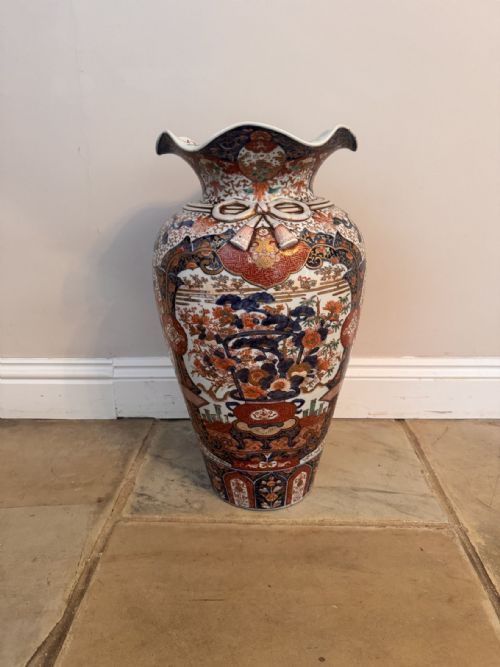
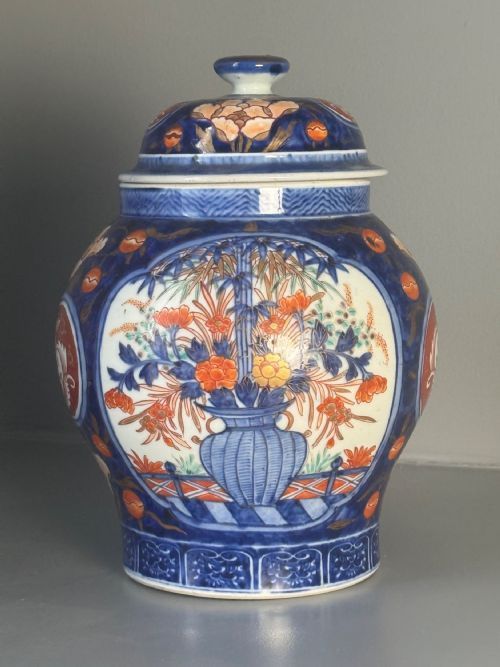
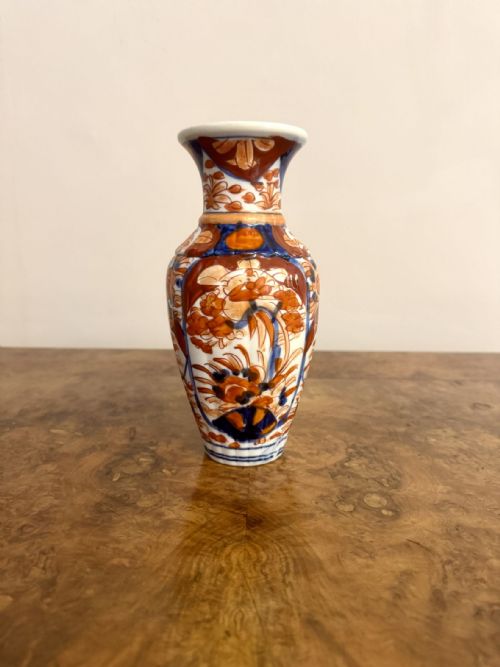
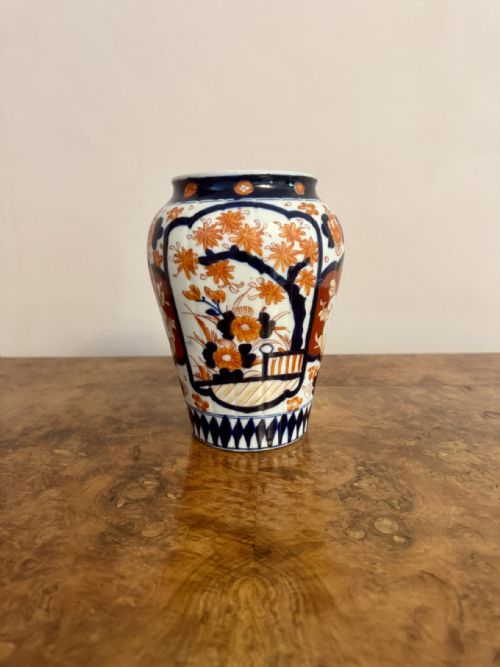


Japanese Floral Porcelain Urns
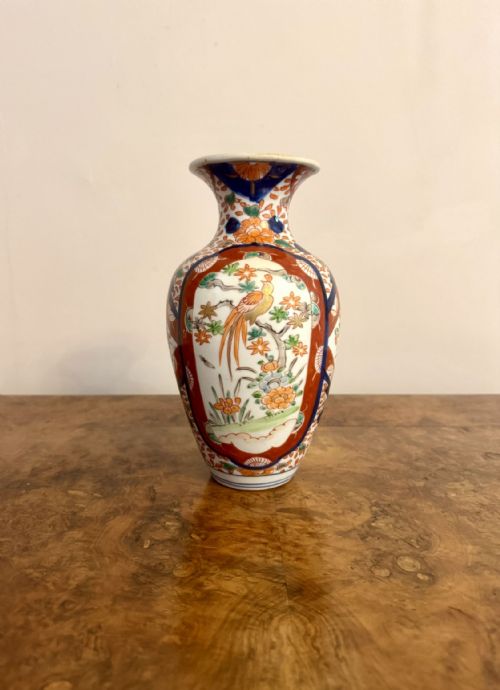
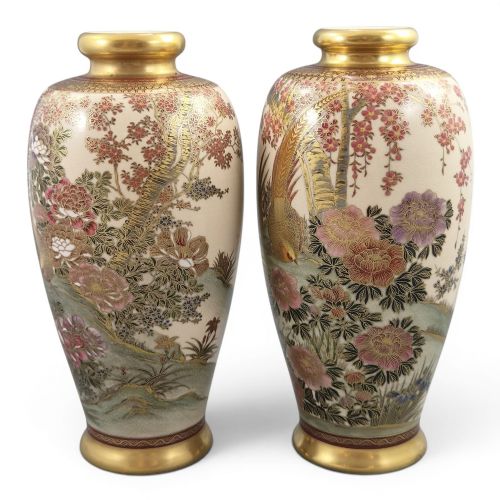
These japanese floral porcelain urns bring striking cobalt and enamel colour into a room, offering the decorative impact collectors seek from Meiji period export wares.
Japanese Floral Porcelain Urns
When searching for japanese floral porcelain urns, buyers encounter large floor-standing vessels, ginger jars, lidded vessels and bulbous vases originating mainly from the nineteenth century and the Edwardian era. The selection draws heavily upon Meiji period production, alongside items dated through the eighteen-eighties and eighteen-nineties up to the nineteen-twenties.
The objects take diverse shapes, including double-gourde profiles, fluted bodies, flared necks and two-handled urns. Many examples arrive in matched pairs or garnitures of three, while others stand as single decorative centerpieces.
A significant portion of the pieces follow the traditional Japanese Imari palette, complemented by Satsuma and Kutani wares. Production spans regional centres such as Arita, Kyoto and Kobe, reflecting the varied output exported to Western markets during the late nineteenth and early twentieth centuries.
Evaluating the Pieces
The distinction between standard export wares and exceptional pieces rests upon the crispness of the hand-painted brushwork and the complexity of the palette. Finer examples display precise control over cobalt underglaze tones and generous, unrubbed applications of gold leaf.
Exhibition-quality items often feature signed maker panels, specific family mons such as the Shimazu crest, or documented origins from renowned Kyoto and Kobe studios. The structural ambition of the vessel, seen in double-gourde forms, heavy lidded garnitures, or large floor-standing proportions, also elevates the status of the piece.
Materials recorded across the inventory include porcelain, earthenware, enamel, gold leaf, glaze, gilt, cobalt, and lacquer.
Manpei·Tagawa·Hododa·Kinkozan
The Japanese Floral Porcelain Urns Glossary
- Imari
- A style of Japanese porcelain originating from Arita, traditionally decorated in underglaze blue, iron-red, and gilt. It dominated export markets throughout the Meiji period.
- Satsuma
- An earthenware pottery type featuring an ivory-coloured crackle glaze, typically painted with elaborate polychrome enamels and gold. It was widely produced for Western collectors.
- Meiji Period
- The era of Japanese history lasting from eighteen sixty-eight to nineteen twelve, marked by extensive international trade and the production of high-detail export ceramics.
- Garniture
- A set of three or more matching vases or jars designed to be displayed together on a mantelpiece or cabinet. These sets often include lidded ginger jars paired with open vessels.
- Mon
- A Japanese emblem or crest used to identify families, clans, or specific lineages. They appear on select high-grade ceramics such as Satsuma export pieces.
Japanese Floral Porcelain Urns: Frequently Asked Questions
How do I date a Japanese Imari vase?
Dating relies on the depth of the cobalt blue, the weight of the porcelain body, and stylistic markers associated with the Meiji period or late nineteenth-century production.
Examine the base and the enamel saturation, as nineteenth-century export pieces typically show specific potting traits and hand-mixed mineral pigments distinct from later twentieth-century reproductions.
What is the difference between Imari and Satsuma?
Imari pieces use a hard porcelain body finished with blue underglaze and iron-red overglaze enamels, often accented with gold leaf. They present a resonant, vitrified structure built for daily utility and display.
Satsuma wares consist of a softer earthenware body covered in a characteristic network of fine crackle glaze. Their decoration relies entirely on polychrome enamel painting and heavy gilding over the porous surface.
Are signed vases more valuable?
Signatures or artist seals point to specific workshops, studios, or master decorators working in regional centres like Kyoto or Arita. Marks such as those from Kinkozan indicate a higher tier of Meiji period manufacturing.
While unsigned pieces still demonstrate exceptional artistic skill, authenticated signatures tie the work to notable historical kilns and documented exhibition standards.