




Japanese Export Porcelain Urns
Japanese export porcelain urns bring centuries of vibrant Imari palettes and intricate Satsuma painting into a room.
Japanese Export Porcelain Urns
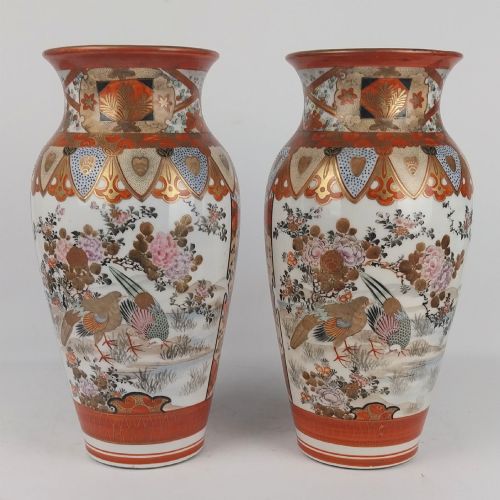
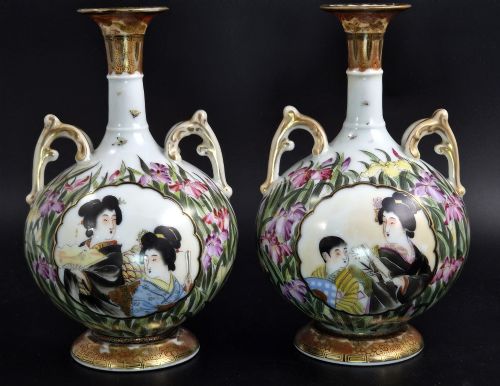
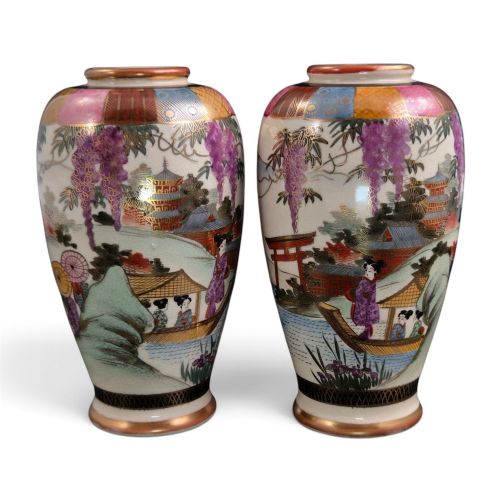
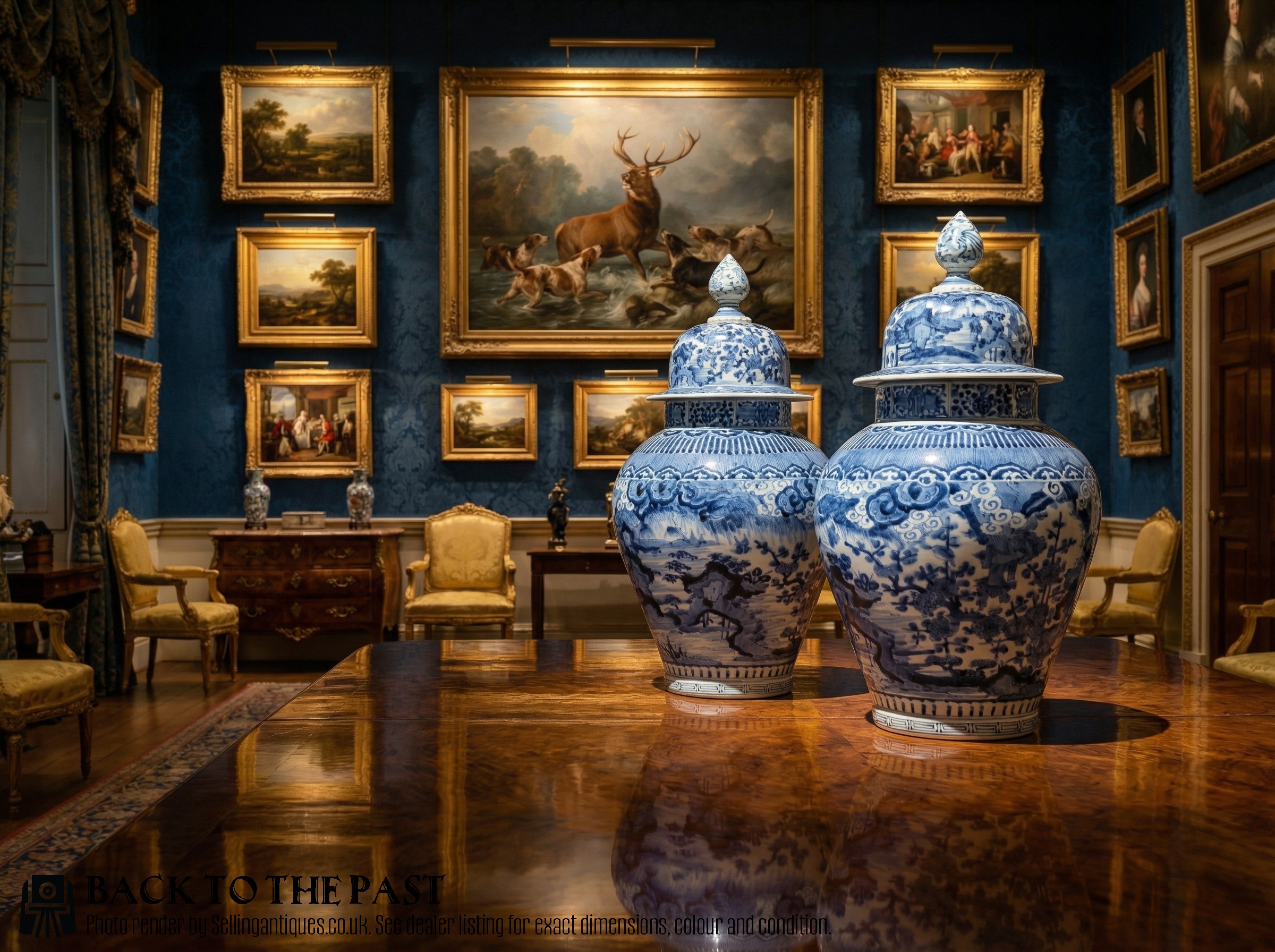
When buyers search for japanese export porcelain urns, they find vessels spanning the seventeenth century through to the Edwardian era. The selection draws together various forms including lidded vases, table lamps, and spill vases produced for international markets.
Most examples appearing here stem from the Meiji and Edo periods, alongside later nineteenth-century and Edwardian interpretations. These pieces showcase traditional decorative vocabularies ranging from blue and white Arita designs to rich polychrome Imari palettes.
How they were made
Potters shaped fine porcelain and earthenware on the wheel or in moulds before applying glazes and underglaze blue pigments. Artisans then added detailed enamel work and gold leaf or gilt highlights across the surface.
Certain heavier vessels incorporate cast mounts, such as gilt bronze fixtures added to nineteenth-century table lamps. Hand-painted motifs often depict landscapes, wisteria, and heraldic mon symbols.
Japanese Export Porcelain Urns Retail Price Guide 2026
Typical asking prices for japanese export porcelain urns among the pieces listed under this phrase on Sellingantiques today, from the lower quarter to the upper quarter. They describe what is for sale here now, not the wider market.
Listings feature porcelain, earthenware, enamel, and gold leaf across Imari, Satsuma, and Arita styles.
What varies in quality
The precision and density of the hand-painted enamels dictate much of the visual impact, separating standard production wares from exhibition pieces. Finer specimens display crisp brushwork in the gilding and well-balanced forms, whether hexagonal Satsuma vessels or trumpet-shaped beakers.
Condition of the delicate enamel and gold leaf influences the integrity of the piece over time. Original lidded forms and matched pairs command distinct attention from collectors compared to single surviving vessels.
Hattori·Hododa·Fukagawa
The Japanese Export Porcelain Urns Glossary
- Imari palette
- A traditional decorative scheme utilising underglaze blue, iron red, and gilt highlights on a white porcelain ground. This style originated in Japanese kilns and gained immense popularity across European export markets.
- Satsuma
- An earthenware ceramic type featuring a crackle-glaze finish, typically decorated with intricate polychrome enamels and raised gold leaf. Many fine examples date from the Meiji period.
- Arita
- The town and surrounding region in Hizen province famous for pioneering Japanese porcelain production. Arita wares include early blue and white export pieces as well as later polychrome designs.
- Mon
- A Japanese emblem or crest used to indicate family lineage or clan affiliation. These heraldic symbols frequently appear on high-quality Satsuma pottery.
- Garniture
- A set of three or more matching vases or vessels designed for symmetrical display on a mantelpiece or cabinet. These sets often include lidded and open forms.
Japanese Export Porcelain Urns: Frequently Asked Questions
What periods do these pieces come from?
The available selection spans from the late seventeenth century during the Edo period through to the Edwardian era. Nineteenth-century production forms a significant portion of the items.
Meiji period pieces appear frequently alongside earlier eighteenth-century examples and turn-of-the-century interpretations.
How are Imari and Satsuma different?
Imari pieces consist of hard-paste porcelain decorated with underglaze blue, iron red, and gilding. They offer a bright, resonant finish suited to frequent display.
Satsuma pieces are typically earthenware with an ivory crackle glaze, painted with dense polychrome enamels and gold leaf. They prioritize detailed pictorial scenes over symmetrical geometric patterns.
Were these made for export?
Yes, these vessels were produced specifically for international markets in Europe and the West. Artisans adapted traditional Japanese motifs to suit foreign tastes and interior decoration trends.
This exchange resulted in distinctive forms like lidded garnitures, flared neck vases, and table lamps.