


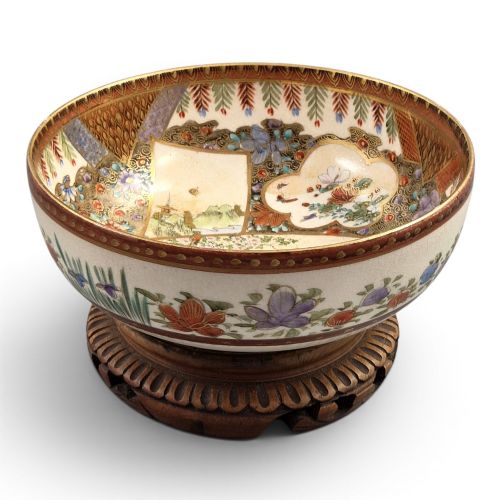


Japanese Enamel Display Dish
When seeking a japanese enamel display dish, collectors encounter decorative chargers and plates shaped during the Meiji and Edo periods.
Japanese Enamel Display Dish
A japanese enamel display dish typically takes the form of a large charger, shallow bowl, or decorative plate intended for visual appreciation rather than utility. These pieces span from the Edo period through the Meiji period, capturing centuries of meticulous metalwork and ceramic artistry.
The selections on this page lean heavily toward cloissone enamel chargers and porcelain vessels adorned with hand-painted enamels, copper cores, and brass details. Motifs range from fierce dragons and leaping koi to serene birds and botanical scenes.
Originating primarily from Japanese workshops, these display pieces reflect distinct stylistic shifts across the nineteenth and early twentieth centuries. Buyers find substantial charger plates alongside smaller decorative plates, trays, and lidded bowls.
How They Were Made
These objects rely on base materials such as copper, brass, porcelain, and earthenware, often shaped into wide display chargers and shallow bowls. Artisans applied vitreous enamels within delicate wire cells, or painted directly onto ceramic surfaces using gold leaf and rich pigments.
Techniques like totai shippo combined porcelain with cloisonne tree bark effects, binding enamel directly to ceramic bodies. Firing and polishing completed the process, creating smooth, reflective surfaces on heavy copper or earthenware foundations.
Japanese Enamel Display Dish Retail Price Guide 2026
Typical asking prices for japanese enamel display dish among the pieces listed under this phrase on Sellingantiques today, from the lower quarter to the upper quarter. They describe what is for sale here now, not the wider market.
The listings span multiple decades, incorporating copper, brass, porcelain, and gold leaf across diverse forms.
What Varies in Quality
Quality rests upon the precision of the enamel work, the complexity of the chosen subject matter, and the clarity of the signature. Pieces featuring intricate wirework depicting dragons, koi, or botanical elements demonstrate higher technical mastery than simpler designs.
The scale and weight of the copper or porcelain foundation also distinguish the tier of a piece, with larger chargers requiring advanced thermal control during firing. Signed works by recognised makers often exhibit superior finish and balanced composition.
Kozan·Shuzan for Yasuda·Meizan·Shozo
The Japanese Enamel Display Dish Glossary
- Charger
- A large ornamental plate designed primarily for display rather than dining. These heavy circular vessels provide a broad surface for elaborate pictorial scenes.
- Cloisonne
- A technique where thin metal wires are soldered to a metal base to create compartments, which are then filled with enamel paste and fired. This method produces intricate, multi-coloured patterns.
- Totai Shippo
- A method of applying cloisonne enamel directly onto porcelain or earthenware bodies rather than traditional metal. It results in a distinct textured surface resembling tree bark.
- Meiji Period
- The era in Japanese history spanning from 1868 to 1912, known for significant artistic output and the opening of trade with Western markets. Pieces from this time often show exceptional technical refinement.
- Edo Period
- The period lasting from 1603 to 1867, characterised by relative peace and the flourishing of traditional Japanese arts and crafts. Early enamel and ceramic works originate from this foundational era.
Japanese Enamel Display Dish: Frequently Asked Questions
What is a japanese enamel display dish used for?
These pieces function primarily as decorative art rather than tableware, meant to be shown on walls, stands, or cabinets. Their large surface area allows intricate pictorial narratives to be displayed in domestic interiors.
Historically, they served as luxury export goods and high-status decorative objects within Japanese and Western homes alike.
How do I tell Meiji period pieces apart from Edo period ones?
Edo period works often display heavier construction and more subdued palettes, reflecting traditional domestic patronage. Meiji period items typically feature brighter enamel work, highly complex wire patterns, and designs tailored for the international export market.
Signatures also became more prevalent on Meiji pieces as individual workshops gained independent renown.
What is totai shippo?
Totai shippo is a specialised technique where cloisonne enamel is applied over a ceramic or porcelain core rather than a solid metal foundation. This creates a unique textured finish that often mimics natural materials like tree bark.
Plates made this way combine the weight and resonance of porcelain with the vibrant colour cells of metalwork.