


Japanese Earthenware Bowl
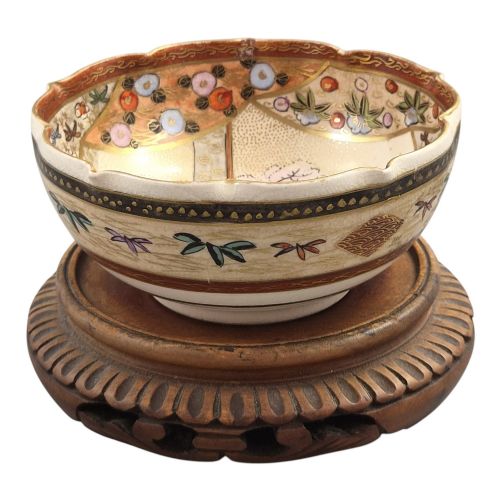
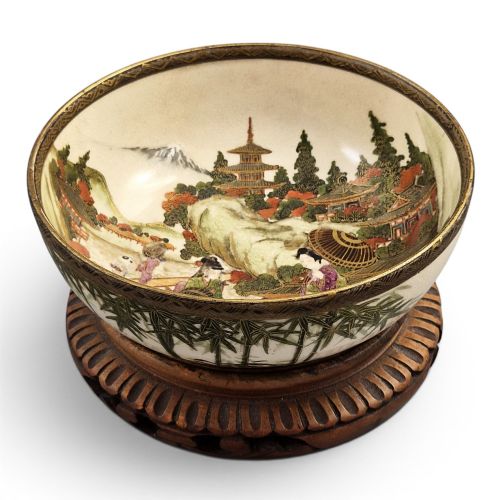
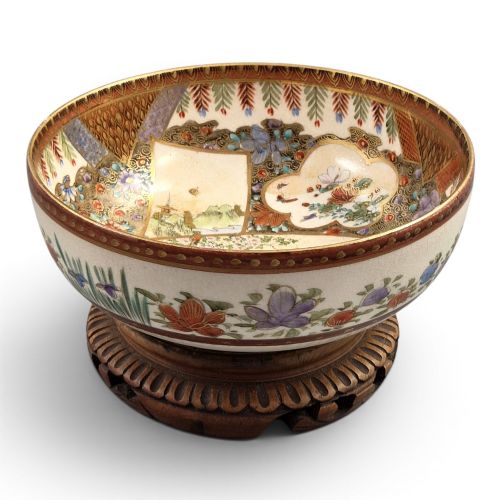
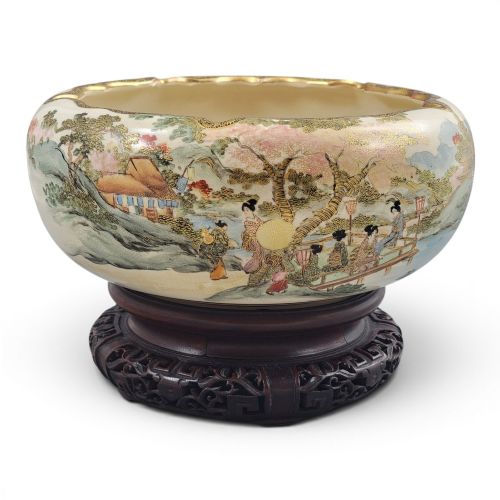
These Japanese earthenware bowl examples bring intricate hand-painted detail and rich gilding from the Meiji period directly into your home.
Japanese Earthenware Bowl
When you search for a japanese earthenware bowl, you are looking at decorative ceramics originating predominantly from the Meiji period and the late nineteenth century. These vessels range from small handled items and sugar bowls to monumental exhibition pieces painted with elaborate scenes.
The version you are most likely to meet on this page is Satsuma ware, often featuring detailed pictorial narratives, floral motifs, or thousand-flower patterns. Kyoto studios and notable makers produced these fine earthenware pieces for both domestic and international markets.
Objects include footed bowls, decorative bowls and saucers, and vessels with intricate enamel work. The designs frequently incorporate traditional motifs such as samurai battles, court figures, flowers, and birds rendered in dense colour.
How They Were Made
The foundation of these pieces is earthenware, shaped into bowls, saucers, and burners before receiving intricate surface decoration. Artisans applied detailed painting using vibrant enamels alongside gold leaf and gold gilt highlights.
Specialised techniques such as wirework and totai shippo, or wireles cloisonne over earthenware, also appear in the record. Workshops utilised skilled hand-painting to build up complex multilayered compositions across the ceramic surface.
Materials recorded across the inventory include earthenware, enamel, gold leaf, wood, gold gilt, and metal wire.
What Varies in Quality
The distinction between standard production and masterwork pieces rests primarily on the finesse of the brushwork and the density of the enamel and gilding. Pieces bearing the signatures of renowned makers or specific studio marks generally exhibit superior artistic execution.
Composition and scale also dictate quality, as monumental bowls with detailed narrative scenes or complex millefleur patterns demand greater technical skill than smaller, simpler floral designs.
Kozan·Shizan·Ryuzan·Nikko·Hododa·Kinkozan·Shozan
The Japanese Earthenware Bowl Glossary
- Satsuma ware
- A type of Japanese earthenware featuring a ivory-coloured, crackled glaze that provides a canvas for colourful enamel and gilt decoration. It originated in Satsuma Province before production spread to major urban centres like Kyoto.
- Meiji period
- The era of Japanese history spanning from 1868 to 1912, characterised by rapid modernisation and an explosion of decorative arts exported to the West. Many pieces on this market date from this specific period.
- Totai shippo
- A technique where cloisonne enamel is applied directly to an earthenware body rather than metal. This unusual method creates textured surfaces resembling tree bark or carved elements.
- Shimazu crest
- The mon or badge of the Shimazu clan, who ruled the Satsuma domain. This crest frequently appears on Satsuma ceramics produced by workshops associated with the region.
- Millefleur
- A decorative pattern meaning thousand flowers, covering the entire surface of the ceramic in dense floral motifs. It requires immense patience and precision from the artist.
Japanese Earthenware Bowl: Frequently Asked Questions
What is Satsuma ware?
Satsuma ware is a specific type of Japanese earthenware distinguished by its fine crackled cream glaze and elaborate polychrome and gilt enamel painting. These ceramics were heavily produced during the nineteenth century for export.
Most examples feature scenes from history and mythology, alongside dense floral arrangements and traditional Japanese motifs.
How do I identify a Meiji period bowl?
Meiji period bowls often display distinct signatures, studio marks, or the Shimazu crest on the underside. The style reflects the artistic output of Japan between 1868 and 1912.
Stylistic cues include intricate hand-painted gilding, finely rendered facial expressions on figures, and complex floral borders.
Where were these bowls made?
While the style originates from Satsuma Province, many of the finest bowls listed here were produced in Kyoto workshops. Major urban centres like Yokohama also housed studios that decorated and exported these ceramics.
Master craftsmen in these locations signed their works to denote high artistic standards.
How should I display my bowl?
Display these earthenware bowls on stable surfaces away from direct sunlight to protect the delicate enamels and gold leaf highlights. Because the ceramic body is relatively porous compared to porcelain, keep them in dry environments.
Use appropriate stands for footed bowls and burners to showcase both the interior painting and the decorated base.