


Japanese Crackle Glaze
These Japanese crackle glaze pieces bring intricate hand-painted detail and distinct networked pottery finishes straight into your living space.
Japanese Crackle Glaze
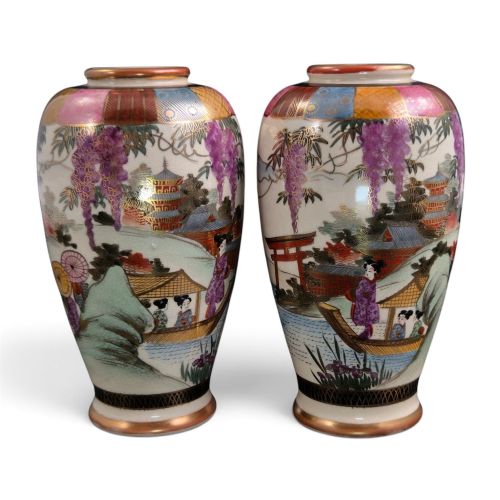
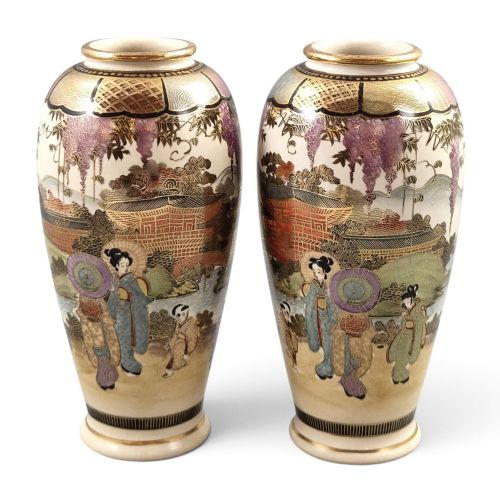
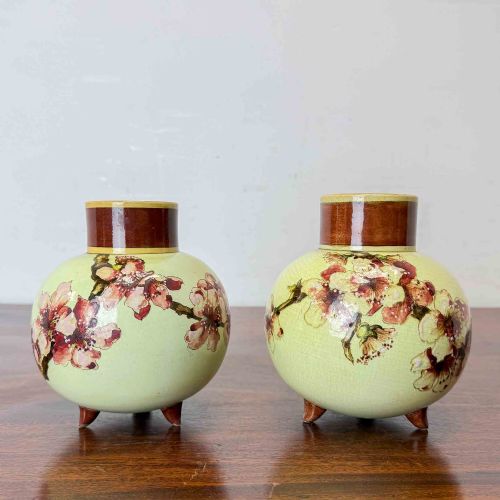
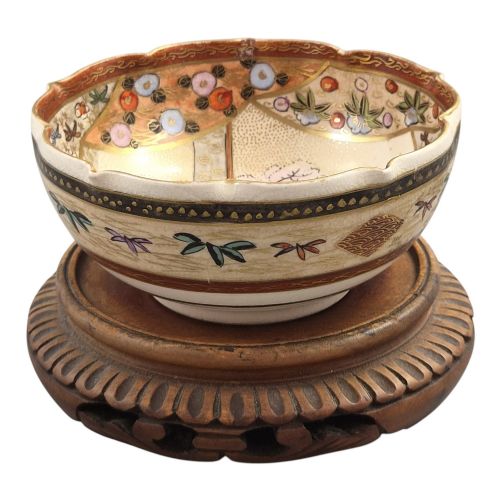
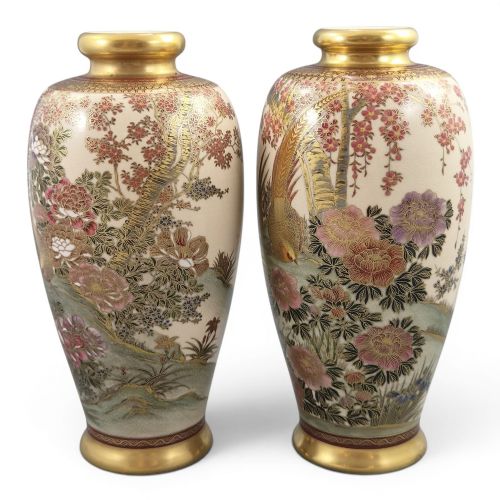
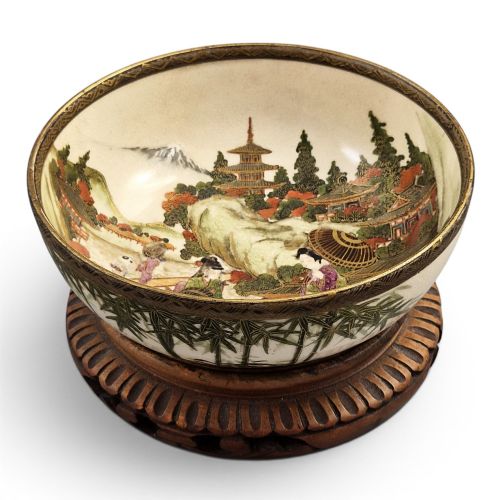
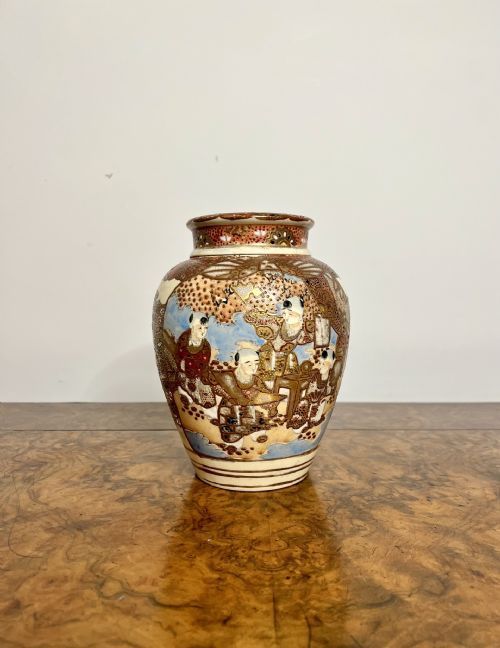
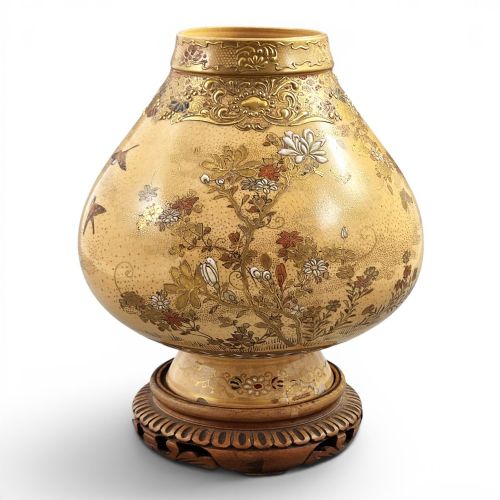
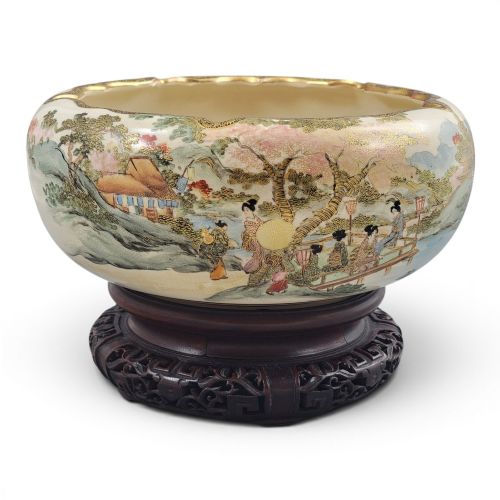
When searching for Japanese crackle glaze, buyers encounter earthenware and ceramic vessels that display intentional crazing across their surfaces. The most common forms on this page are Satsuma vases, decorative bowls, ginger jars, and tea caddies originating from the Meiji, Taisho, and early Showa periods.
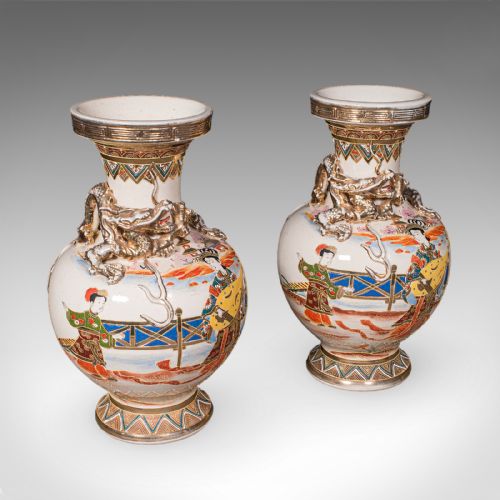
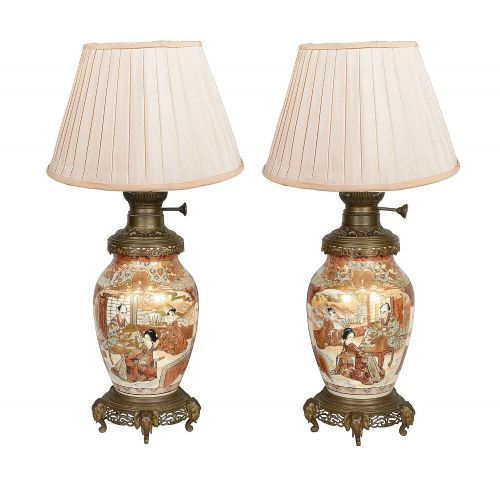
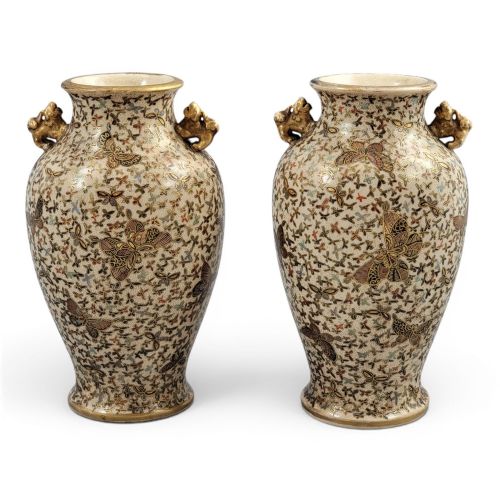
Makers fashioned these items in regional centres such as Kyoto and Kobe, often decorating them with court figures, landscapes, or butterflies enriched with gold leaf and enamel. Alongside traditional vessels, the selection occasionally includes table lamps and decorative bowls mounted on carved wooden stands.
The aesthetic bridges late Victorian, Edwardian, and Aesthetic Movement tastes, reflecting both domestic Japanese traditions and export demands of the nineteenth and early twentieth centuries. Pieces range from miniature vases to monumental garnitures.
Materials and construction techniques
Potters formed these items using earthenware and ceramic bodies coated in specialised glazes designed to crackle upon cooling. Artisans then applied detailed enamel pigments and gold gilt by hand, often building up raised moriage designs across the surface.
Many of the finer vessels incorporate rich cobalt grounds and meticulous gold leaf highlights over the characteristic crazed earthenware base. Workshops utilised carved wooden stands and fitted lids to complete pieces like tea caddies, incense burners, and ginger jars.
Materials documented across the inventory include earthenware, enamel, gold leaf, and carved wood.
Distinctions in workmanship and finish
The division between standard output and superior work rests on the precision of the hand-painted figures and the fineness of the underlying crackle network. Master workshops achieved disciplined enamel control and subtle tonal gradations in the gold leaf work.
Signed pieces by known artists or reputable studios demonstrate greater care in the execution of complex motifs such as Rakan, landscapes, and thousand butterfly patterns. The crispness of the moulded relief and the integration of the gilt decoration separate exceptional pieces from simpler production items.
Shozan·Manpei·Kinkozan·Kinzan·Shizan·Seiko en Chokei·Chosei·Tokyo Taizan
The Japanese Crackle Glaze Glossary
- Satsuma
- A type of earthenware pottery with a ivory-coloured crackle glaze originating from Satsuma province and later produced widely in Kyoto. It serves as the primary canvas for richly gilt and enamelled pictorial decoration.
- Moriage
- A decorative technique where slip is piped onto ceramics to create raised patterns and textured surfaces. Artisans frequently highlight these raised elements with gold leaf and vibrant enamel colours.
- Meiji Period
- The era in Japanese history spanning from 1868 to 1912, characterised by extensive export of decorative arts to Western markets. Pieces from this time often exhibit highly intricate craftsmanship.
- Garniture
- A set of matching vases or decorative jars designed to be displayed together on a mantelpiece or sideboard. These matched sets form coordinated visual centrepieces.
- Koro
- A traditional Japanese incense burner, typically featuring a tripod base and a pierced cover. They appear frequently among decorative ceramic forms.
Japanese Crackle Glaze: Frequently Asked Questions
What is moriage decoration?
Moriage refers to a technique where liquid clay is piped onto the ceramic surface before firing to create raised, three-dimensional patterns. This textured base is then hand-painted with enamels and highlighted with gold gilt.
It adds a distinct tactile quality to court scenes, dragons, and floral arrangements on vases and bowls.
How should I display these pieces?
These ceramics work well as standalone focal points on sideboards, tables, or within open shelving where their detailed enamel work can be appreciated up close. Paired vases and garnitures look balanced when placed symmetrically on a mantelpiece or cabinet top.
Ensure they sit away from high-traffic edges, as antique earthenware can chip upon sharp impact.
Are these items waterproof?
Traditional Satsuma earthenware and its associated crackle glaze are porous by nature and generally not suited for holding water. Using them as dry decorative vessels or with fitted internal liners protects the historic ceramic body from moisture damage.
Cleaning should be limited to gentle dusting with a dry cloth rather than washing.