









Japanese Cobalt Blue Charger
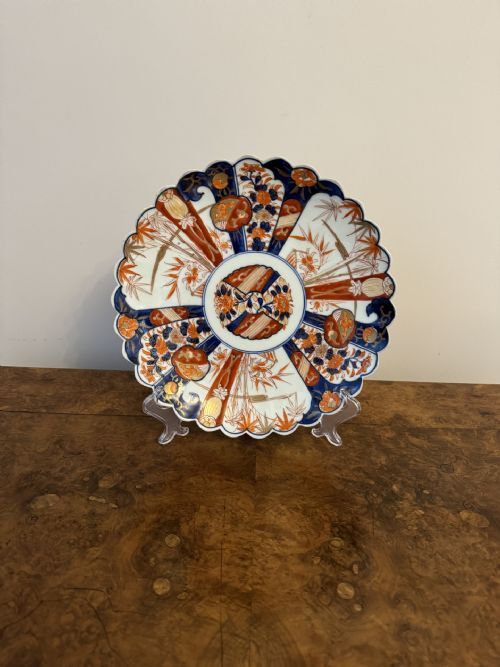
A Japanese cobalt blue charger brings deep indigo tones and intricate painted detail to a wall or cabinet.
Japanese Cobalt Blue Charger
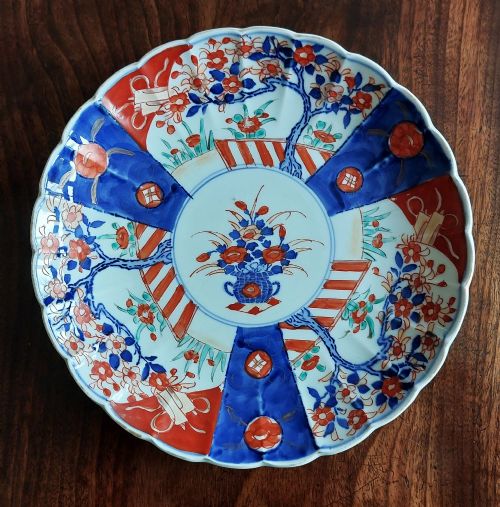
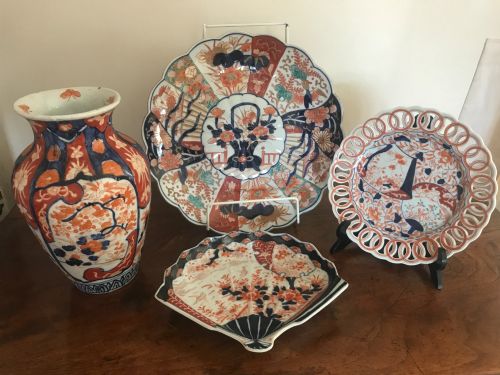
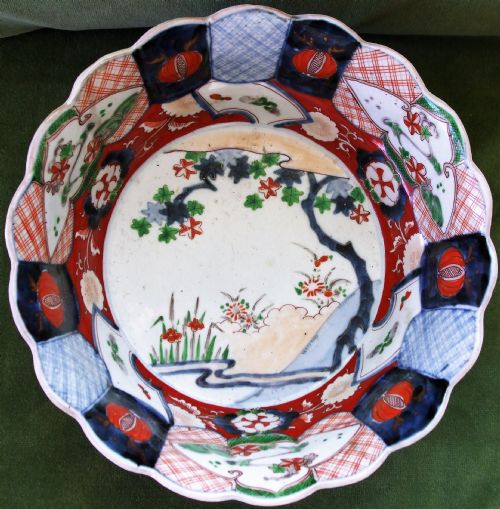
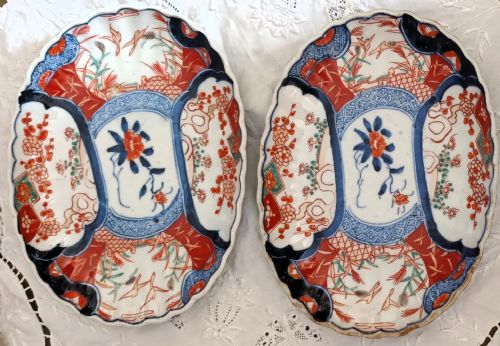
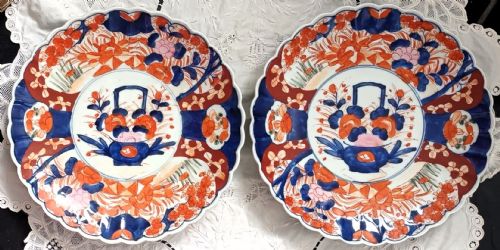
When searching for a japanese cobalt blue charger, collectors look at large ceramic display pieces originating from the nineteenth and early twentieth centuries. These encompass the Edo and Meiji periods, taking the form of wide decorative plates, chargers, and bowls shaped with round, scalloped, square, or hexagonal edges.
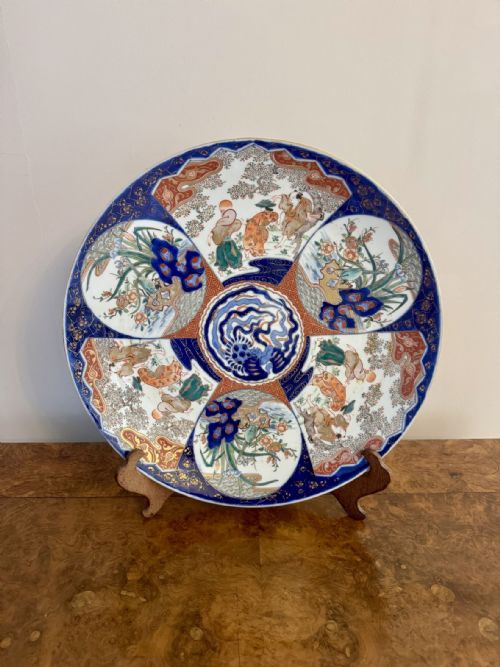
The versions most commonly met on this page belong to the Imari and Arita traditions, produced in Japan during the Victorian era and the late nineteenth century. Such items frequently feature cobalt blue glaze combined with enamel and gilt highlights, sometimes depicting motifs like the Seven Lucky Gods or exotic birds.
Materials and Technique
Potters shaped these objects from porcelain and ceramic, applying cobalt pigment and cobalt glaze beneath or over the body to achieve deep blue tones. Kiln firing fixed the ceramic body before artisans added enamel details and gold leaf or gilt highlights.
Makers utilised traditional moulding and throwing techniques to create standard rounds alongside complex geometric forms like square and hexagonal plates, finishing edges with scalloped contours.
Several antique plates happily depict the Seven Lucky Gods wandering across the porcelain surface.
Assessing Quality
Quality rests in the crispness of the cobalt pigment under the glaze and the precision of the hand-painted enamels and gold leaf application. Finer pieces show careful control during the kiln firing, resulting in brilliant white porcelain grounds that contrast sharply with the deep blue decoration.
Form and design complexity also separate categories, with unusual shapes like square or hexagonal plates and elaborate figural scenes such as the Seven Lucky Gods demonstrating superior artisan skill compared to standard circular patterns.
The Japanese Cobalt Blue Charger Glossary
- Charger
- A large decorative plate intended primarily for display rather than dining use. These items measure substantially wider than standard dinner plates.
- Imari
- A traditional Japanese style of porcelain decoration originating from the town of Arita. It typically incorporates a palette of cobalt blue, iron red, and gold.
- Meiji
- A historical period in Japan spanning from 1868 to 1912. Ceramics from this era often display intricate hand-painted enamels and gilt highlights.
- Edo
- A historical period in Japan running from 1603 to 1868. Pieces from this time represent earlier developments in Japanese export ceramics.
- Glaze
- A vitreous coating applied to ceramics and fired in a kiln to seal the surface. Cobalt glaze provides the deep blue coloration characteristic of these wares.
Japanese Cobalt Blue Charger: Frequently Asked Questions
How were chargers displayed historically?
Large ceramic chargers were traditionally placed on sideboards or mounted onto walls using specialised wire hangers. This allowed households to showcase intricate painted designs.
In modern interiors, these pieces continue to serve as focal points on dining room walls or displayed upright within glazed cabinets.
What is the difference between Imari and Arita ware?
Arita is the Japanese town where the porcelain clay was mined and fired in provincial kilns. Imari refers specifically to the export port through which these ceramics left Japan.
Over time, the name Imari became synonymous with the distinct blue, red, and gold decorative style produced in the Arita region.
How do I distinguish Meiji period pieces?
Meiji period ceramics generally date from the late nineteenth to early twentieth centuries. They often feature dense enamel work and liberal applications of gold leaf.
Earlier Edo period examples tend to show slightly simpler brushwork and heavier porcelain bodies formed in traditional kilns.
Can these plates be used for food?
Antique chargers and decorative plates are intended for display and collection. Historic glazes and gold leaf decorations are susceptible to wear from cutlery and washing.
Displaying them upright protects the delicate enamel surfaces from accidental chipping or scratching.