

Japanese Cast Bronze
Japanese cast bronze brings together centuries of foundry work, forming figures, vases and lamps that hold sharp patination.
Japanese Cast Bronze
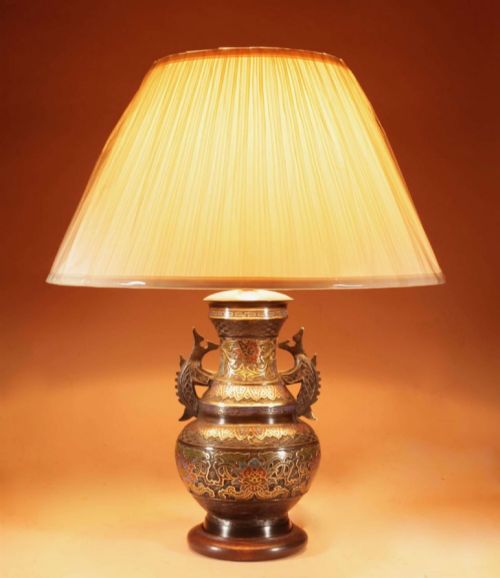
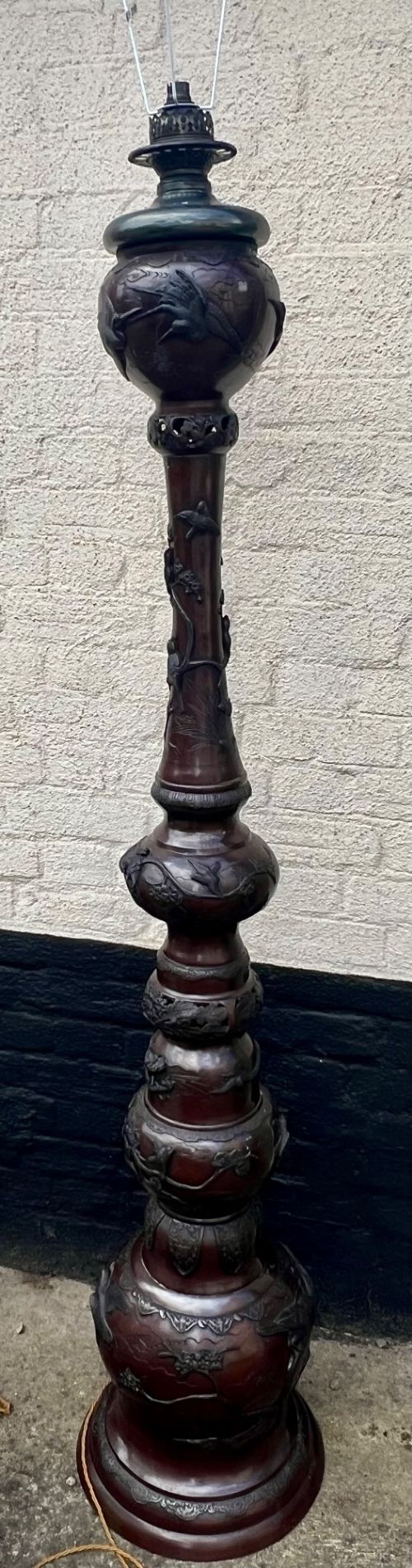
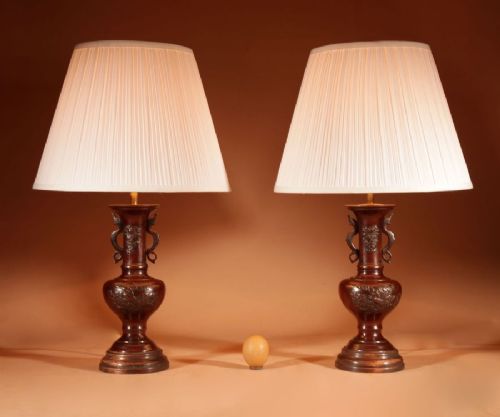
Japanese cast bronze objects span sculptures of animals and figures, tall vases, temple vessels, and table lamps adapted for western interiors. The selection gathers pieces originating from the 19th century, Meiji period, Edo period, and Edwardian eras, uniting traditional metalwork with functional domestic forms.
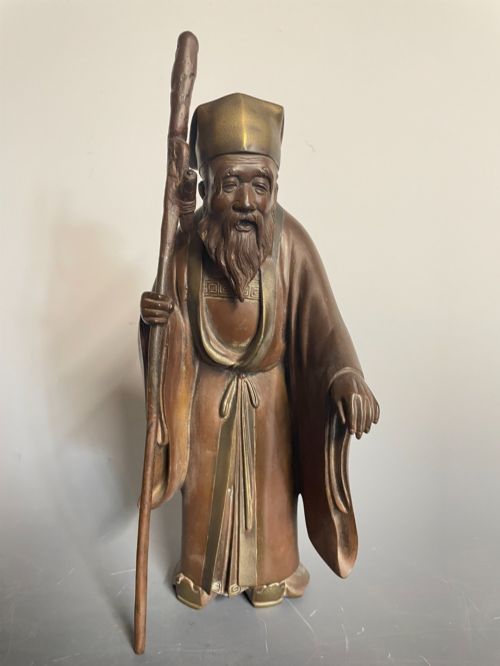
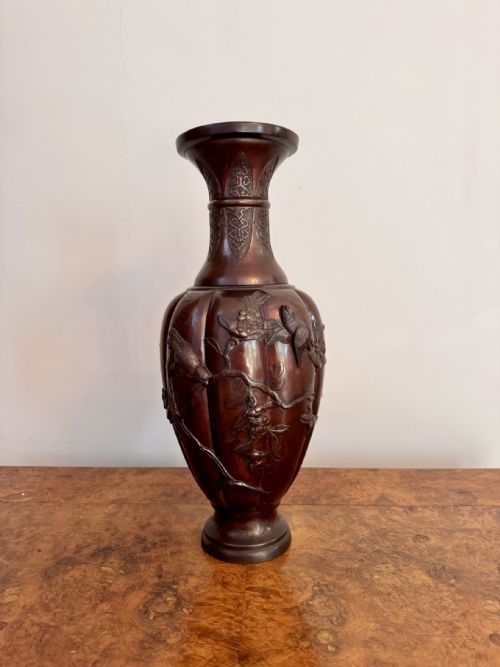
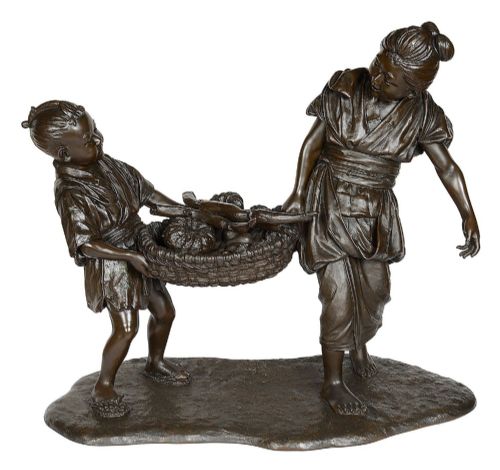
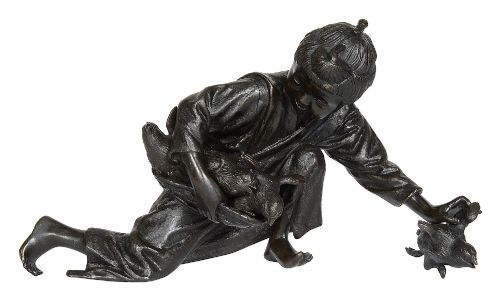
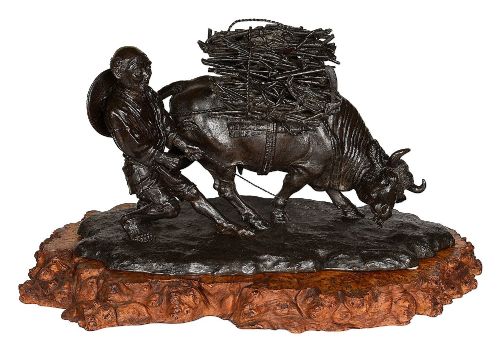
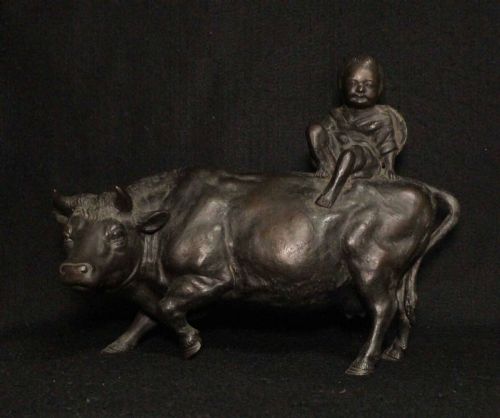
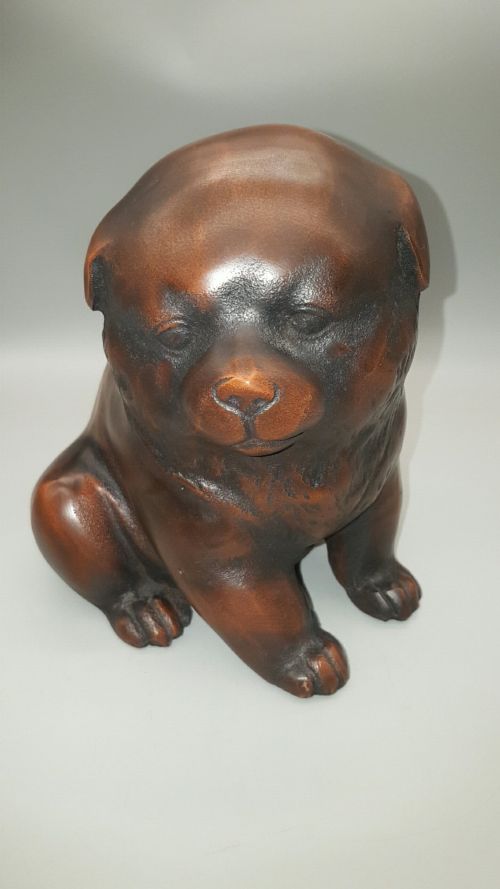
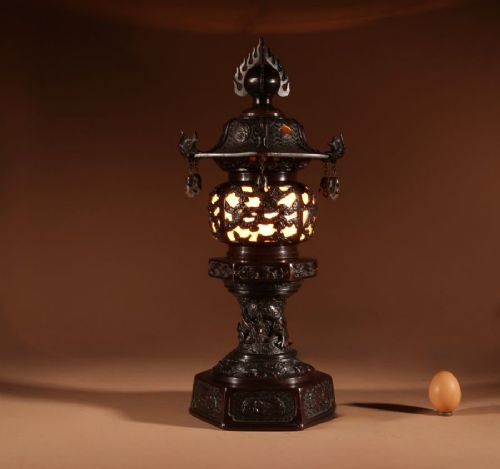
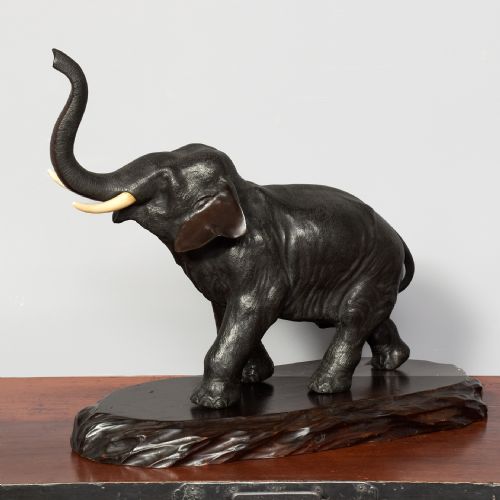
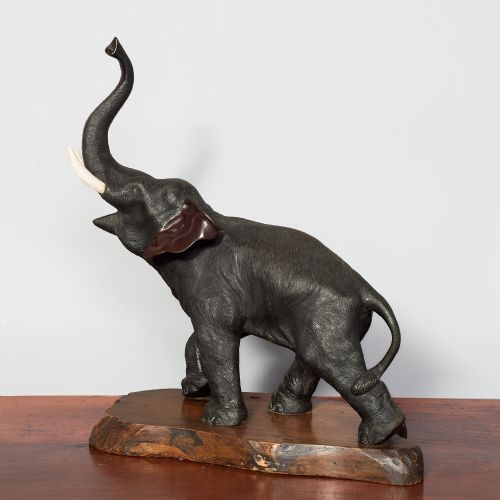
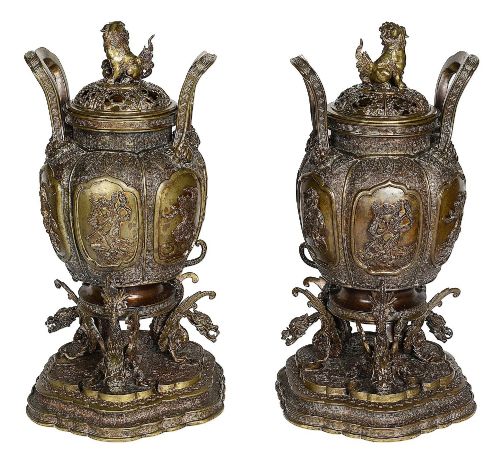
Figures and okimono take the shape of elephants, dogs, monkeys, insects, and human subjects engaged in daily tasks or folklore. Vases, incense burners, and sake kettles demonstrate disciplined vessel casting often augmented with enamel or patinated surfaces.
Found across multiple decades including the late 19th century and early 20th century, these items reflect both native domestic shrines and export production geared towards European tastes.
Materials and casting methods
Foundries utilised bronze alloys, patinated bronze, and cast iron, sometimes combining the metalwork with ivory tusks, wood bases, or fabric shades. Champlevé and cloisonné enamel add coloured detail to vessels and lamp mountings.
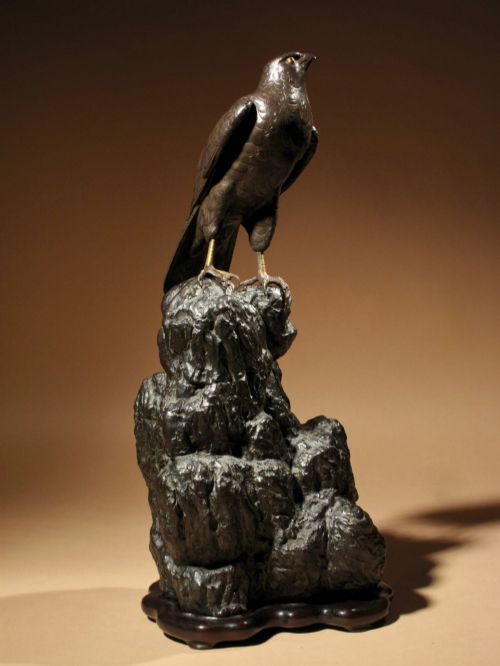
Lost-wax casting allowed artisans to render fine textures such as feathers, fur, and craggy rock formations with exact precision. Surface patination treatments created deep brown, black, and greenish tones on the metal.
Japanese Cast Bronze Retail Price Guide 2026
Typical asking prices for japanese cast bronze among the pieces listed under this phrase on Sellingantiques today, from the lower quarter to the upper quarter. They describe what is for sale here now, not the wider market.
Periods represented span the Edo period, Meiji period, Victorian era, Edwardian era, Showa period, and the 19th century.
Distinctions in casting and finish
Quality rests in the crispness of the chased detail, where individual hairs, scales, and facial expressions remain sharp rather than smoothed by over-cleaning or weak casting. Fine examples show careful proportion and balanced weight across large okimono and vessels.
The sophistication of the patination and the integration of secondary materials like enamel or inlaid elements separate standard production from accomplished workshop output.
Tsunemitsu·Masaaki·Kunio Itô·Kaniya Kuniharu·Kibundo·Tokyo Foundry Sakai Kōzan
The Japanese Cast Bronze Glossary
- Okimono
- A Japanese ornamental figure or sculpture designed for display on a shelf or tokonoma.
- Koro
- A traditional Japanese incense burner, frequently fitted with a pierced cover.
- Champlevé
- An enamelwork technique where troughs are sunk into the metal surface and filled with coloured vitreous paste before firing.
- Tetsubin
- A traditional Japanese cast iron or bronze kettle used for boiling water, often associated with tea preparation.
- Meiji Period
- The period in Japanese history spanning from 1868 to 1912, characterised by extensive export art and industrial modernisation.
Japanese Cast Bronze: Frequently Asked Questions
How do I identify a Meiji period piece?
Meiji period pieces often display naturalistic animal subjects or elaborate patination, aligning with production dates between 1868 and 1912.
Examination of the underside or casting seams can reveal workshop signatures or traditional foundry marks characteristic of this era.
Were these bronzes made for export?
Many items, including table lamps and decorative vases, were produced specifically for Western export markets during the late 19th and early 20th centuries.
At the same time, traditional forms like incense burners and okimono continued to serve domestic Japanese interiors.
How should I clean a bronze sculpture?
Dust the surface gently with a soft, dry brush to prevent accumulation in recessed crevices.
Avoid chemical polishes or water, which can damage the original patinated finish.
What is the difference between an okimono and a vessel?
An okimono is a solid or hollow sculptural object intended purely for display, depicting animals, figures, or mythical creatures.
Vessels such as vases, koro, and sake kettles are functional hollow forms designed to hold contents.