



Japanese Carved Side Table
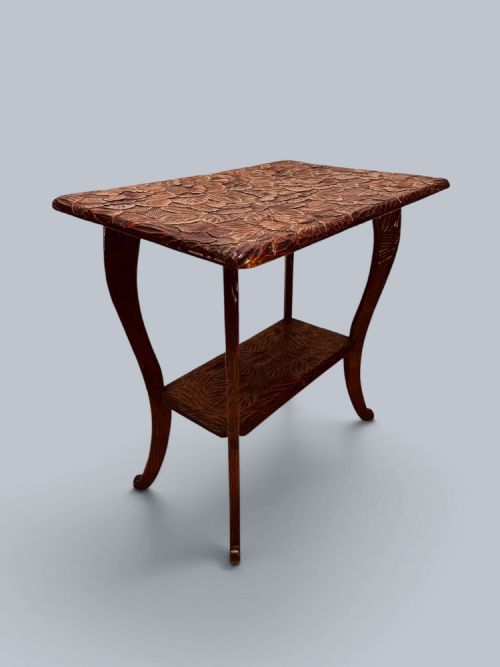
A japanese carved side table brings distinctive Far Eastern motifs and dense relief carving directly into an English interior.
Japanese Carved Side Table
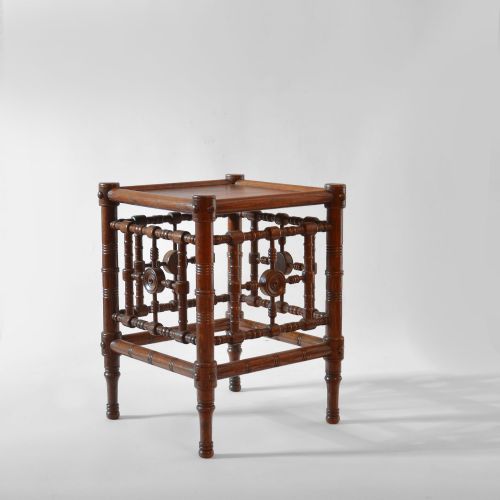
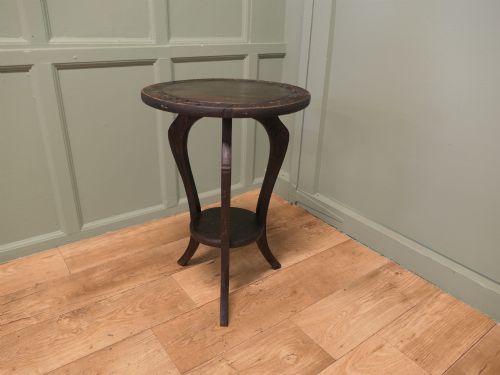
A japanese carved side table covers low occasional tables, plant stands, and folding forms made across the late nineteenth and early twentieth centuries. These works reflect the cross-cultural exchange of the Aesthetic and Arts and Crafts movements, combining British retail demand with Asian craftsmanship.
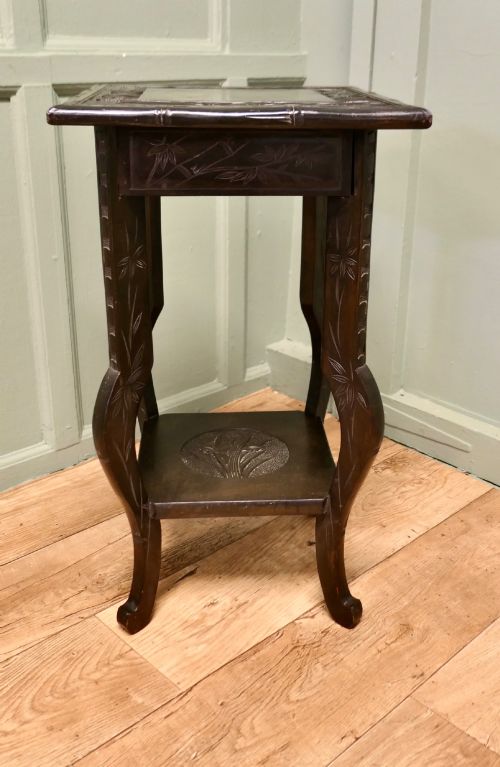
The most common versions on this page are sturdy hardwood stands and occasional tables bearing deep floral or lily pad carvings. Pieces associated with major London retailers frequently sit alongside vernacular examples dating from the Meiji to the Taisho periods.
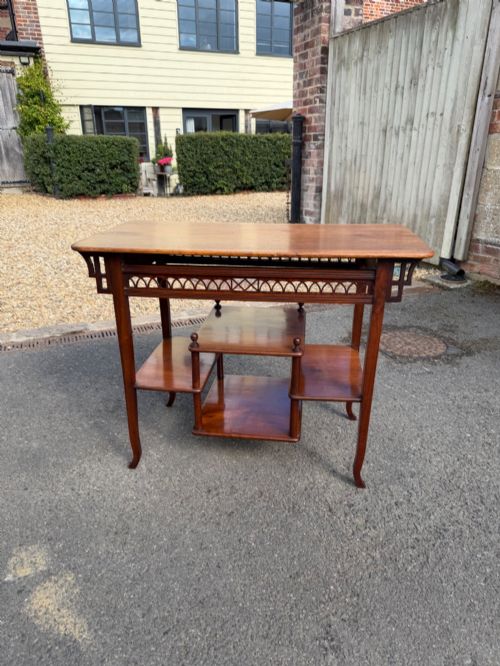
Forms extend beyond simple square tables to include nest of tables, half moon console tables, and marble top plant stands. Each type served a specific decorative function in the Victorian or Edwardian drawing room.
How they were made
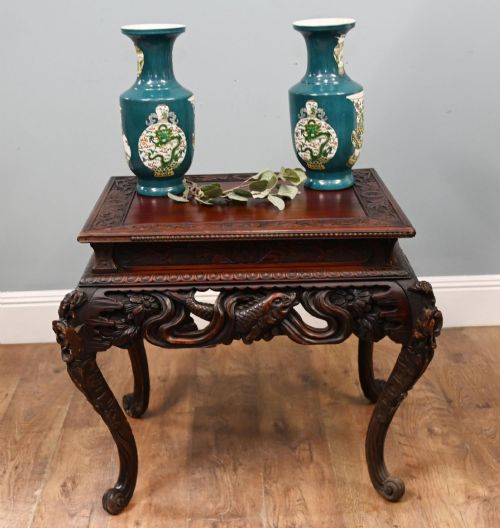
Makers utilised dense Asian hardwoods, ebonised wood, and oak as the structural foundation for heavy relief work and structural framing. Surfaces were frequently hand carved with floral motifs, trailing foliage, and intricate geometric borders.
Selected examples incorporate inset marble slabs, glass, or cloisonné enamel panels directly into the wooden top to create durable display surfaces. Lacquer and parcel-gilt finishes appear alongside traditional joinery methods to achieve the finished form.
Japanese Carved Side Table Retail Price Guide 2026
Typical asking prices for japanese carved side table among the pieces listed under this phrase on Sellingantiques today, from the lower quarter to the upper quarter. They describe what is for sale here now, not the wider market.
Lily pads carved into a side table let you bring a miniature Victorian pond indoors without the damp socks.
What varies in quality
Quality rests primarily on the depth and crispness of the hand carving across the legs and apron. Finer examples display undercut foliage and sharply defined edges where mass-produced or later pieces remain shallow and soft.
The selection of materials creates a distinct tier in these tables, separating standard ebonised wood from dense native hardwoods or those mounted with genuine marble tops and cloisonné panels. Retail provenance and documented attribution further elevate the standing of an individual piece.
Liberty of London·Gabriel Viardot
The Japanese Carved Side Table Glossary
- Japonisme
- The influence of Japanese art and design on Western practitioners during the late nineteenth century. This movement inspired European designers to adopt asymmetrical compositions and natural motifs.
- Meiji Period
- The era of Japanese history spanning from 1868 to 1912, corresponding with significant export trade to Western markets. Pieces from this time often feature elaborate hardwood carving and traditional iconography.
- Ebonised Wood
- Timber treated with a dark stain or finish to imitate expensive ebony. It provided a contrasting dark surface popular in Victorian and Aesthetic Movement interiors.
- Cloisonné
- A technique where enamel is applied to compartments created by soldered wire on a metal base. Inset panels of this type appear on the tops of select display and centre tables.
Japanese Carved Side Table: Frequently Asked Questions
What periods do these tables date from?
The pieces span from the late nineteenth century through the Edwardian era up to the 1930s. Most examples originate from the Meiji and Taisho periods or concurrent British Arts and Crafts production.
Design influences range from Victorian Aesthetic Movement taste to specific retailer commissions. Dates are guided by documented retail records and construction styles.
Where were these tables used at home?
They functioned as occasional display surfaces for plants, ceramics, and ornaments in Victorian and Edwardian drawing rooms. Smaller versions served near seating areas for books and tea.
Plant stands and jardiniere supports occupied corners or hallway spaces where their vertical carving could be viewed. Nesting tables provided flexible surface space when entertaining guests.
How do I care for a carved wooden top?
Dust the deep relief carvings regularly with a soft brush to prevent dirt accumulation in the recesses. Avoid excessive moisture and keep wooden surfaces away from direct heat sources.
Apply a light wax sparingly if the timber appears dry, buffing gently with a soft cloth. Marble or glass inserts require simple glass cleaner or a damp cloth without touching the surrounding wood.
How do I distinguish retailer pieces?
Pieces retailed by Liberty often display distinct Arts and Crafts sensibilities combined with traditional Japanese carving motifs. Certain items carry paper labels, stamps, or direct attribution to associated designers.
Construction methods and timber selection often mirror contemporary British workshop standards of the early twentieth century. Comparative archive records help confirm retail provenance.