



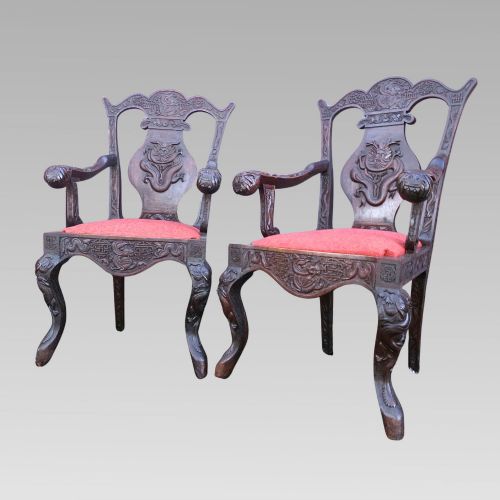


Carved Hardwood Desk
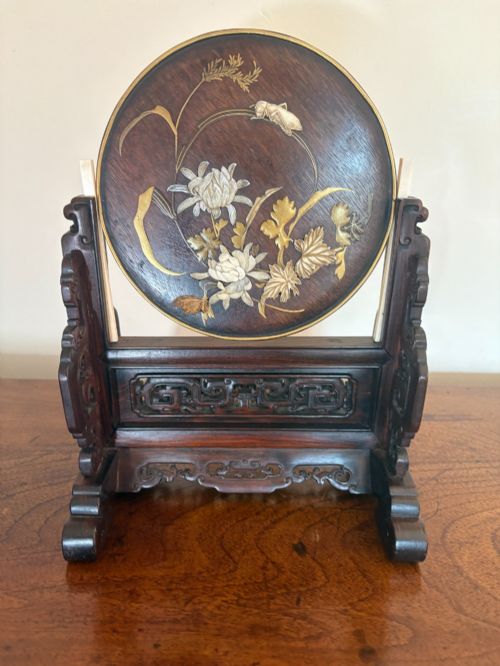
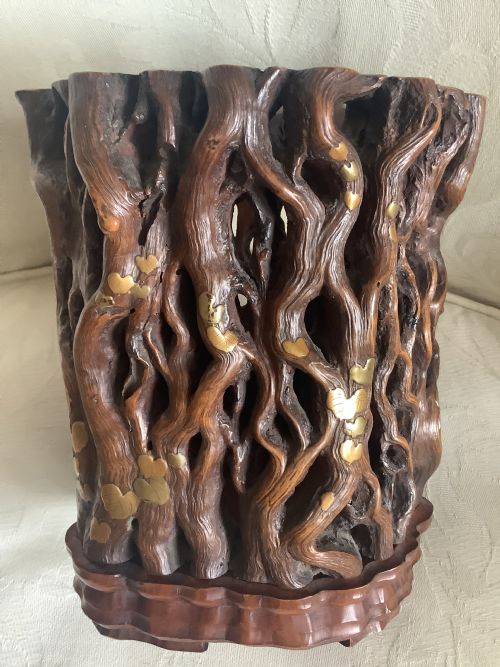
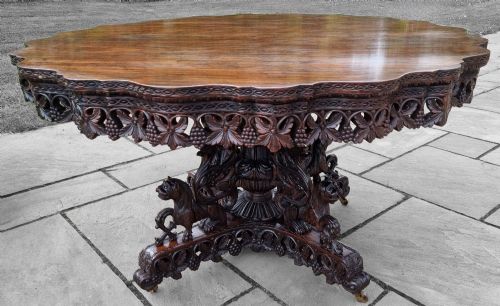
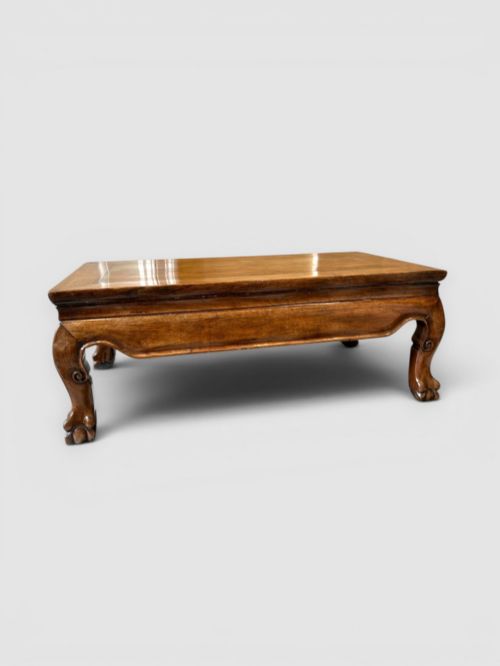
A carved hardwood desk brings dense grain, deep relief carving and colonial or export craftsmanship straight into a study.
Carved Hardwood Desk
A carved hardwood desk represents substantial writing and study furniture produced during the eighteenth, nineteenth and early twentieth centuries. These pieces originate primarily from Chinese export workshops and Anglo-Indian colonial centres, reflecting global trade routes and cross-cultural design influences.
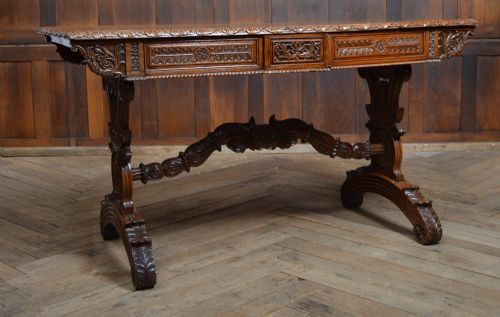
The desks appearing here encompass partners desks, bureau desks, writing tables and cylinder desks constructed from dense timber species. Such forms serve practical workspace functions while displaying intricate sculptural detail across pedestals, panels and friezes.
Buyers encountering this phrase find examples ranging from Victorian Anglo-Indian padauk pedestal desks to nineteenth-century Chinese export writing tables. These forms combine utilitarian surfaces with deep, hand-chiseled botanical and figurative ornamentation.
How they were made
Construction relies upon heavy tropical hardwoods such as padauk, teak, rosewood, ebony and elm, selected for structural rigidity and fine grain. Artisans join structural elements using traditional joinery methods suited to dense timbers that resist standard fasteners.
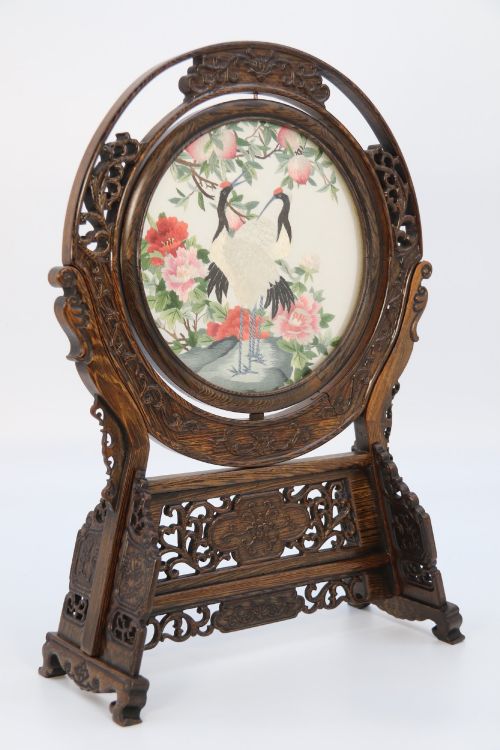
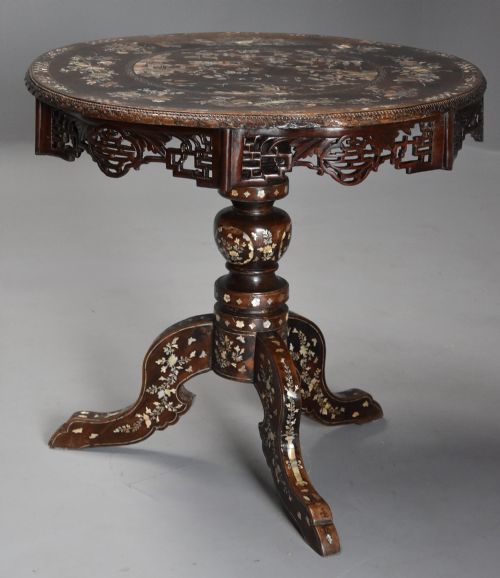
Surface ornament involves meticulous hand-carving in high and low relief, occasionally supplemented by brass mounts, mixed metal applications or mother-of-pearl inlay. These decorative elements integrate directly into the structural framework of the desk rather than acting as applied surface additions.
The site records desks spanning the Victorian, Edwardian and Qing Dynasty periods alongside Anglo-Indian and Chinese export styles.
What varies in quality
Quality separates along the crispness and depth of the chisel work, where superior examples display three-dimensional undercut foliage, dragons or figures without splintering the dense grain. Lesser pieces rely on shallow, repetitive stamping or mechanical smoothing.
The selection of timber grain and the integrity of the joinery across heavy pedestals and writing surfaces dictate the standing of a piece. Desks retaining original brass hardware, unblemished mother-of-pearl inlay and stable structural frames occupy the upper tier of the range.
The Carved Hardwood Desk Glossary
- Padauk
- A heavy, durable tropical hardwood with a reddish-brown colour that darkens with age. It provides a stable base for deep relief carving on colonial furniture.
- Partners desk
- A large double-sided writing table designed for two people to work opposite one another, typically fitted with drawers and cupboards on both faces.
- Mother of pearl inlay
- Iridescent inner shell material set into precise channels carved within the timber surface. It creates contrasting geometric or floral patterns.
- Chinese Export
- Furniture produced in China specifically for Western markets during the nineteenth and early twentieth centuries, blending local techniques with European forms.
- Anglo-Indian
- Furniture made in India during the British colonial period by local craftsmen using traditional regional carving styles on European furniture shapes.
Carved Hardwood Desk: Frequently Asked Questions
How do I care for a carved hardwood desk?
Maintain stable humidity levels in the room to prevent the dense tropical timber and intricate carvings from splitting. Dust regularly with a soft, dry cloth and apply occasional natural wax to preserve the grain.
Avoid placing the desk near direct heat sources or strong sunlight, which can fade the finish and dry out the wood. Lift the desk entirely when moving it rather than dragging it across the floor to protect the structural joinery.
Where were these desks originally used?
These desks served administrators, merchants and scholars within colonial administrative offices, treaty ports and private residences across Asia and Britain. They functioned as primary workspaces for correspondence, ledger keeping and administrative duties.
Many examples travelled back to Britain and Europe via maritime trade routes as personal property of returning officials or commercial export goods. Their robust construction suited both formal home libraries and busy commercial offices.
What is the difference between Chinese export and Anglo-Indian desks?
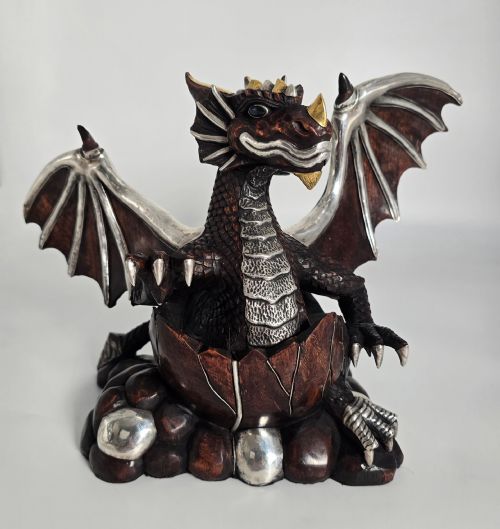
Chinese export desks generally feature characteristic motifs such as dragons, prunus blossom and geometric fretwork executed in dense hardwoods like padauk or rosewood. They often incorporate traditional Chinese joinery adapted to Western furniture forms.
Anglo-Indian desks typically display dense, continuous foliate carving, acanthus scrolls and elephant or mythological motifs associated with workshops in nineteenth-century India. They utilise regional timbers including teak and padauk within classic pedestal or bureau configurations.
Can I use a partners desk in a modern room?
A partners desk provides generous surface area and dual-sided storage capacity, making it a functional centrepiece for a spacious study or home office. Its freestanding nature allows it to sit away from walls as a central room feature.
Pair the desk with neutral surrounding decor to let the dense carving and dark hardwood tones stand out. The double-sided configuration offers practical drawer and cupboard access from both ends of the piece.