


Hand Carved Writing Table
These hand carved writing table pieces combine practical workspace with rich regional craftsmanship, offering characterful focal points for traditional and eclectic studies alike.
Hand Carved Writing Table
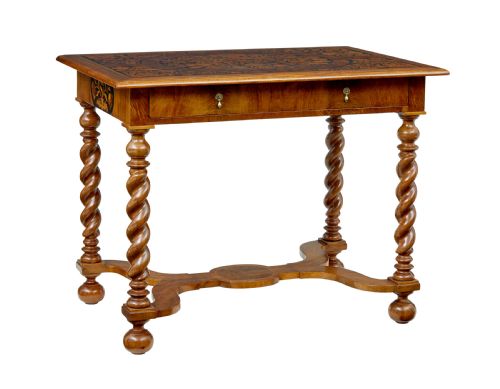
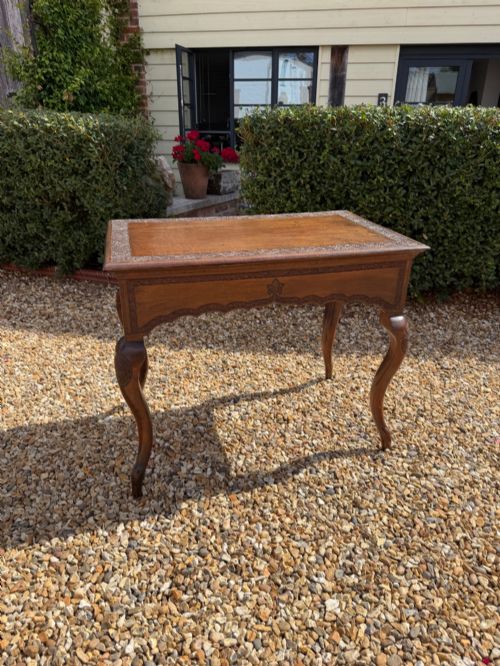
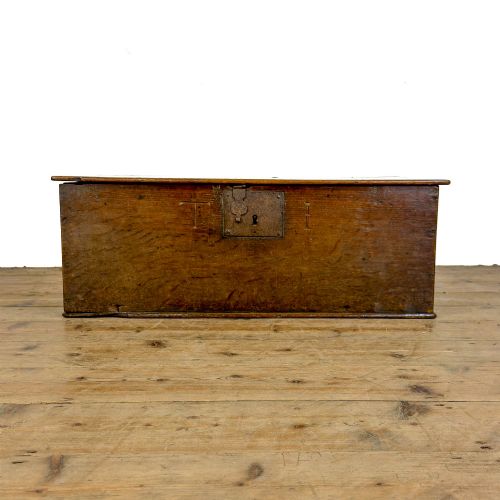
A hand carved writing table brings together functional surface space and intricate regional ornamentation across diverse periods from the eighteenth century to the twentieth century. When exploring this search phrase, buyers encounter forms ranging from pedestal desks and partners desks to console tables, centre tables, and bible boxes.
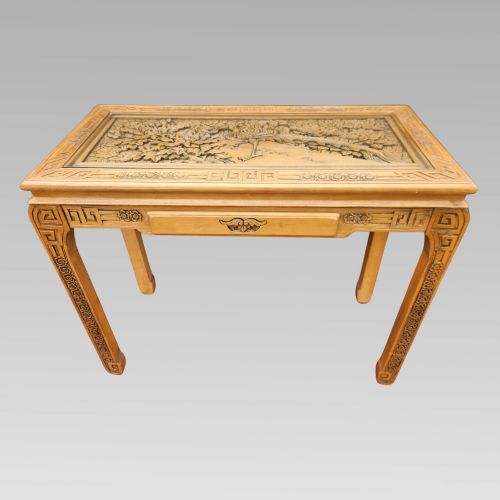
The pieces listed on this page originate from distinct stylistic traditions, including Anglo-Indian, Chinese Export, Georgian, Anglo-Indian Colonial, Meiji Japanese, Chinoiserie, and Victorian designs. Hardwood and oak provide the structural foundation for these varied forms, often complemented by intricate surface decoration.
Most examples originate from the nineteenth century, alongside eighteenth-century pieces and later twentieth-century interpretations. Buyers frequently meet regional variations such as Kashmiri walnut tables and Chinese hardwood dragon centre tables alongside traditional European forms.
Materials and construction
Hardwood, oak, walnut, camphorwood, teak, padauk, and mahogany form the primary timbers utilised in these tables and desks. Artisans shaped these dense woods by hand to support deep relief carving, turned supports, and integrated drawer structures.
Metal fittings in iron and brass appear alongside glass elements and hand-dyed brown leather writing surfaces. Traditional joinery secures the internal drawers and friezes found within bible boxes and pedestals, ensuring structural stability beneath ornamental surfaces.
Listings feature pieces spanning the eighteenth, nineteenth, and twentieth centuries, constructed from hardwoods, oak, walnut, teak, and camphorwood.
Judging quality and execution
The depth, crispness, and continuity of the hand carving separate simpler items from superior examples. Skilled execution ensures that floral, dragon, or geometric motifs remain sharp and well-defined across walnut, oak, and exotic hardwoods.
Liberty
The Hand Carved Writing Table Glossary
- Partners desk
- A large double-sided desk designed for two people to work opposite one another, featuring drawers and cupboards accessible from both sides. These heavy pieces often stand on pedestals.
- Bible box
- A small sloped or flat-topped wooden chest traditionally used for storing scriptures and documents, frequently resting on a table or desk surface. Examples often feature carved friezes and internal compartments.
- Padauk
- A heavy, durable tropical hardwood prized for its rich reddish-brown colour and stability in furniture construction. It accepts detailed hand carving particularly well.
- Chinoiserie
- European artistic style reflecting Chinese motifs and decorative techniques, popular in furniture and interior design during various historic periods. It often appears on japanned or carved hardwood surfaces.
- Frieze
- The middle horizontal band of a piece of furniture, situated beneath the top surface, frequently ornamented with carved panels or mouldings.
Hand Carved Writing Table: Frequently Asked Questions
How do I date a carved desk?
Dating relies on identifying stylistic markers, construction methods, and timber types associated with specific periods like the eighteenth or nineteenth century. Examining joinery and hardware provides further chronological clues.
Regional influences, such as Meiji Japanese or Anglo-Indian Colonial motifs, also help place the piece within a specific historical era.
Where were these tables made?
These tables originate from diverse global workshops, reflecting British domestic cabinetmaking as well as international trade and colonial production. Regions represented include Britain, India, China, and Japan.
Export workshops often adapted traditional European forms to incorporate local carving techniques and native timbers.
How do I care for antique hardwood?
Maintain hardwood surfaces by keeping them away from direct heat sources and dramatic humidity fluctuations. Regular dusting with a soft, dry cloth preserves the finish.
Avoid harsh chemical cleaners, utilising traditional beeswax sparingly to nourish the timber grain without building up residue.