
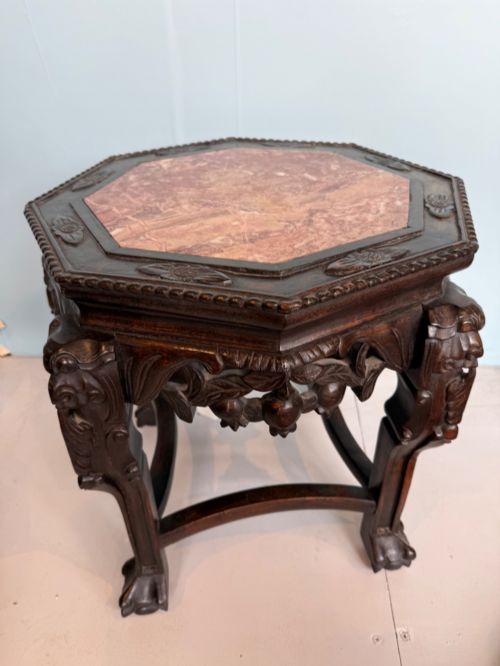


Oriental Export Furniture
Oriental export furniture comprises hybrid furnishings made in Asia for Western markets, prized for dense hardwoods and intricate lacquerwork.
Oriental Export Furniture
Oriental export furniture brings together decorative forms produced across Asia specifically for Western clientele. Buyers exploring this category encounter pieces dating from the eighteenth century through to the early twentieth century.
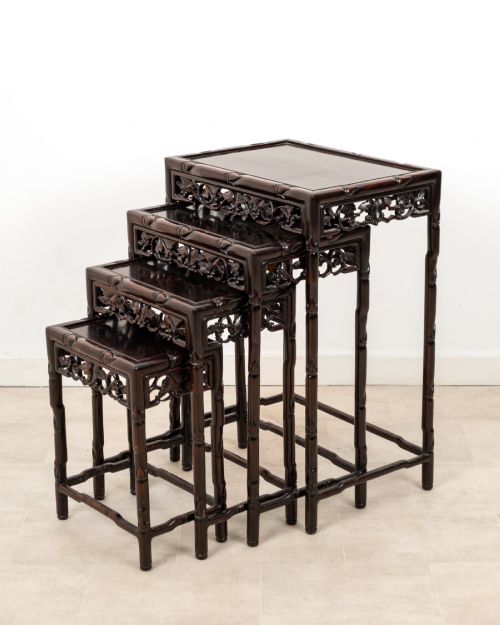
The selection on this page centres on practical and display forms. Nests of tables, occasional tables, cabinets, and plant stands appear frequently alongside seating and desks.
Origins span Chinese export workshops, Japanese Meiji period production, and Anglo-Indian output. These regional traditions merge traditional local craftsmanship with forms suited to European and British interiors.
How oriental export furniture was made
Construction relies heavily on dense tropical hardwoods, including rosewood, padouk, and hongmu, which provide robust framing and weighty foundations. Workshops also utilise ebonised wood and general cabinet timber.
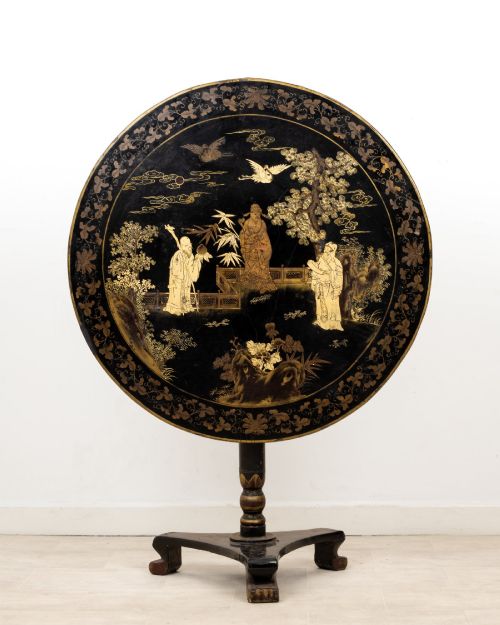
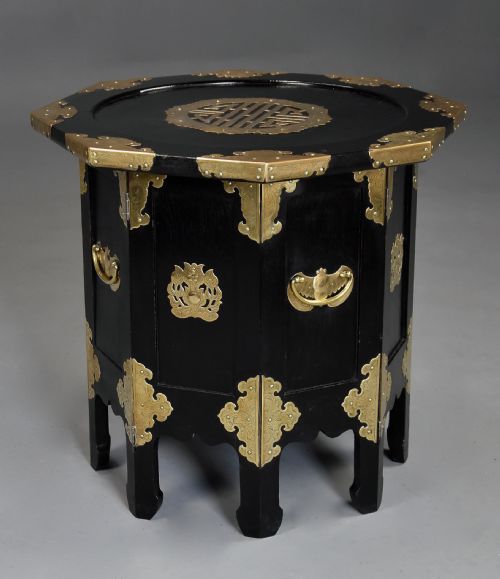
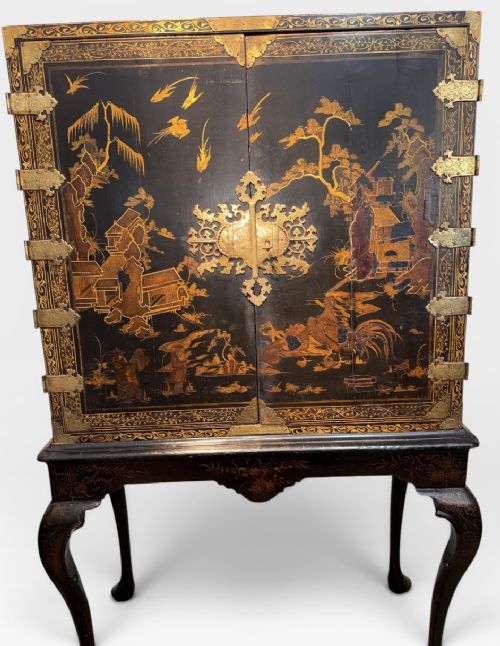
Surface decoration frequently involves layered lacquer, enhanced with gold leaf and gilded details. Marble inserts appear on table and stand tops, while brass fittings add structural and decorative contrast.
Certain tables hide their utility behind fierce wooden dragons gripping marble tops with stern determination.
What varies in quality
The refinement of the carving separates standard items from exceptional examples. Deeper, crisper relief work on dragons, floral motifs, and geometric borders demonstrates superior workshop skill.
The preservation of applied finishes dictates overall calibre. Intact lacquer with sharp gilding and firmly seated marble inserts represent the upper tier of execution.
The Oriental Export Furniture Glossary
- Hongmu
- A dense, dark tropical hardwood used traditionally in Chinese furniture construction. It provides exceptional weight and durability.
- Shodana
- A Japanese display cabinet featuring asymmetrical shelving and small cupboards. These pieces showcase intricate woodwork and joinery.
- Jardiniere stand
- A tall pedestal or table designed specifically to hold a heavy plant pot or flower bowl. They often feature inset marble tops to protect against moisture.
- Coffer
- A large chest or box utilised for storage. Export examples often incorporate elaborate lacquer and metalwork.
- Chinoiserie
- A European decorative style reflecting Chinese artistic influences. It appears frequently in lacquered and painted furnishings.
Oriental Export Furniture: Frequently Asked Questions
What is oriental export furniture?
These items are decorative furnishings manufactured in Asia during the eighteenth, nineteenth, and early twentieth centuries for export to Western buyers.
They combine traditional Eastern materials and motifs with forms designed to fit European homes.
How do I date oriental export pieces?
Dating relies on stylistic markers, construction methods, and material choices recorded across different eras. Eighteenth-century pieces often display restrained lines, while Victorian and Edwardian examples utilise heavier carved details.
Changes in lacquer techniques and hardware styles also help establish the approximate period of manufacture.
Where were these pieces made?
Workshops in China and Japan produced the majority of these goods, alongside items originating from Anglo-Indian centres.
Coastal trading ports served as the primary departure points for items destined for British and European markets.
How do I care for lacquer furniture?
Preserving lacquered surfaces requires stable indoor humidity and protection from direct sunlight. Dusting should be done gently with a soft, dry cloth.
Avoiding harsh cleaning agents prevents damage to the delicate gold leaf and pigmented finishes.