




Japanese Bronze Bird Vase
A Japanese bronze bird vase brings sculpted nature into a room, rendered in patinated metal through Meiji period artistry.
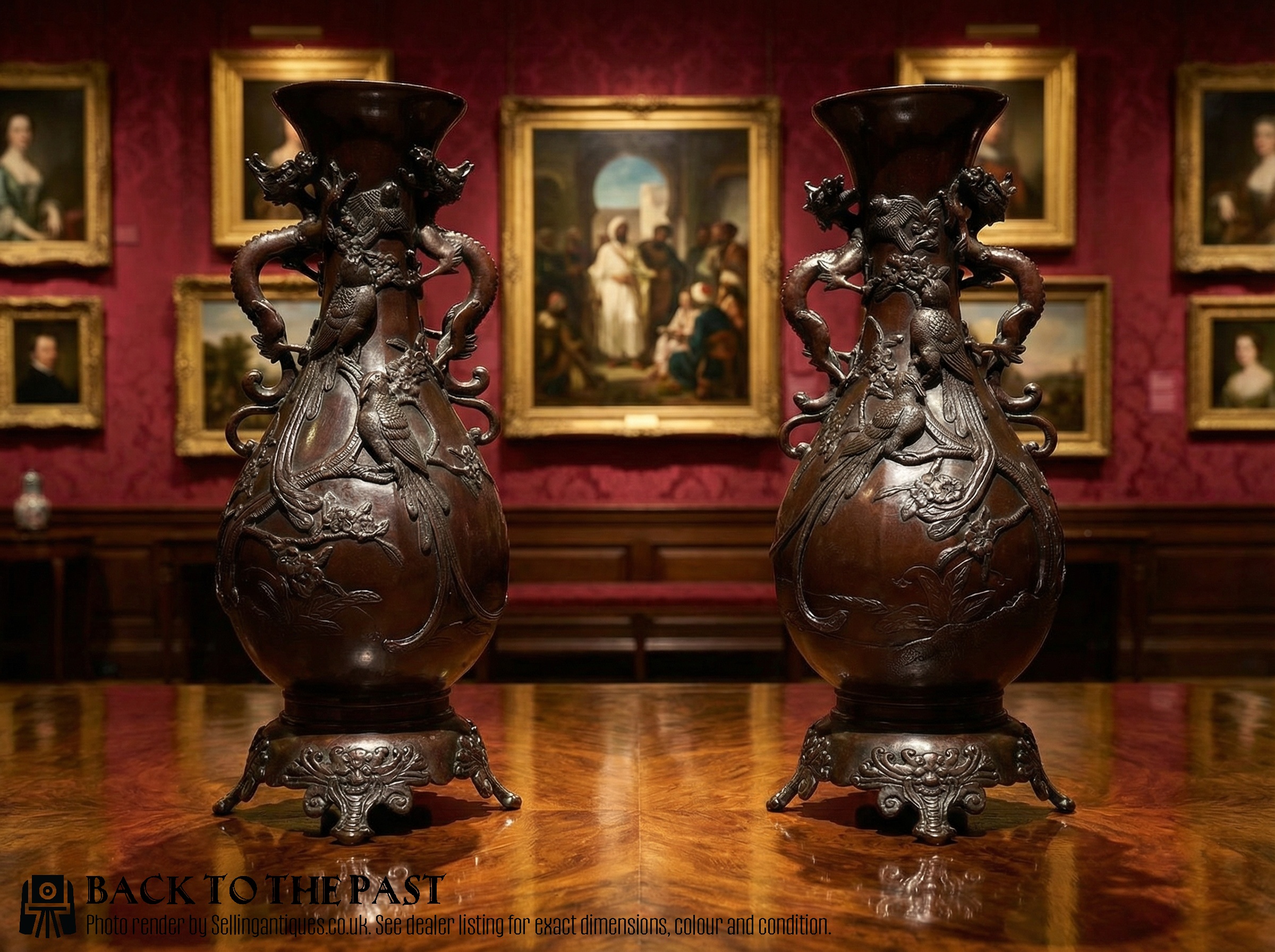
Japanese Bronze Bird Vase
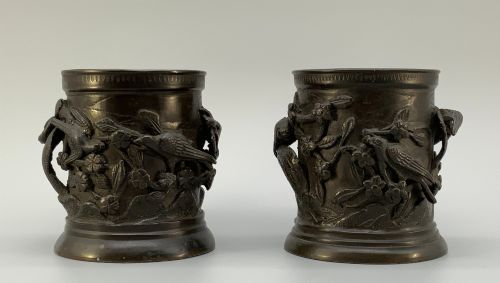
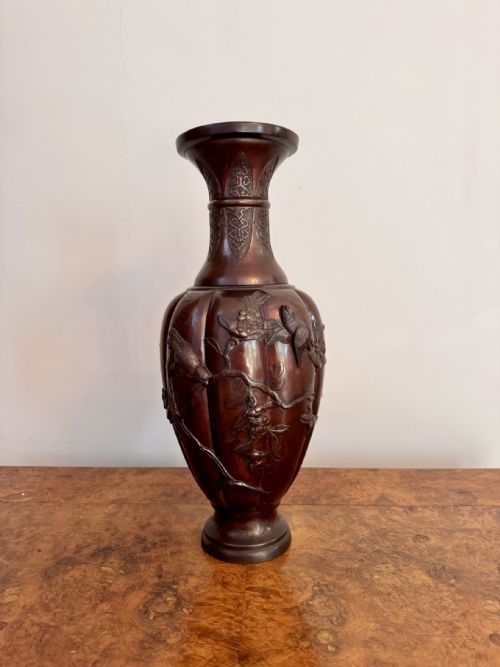
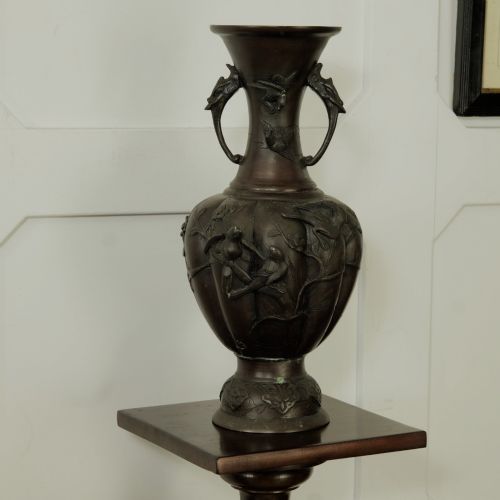
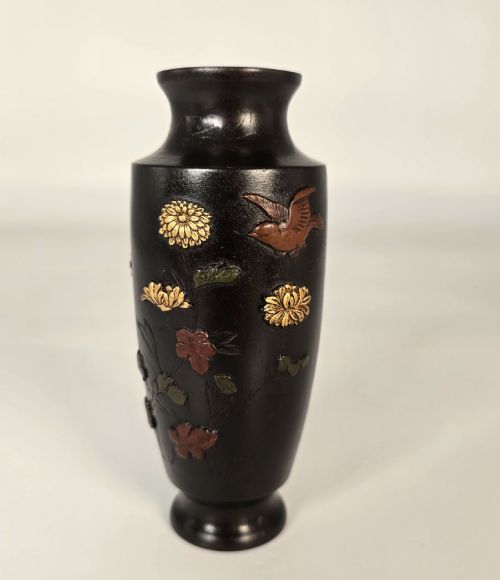
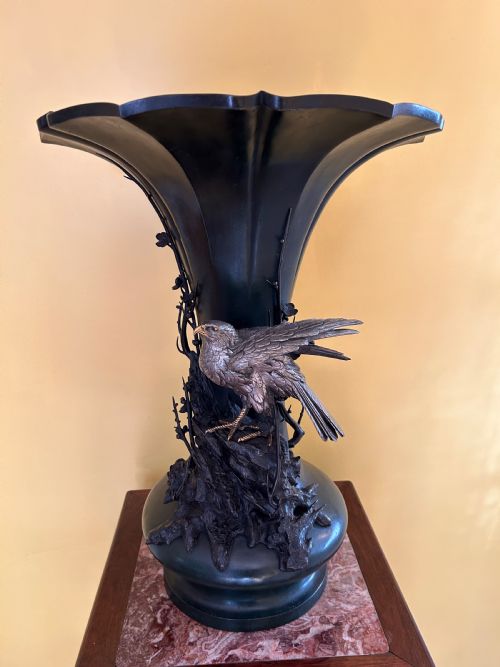
A japanese bronze bird vase is typically encountered from the Meiji period and the nineteenth century, taking the form of baluster urns, stem vases, and decorative vessels. These pieces frequently incorporate birds, blossoms, and raised detail into their cast metal surfaces.
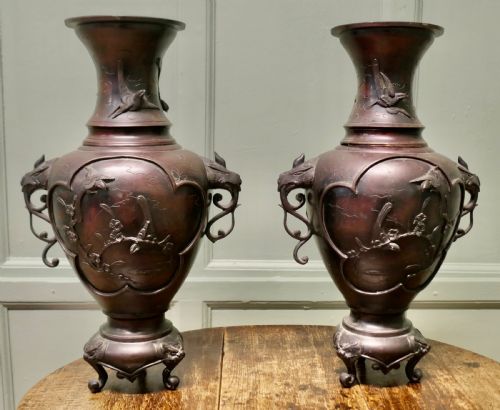
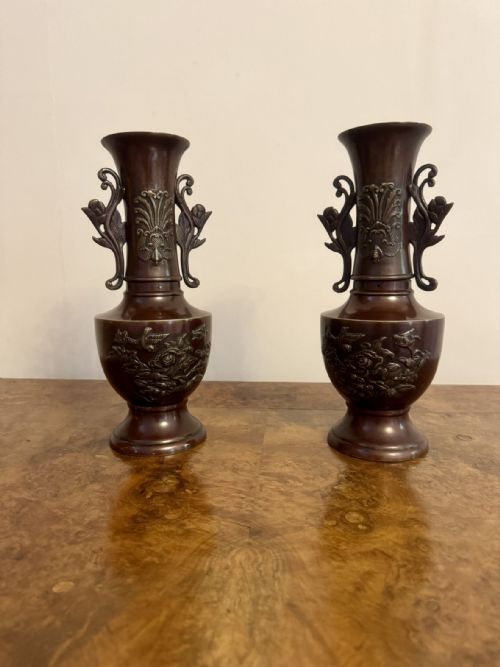
Buyers will find individual vessels and matched pairs, ranging from modest fifteen-centimetre heights up to large presentation pieces. The forms span standard decorative vases, jardinières, and twin-handle vessels created during the late nineteenth and early twentieth centuries.
How they were made
These vessels rely on bronze, patinated bronze, and copper cast into forms, then enriched with mixed metal elements, brass, and gold inlay. Artisans applied chemical patination to achieve deep surface tones across the metal.
Raised detail and applied decoration depict natural subjects such as birds and floral motifs. Some examples incorporate enamel work and cloisonné techniques alongside traditional metal casting.
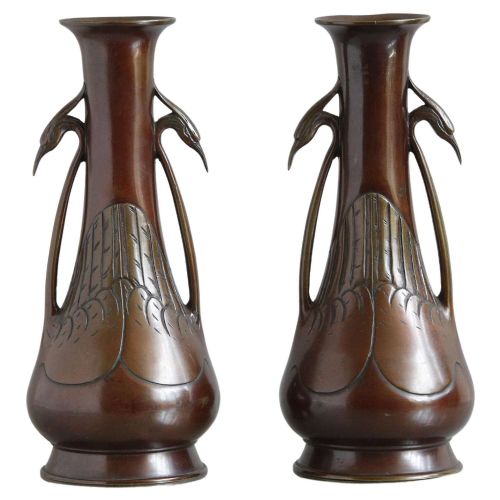
Some persistent egrets manage to hold up entire vases by their handles without a single complaint.
What varies in quality
The standard of a japanese bronze bird vase rests on the crispness of the cast relief and the depth of the patination. Finer examples display intricate mixed metal inlay and sharply defined avian and floral subjects.
Larger presentation pieces and matched pairs generally demonstrate superior command of balance and proportion in the handles and body. The integration of applied elements distinguishes standard production from exceptional work.
The Japanese Bronze Bird Vase Glossary
- Meiji Period
- The era in Japanese history spanning from 1868 to 1912, associated with extensive production of decorative bronzes for export. This period yielded the vast majority of pieces found on the market today.
- Patinated Bronze
- Bronze treated with chemical solutions to produce controlled surface colouration and ageing effects. This technique creates the deep brown, black, or green tones seen on period vessels.
- Mixed Metal
- A decorative method combining copper, brass, bronze, and precious metal highlights within a single casting. It allows artisans to introduce contrasting metallic colours to birds and foliage.
- Cloisonné
- An enamelling technique where metal wire forms compartments on the bronze body to hold coloured paste. These sections are fired and polished to create smooth decorative patterns.
Japanese Bronze Bird Vase: Frequently Asked Questions
How do I identify a Meiji period vase?
Look for the characteristic use of patinated bronze, mixed metal details, and naturalistic bird or floral motifs typical of late nineteenth-century Japanese metalwork.
Period markers also include the specific casting weights and the integration of handles shaped as egrets or botanical elements.
Were these vases made as pairs?
Many Japanese bronze vessels were produced as balanced pairs for decorative display on mantelpieces or cabinets.
While single vases appear frequently, matched pairs often indicate presentation pieces or higher-status export goods.
How should I clean a bronze vase?
Dust the surface gently with a dry, soft cloth to protect the original patination and any delicate gold inlay.
Avoid chemical polishes or water, which can strip away the historical patina built up over the centuries.
What subjects besides birds appear on these?
Beyond avian decoration, these pieces frequently incorporate blossom, floral sprays, and raised foliage across the body.
Some larger urns and jardinieres extend these natural scenes to include elephants and complex landscape elements.