


Japanese Brass Dish
A japanese brass dish brings intricate Meiji metalwork and enamels into a room, offering both bold scale and quiet detail for a collector.
Japanese Brass Dish
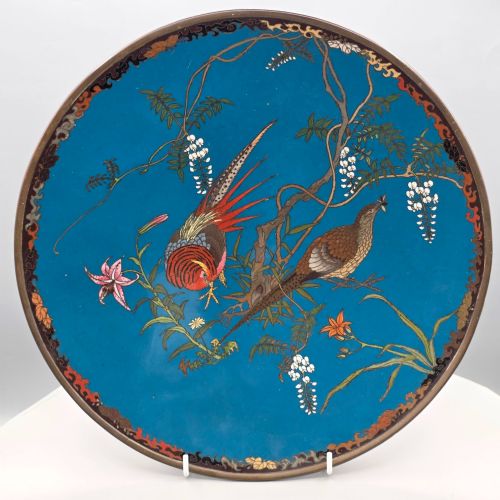
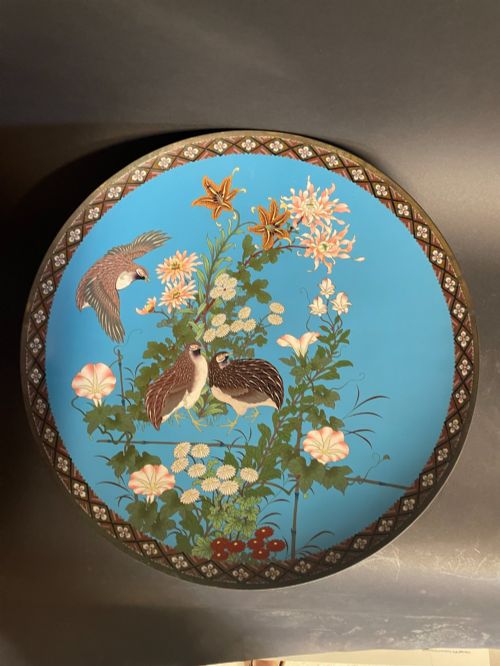
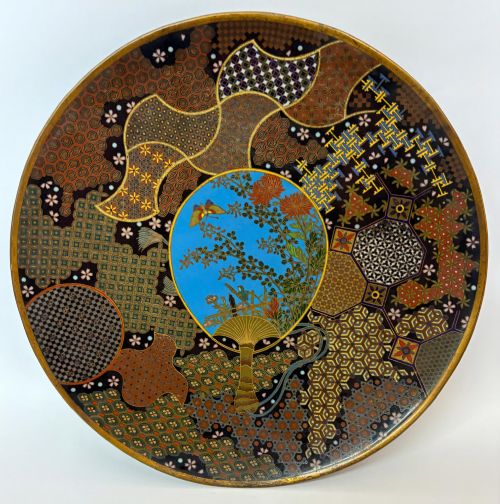
A japanese brass dish encompasses large decorative chargers, plates, trays, and bowls created during the 19th century. Buyers encounter substantial chargers adorned with birds, dragons, and landscapes alongside smaller cabinet plates.
Most pieces date from the Meiji period, spanning the late Victorian decades, while earlier examples stretch back to the Edo period. These vessels range from intimate dishes to massive chargers measuring fifty centimetres across.
Materials and construction
The construction relies on brass, copper, and bronze combined with cloisonne enamel and gold inlay. Artisans soldered thin metal wires onto the metal base to form compartments for coloured enamel pastes.
Mixed-metal techniques integrate distinct alloys on a single surface, as seen in Komai style pieces depicting figures and mythical creatures. Subsequent firing and polishing secure the glass enamels flush with the metal framework.
Listings span the 1860s through the 1900s, encompassing both the Edo and Meiji periods alongside Victorian cataloguing.
Factors of distinction
Quality rests upon the precision of the wirework and the complexity of the imagery, such as lifelike fauna or detailed landscapes featuring Mount Fuji. Masterpieces display finer detail in subjects like koi, iris, and phoenix motifs.
The depth of the enamel work and the integration of mixed metals distinguish standard production from exceptional studio outputs. Scale also dictates importance, with massive chargers commanding particular attention.
The Japanese Brass Dish Glossary
- Cloisonne enamel
- A technique where thin metal wires are soldered to a base to create cells filled with enamel paste. This method defines the primary surface decoration of many chargers.
- Meiji Period
- The era in Japanese history spanning from 1868 to 1912. Most decorative chargers on this page originate from these decades.
- Charger
- A large decorative plate intended for display rather than dining. These form the larger end of the available scale.
- Komai Style
- Metalwork characterised by dense gold inlay and intricate mixed-metal detailing. It frequently depicts mythological figures and deities.
- Edo Period
- The period preceding the Meiji era, running from 1603 to 1868. Pieces from this time represent the earlier end of the timeline here.
Japanese Brass Dish: Frequently Asked Questions
How do I display a large charger?
Large chargers require robust wall hangers or sturdy plate stands designed to support significant weight. Their scale makes them natural focal points in a room.
Ensure the mounting hardware matches the metal base of the dish to prevent any slipping or strain on the rim.
What subjects appear on these dishes?
Common subjects include birds, dragons, iris flowers, landscapes, and leaping koi. Mythological figures such as Benzaiten also appear in mixed-metal work.
Animals and nature motifs dominate the Meiji period aesthetic found across these pieces.
How do I date a piece?
Dating relies on stylistic markers, historical periods like Meiji or Edo, and construction methods. The complexity of the wirework often shifts between decades.
Reference markers like Victorian era pairings help narrow down the period of importation and display.
Are these dishes meant for food?
These pieces serve as decorative chargers, trays, and bowls rather than tableware. Their enamel and wire surfaces are unsuited for regular dining use.
Display and careful dusting preserve the integrity of the metal and glass paste.