




Japanese Blue White Vase
A Japanese blue white vase brings centuries of kiln craft and painted cobalt into a room.
Japanese Blue White Vase
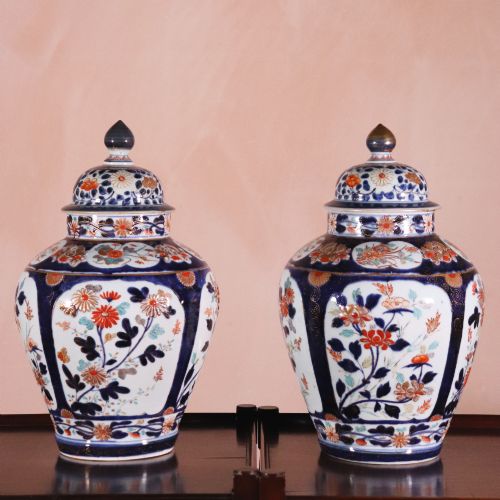
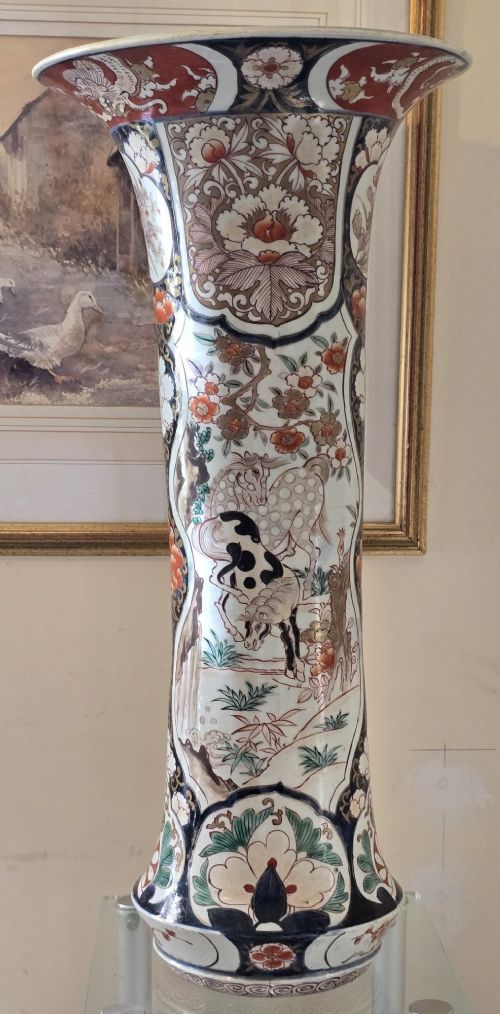
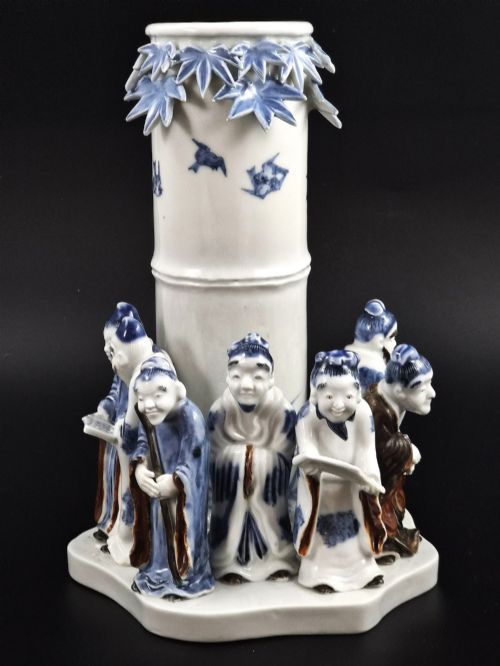
When you search for a japanese blue white vase, you are looking at vessels made across the Edo and Meiji periods, stretching back to the seventeenth century and onward through the nineteenth and twentieth centuries. These pieces appear as standard baluster shapes, lidded temple jars, bottle forms, and monumental floor pieces.
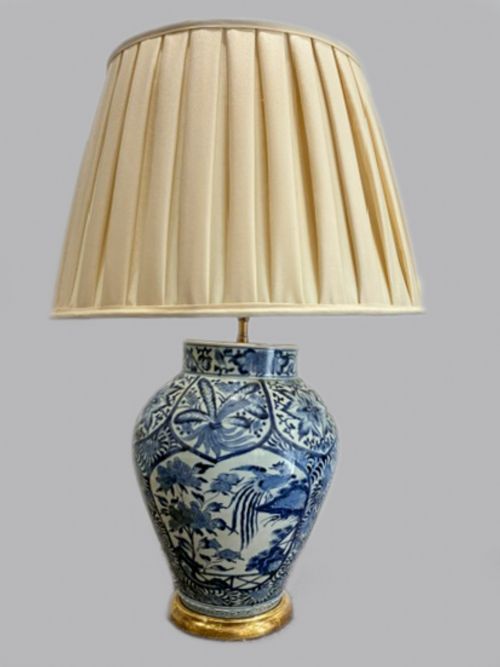
The versions most commonly met on this page span the seventeenth, eighteenth, and nineteenth centuries, often showing Arita porcelain or Imari palettes. Many examples arrive in pairs, while others have been adapted into table lamps or stick stands over time.
How They Were Made
Potters shaped these vessels from porcelain clay, applying cobalt underglaze pigments by hand before firing the piece at high temperatures to achieve the characteristic blue and white contrast. Additional decorative layers sometimes include enamel colours, lacquer panels, or gold leaf accents applied over the glaze.
Mounts and conversions occasionally incorporate brass elements or wood components, particularly when vessels are adapted into lamps.
Japanese Blue White Vase Retail Price Guide 2026
Typical asking prices for japanese blue white vase among the pieces listed under this phrase on Sellingantiques today, from the lower quarter to the upper quarter. They describe what is for sale here now, not the wider market.
Several seventeenth century vessels spent decades moonlighting as British table lamps.
What Varies in Quality
Quality rests in the crispness of the cobalt painting and the precision of the porcelain body, where controlled kiln temperatures produce a clear glaze without distortion. Weight, scale, and the intricacy of hand-painted motifs separate standard production pieces from monumental or master-signed works.
The coherence of design across pairs, along with the survival of original lids, determines the standing of an individual vessel.
Makuzu Kozan·Fukagawa
The Japanese Blue White Vase Glossary
- Arita
- The Japanese town where porcelain production began in the early seventeenth century, known for producing durable and refined white clay bodies. Pieces from this region form the backbone of early blue and white exports.
- Imari
- A style of Japanese export porcelain named after the port from which the wares were shipped to Europe. It traditionally combines underglaze blue with iron red, gold, and other enamel colours.
- Baluster
- A vase form characterised by a rounded body that tapers toward the base and swells near the centre. This silhouette was widely utilised by seventeenth and eighteenth century potters.
- Meiji Period
- The era in Japanese history lasting from 1868 to 1912, marked by increased international trade and large-scale decorative arts production. Many substantial vases and floor urns date from this period.
- Edo Period
- The historical period spanning from 1603 to 1867, defined by relative domestic peace and the flourishing of regional kilns. Early blue and white trumpet beakers and bottles originate here.
Japanese Blue White Vase: Frequently Asked Questions
How are these vases cleaned?
Dust the porcelain gently with a dry, soft cloth to prevent surface accumulation. Avoid chemical cleaners and submerged washing, particularly on pieces with enamel or gold leaf details.
For converted lamps, keep moisture entirely away from the electrical fittings and brass components during maintenance.
Can these vases hold water?
Many antique examples were created primarily for display rather than utility, and some feature historical conversion holes or hairline drying from the kiln. It is safer to use them dry or with a discreet internal liner.
Checking the interior base helps determine whether a vessel remains sealed against moisture.
How do I date a piece?
Dating relies on stylistic clues, potting weight, and the character of the cobalt blue under the glaze. Early seventeenth and eighteenth century pieces often display coarser potting or distinct Arita forms, while nineteenth century examples show different scale and palette combinations.
Base marks, where present, can also point toward specific kiln periods or workshop traditions.
Where should I place a large vase?
Monumental floor vases and heavy temple jars require stable surfaces away from high-traffic walkways to prevent accidental tipping. Pairing them on low tables or flanking a fireplace creates visual balance in a room.
Consider natural light levels, as bright windows enhance the depth of the cobalt underglaze.