








Japanese Arita Ware Chargers
Japanese arita ware chargers are robust porcelain plates and dishes painted in rich cobalt and enamel, bringing centuries of kiln craft to your wall or table.
Japanese Arita Ware Chargers
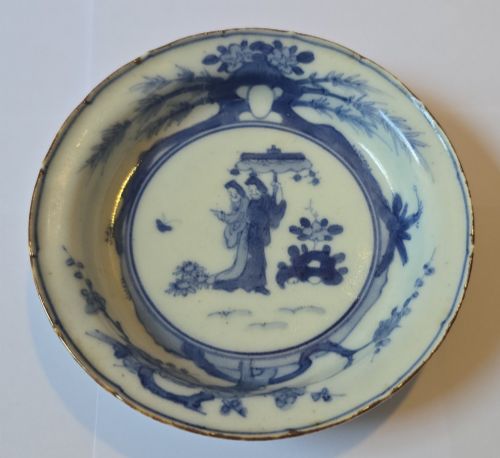
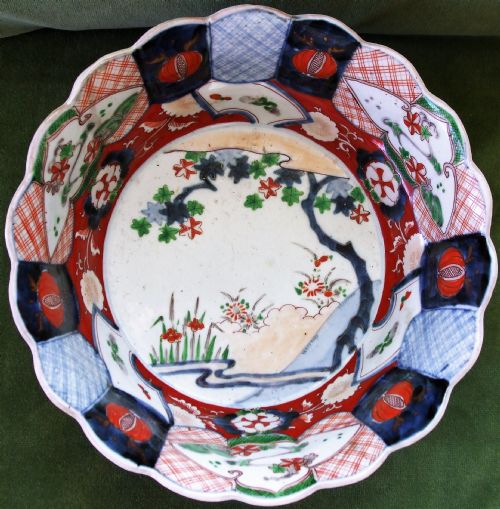
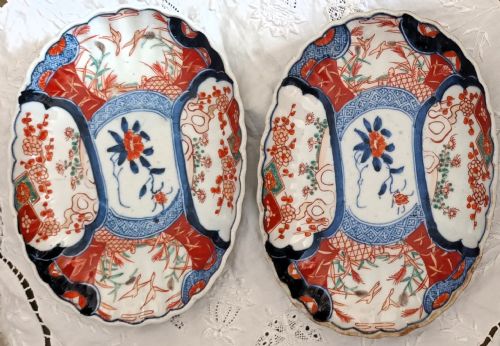
Japanese arita ware chargers appear primarily in robust forms such as large circular plates, shallow dishes, and scalloped bowls fashioned for display or export. These objects span several centuries, with pieces emerging from the Edo period and the Meiji period alongside later twentieth-century iterations.
The assortment on this page leans heavily toward Japanese Imari styles alongside blue and white export porcelain. Buyers will encounter hexagonal, square, fan-shaped, and circular geometries decorated with floral and bird motifs or scrolling foliate borders.
Materials and Techniques
Potters shaped fine porcelain clay into large plates and bowls before applying cobalt underglaze for foundational blue patterns. Kiln workers then added enamel glazes and gold leaf to enrich the surface design.
Many items received hand-painted details depicting cranes, flowers, and birds across wide expanses of porcelain. Artisans utilised contrasting colours, including iron red and cobalt blue, fixed by high-temperature firing.
Japanese Arita Ware Chargers Retail Price Guide 2026
Typical asking prices for japanese arita ware chargers among the pieces listed under this phrase on Sellingantiques today, from the lower quarter to the upper quarter. They describe what is for sale here now, not the wider market.
Some seventeenth-century plates arrived in Europe packed so tightly aboard merchant ships that entire cargoes survived centuries resting on ocean floors.
Assessing Quality
Quality rests upon the crispness of the hand-painted brushwork and the vibrancy of the cobalt underglaze and enamel glazes. Superior pieces display precise control over scrolling foliate borders and intricate bird or floral motifs without blurring.
The depth of the porcelain body and the careful application of gold leaf differentiate standard production from finer output. Form also plays a role, with unusual shapes like fan-cut edges or hexagonal rims demanding greater skill from the potter.
The Japanese Arita Ware Chargers Glossary
- Arita
- A Japanese town and the historic centre of porcelain production in Hizen province. Kilns here produced substantial quantities of domestic and export ware.
- Imari
- A style of Japanese export porcelain characterised by a palette of cobalt blue, iron red, and gold. Items were shipped from the port of Imari to European markets.
- Edo Period
- The historical epoch in Japan lasting from 1603 to 1867. Ceramics from this era often display restrained blue and white designs or early Imari polychrome schemes.
- Meiji Period
- The era spanning from 1868 to 1912 in Japan. Porcelain from this time frequently exhibits bold decorative schemes and intricate enamel work.
- Cobalt Underglaze
- A blue pigment applied to raw porcelain clay before glazing and firing. This technique creates durable designs that resist fading over centuries.
Japanese Arita Ware Chargers: Frequently Asked Questions
How were japanese arita ware chargers used?
These large ceramic pieces served primarily as decorative plates for display on tables, sideboards, or walls rather than for daily dining.
Export vessels shipped abroad also functioned as prestigious status symbols in European households during the seventeenth and eighteenth centuries.
How do I hang a heavy charger?
Displaying a large porcelain dish securely requires a coated wire wall hanger designed to distribute weight evenly across the rim.
Ensure the fixing is anchored directly into wall studs or uses appropriate masonry plugs to support the substantial weight safely.
How do I distinguish edo period pieces?
Edo period items typically exhibit characteristic potting traits, subtle glaze variations, and hand-painted cobalt or Aka-e enamel patterns unique to seventeenth- and eighteenth-century kilns.
Reference marks and stylistic traits help separate these earlier wares from Meiji period or twentieth-century revivals.
Can I use these chargers for food?
Antique porcelain can technically hold food, but historic glazes and enamel pigments are generally unsuited for modern culinary use.
Displaying these chargers preserves their painted surfaces and fragile enamel or gold leaf details from acidic foods and washing.