

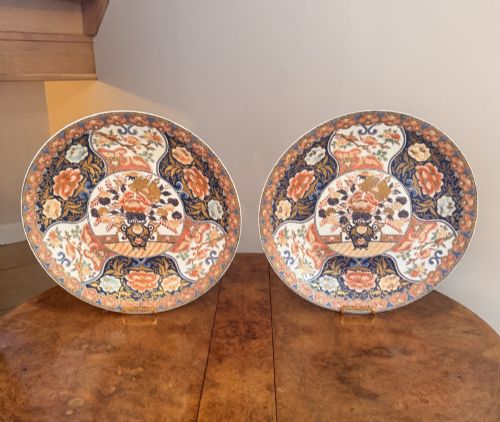

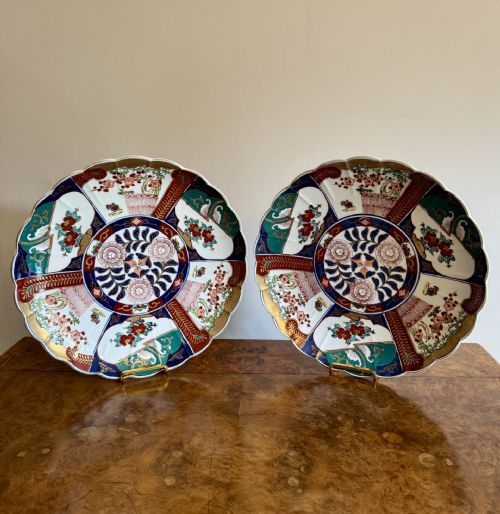
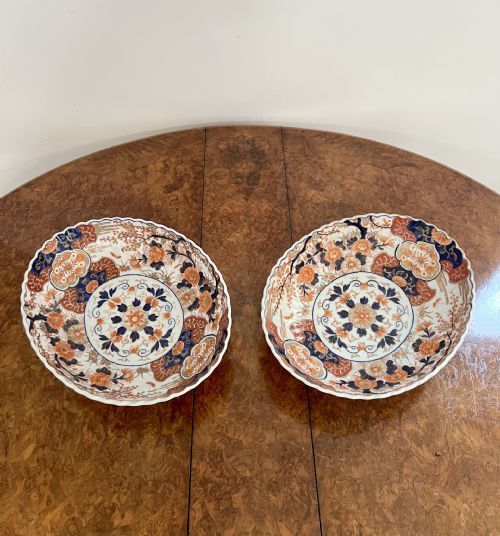


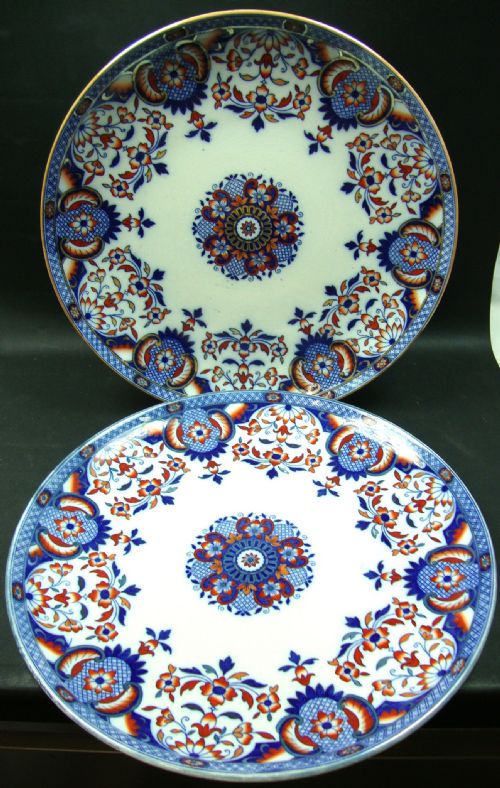


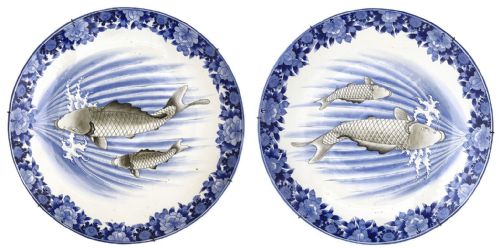
Large Porcelain Chargers Pair
A large porcelain chargers pair offers striking wall or table display, bringing historic ceramic artistry directly into your home.
Large Porcelain Chargers Pair
A large porcelain chargers pair consists of substantial decorative plates, most frequently encountered in Japanese Imari styles from around 1900, alongside Victorian and later English productions. These sizeable ceramics function primarily as display pieces rather than tableware, commanding attention on walls, sideboards, or dedicated stands.
The selection here encompasses items from the nineteenth century through to the mid-twentieth century, capturing diverse aesthetic movements. Buyers encounter round ceramic chargers with traditional Imari coloured decoration, scalloped edge bowls, and blue and white Arita wares.
Japanese export pieces dominate the selection, though English fine porcelain makers such as Mintons and Royal Worcester also appear. Dating ranges from the Victorian era into the 1950s, providing options across distinct historical periods.
Materials and construction
Potters shaped these items from refined porcelain, applying cobalt pigment beneath the glaze for deep blue tones before firing. Artisans then added overglaze enamels, incorporating rich reds and other pigments to create the characteristic palette.
Many examples feature applied gold leaf and gilding, highlighting specific motifs and border details. Kiln techniques varied from traditional blue and white underglaze methods to complex multi-fired Japanese Imari and European decorative schemes.
Large Porcelain Chargers Pair Retail Price Guide 2026
Typical asking prices for large porcelain chargers pair among the pieces listed under this phrase on Sellingantiques today, from the lower quarter to the upper quarter. They describe what is for sale here now, not the wider market.
Listings feature porcelain pieces spanning from the Victorian era and 1800s up to 1950, highlighting Japanese Imari and English fine porcelain.
Assessing quality and execution
The finesse of the hand-painted decoration distinguishes finer examples, where cobalt blue underglaze and overglaze enamels maintain crisp outlines and vibrant depth. Superior pieces display meticulous brushwork across intricate motifs, such as the depiction of the Seven Lucky Gods.
The integrity of the glaze and the preservation of any gilding or gold leaf dictate the visual impact of the surface. Potteries with established reputations, including Mintons and Royal Worcester, demonstrate precise control over ceramic bodies and firing temperatures.
Mintons·Royal Worcester
The Large Porcelain Chargers Pair Glossary
- Charger
- A large decorative plate or platter traditionally used for display rather than for serving food at the table.
- Imari
- A traditional style of Japanese export porcelain featuring a distinctive palette of underglaze cobalt blue, iron red, and gilt.
- Underglaze
- A decoration technique where pigments are applied to the ceramic body before the glaze is fired, protecting the colour beneath a glassy layer.
- Overglaze enamel
- Coloured glass pigments painted onto an already fired and glazed ceramic surface, requiring a subsequent lower-temperature firing.
- Arita
- The Japanese town and surrounding region long renowned as the primary production centre for Japanese porcelain.
- Scalloped edge
- A decorative rim shaped into a series of continuous curves resembling the edge of a scallop shell.
Large Porcelain Chargers Pair: Frequently Asked Questions
How were large porcelain chargers used historically?
These large plates served primarily as decorative centerpieces on sideboards or tables in wealthy households. They demonstrated the owner's taste and appreciation for imported Asian or fine European ceramics.
In many interiors, chargers were mounted on walls or displayed on specialised plate stands rather than used for dining purposes.
How do I hang a large porcelain charger safely?
Hanging heavy ceramic chargers requires proper support hardware designed specifically for heavy plates, utilising coated spring-loaded wire clips that distribute weight evenly.
Avoid adhesives or friction-only hangers that rely on tension alone, ensuring the display bracket secures the entire rim firmly against the wall.
How do I tell Japanese Imari from English Imari style?
Japanese Imari pieces from the Meiji period typically feature dense hand-painted cobalt blue and iron red motifs on a slightly heavier, unrefined foot rim. The paste and glaze characteristics often reflect traditional Arita manufacturing methods.
English makers such as Mintons adapted these aesthetic principles using refined domestic porcelain bodies and standardised nineteenth-century factory backstamps.