
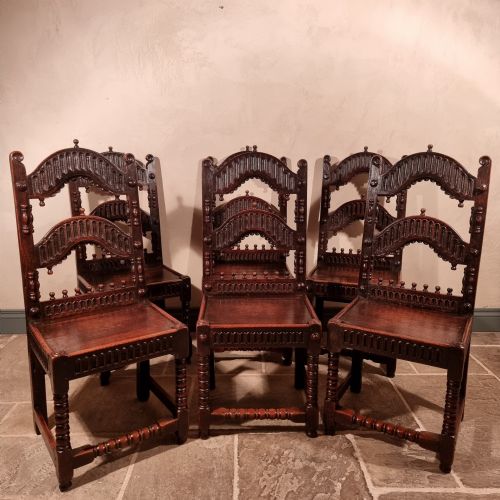


Jacobean Style Hall Chair
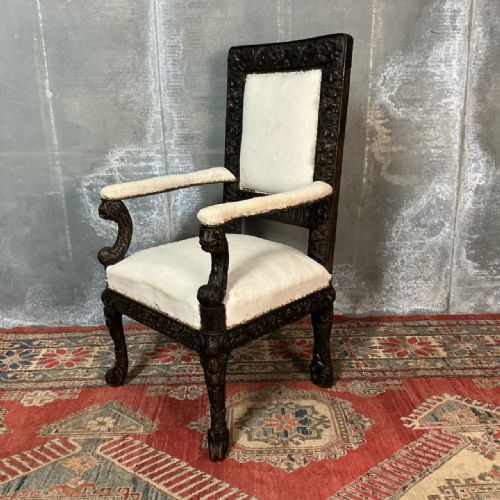
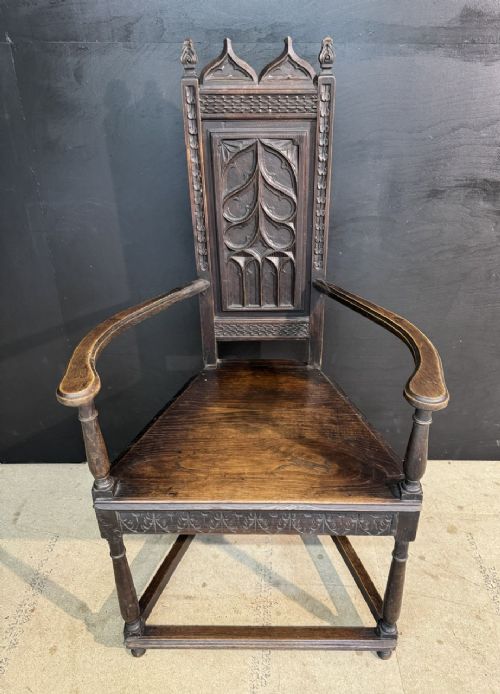
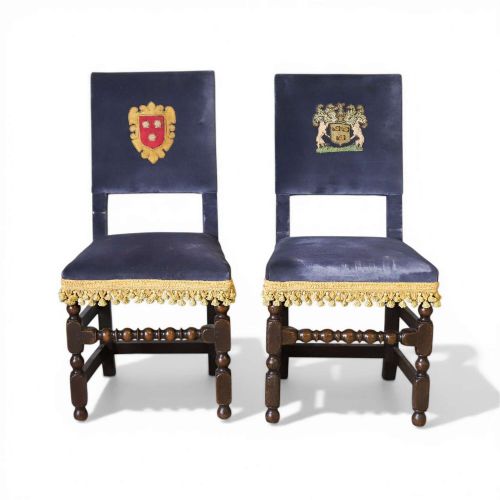
The jacobean style hall chair brings heavy carved timber and strict upright posture into a modern hallway.
Jacobean Style Hall Chair
A jacobean style hall chair sits firmly in the tradition of heavy seventeenth-century seating designed for grand entrance halls and formal rooms. Most examples encountered here date from the nineteenth-century revival periods, though genuine seventeenth-century survivals and early twentieth-century interpretations also appear.
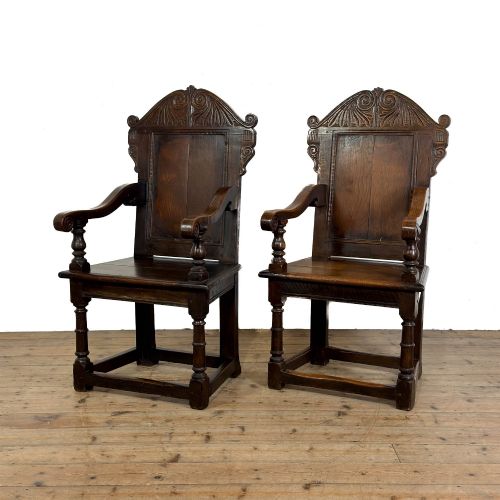
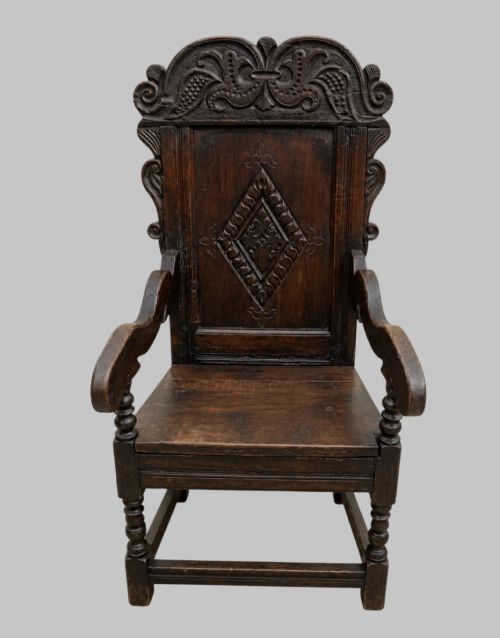
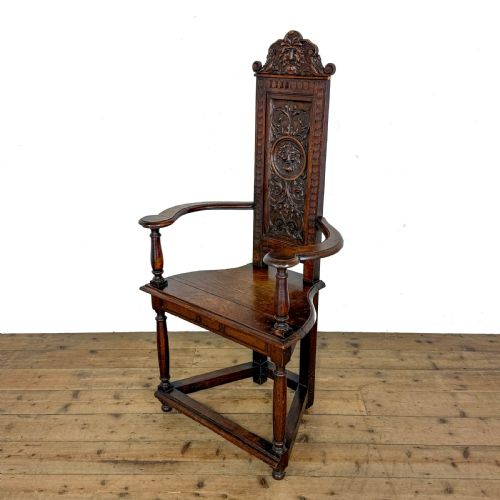
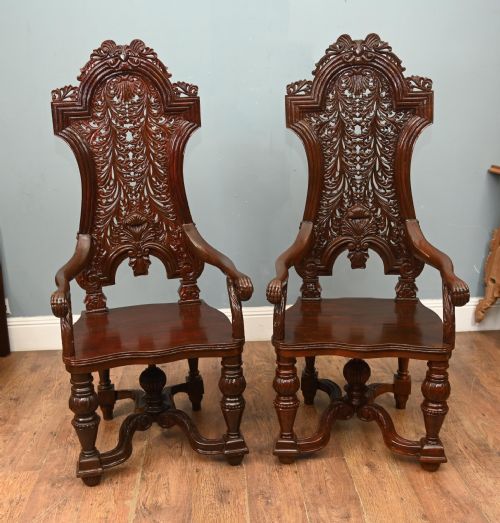
The form typically relies on a solid timber frame with high backs, panelled construction, and substantial armrests or turned legs. Makers frequently drew on Jacobean, Carolean, and Gothic revivals to produce side chairs, wainscot chairs, and imposing throne chairs.
These chairs were originally intended to project authority and status rather than offer relaxed comfort. Today, they serve equally well as sculptural statements against a plain wall or as functional seating in a period interior.
What varies in quality
The depth and crispness of the hand-carving define the artistic merit of each piece. Skilled carvers achieved sharp relief and balanced proportions, whereas mass-produced revival pieces often display shallow, mechanical stamping.
The integrity of the timber and joinery determines structural longevity. Chairs retained from earlier centuries or constructed by master cabinetmakers maintain tight joints and substantial weight, while lesser items suffer from loose timber and shrinkage over time.
Listings span from the 17th century through the Victorian era to the 1930s, using oak, walnut, beech, velvet, leather, and cane.
The Jacobean Style Hall Chair Glossary
- Wainscot chair
- A heavy wooden armchair with a panelled back, popular in the seventeenth century. These pieces usually feature solid wooden seats and carved arm supports.
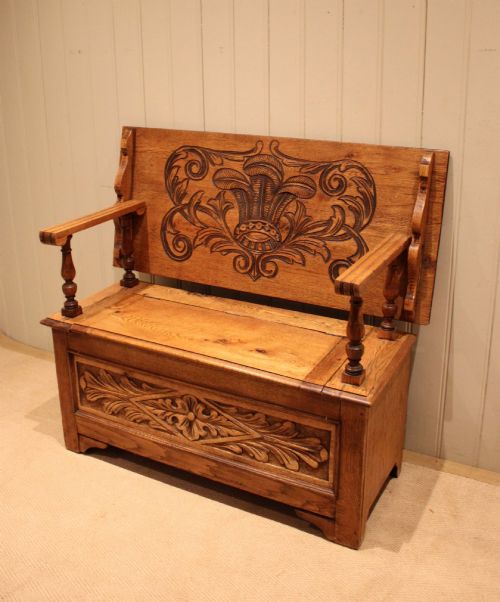
- Monks bench
- A convertible piece of furniture with a pivoting back that transforms from a table top into a bench seat. This multi-functional form was common in panelled halls.
- Carolean
- Pertaining to the reign of King Charles II, marked by ornate scrolling carved woodwork and rich upholstery. This style inspired numerous Victorian revival interpretations.
- Backstool
- An early form of chair without arms, serving as the precursor to the modern side chair. They generally stood high and upright.
- Strapwork
- A carved decorative motif resembling intersecting leather bands or ribbons. It frequently appears on the friezes and back panels of seventeenth-century furniture.
Jacobean Style Hall Chair: Frequently Asked Questions
Where should I put a hall chair?
These chairs suit narrow hallways, landings, or spaces needing a strong architectural accent. Their upright stance makes them better suited for occasional use than prolonged lounging.
Position one against a plain wall to let the carved details stand out without cluttering the room.
How do I tell original oak from revival pieces?
Examine the colour, tool marks, and construction methods across the timber frame. Nineteenth-century revivals often use machine-sawn components and heavy dark stains.
Genuine seventeenth-century pieces show hand-riven timber, irregular peg placement, and natural patina accumulated through centuries of wear.
Are monks benches comfortable?
Monks benches were built for utility and space-saving rather than soft padding. The solid wooden seat requires a cushion if you plan to sit for long periods.
Their true strength lies in their dual function as a small table and a secure hallway seat.
How do I care for antique oak?
Keep wooden furniture away from direct heat sources and sudden temperature shifts to prevent the timber from splitting. Regular dusting with a dry cloth keeps the surface clean.
Apply a traditional beeswax polish sparingly to maintain the natural lustre of the oak.