

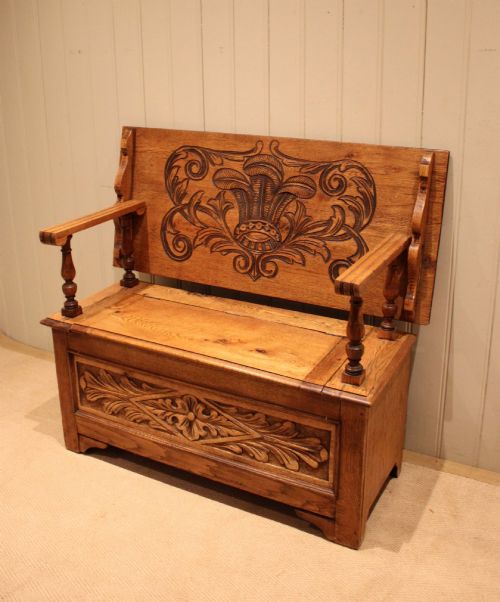
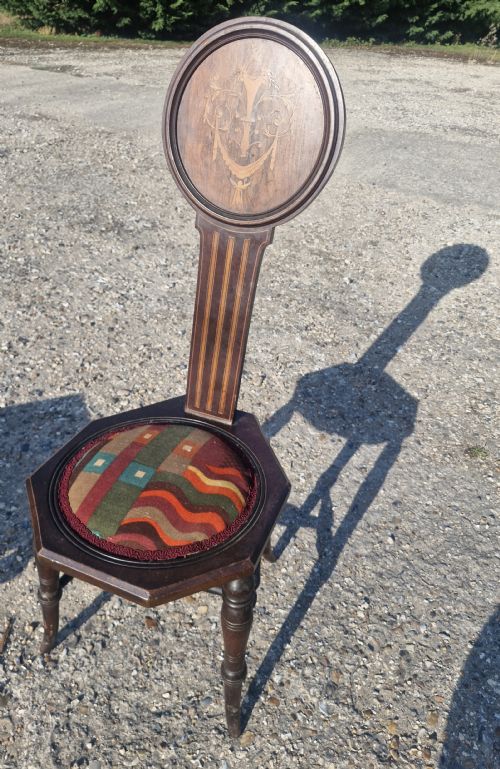
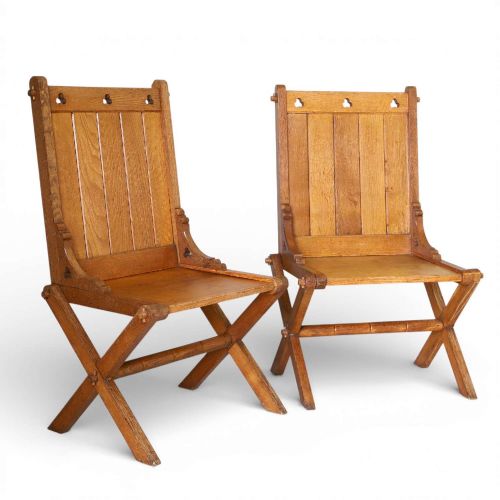
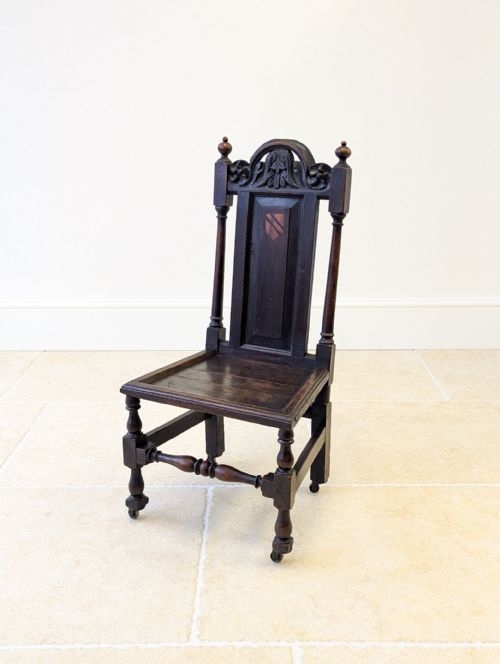
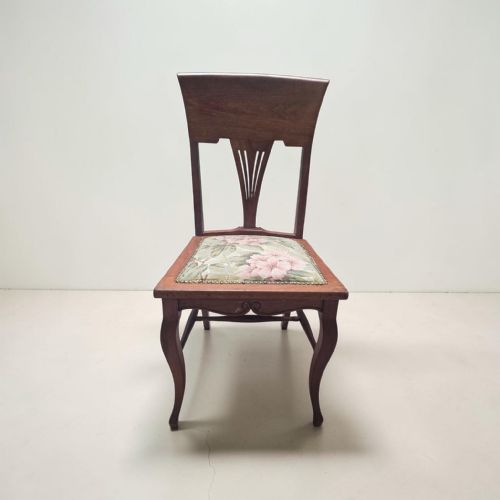
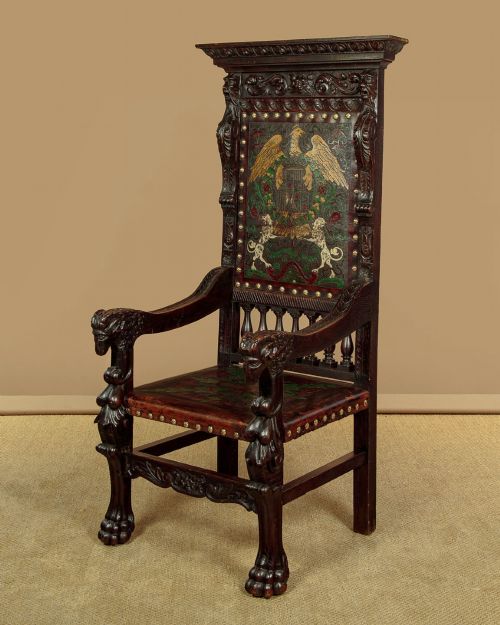
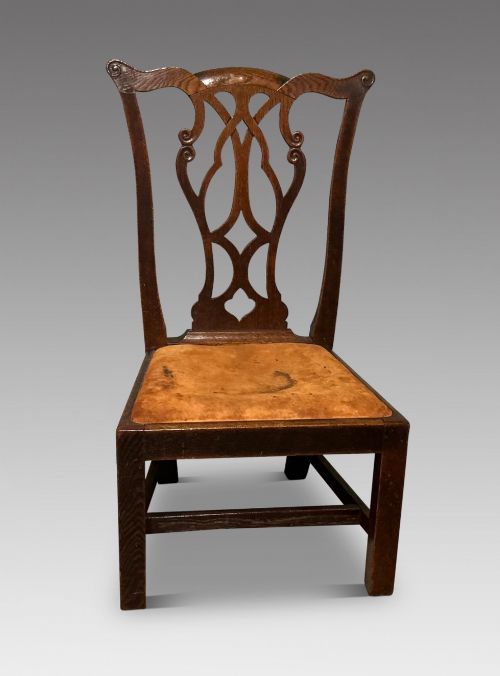
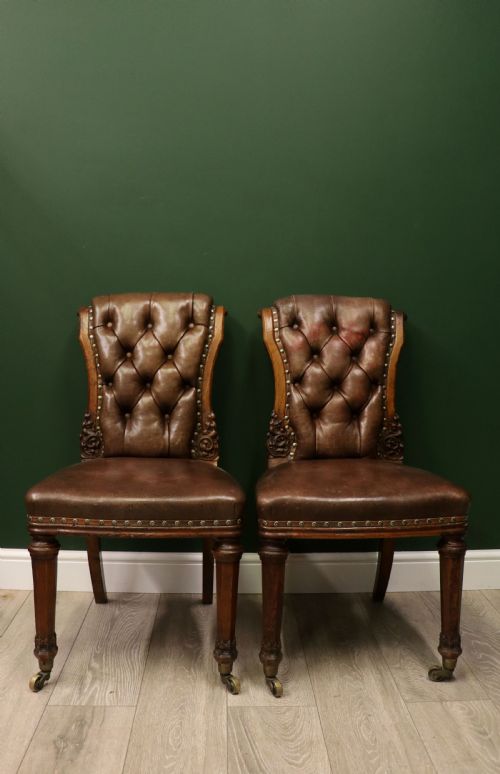
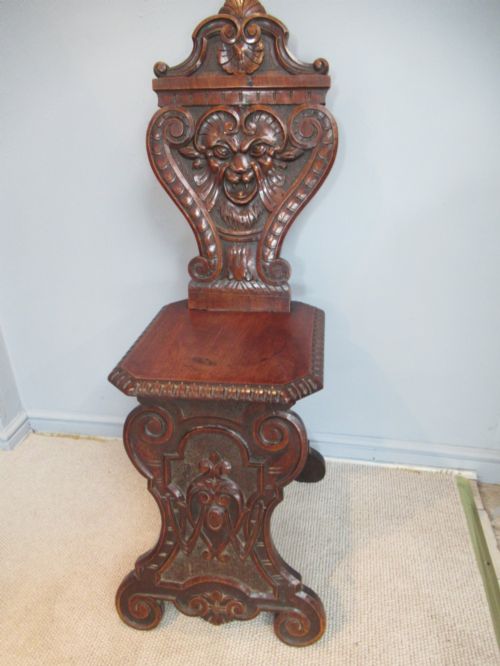


Edwardian Carved Hall Chair
An edwardian carved hall chair brings sturdy timber and crisp period detail to a narrow space.
Edwardian Carved Hall Chair
When you search for an edwardian carved hall chair, you encounter wooden seating designed for entrance spaces and corridors from the turn of the twentieth century. The selections available encompass styles ranging from plain Edwardian forms to revival designs drawing on Jacobean and Gothic traditions.
Most examples you meet are constructed from oak or mahogany, often featuring carved wooden backrests intended to make a formal statement to visitors. Alongside standard upright seating, you find armchairs, benches, and occasional variants sharing the same period aesthetic.
The pieces listed span multiple decades around 1900, blending late Victorian solidity with early twentieth-century decorative carving. These items served a practical domestic purpose in period homes while displaying the woodcarver's skill in prominent panels and frames.
How they were made
Makers relied primarily on solid oak and mahogany, shaping heavy timber components with hand tools to build rigid frames that could withstand daily use in busy hallways. Joinery methods such as mortise and tenon joints kept the structures sturdy without relying on metal brackets.
Carving was executed directly into the wooden back panels and rails, utilising gouges and chisels to create deep relief patterns like trefoils, linenfold, or floral motifs. Where upholstery appears, leather or fabric panels are secured with brass tacks or studs.
Secondary timbers like beech occasionally form the internal or lesser-seen parts of lighter occasional chairs, while turning lathes produced decorative elements such as barley twist legs on specific revival models.
Edwardian Carved Hall Chair Retail Price Guide 2026
Typical asking prices for edwardian carved hall chair among the pieces listed under this phrase on Sellingantiques today, from the lower quarter to the upper quarter. They describe what is for sale here now, not the wider market.
Period styles span Jacobean Revival, Gothic Revival, Arts and Crafts, and Art Nouveau alongside standard Edwardian forms.
What varies in quality
The standard of the timber selection dictates the initial tier of quality, with dense, evenly grained oak and rich mahogany forming the basis of superior examples. Lesser pieces employ mixed or secondary woods with less consistent figuring.
Depth and crispness separate ordinary carving from exceptional work, as skilled carvers produced sharp undercutting and smooth relief that catch the light. Softer, shallower surface decoration indicates a more hurried production standard.
Structural integrity depends on the tightness of the original joinery and the survival of the timber without excessive drying splits. Chairs retaining their original patination and firm joints sit at the upper end of the range.
Charles Tozer·Liberty of London·Liberty and Co·A W N Pugin
The Edwardian Carved Hall Chair Glossary
- Hall chair
- A rigid wooden seat intended for an entrance hall or passage, usually featuring a solid timber seat and a carved back rather than plush upholstery. These items were built primarily for posture and display.
- Gothic Revival
- An architectural and decorative style popular during the nineteenth and early twentieth centuries that mimics medieval forms. You see pointed arches, trefoil details, and heavy structural framing.
- Jacobean Revival
- A design movement looking back to the early seventeenth century, characterised by dark oak, geometric mouldings, and deep panel carving. Pieces in this style feel heavy and architectural.
- Barley twist
- A type of furniture leg or stretcher carved in a helical spiral resembling twisted rope. This turning technique was common in seventeenth-century furniture and revived later in the nineteenth and twentieth centuries.
- Patina
- The surface sheen and softening of colour developed by wood and leather over decades of handling and polishing. A good patina shows depth rather than a flat modern finish.
Edwardian Carved Hall Chair: Frequently Asked Questions
Where did people put these chairs?
These seats stood primarily in entrance halls, corridors, and vestibules where visitors waited before entering the main reception rooms of a home.
Because they were meant for brief use rather than long sitting, their designs prioritised a striking upright silhouette over deep cushioning.
How do I care for the wood?
Keep the timber away from direct heat sources and sudden humidity shifts to prevent the solid oak or mahogany from splitting.
Apply a traditional beeswax polish occasionally to nourish the grain and maintain the natural surface sheen without building up a sticky layer.
How do I spot a revival piece?
Look at the tooling marks, the weight of the timber, and the specific decorative motifs like trefoils or heavy strapwork that mimic earlier eras.
Revival furniture from the late nineteenth and early twentieth centuries borrows heavily from Jacobean or Gothic source material while retaining modern construction methods.