




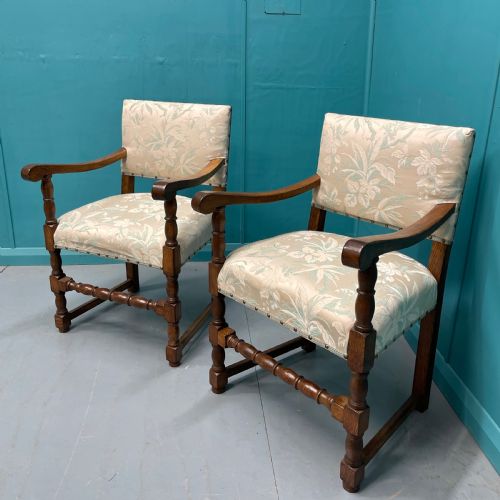


17th Century Revival Chair
These 17th century revival chairs bring substantial oak frames and high backrests into a room, offering a distinct historical presence.
17th Century Revival Chair
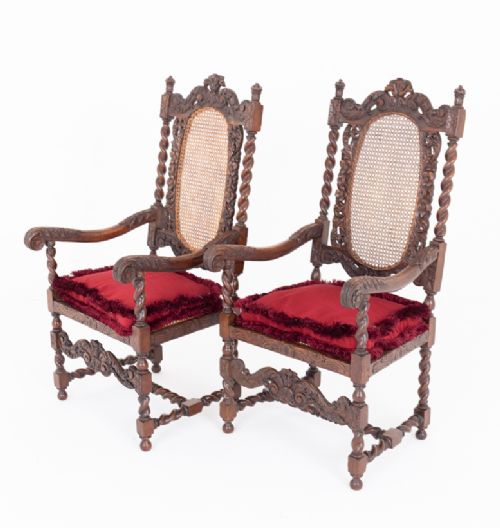
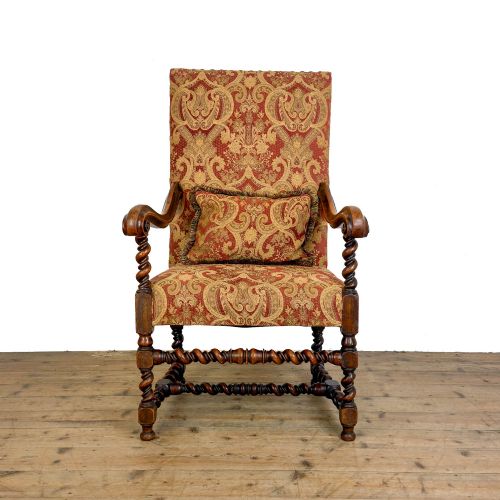
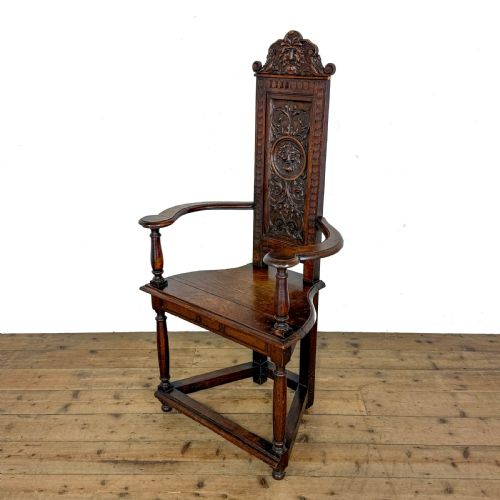
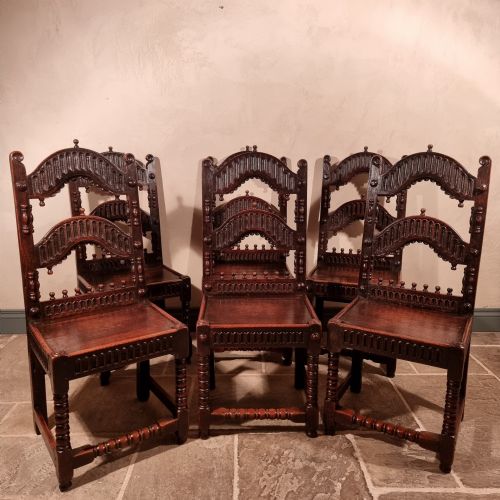
A 17th century revival chair draws directly upon earlier seventeenth-century forms, reproducing the architectural lines and carved motifs of the Jacobean, Carolean, and Baroque periods. You will encounter various seating types on this page, ranging from single elbow chairs and wainscot chairs to matched dining sets and highback chairs.
The materials and construction reflect a deliberate homage to past centuries, frequently utilising solid timber and traditional joinery. Most examples found here date from the nineteenth and early twentieth centuries, capturing the Victorian and Edwardian enthusiasm for historical recreation.
Materials and construction
Oak dominates the construction, providing the heavy timber framework essential for these sturdy seat frames and high backs. Walnut also appears among the listings, offering a darker grain and finer texture for more decorative seating.
Cane panels, leather upholstery, and velvet pad inserts furnish the seats and backrests, secured frequently with brass metal studs. Carving is applied extensively across the wooden crest rails, stiles, and stretchers to mimic authentic seventeenth-century ornamentation.
One lonely throne armchair stands out among the dining sets, demanding an audience.
Indicators of quality
The depth and crispness of the hand-carving separate standard production pieces from finer workshop examples. Sharp relief work on the wooden crests and legs indicates skilled craftsmanship during the revival period.
The choice of primary timber and the integrity of the joints dictate the overall longevity of the chair. Heavier oak construction and well-fitted cane or leather elements denote superior build quality.
The 17th Century Revival Chair Glossary
- Jacobean Revival
- A style drawing on early seventeenth-century English design, characterised by solid oak frames and geometric mouldings. It became particularly popular during the nineteenth-century Gothic revival.
- Carolean Revival
- A decorative style replicating the ornate late seventeenth-century reign of Charles II, featuring scrolled woodwork and high pierced crest rails. These chairs often utilise rich velvet or leather upholstery.
- Wainscot chair
- A heavy wooden armchair with a panelled backrest and solid seat, originating in the sixteenth and seventeenth centuries. Revival versions imitate this enclosed, architectural form.
- Derbyshire chair
- A type of regional seventeenth-century chair featuring turned posts and an open arcaded back, reproduced in later revival sets. They are typically made entirely of oak.
- Elbow chair
- An alternative term for an armchair, often used to describe seating with low or scroll-ended arms. These pieces frequently serve as singular statement chairs.
17th Century Revival Chair: Frequently Asked Questions
How do I identify a revival chair?
Examine the timber colour, tool marks, and construction methods to distinguish a nineteenth or twentieth-century revival piece from an original seventeenth-century artefact. Revival pieces often display machine-sawn elements or nineteenth-century upholstery techniques beneath the surface.
Look closely at the style labels such as Jacobean or Carolean, which indicate the historical era the maker sought to copy.
Are these chairs comfortable for daily use?
Many of these pieces feature upright wooden backs and firm cane or leather pads designed for formal posture rather than lounging. Dining sets and single elbow chairs provide sturdy seating suitable for regular use around a table.
Consider adding loose squabs or cushions if you plan to sit in them for extended periods.
How should I care for oak and leather?
Maintain the oak framework by applying a neutral beeswax periodically to nourish the dry timber and preserve the grain. Keep leather upholstery conditioned to prevent cracking, avoiding direct sunlight or excessive heat sources.
Dust intricate carvings regularly with a soft brush to prevent dirt accumulation in the recessed areas.
Can I mix these chairs with modern tables?
The strong architectural lines of oak and carved woodwork pair effectively with rustic wooden dining tables or minimalist contemporary surfaces. Single armchairs also function well as reading seats in studies or hallways.
Matching sets can anchor a traditional dining room scheme with historical weight.