
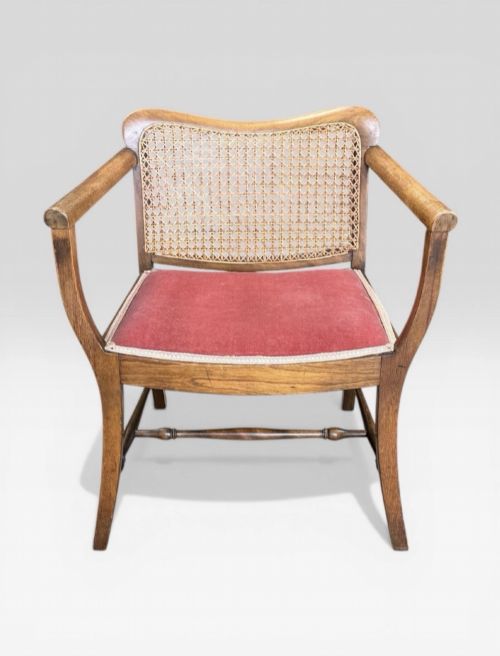


Cane Back Oak Armchair
A cane back oak armchair brings tactile woven texture and sturdy timber presence into a room.
Cane Back Oak Armchair
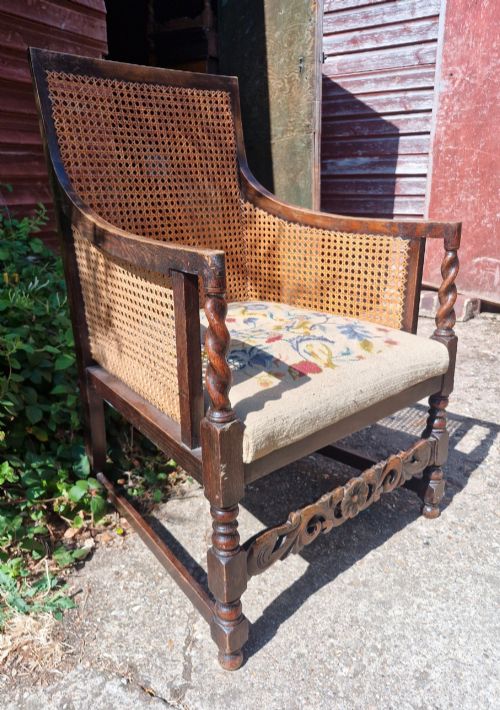
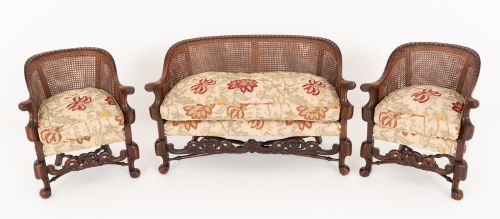
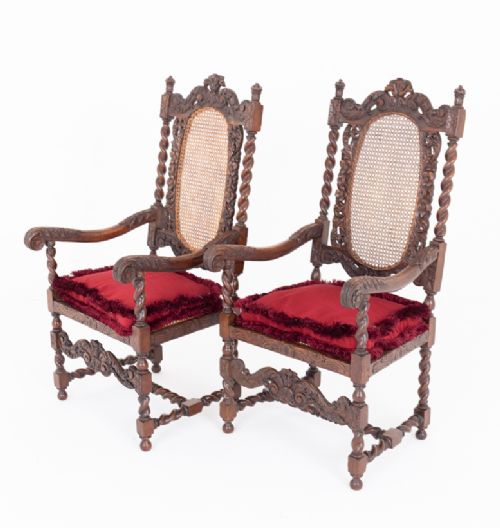
A cane back oak armchair combines a robust wooden frame with an open woven panel, creating seating that balances structural support with lightness. These pieces draw on historical revivals and vernacular traditions, appearing in forms ranging from substantial throne chairs to comfortable fireside bergères.
The selections here span the nineteenth century through the early twentieth century, showing revivalist influences such as Jacobean and Carolean styles alongside rustic country pieces. Buyers frequently encounter open armchairs, bergère chairs, and occasional rocking chairs that utilise this combination of materials.
How they were made
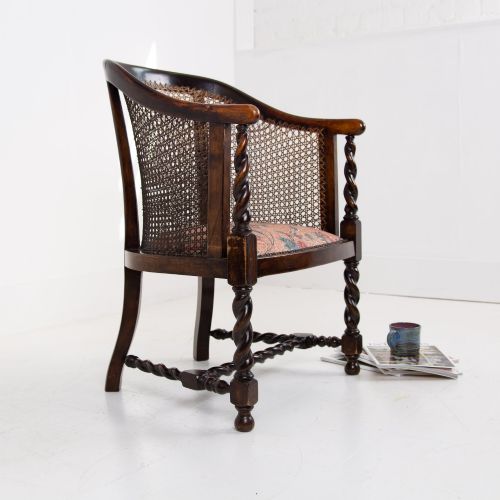
Makers constructed the primary frames of these chairs from solid oak, occasionally using walnut, shaping the timber with hand tools to form turned legs, stretchers, and carved crest rails. Frameworks often incorporate decorative elements like bobbin turnings or elaborate carved foliage.
The characteristic back panels and seats utilise woven cane or rattan cane, threaded through drilled holes in the wooden frames to form tight, resilient mesh patterns. Upholstered additions like loose cushions in velvet, leather, or standard fabric frequently accompany these woven surfaces.
The listings span from the nineteenth century into the twentieth century, encompassing Victorian interpretations alongside Arts and Crafts and French provincial designs.
What varies in quality
The standard of a cane back oak armchair rests upon the crispness of the timber carving and the tightness of the woven cane work. Superior examples display deeply sculpted details on the oak frame and evenly spaced, uniform strands in the cane panel.
Construction methods also dictate quality, visible in the rigidity of the joinery and the harmonious proportion of arms, legs, and backrests. Chairs retaining their original framework without excessive timber replacement demonstrate superior preservation.
James Shoolbred·Heals of London
The Cane Back Oak Armchair Glossary
- Bergere
- An enclosed upholstered armchair with a wooden frame, frequently featuring cane sides and back panels. These seats often include a loose down or feather-filled seat cushion.
- Carolean Revival
- A nineteenth-century design movement copying the exuberant decorative style of the late seventeenth-century English restoration period. Pieces in this style typically feature scrolling carved crests, twisted stretchers, and cane inserts.
- Jacobean Style
- An architectural and furniture aesthetic reflecting the early seventeenth-century reign of James the First. It is characterised by heavy, rectilinear oak framing and geometric panel carving.
- Bobbin turning
- A method of lathe-turning wood to create a series of rounded, spool-like shapes resembling bobbins strung together. This technique appears frequently on the uprights and stretchers of country chairs.
Cane Back Oak Armchair: Frequently Asked Questions
How do I care for cane seating?
Keep woven cane panels supple by wiping them occasionally with a damp cloth to prevent the natural material from drying out and snapping.
Avoid placing these chairs in direct sunlight or next to heat sources, which accelerates timber shrinkage and cane brittleness.
Are these chairs comfortable for daily use?
Most models provide firm upright support, though bergère versions with deep seats and cushions offer a more relaxed sit.
Adding a loose squab cushion allows you to adjust the seating height and comfort level to suit your living space.
How can I tell the period?
Examine the tool marks on the timber frame and the regularity of the cane weaving, as machine-drilled holes often point towards later revival pieces.
Hardware details like iron fixings or upholstery remnants help distinguish nineteenth-century production from earlier historic work.
Where do these chairs work best?
An open armchair functions well as a reading seat in a study or as an accent piece in a sitting room.
Pairing a fireside bergère with a low table creates a balanced corner for relaxation.