



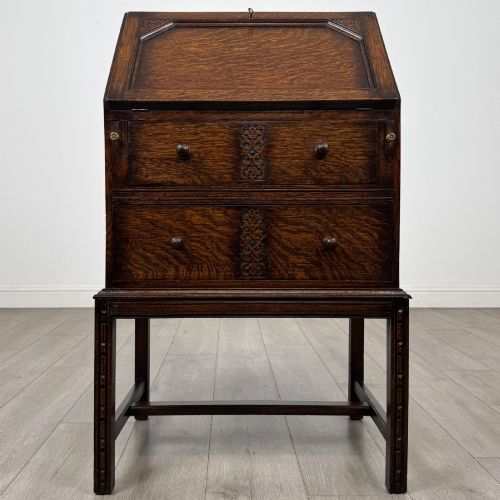
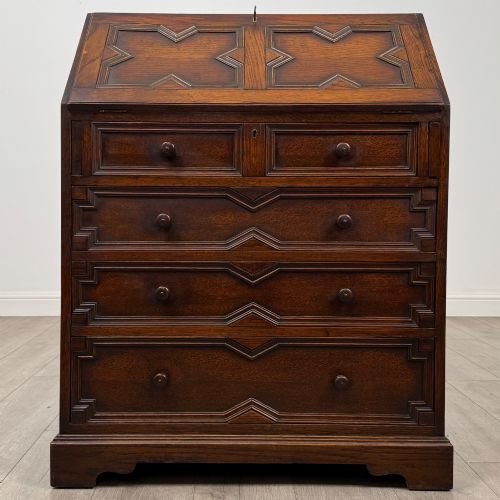
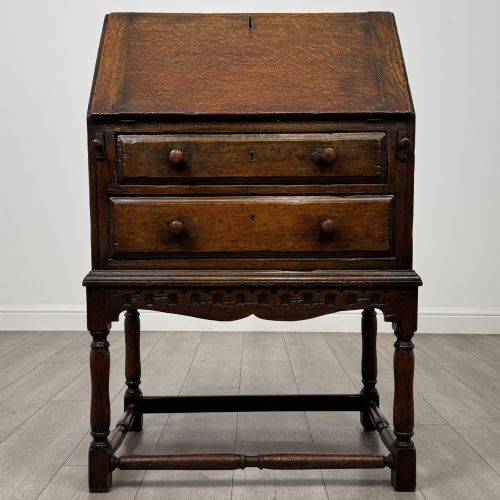


Jacobean Slant Front Bureau
These jacobean slant front bureau pieces offer practical writing space and period presence, drawing buyers who want traditional character.
Jacobean Slant Front Bureau
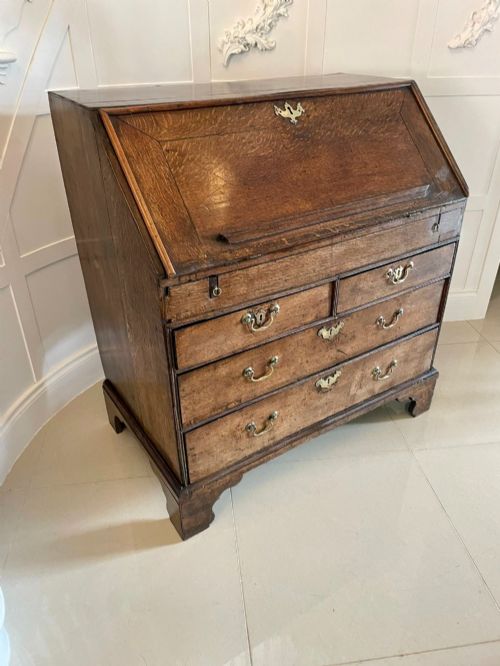
A jacobean slant front bureau provides a sloping fall-front lid that opens to reveal a fitted interior of small drawers and pigeonholes for correspondence. These items combine a surface for writing with enclosed storage below, typically resting on stands, drawers or bracket feet.
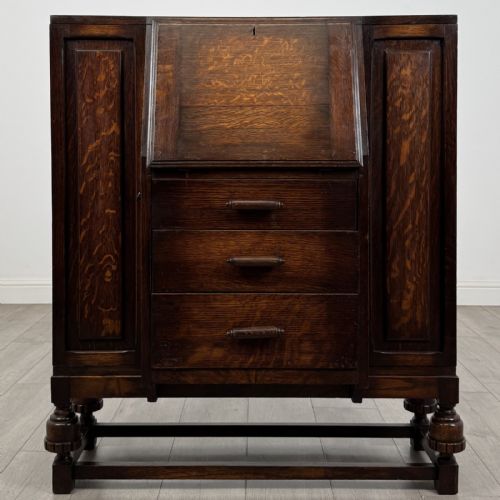
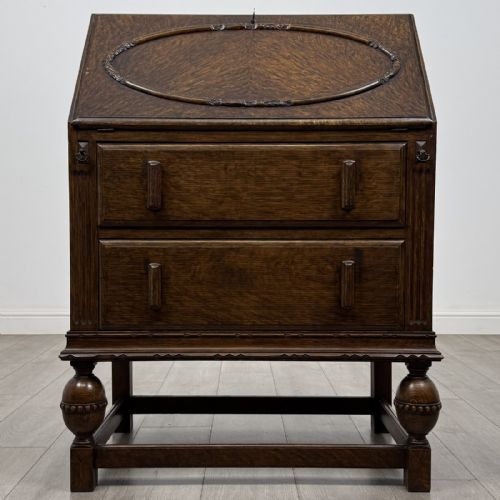
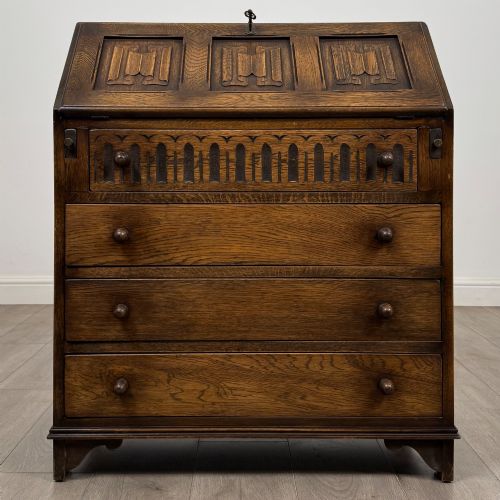
Most examples seen here belong to the revival periods of the early twentieth century, alongside genuine seventeenth-century pieces. Buyers frequently encounter Edwardian and 1920s interpretations executed in dark oak, often carrying traditional carved decoration.
Materials and construction
Solid oak and oak veneer dominate the construction of these items, providing the heavy substance and distinct grain expected from the style. Wood inlay and carved details frequently adorn the exterior panels, complemented by brass handles and iron hinges.
Joinery methods rely on traditional framing and panel construction to house the moving interior mechanisms and drawers. Glass panels appear on upper sections where the bureau incorporates a bookcase.
Jacobean Slant Front Bureau Retail Price Guide 2026
Typical asking prices for jacobean slant front bureau among the pieces listed under this phrase on Sellingantiques today, from the lower quarter to the upper quarter. They describe what is for sale here now, not the wider market.
Listings span seventeenth-century examples alongside twentieth-century revival pieces in oak, glass, iron, and brass.
Distinctions in quality
The refinement of the interior arrangement separates standard examples from superior pieces, particularly where small drawers and secret compartments display intricate craftsmanship. The depth and crispness of the carved ornamentation also indicate the maker's skill.
Originality of the stand and hardware distinguishes pieces that retain their earliest configuration from those altered over time. The quality of the timber selection and the stability of the fall-front hinges determine the daily utility of the desk.
The Jacobean Slant Front Bureau Glossary
- Slant front
- The sloping writing flap that folds down to create a desk surface and conceals the interior compartments when closed.
- Linenfold
- A carved wooden panel motif imitating folded fabric, commonly seen on early twentieth-century revival pieces.
- Bureau bookcase
- A combination furniture form featuring a writing desk base beneath an upper shelved cabinet enclosed by doors.
- Vernacular
- Describing provincial furniture made by local craftsmen using regional traditions rather than metropolitan designs.
- William and Mary
- A late seventeenth-century stylistic period known for Dutch influences, trumpet turned legs, and rich veneer work.
Jacobean Slant Front Bureau: Frequently Asked Questions
What is inside a bureau interior?
The interior contains a collection of small drawers, pigeonholes and sometimes hidden compartments designed for letters and documents.
Opening the sloping flap reveals these compartments arranged around a central space.
How do I date a wooden bureau?
Dating relies on examining the construction methods, timber preparation, and the style of the carved decoration.
Seventeenth-century pieces show hand-riven timber and vernacular joinery, while twentieth-century revivals display machine assistance and specific period revival motifs.
Where should I place a bureau?
These desks suit studies, living rooms or hallways where the closed slope presents a tidy wooden cabinet.
Ensure adequate floor space in front of the unit for the fall-front flap to lower completely during use.
What is the difference between revival and period?
Period pieces were manufactured during the actual seventeenth century, reflecting the prevailing domestic furniture fashions of that era.
Revival items date from the Edwardian years and the 1920s or 1930s, reproducing earlier styles for modern homes.