





Jacobean Style Bureau Desk
A jacobean style bureau desk brings heavy timber and period character to a room, offering a sloping fall-front workspace above drawers or cupboards.
Jacobean Style Bureau Desk
A jacobean style bureau desk provides a practical writing surface alongside enclosed storage, taking the form of writing bureaus, bureau bookcases, and bureau cabinets. Most examples seen here date from the Edwardian era through the nineteen-twenties, capturing a revivalist aesthetic inspired by earlier centuries.
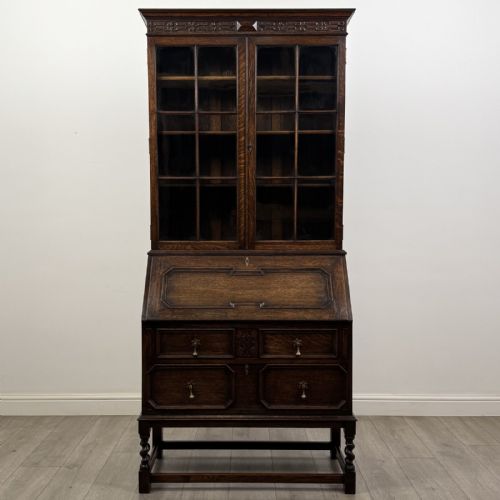
The dominant forms combine a hinged writing flap that opens to reveal internal pigeonholes and small drawers with lower storage. Buyers encounter taller bureau bookcase variations featuring glazed upper display sections, as well as simpler freestanding writing desks built from robust timber.
How they were made
Construction relies predominantly on solid oak, chosen for its durability and strong grain pattern, often finished in dark tones typical of the revival style. Metal elements such as brass handles and iron hinges provide structural reinforcement and functional hardware.
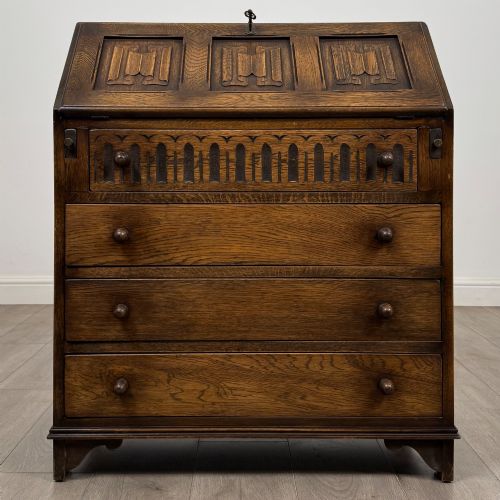
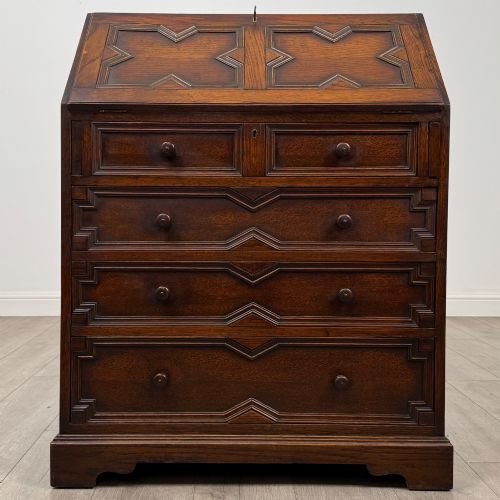
Surface ornamentation relies on traditional woodworking techniques including carved linenfold panels and wood inlay, rather than applied metal or synthetic finishes. Glazed doors incorporate glass panels held in wooden frames to protect the contents of upper bookcases.
Jacobean Style Bureau Desk Retail Price Guide 2026
Typical asking prices for jacobean style bureau desk among the pieces listed under this phrase on Sellingantiques today, from the lower quarter to the upper quarter. They describe what is for sale here now, not the wider market.
The archive includes bureau desks with glazed upper bookcases alongside simpler writing units finished in dark oak.
What varies in quality
Depth and crispness of carved detail distinguish standard production from finer work, particularly where linenfold panels and geometric mouldings are concerned. The choice of timber grain and the quality of the darker finish contribute significantly to the visual presence of the piece.
Engineering of internal fittings, such as small stationery drawers and pigeonhole dividers, separates simple utilitarian pieces from more considered examples. Hardware choice, from plain iron to well-cast brass handles, also indicates the level of care taken in original manufacture.
Wylie & Lochhead
The Jacobean Style Bureau Desk Glossary
- Bureau
- A writing desk featuring a sloping hinged flap that covers a compartment for papers. When lowered, the flap provides a flat surface for writing.
- Linenfold
- A style of wood carving that resembles folded parchment or linen cloth. It appears frequently on the panels of Edwardian oak furniture.
- Jacobean Revival
- A design style popular in the late nineteenth and early twentieth centuries that copies the heavy proportions and dark finishes of seventeenth-century English furniture.
- Bureau Bookcase
- A two-part piece of furniture combining a lower writing bureau with an upper bookcase enclosed by wooden or glazed doors.
- Wood Inlay
- The technique of inserting pieces of contrasting timber into a recessed surface to form decorative patterns.
Jacobean Style Bureau Desk: Frequently Asked Questions
What is a jacobean style bureau desk?
A jacobean style bureau desk is a compact writing cabinet featuring a sloping lid that drops down to create a writing surface. Beneath this flap, makers typically included multiple small drawers and pigeonholes for correspondence.
The base generally incorporates wider drawers or enclosed cupboards for larger storage needs. These pieces draw their design inspiration from seventeenth-century English furniture, reinterpreted during the Edwardian period and the nineteen-twenties.
How were these desks used originally?
These desks served as private spaces for writing letters, managing household accounts, and storing important documents. The drop-front allowed users to conceal their paperwork simply by closing and locking the flap.
Upper bookcase sections, where present, held reference volumes and prized books behind glass panels. This combination of writing surface and enclosed storage made them central pieces for studies and living rooms.
How do I date a bureau desk?
Dating relies heavily on the timber selection, construction methods, and hardware styles found on the piece. Most examples seen here originate from the early twentieth century, specifically between nineteen-ten and nineteen-twenty.
Revival pieces from this era often utilise machine-sawn timber combined with hand-finished carving. Examining the interior secondary woods and the style of the brass or iron fittings helps narrow down the period of manufacture.
Where does dark oak come from?
Dark oak finishes on revival furniture were achieved through staining and polishing native or imported oak timbers. This treatment emulated the appearance of centuries-old furniture that had darkened naturally through age and exposure to smoke.
Cabinetmakers of the Edwardian period and nineteen-twenties used these dark tones to create a sense of historical weight and traditional craftsmanship. The finish highlights the coarse grain structure characteristic of oak.