
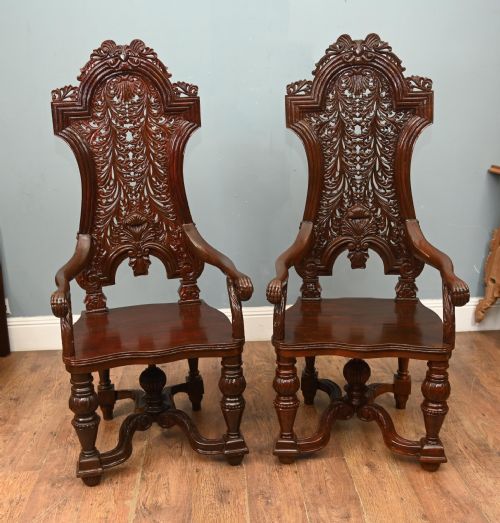


Jacobean Revival Armchairs
Jacobean revival armchairs bring heavy timber frames and deep upholstery into a room.
What these armchairs are
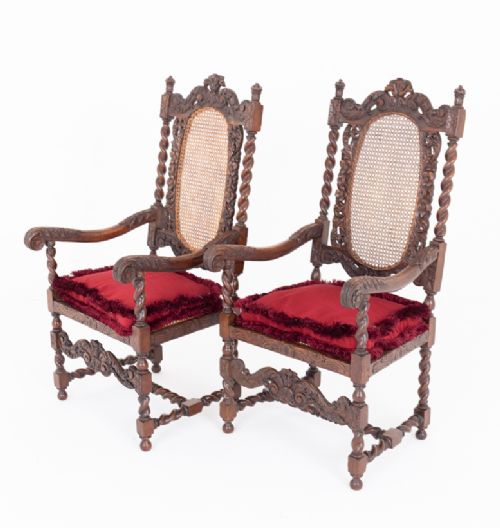
Jacobean revival armchairs are sturdy seating forms built to echo seventeenth-century models through grand proportions and formal silhouettes. These pieces rely on solid timber frameworks designed to anchor a room with architectural presence.
The versions most commonly met on this page span the late nineteenth century through the early decades of the twentieth century. These later interpretations lean heavily on dark woods and carved details to replicate earlier centuries.
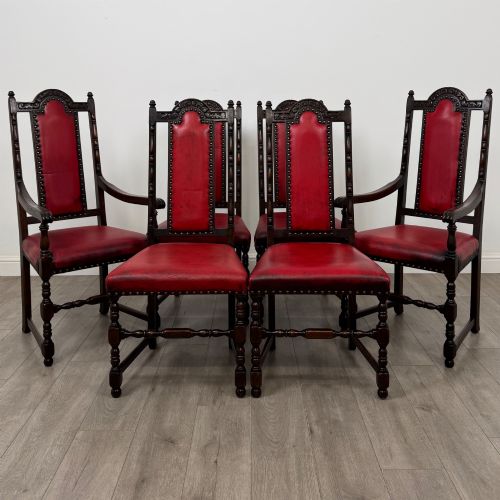
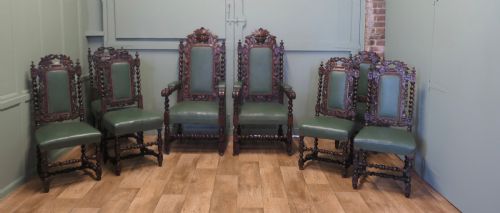
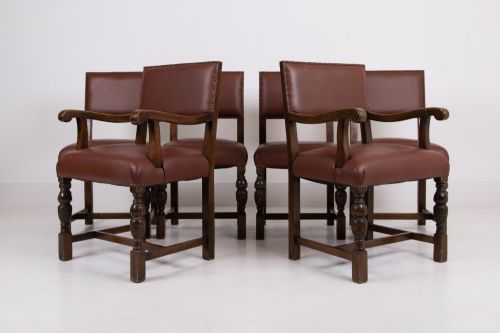
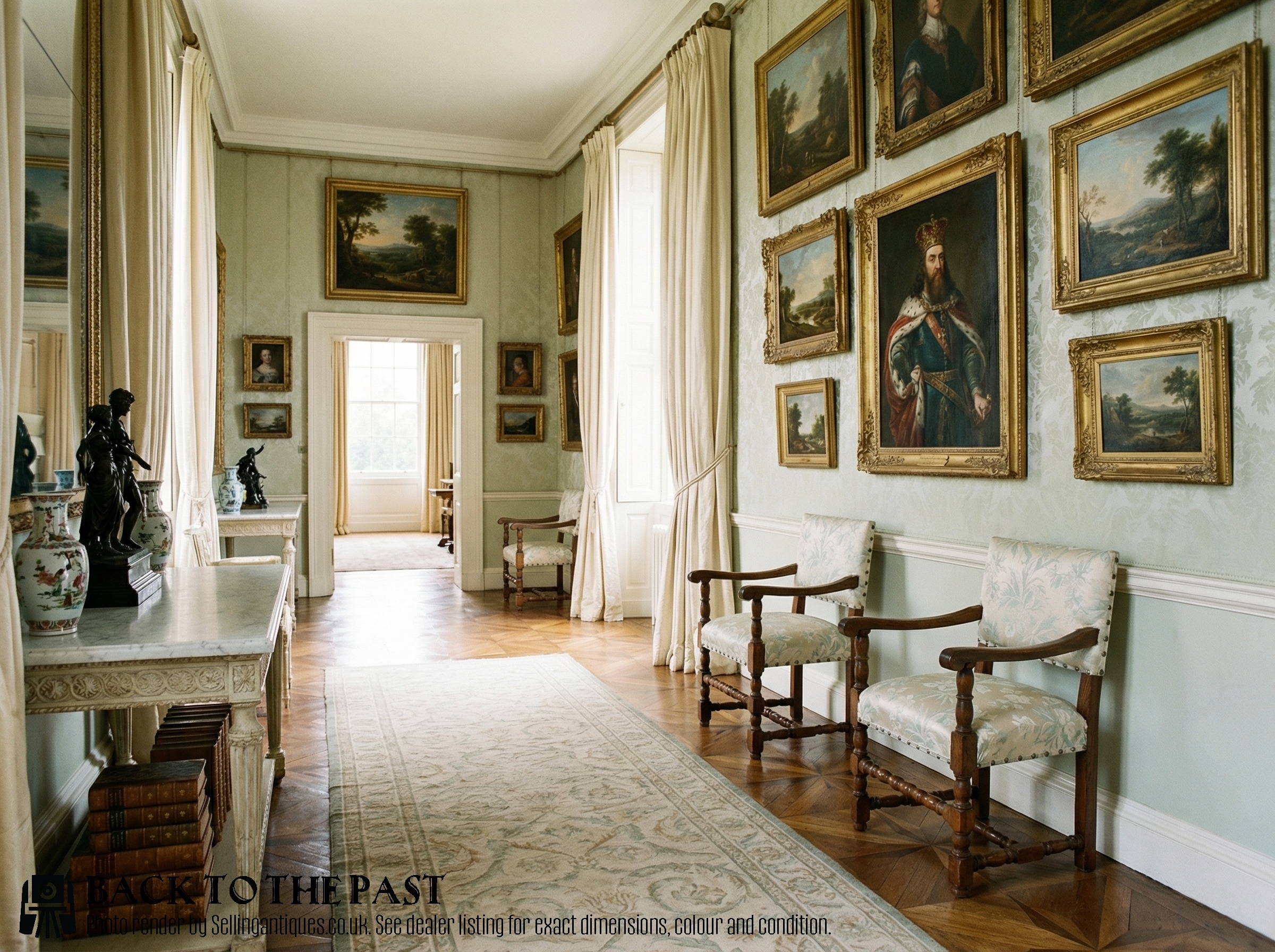
Makers of this era produced these large armchairs in pairs frequently, offering matching seats for studies, libraries and panelled halls. Oak remains the predominant timber across these listings, alongside walnut and mixed textiles.
How they were made
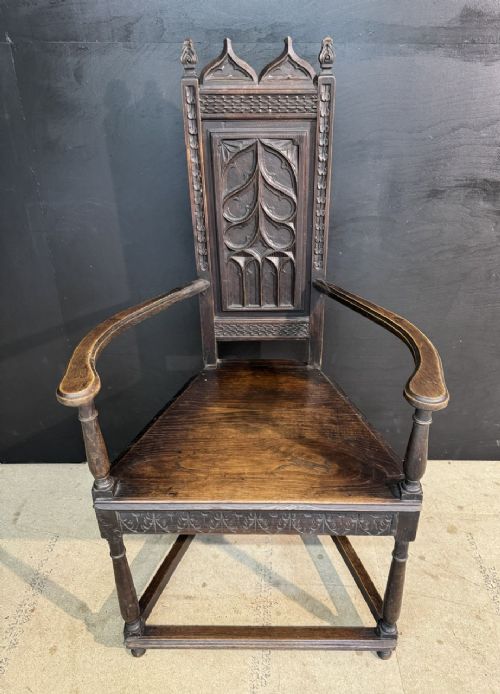
Constructed primarily from oak and walnut, these frames utilise dense hardwoods capable of supporting deep hand-carving. Joinery methods of the period rely on mortise and tenon joints secured with wooden pegs.
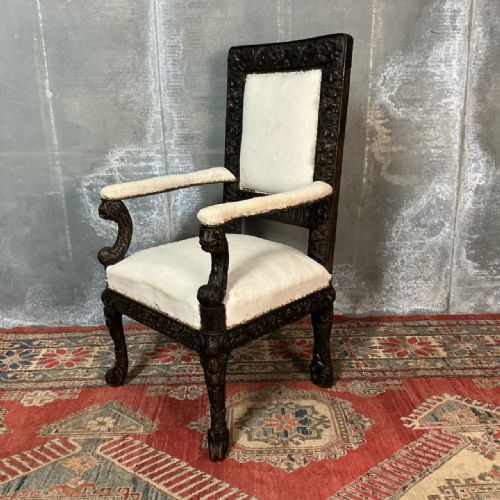
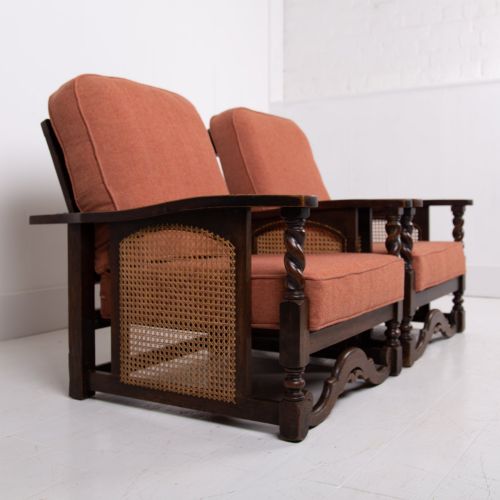
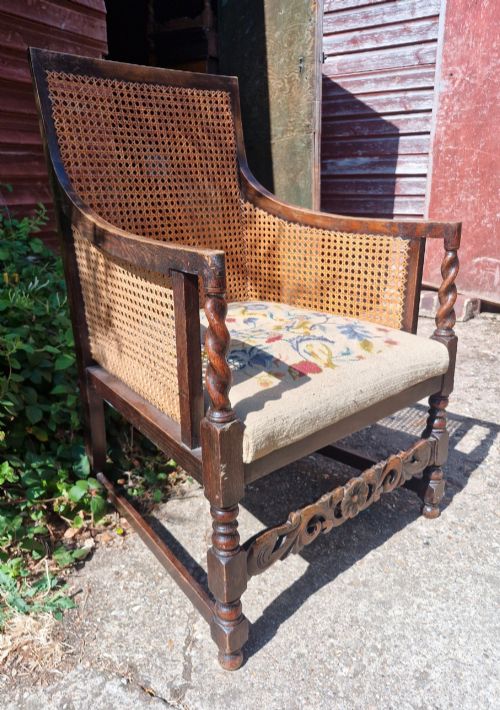
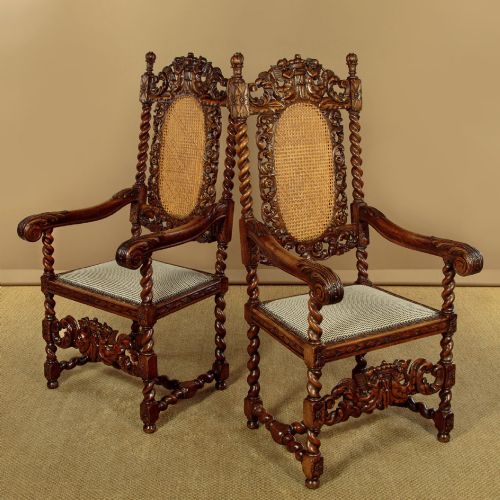
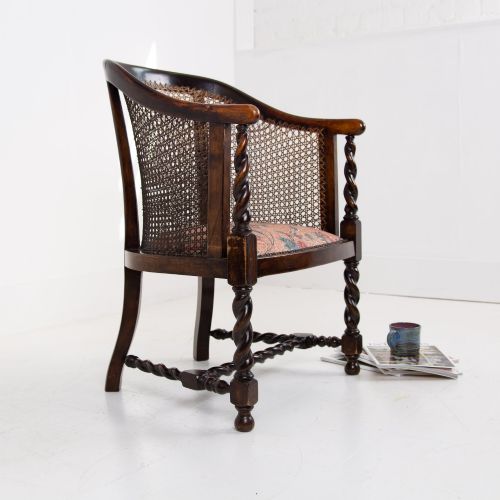
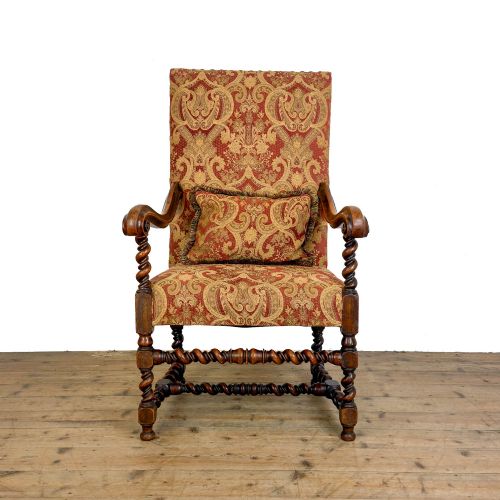
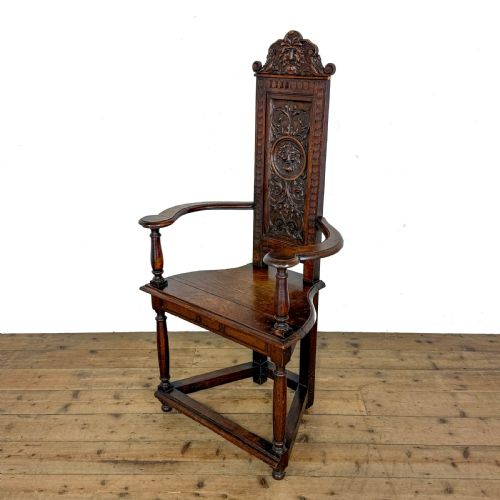
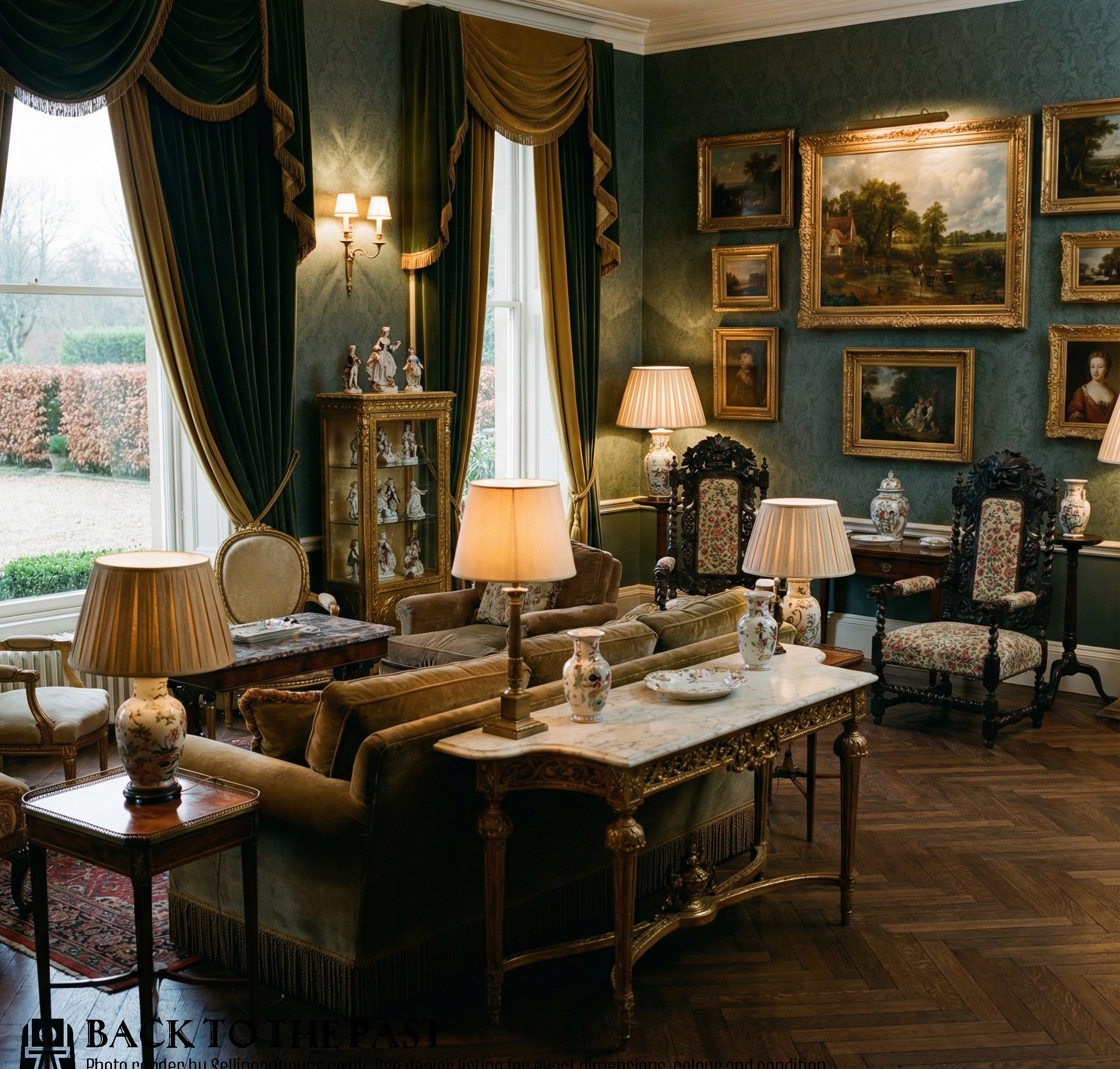
Upholstery elements incorporate traditional materials such as fabric, leather, velvet, and tapestry fabric fixed with brass studs. Turned elements like barley twist members appear alongside carved Green Man motifs and panelled woodwork.
Retail Price Guide 2026
Typical UK retail prices for jacobean revival armchairs, calculated from the Sellingantiques database of over a million retail prices indexed since 2003. This retail price guide relies exclusively on Sellingantiques data; no external sources or auction records are used, so the figures do not describe the wider market.
Staring armrests often feature carved Green Man faces keeping watch over the room.
What varies in quality
The distinction between standard production and finer execution lies in the depth and crispness of the timber carving. Hand-chiselled foliage and figural details display a sharpness that machine routing simply fails to replicate.
Timber selection dictates the overall weight and presence of the piece, with dense quarter-sawn oak exhibiting pronounced medullary rays. The integration of high-grade upholstery fabrics, from heavy tapestry to supple leather, elevates the secondary materials to match the substantial frames.
The Jacobean Revival Armchairs Glossary
- Barley twist
- A decorative turning technique resembling a twisted rope, commonly used on the legs and stretchers of these chairs. This form gained immense popularity during the seventeenth century and saw a major revival in later periods.
- Green Man
- A sculptural motif depicting a human face carved out of or entwined with foliage and vines. It symbolises rebirth and appears frequently on revival furniture from the nineteenth century.
- Quarter-sawn
- A method of cutting logs that produces timber with straight grain patterns and durable physical properties. This cut reveals striking figuring within oak frames.
- Tapestry fabric
- Heavy woven textile featuring pictorial or decorative designs, often utilised for upholstery on formal revival seating. These panels add considerable visual weight to the chairs.
- Mortise and tenon
- A traditional woodworking joint where a projecting tongue fits snugly into a matching cavity. This method ensures rigid stability across heavy armchair frames.
Frequently Asked Questions
Are these armchairs comfortable for daily seating?
These pieces offer a firm and upright posture suited to formal rooms rather than slouching. The deep wooden frames and heavy upholstery provide sturdy support.
Buyers often place them in studies or libraries where an upright sitting position is preferred. Cushions can alter the everyday feel without changing the structure.
How do I identify the period of an oak armchair?
Dating relies on examining the tool marks, timber preparation, and the specific style of the revival movement. Late nineteenth and early twentieth-century pieces often mix machine finishing with hand carving.
Hardware such as brass upholstery tacks and the type of secondary woods used inside the frame offer further clues. Comparing the carving depth to known examples helps confirm the era.
Do these chairs usually come in pairs?
Many surviving examples of these armchairs appear as matching pairs intended for grand reception rooms. Workshops frequently produced them together to balance the heavy visual weight within a space.
Finding matching pairs makes them practical for flanking a fireplace or large piece of furniture. Single chairs also appear for use as accent pieces.
What rooms suit jacobean revival armchairs best?
The dark timber and formal upholstery demand spaces with enough room to absorb their visual mass. High-ceilinged rooms, libraries, and panelled dining spaces complement their architectural lines.
Pairing them with neutral walls allows the carved details of the oak or walnut frames to stand out. They function well as anchor pieces in traditional interiors.