
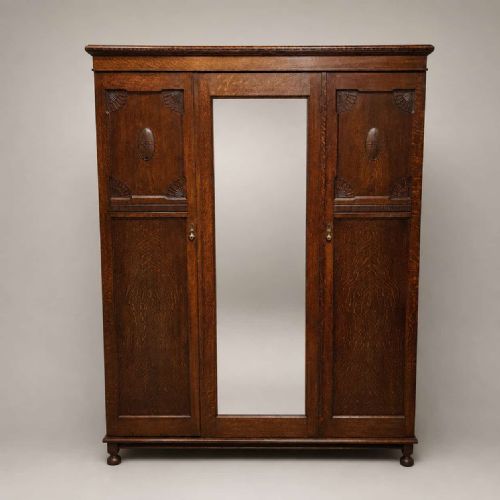
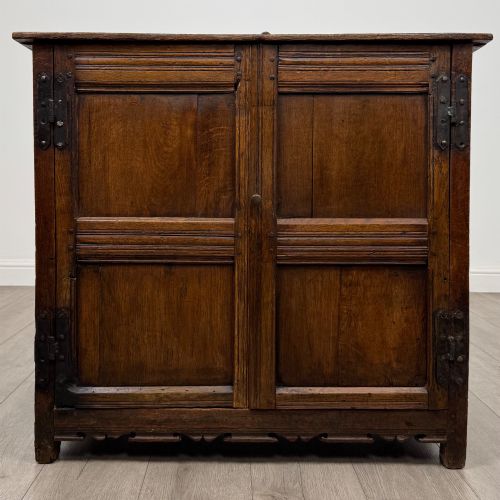
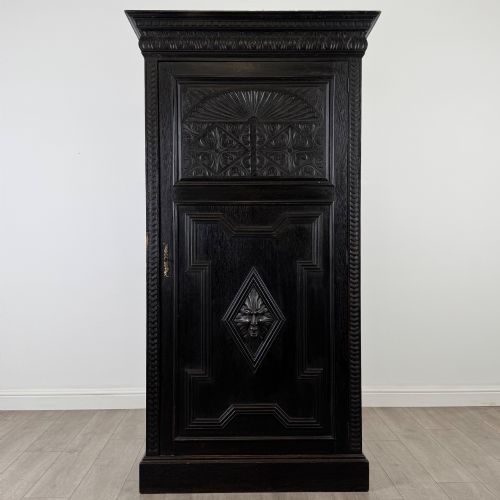

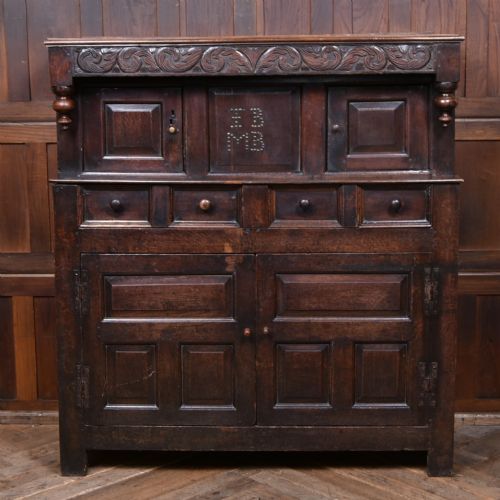
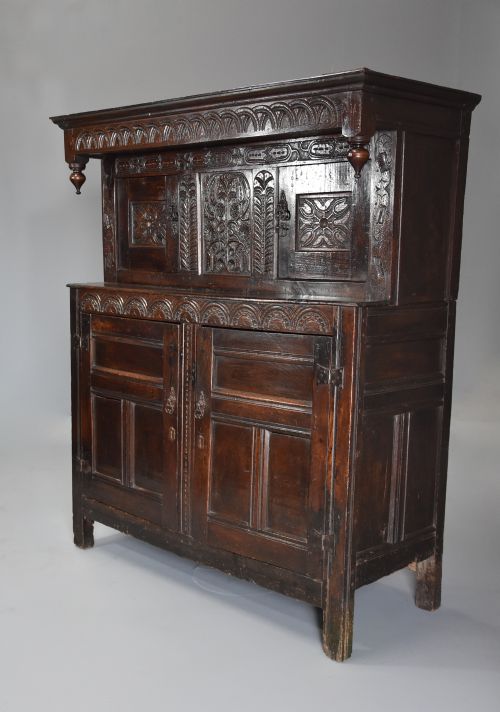
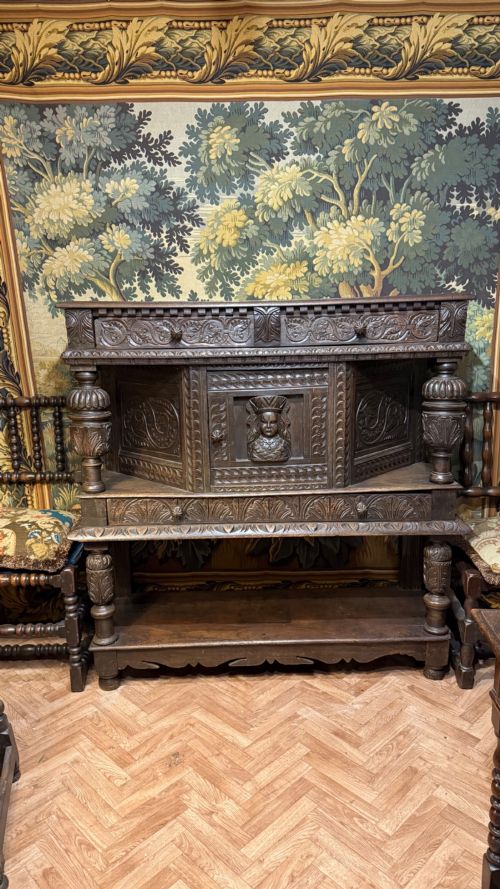
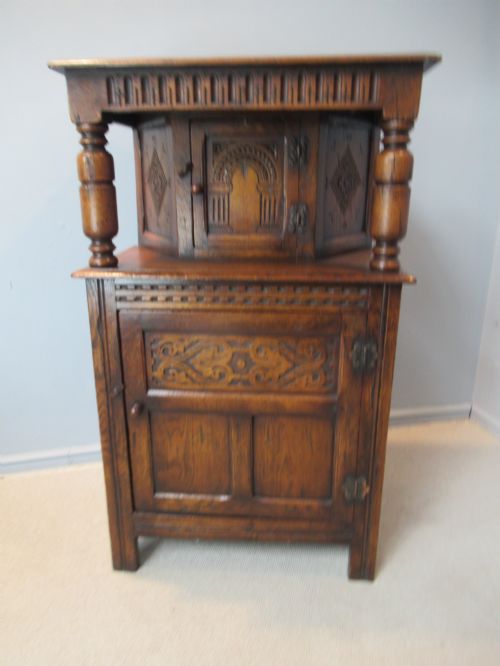
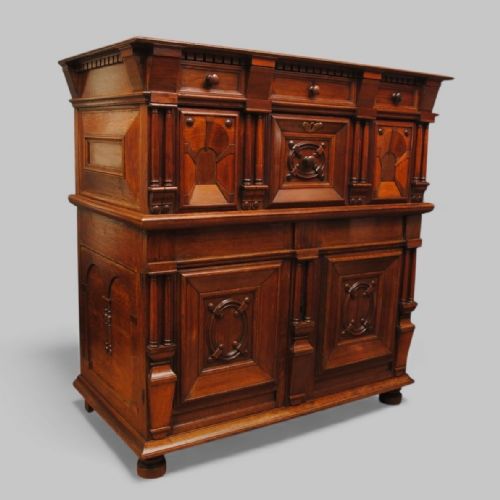


Jacobean Oak Press Cupboard
A jacobean oak press cupboard stands as a heavy timber monument to seventeenth century joinery, offering deep storage and carved presence.
Jacobean Oak Press Cupboard
A jacobean oak press cupboard is a substantial household storage piece designed to hold linen, garments, and valuables within compartmentalised lower and upper sections. The form bridges domestic utility and formal display, often featuring enclosed upper tiers flanked by recessed panels or open columns.
Most examples encountered on this page date from the seventeenth century or arrive as later revival interpretations from the Victorian and early twentieth century periods. Alongside traditional press cupboards, buyers regularly find related court cupboards, livery cupboards, and Lancashire buffets sharing the same heavy timber vocabulary.
Regional origins shape the proportions and decorative schemes found across these pieces, with Welsh and West Country variants appearing alongside standard English examples. Makers utilised sturdy joinery to construct forms that endured through centuries of domestic life.
How they were made
Makers constructed these pieces primarily from solid oak, sometimes combining walnut, fruitwood, or inlaid wood accents for contrasting detail within carved panels. Boards were joined using mortise and tenon frames secured by wooden pegs rather than metal nails.
Surface decoration relies on deep hand carving, chip carving, and applied mouldings that define the architectural hierarchy of the doors and friezes. Iron and brass hinges, locks, and handles complete the construction, supporting heavy timber doors across decades of daily use.
Some seventeenth-century examples retain secret compartments hidden behind sliding panels, built for storing small valuables out of sight.
What varies in quality
The crispness and depth of the hand carving separate standard vernacular pieces from those commissioned for wealthier households. Sharply chiselled strapwork, guilloche patterns, and figural motifs indicate a higher tier of workmanship from period joiners.
The integrity of the timber surfaces and the survival of untouched patination dictate the visual weight of the piece. Examples retaining their original boarded backs, pegged joints, and surface finish hold greater documentary value than those altered by later restorations.
The Jacobean Oak Press Cupboard Glossary
- Press cupboard
- A large enclosed storage furniture piece featuring upper and lower compartments designed for textiles and garments. These forms typically combine hanging space or shelving behind heavy panelled doors.
- Court cupboard
- A formal seventeenth-century sideboard or buffet with a recessed upper stage supported by columns. They served to display plate and store food or linens in the great hall.
- Livery cupboard
- A traditional standing cupboard used for storing rations and candles before nightfall. The ventilated door panels often incorporated turned spindles to allow air circulation.
- Strapwork
- A flat ornamental motif resembling leather bands or ribbons interwoven in geometric patterns. Carvers applied this decoration heavily across seventeenth-century friezes and panels.
- Patina
- The deep surface sheen and mellow colour developed by aged timber through decades of waxing and handling. Untouched patination remains a primary indicator of historical surface preservation.
Jacobean Oak Press Cupboard: Frequently Asked Questions
What is a jacobean oak press cupboard?
A jacobean oak press cupboard is a heavy timber storage piece built with panelled doors and enclosed shelving compartments. These items originated in the seventeenth century to store household linens and clothing.
Over time, cabinet makers adapted the proportions, leading to revival interpretations in later centuries. The heavy framing and panel construction reflect the domestic architecture of the period.
How were these cupboards used?
Households utilised these large cupboards to keep textiles, woollens, and valuable table linens secure and free from dust. The upper and lower tiers separated different categories of domestic goods.
In grander settings, the related court cupboard also functioned as a display surface for silver and pewter plate during feasts. Daily domestic routines relied on the sturdy timber enclosures for safe storage.
How do I live with a large oak cupboard?
Placing a heavy timber piece requires stable indoor humidity away from direct heat sources to prevent wood movement. The substantial footprint demands adequate floor space and a solid wall anchor for safety.
Regular polishing with traditional beeswax maintains the surface moisture and deepens the natural patina. These pieces anchor a room visually, pairing well with plain walls and simple interior schemes.
How can I tell period pieces from revivals?
Period pieces display authentic tool marks, hand-riven oak boards, and pegged joinery that reveal sixteenth or seventeenth-century construction methods. Ironwork, hinges, and locks often show hand-forged characteristics consistent with early hand tool production.
Revival pieces from the Victorian era or the early twentieth century utilise machine-sawn timber and standardised fixings beneath historic styling. Examining the interior construction and secondary woods clarifies the true age of the piece.