

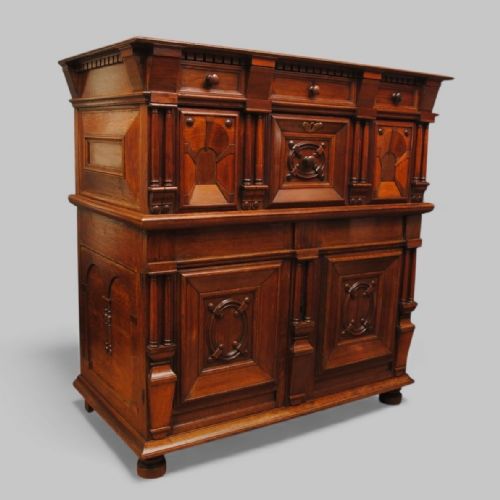


Carved Oak Buffet Press
A carved oak buffet press brings centuries of craftsmanship into a room, offering sturdy storage rooted in historical design.
Carved Oak Buffet Press
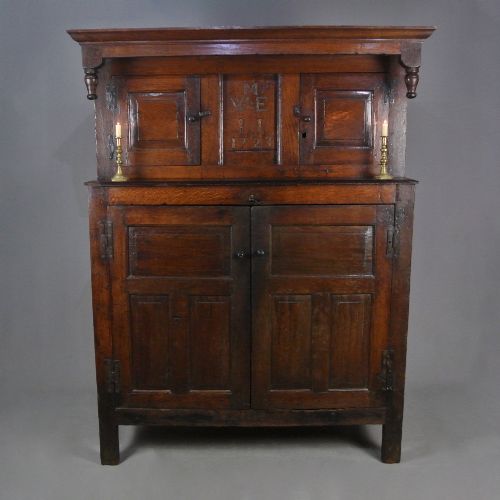
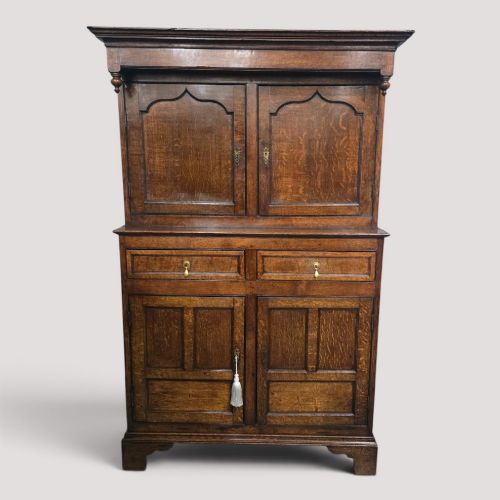
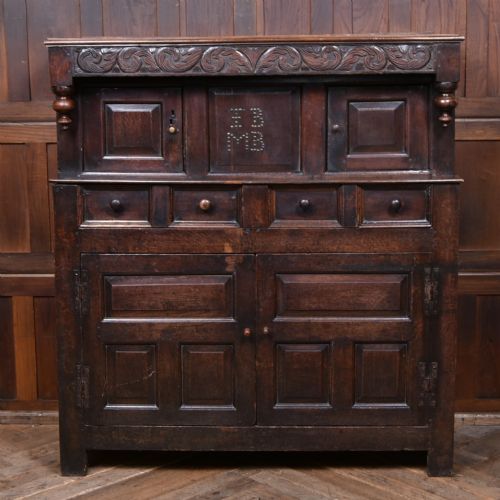
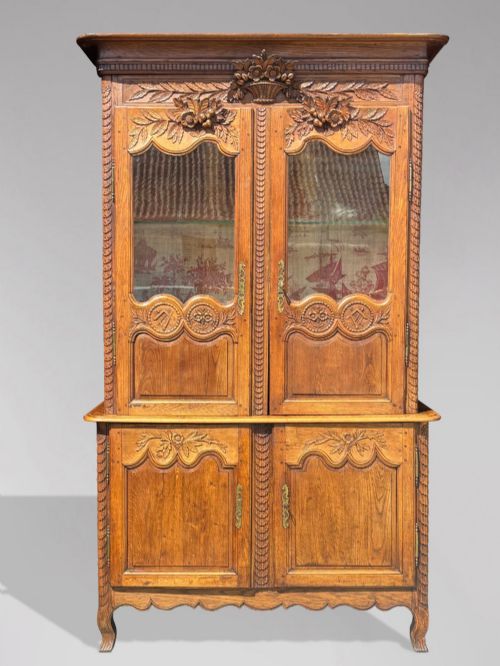
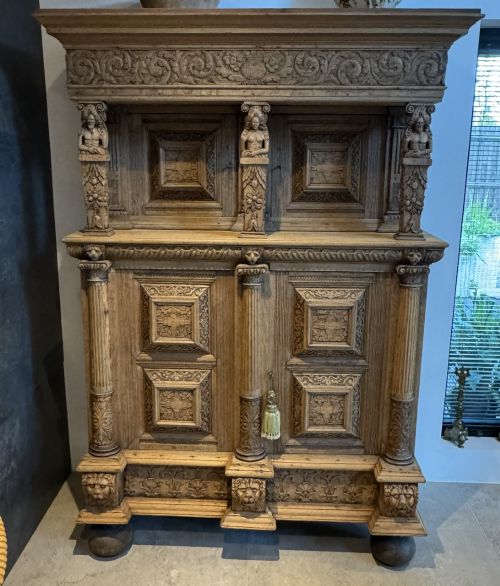
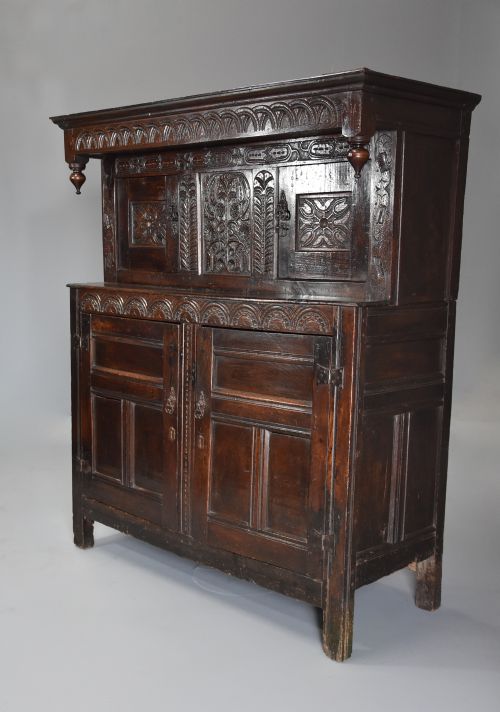
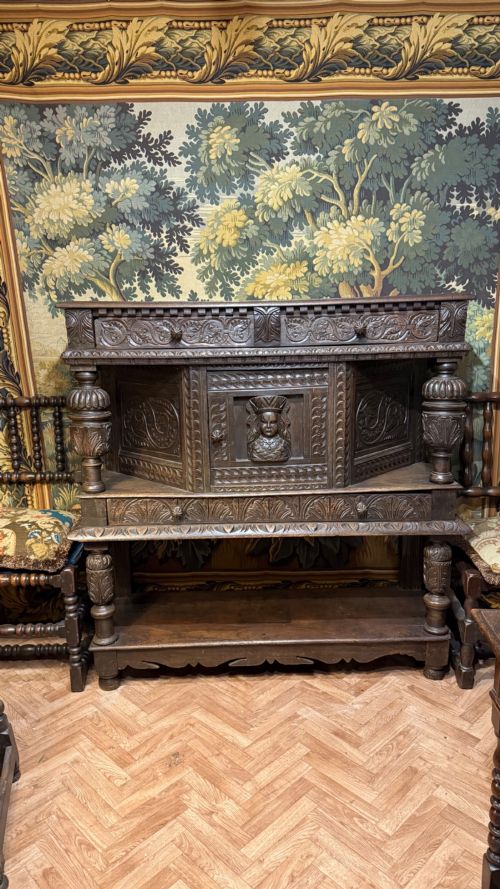
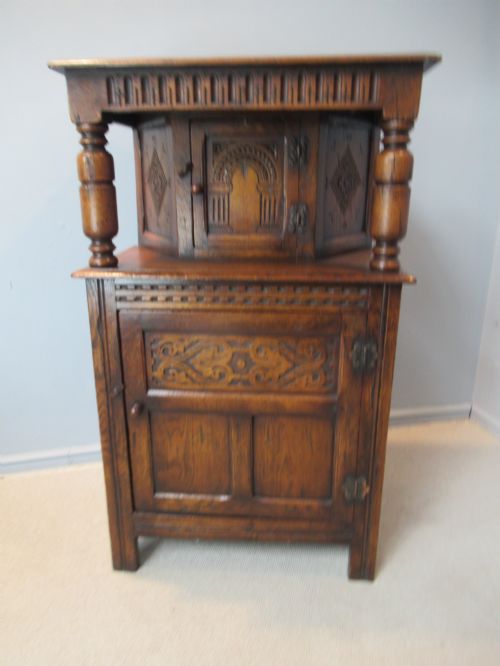
A carved oak buffet press encompasses robust storage furniture built primarily from heavy timber, spanning periods from the sixteenth century through the early twentieth century. Buyers seeking this search phrase encounter various forms, most commonly court cupboards, livery cupboards, and press cupboards originating from English, Welsh, and French traditions.
The pieces on this page lean heavily towards seventeenth-century examples alongside later revivals, reflecting the enduring appeal of panelled doors and enclosed shelving. Regional variations such as Lancashire buffets and West Country court cupboards demonstrate the distinct local joinery methods developed during the Elizabethan and Jacobean eras.
Formations range from tall housekeepers' cabinets and buffet deux corps to smaller cottage cupboards designed for domestic utility. Structural configurations typically divide into upper and lower tiers, providing both display surfaces and enclosed compartments for household goods.
What varies in quality
The standard of carving defines the visual hierarchy, distinguishing deeply undercut, crisp architectural detail from shallow, hurried surface decoration. Original timber surfaces and untouched patina command greater regard than pieces with extensive timber replacement or later alterations.
Structural integrity depends on the tightness of the original joined framework and the stability of the primary oak boards against warping. Regional proportion and the survival of period ironwork further separate standard utilitarian storage from exceptional cabinetmaking.
Listings incorporate regional forms from England, Wales, and France, utilising oak alongside walnut, fruitwood, elm, and iron hardware.
The Carved Oak Buffet Press Glossary
- Court Cupboard
- A traditional tiered cabinet used for displaying plate and storing food or linens. These pieces often feature an enclosed upper section supported by turned pillars.
- Livery Cupboard
- A smaller storage piece historically used to ration food and candles to household staff. They frequently incorporate pierced splines or turned spindles for ventilation.
- Buffet Deux Corps
- A large two-stage cabinet originating in France, featuring a smaller upper cupboard set upon a deeper base. This form provides substantial vertical storage capacity.
- Joined Cupboard
- Furniture constructed using mortise and tenon joinery rather than nails, typical of sixteenth and seventeenth-century workshops. This method creates a rigid skeletal frame to hold heavy panel boards.
- Patina
- The surface sheen developed through decades of oxidation, wax polishing, and physical handling. Collectors value this visual depth as an indicator of age and continuous use.
Carved Oak Buffet Press: Frequently Asked Questions
What is a court cupboard?
A court cupboard is a form of antique storage furniture featuring distinct upper and lower compartments, often supported by heavy turned columns.
Originally utilised in great houses for displaying silver and serving food, these pieces evolved into domestic storage for household linens.
How old are these cupboards?
The pieces listed span from the sixteenth century through to early twentieth-century revivals, encompassing Elizabethan, Jacobean, and Georgian periods.
Earlier examples display seventeenth-century joinery techniques, while later pieces imitate these historical styles using period oak.
Where were these pieces made?
Origin locations include English counties such as Lancashire and the West Country, alongside Welsh workshops and French regional centres like Normandy.
Local timber availability dictated the choice of oak, elm, walnut, or fruitwood used by regional cabinetmakers.
How do I care for antique oak?
Maintaining antique oak involves applying natural beeswax sparingly to nourish the wood and preserve the existing surface patina.
Keep these heavy timber pieces away from direct heat sources and sudden humidity changes to prevent timber splitting.