


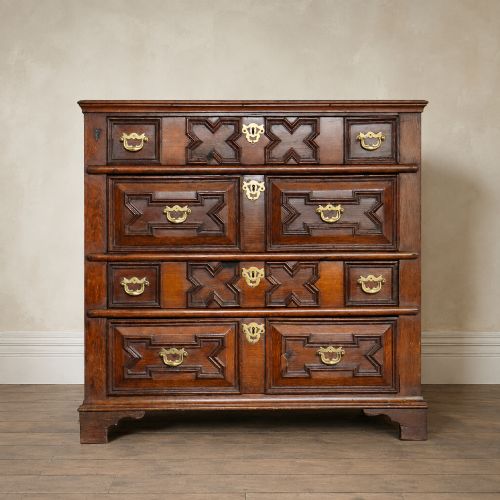
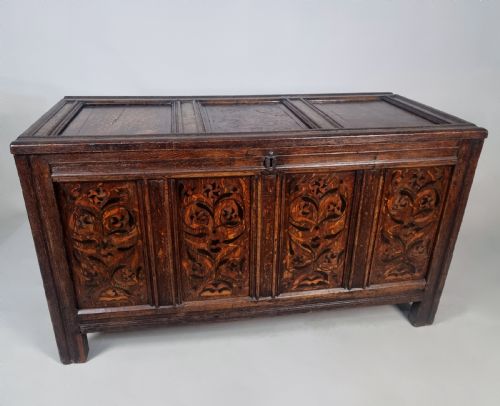
Jacobean Oak Furniture
Jacobean oak furniture gathers heavy timber chests, joint stools and refectory tables that bring robust character and centuries of domestic history into a room.
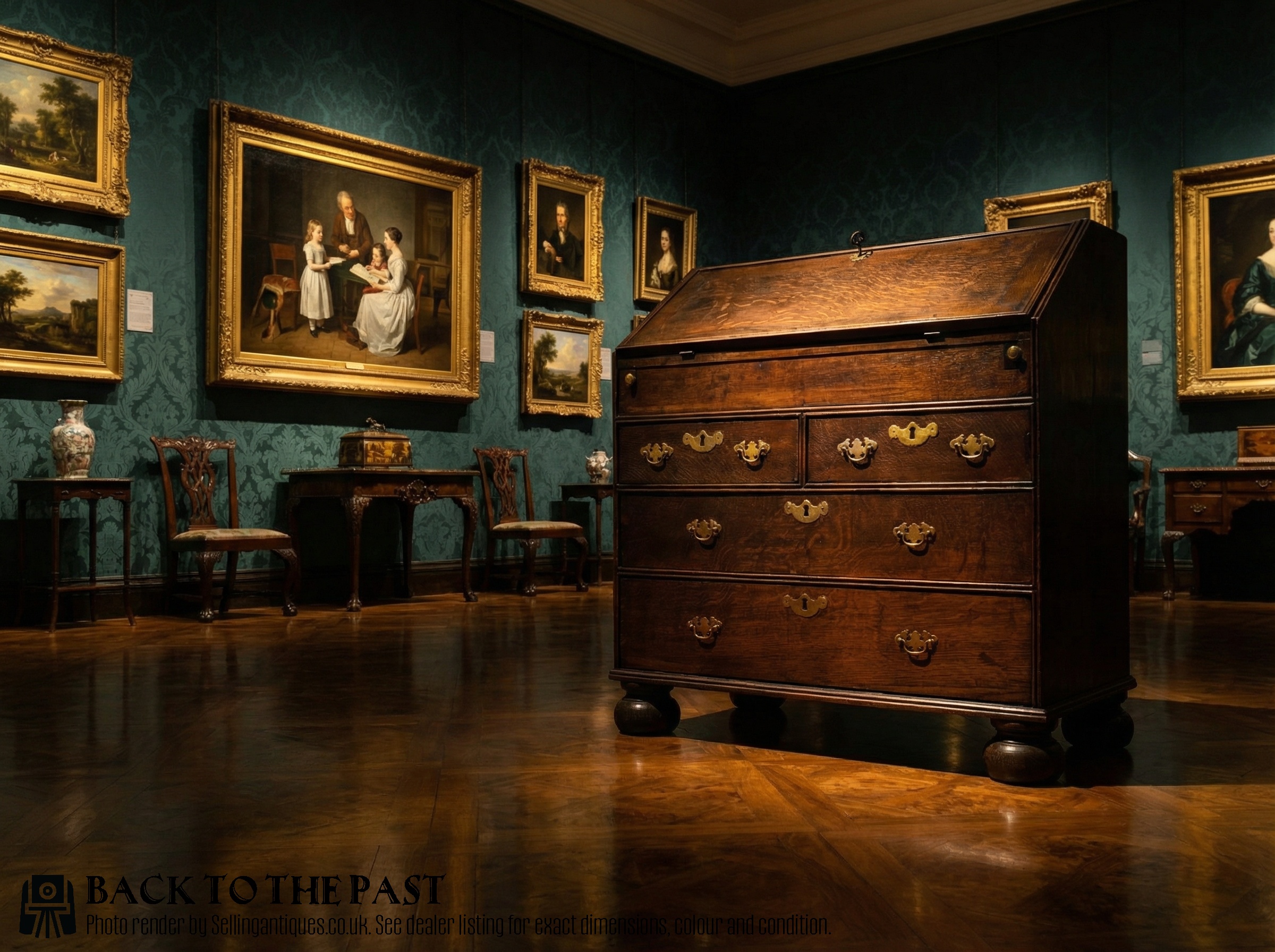
Jacobean Oak Furniture
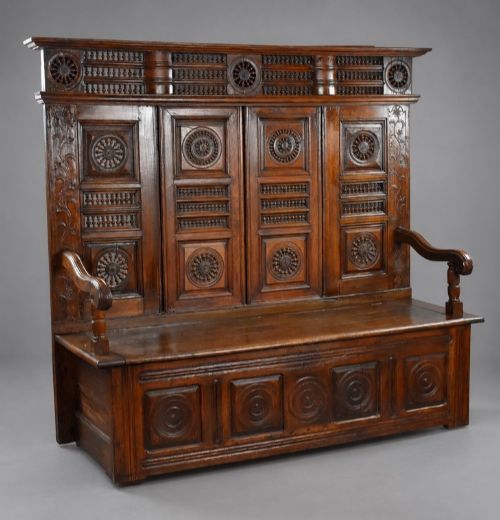
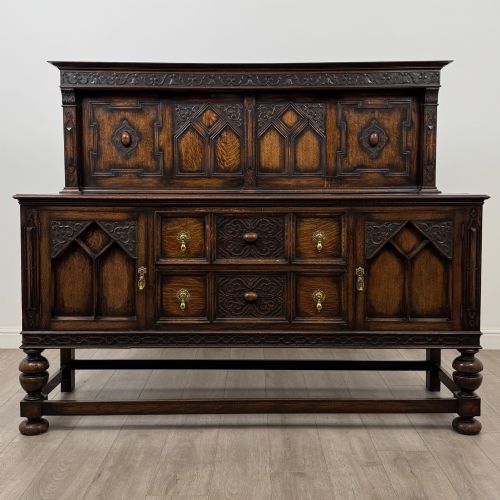
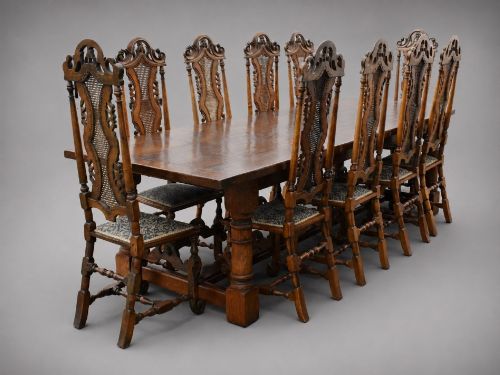
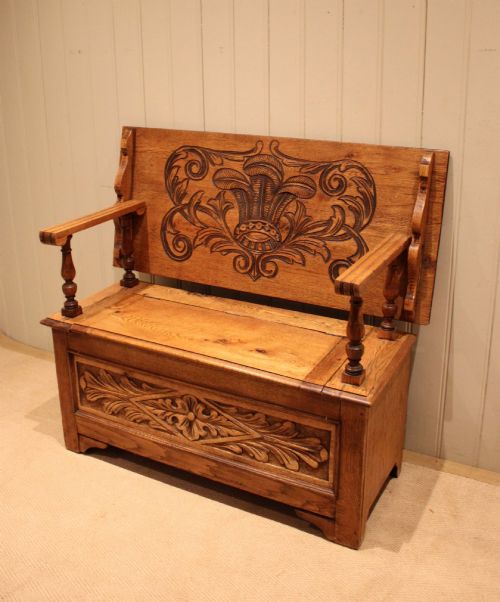
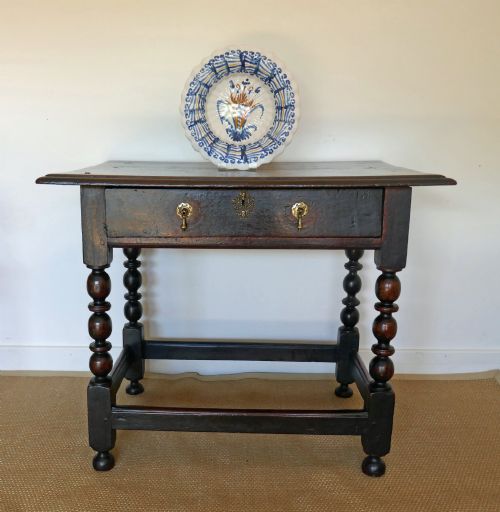
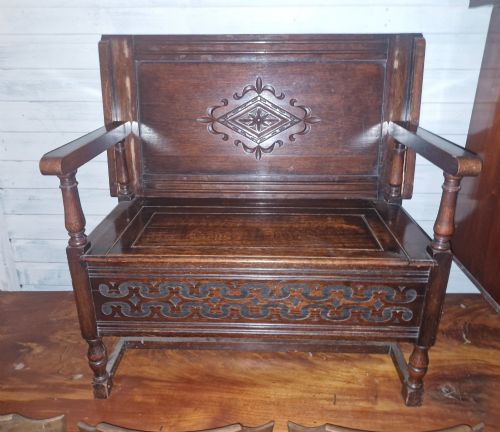
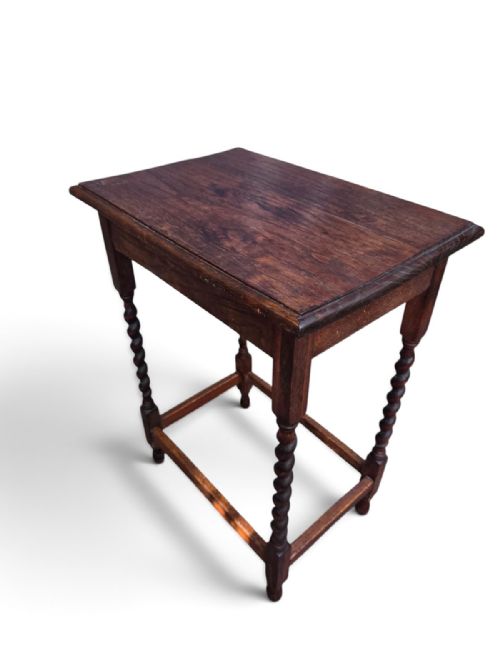
Jacobean oak furniture encompasses pieces built across the seventeenth century alongside later revivals from the Edwardian era and the early twentieth century. Buyers seeking this aesthetic encounter everything from sturdy joint stools and side tables to large dining sets, geometric moulded chests of drawers and panelled settles.
The material focus centres firmly on solid oak, frequently paired with secondary woods like elm for seating components. Original seventeenth-century examples sit alongside later Edwardian interpretations designed to capture the same architectural presence in domestic spaces.
Materials and construction
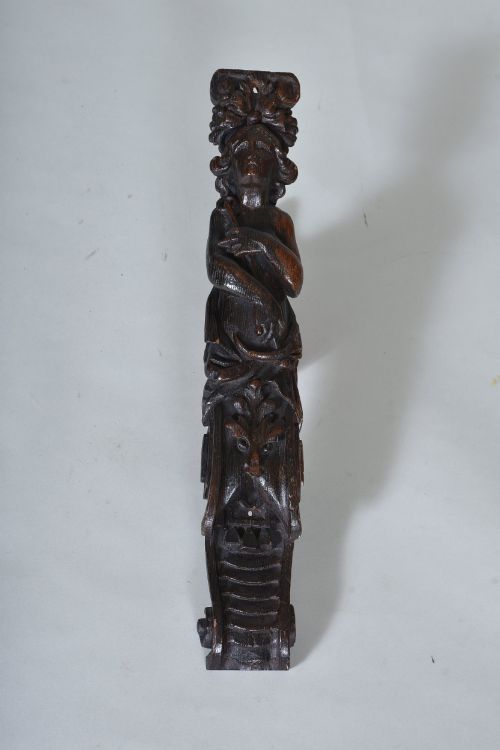
Makers utilised solid oak alongside elm, shaping boards with hand tools and securing joints through pegged tenons rather than modern fasteners. Surfaces often incorporated marquetry inlay, geometric mouldings and crisp hand-carving to break up large expanses of timber.
Metal fittings relied on brass and iron for hinges, handles and strong boxes, adding utilitarian detail to heavy timber carcasses. Natural grain patterns and patination developed over decades of use, distinguishing period work from revival pieces.
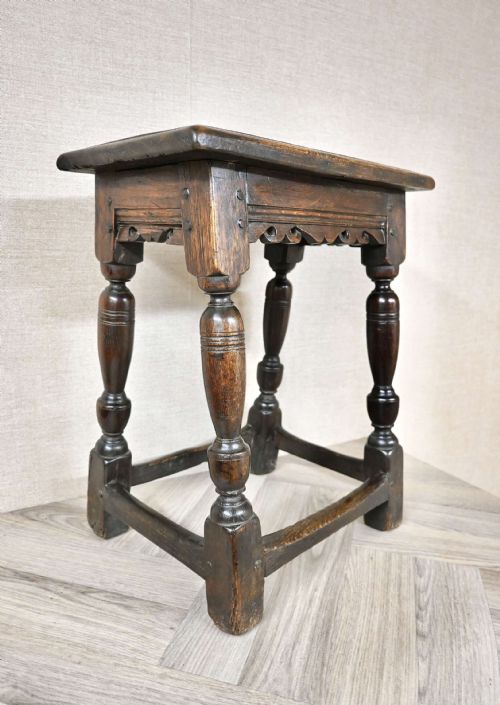
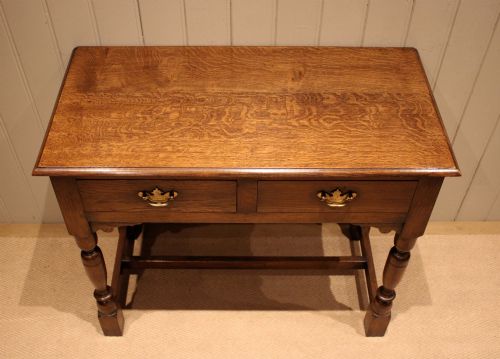
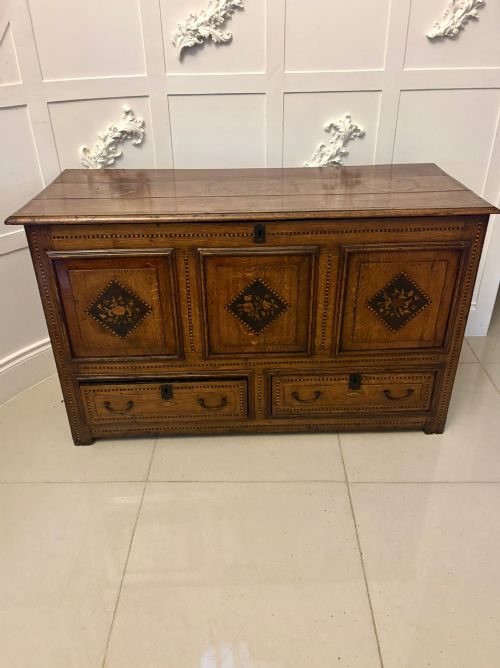
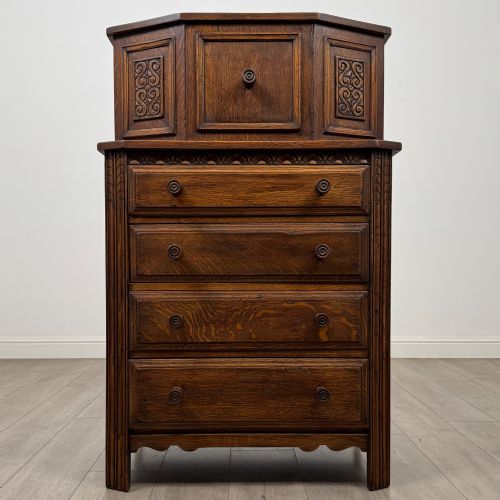
Common forms across the inventory include joint stools, mule chests, refectory dining tables, and geometric moulded chests of drawers.
Assessing quality
Quality rests in the depth of timber selection and the crispness of the hand-carved details or geometric mouldings. Pieces retaining their original boards and uncompromised structural joinery command greater appreciation than those altered significantly over time.
The proportion and balance of a side table or chest dictate its visual success, with bolder mouldings and harmonious timber grain marking the upper tier of surviving examples.
The Jacobean Oak Furniture Glossary
- Joint Stool
- A sturdy wooden stool constructed with pegged mortise and tenon joints rather than turned legs glued into seats. These items served as portable seating or small side tables in seventeenth-century homes.
- Wainscot Armchair
- A heavy wooden chair featuring panelled backboards and solid arms, constructed predominantly from oak during the seventeenth century. They stood as prestigious items of seating reserved for heads of households.
- Refectory Table
- A long dining table featuring substantial wooden legs connected by low stretchers for stability. Seventeenth-century versions often paired oak frames with single-plank elm tops.
- Marquetry Inlay
- The decorative art of applying small pieces of veneer to form geometric or floral patterns on timber surfaces. This technique added colour contrast and visual complexity to coffers and chests.
- Geometric Moulding
- Raised rectangular or intersecting wooden profiles applied drawer fronts to create depth and shadow. This stylistic choice defined much of the decorative work seen on later seventeenth-century chests.
Jacobean Oak Furniture: Frequently Asked Questions
How do I spot a seventeenth-century original?
Authentic seventeenth-century pieces display hand-tool marks, pegged joinery, and natural timber shrinkage consistent with age. Iron or brass hardware should match the period of construction.
Examination of the underside and interior boards often reveals the tool methods and timber ageing that separate genuine early pieces from Edwardian revivals.
Were joint stools used for sitting?
Joint stools served primarily as flexible household seating around dining tables and near hearths. Their sturdy frame construction also allowed them to double as small side tables or stands.
Households utilised their compact footprints to move seating easily between rooms as daily activities demanded.
How do I care for old oak furniture?
Maintain timber stability by placing pieces away from direct heat sources and sudden temperature fluctuations. Regular dusting with a dry cloth protects the wax finish and encourages natural patination.
Avoid modern liquid polishes that can build up on the grain and dull the historical surface texture.
What is a mule chest?
A mule chest combines the deep storage space of a traditional coffer with one or more drawers built into the base. This design allowed owners to access linens without disturbing items stored on top.
Carpenters frequently embellished these chests with panelling, marquetry inlay, or carved details across the front facade.