


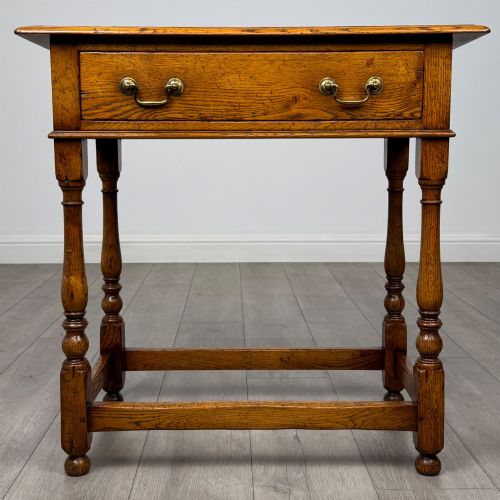
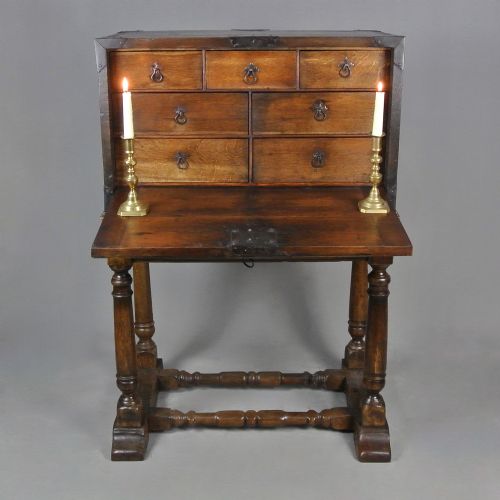
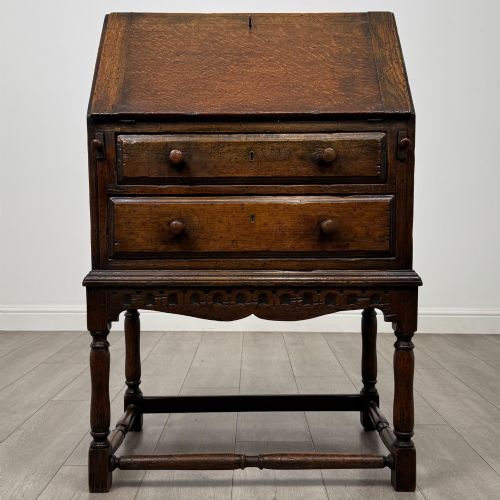
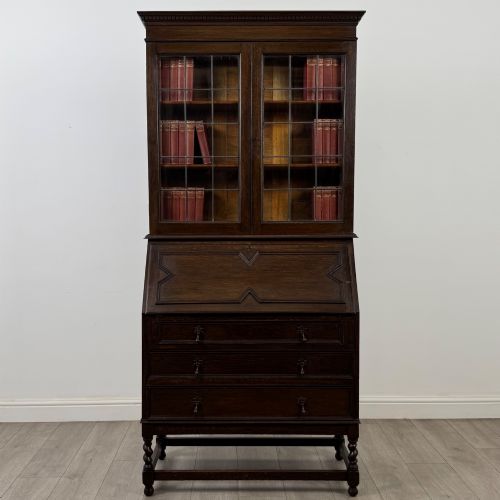
Jacobean Oak Desk
Jacobean oak desk pieces combine heavy timber construction with period revival carving, offering collectors durable workspace heritage.
Jacobean Oak Desk
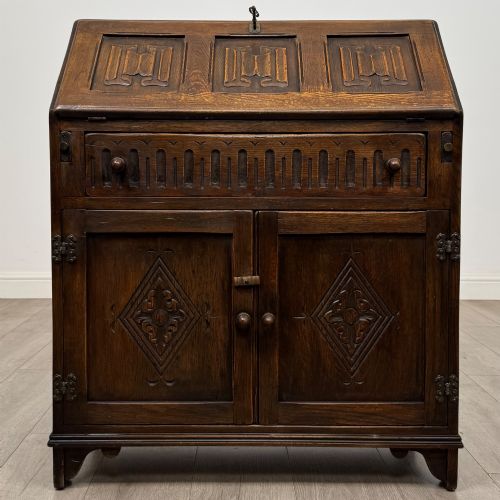
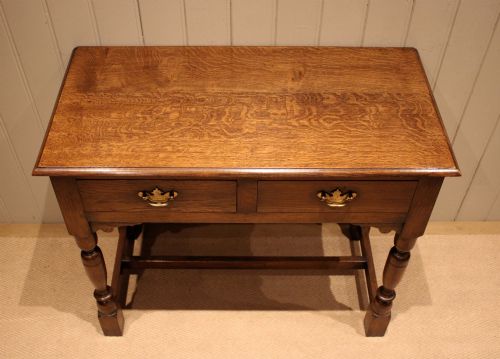
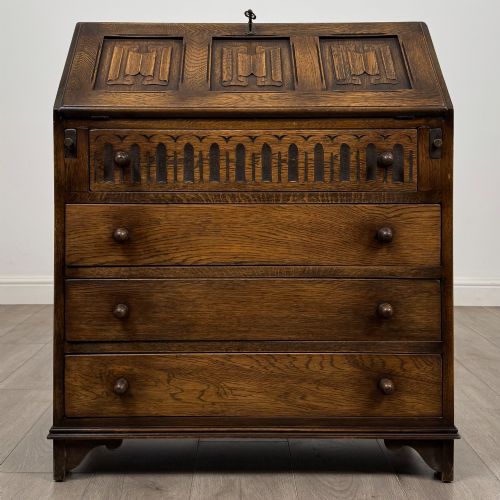
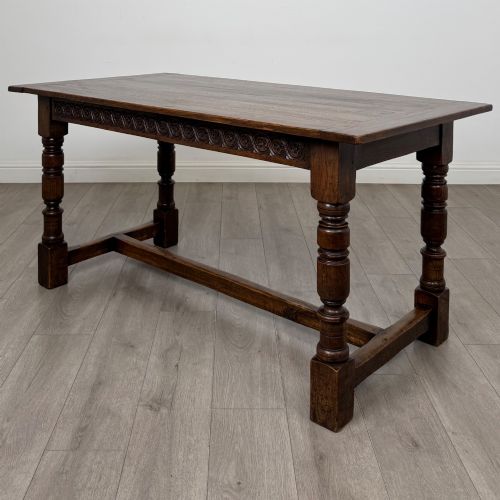
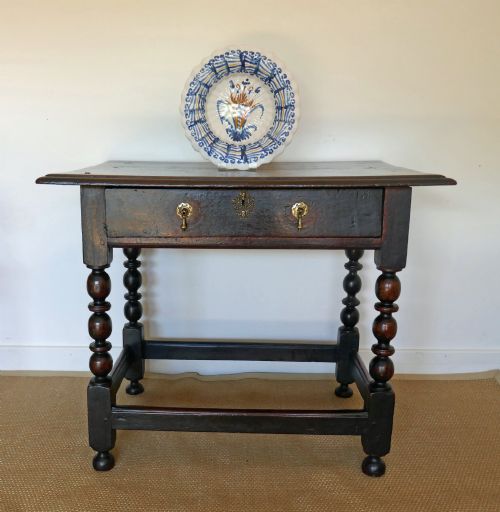
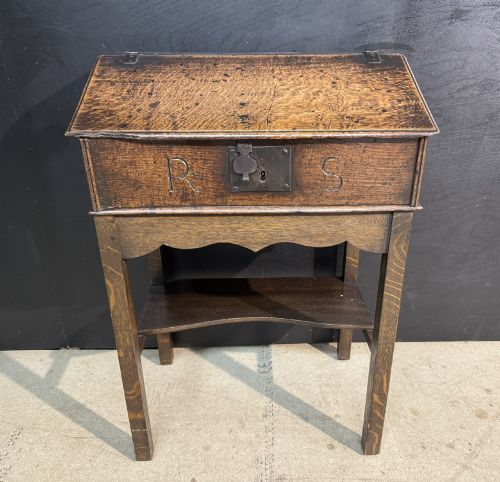
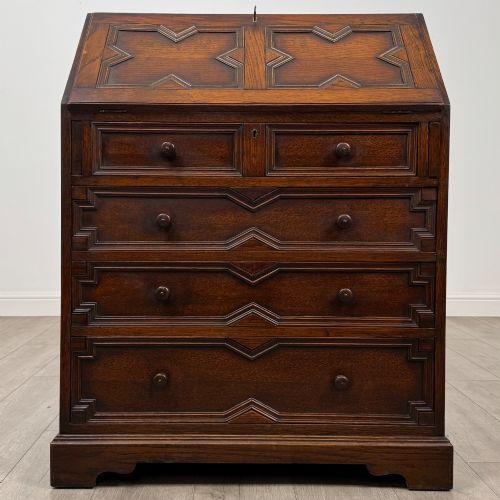
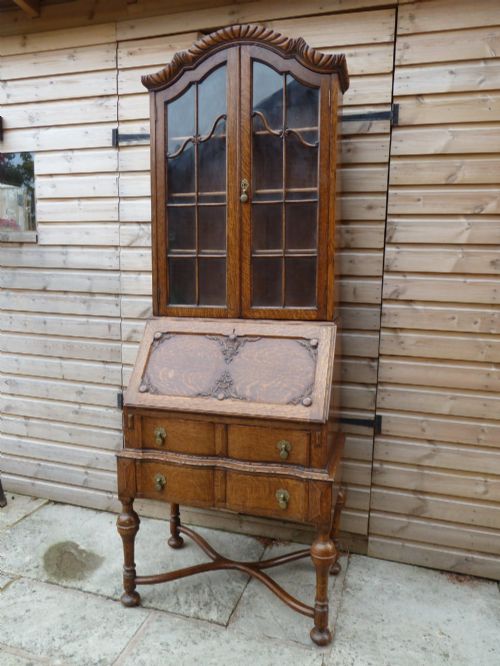
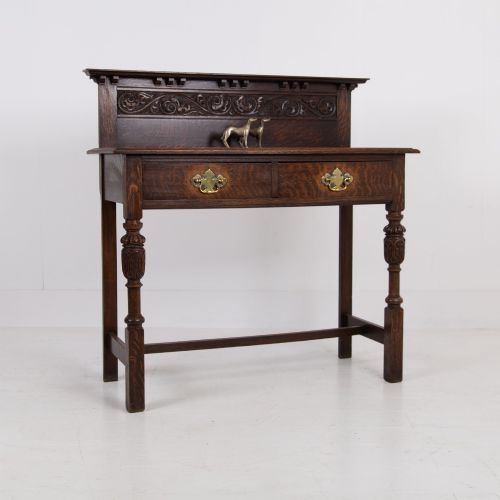
A jacobean oak desk covers a range of formats from early writing slope boxes and bureau bookcases to later revival pedestals.
The selection includes authentic 17th century pieces alongside Edwardian, Victorian and 1920s revival interpretations constructed in solid timber.
Buyers encounter slant front writing surfaces, drawers and internal compartments designed for correspondence and document storage.
How they were made
Construction relies heavily on solid oak joined with traditional methods, often complemented by brass handles, iron hardware and occasionally inset leather surfaces.
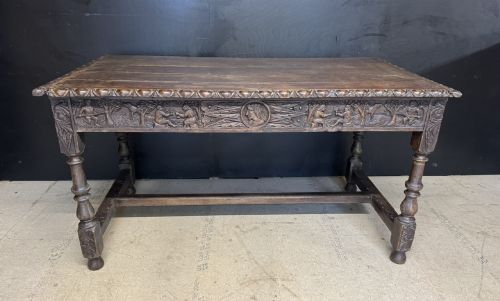
Surface ornamentation utilises carved linenfold patterns, geometric panels and deep relief detailing reflective of 17th century and revival aesthetics.
Several survival boxes retain internal secret drawers designed to outsmart historical tax collectors and snooping family members.
What varies in quality
Quality separates through the depth and crispness of hand-carved decoration compared to mechanical or later shallow tooling.
The integrity of the timber, the presence of original brass or iron hardware and the preservation of a deep natural patina dictate the standing of an individual piece.
Wylie & Lochhead·Gillows Of Lancaster
The Jacobean Oak Desk Glossary
- Bureau
- A writing desk with a sloping hinged flap that opens to reveal a fitted interior of pigeonholes and small drawers.
- Bible box
- A small wooden desk box or chest historically used to store folio volumes and important documents.
- Linenfold
- A style of carved wooden panelling resembling folded vertical linen fabric, common on early oak furniture.
- Jacobean revival
- A 19th and early 20th century design movement replicating the heavy proportions and ornamentation of the early 17th century.
- Patina
- The surface sheen and mellowing developed on timber over centuries of handling and exposure.
Jacobean Oak Desk: Frequently Asked Questions
Are these desks comfortable for daily computer work?
These historical pieces were built for handwriting and document storage rather than modern office technology. Their kneehole clearances and surface heights reflect older ergonomic standards.
Buyers often pair them with adjustable seating or use them for occasional laptop use while retaining their traditional character.
How do I distinguish 17th century pieces from 19th century revivals?
Original 17th century examples display hand-split timber, pegged joinery, and natural wear patterns accumulated over hundreds of years. Revival pieces from the Victorian and Edwardian eras show machine-sawn components and standardised construction methods.
Examining the underside and interior drawer linings usually reveals the tool marks and ageing specific to each period.
What maintenance does solid oak require?
Solid oak furniture benefits from stable indoor humidity and protection from direct heat sources that can dry out the timber. Regular dusting with a dry cloth and occasional application of appropriate wax maintains the surface finish.
Avoiding harsh chemical polishes preserves the historic patina developed over generations.
Did these desks always have leather inserts?
Writing surfaces varied according to the specific form and period of the desk. While many bureau slopes and box desks feature plain wood, Victorian and revival library desks frequently incorporated inset leather panels.
These leather surfaces provided a smooth, quiet medium for quill and pen work.