



Heavy Carved Oak Desk
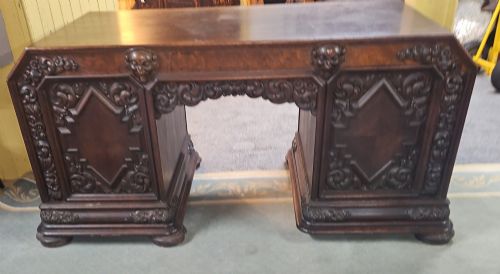
A heavy carved oak desk brings substantial presence to a room, offering deep relief work and solid timber construction built to endure.
Heavy Carved Oak Desk
A heavy carved oak desk represents the grander side of nineteenth and early twentieth century cabinet making, often drawing on revival styles like Gothic, Jacobean and Renaissance. These items command attention through vigorous ornamentation, deep panel work and sturdy proportions that suit traditional studies or libraries.
While the search specifically targets desks, the broader selection includes related forms such as writing tables and pedestal desks, alongside occasional hybrid pieces that blur the line between dressing tables and writing furniture. Buyers will frequently encounter Victorian interpretations featuring bold carving, alongside pieces dating from the nineteen-twenties.
The material palette centres firmly on solid oak, though related items incorporate walnut, brass hardware, and contrasting inserts of leather or velvet on writing surfaces. Such pieces were built for serious utility, combining architectural presence with practical workspace.
How they were made
Makers utilised dense oak timbers, selected for strength and finished with hand-carved relief detailing that defines styles from Gothic Revival to Arts and Crafts. Joinery relied on traditional framing methods to support the substantial weight of the timber and the heavy use expected of a working desk.
Surfaces often incorporated inset panels of leather or velvet to provide a smooth writing plane within the heavily moulded wooden borders. Brass handles, key escutcheons and structural brackets were frequently employed to secure and accent the substantial framework.
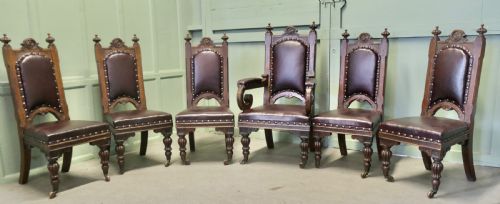
Among the heavy oak and revival styles sits an unusual nineteenth-century cockfighting chair, proving Victorians took their seating arrangements very seriously.
What varies in quality
The distinction between standard workshop output and superior examples lies in the crispness and depth of the carved ornamentation, where confident chiselling outlasts shallow mechanical work. Proportion and timber selection also dictate standing, with tightly grained oak holding up better to centuries of atmospheric change.
Hardware integration and secondary woods reveal the care taken during construction, separating heavy utility items from truly distinguished library furniture.
S&H Jewell
The Heavy Carved Oak Desk Glossary
- Gothic Revival
- A design movement drawing inspiration from medieval architecture, featuring pointed arches, tracery and heavy linenfold or geometric carving. This style dominates much of the nineteenth century seating and desk production.
- Jacobean Revival
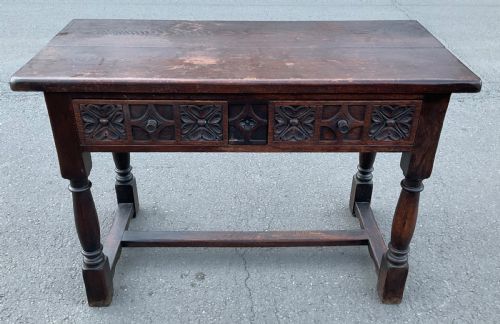
- An early seventeenth century style revived in the Victorian era, characterised by turned legs, strapwork carving and austere rectangular proportions. Pieces in this idiom often display dark finishes and robust joinery.
- Pedestal desk
- A large freestanding writing table supported by two banks of drawers or cupboards beneath the top. They offer substantial storage alongside a dedicated central seating recess.
- Arts and Crafts
- A late nineteenth century movement emphasising honest construction, visible joinery and handcrafted decoration over industrial mass production. Items from this tradition show restrained yet purposeful ornamentation.
- Writing table
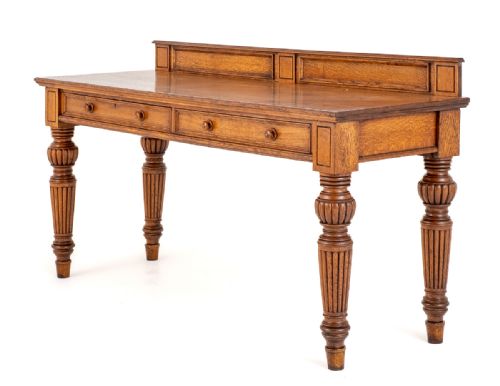
- A freestanding table designed primarily for correspondence, typically featuring one or more drawers built into the frieze beneath the top. They prioritize lighter proportions than pedestal variants while maintaining solid timber builds.
Heavy Carved Oak Desk: Frequently Asked Questions
What periods do these desks come from?
The available pieces largely span the Victorian era and the early twentieth century, specifically around nineteen-twenty. Earlier precedents from the eighteenth century occasionally appear in archival records.
Revival movements strongly influence these dates, meaning Victorian makers frequently adopted seventeenth-century or medieval motifs.
How were heavy oak desks used originally?
These furniture items served as principal workspaces for estate management, scholarly research and formal correspondence in large country houses and town residences. Their robust construction was intended to support heavy ledgers, books and writing implements.
They stood as architectural anchors within libraries, studies and morning rooms, signalling the status and literacy of the owner.
How do I care for a heavy carved oak desk?
Maintain the timber by keeping the desk away from direct heat sources and sudden humidity shifts that cause oak to split. Regular dusting of the deep carved recesses preserves the finish without requiring heavy polishes.
Protect leather or velvet writing inserts by avoiding harsh cleaning agents and keeping sharp objects from scoring the surface.
How do I tell revival styles apart?
Gothic Revival pieces display pointed arches, quatrefoils and heavy vertical emphasis, whereas Jacobean Revival relies on strapwork, geometric panels and heavy bulbous turnings. Arts and Crafts items strip away excessive ornament to highlight the natural grain and structural joinery.
Examining the carving depth and secondary woods helps clarify whether a piece follows a medieval or seventeenth-century aesthetic.