

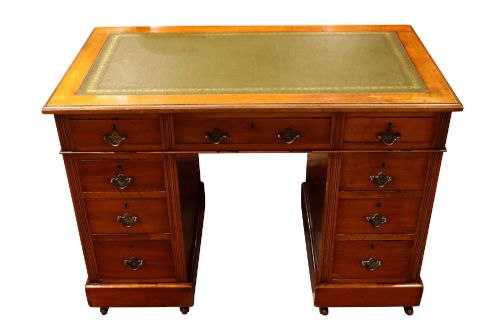
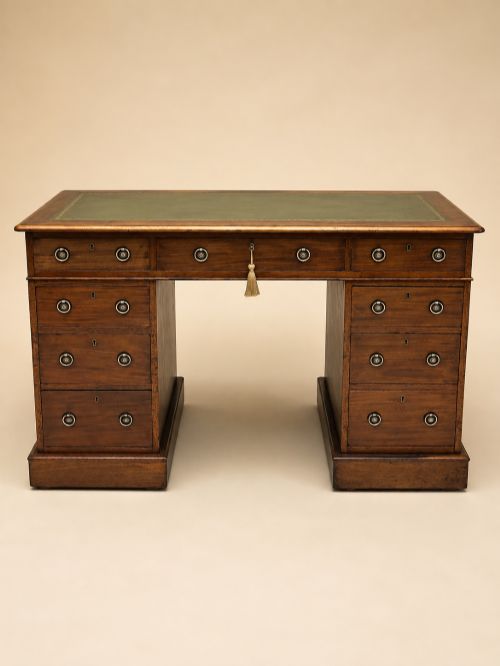
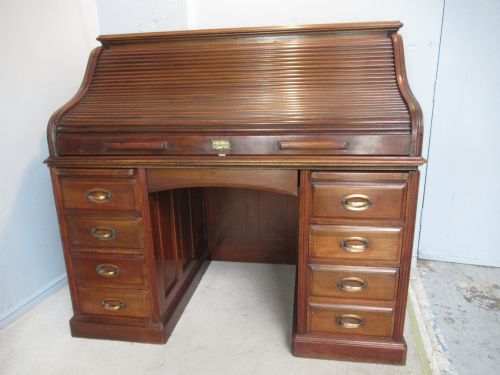
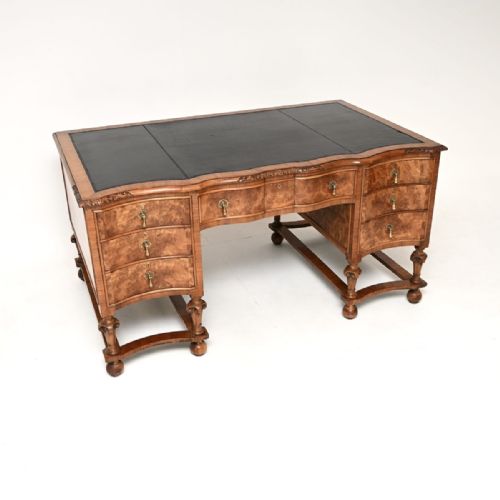
Vintage Carved Writing Desk
A vintage carved writing desk brings solid timber, period presence and purposeful workspace into a room.
Vintage Carved Writing Desk
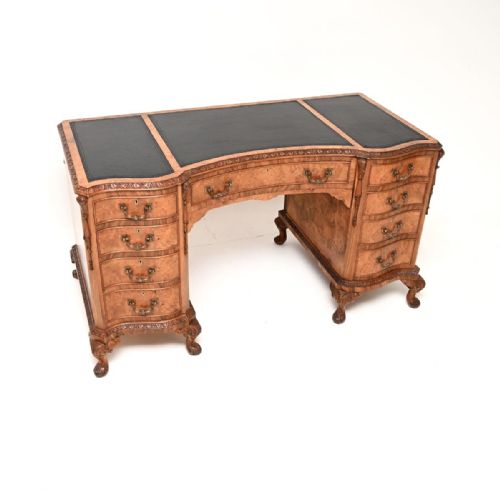
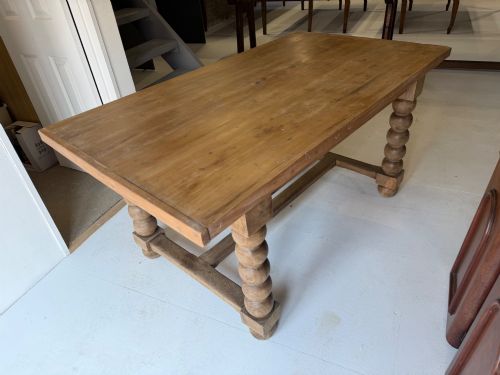
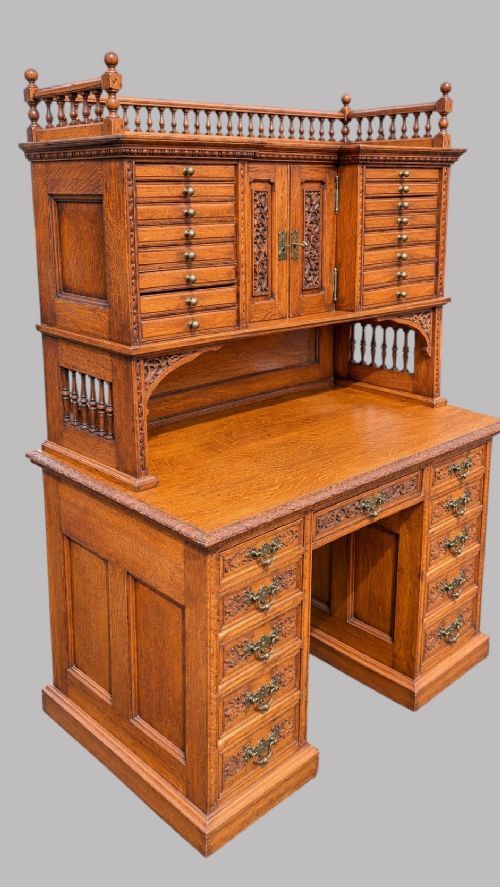
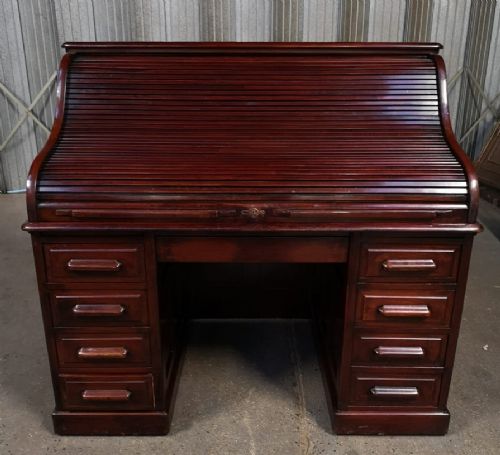
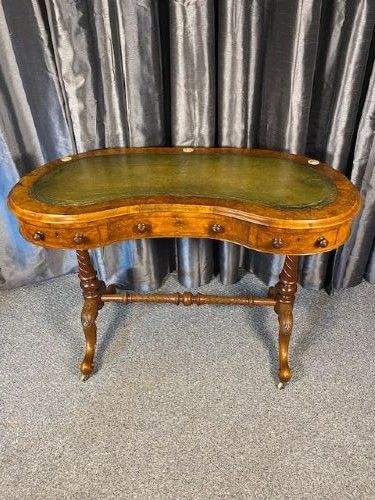
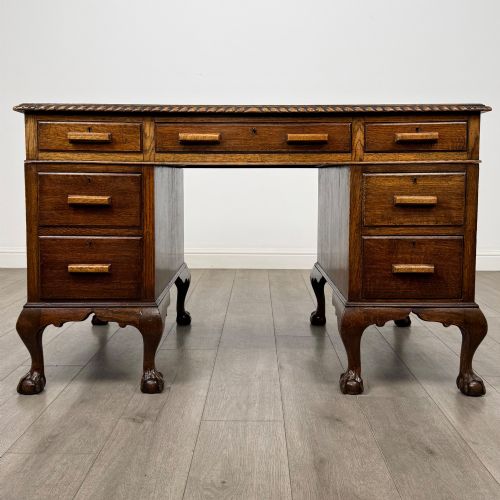
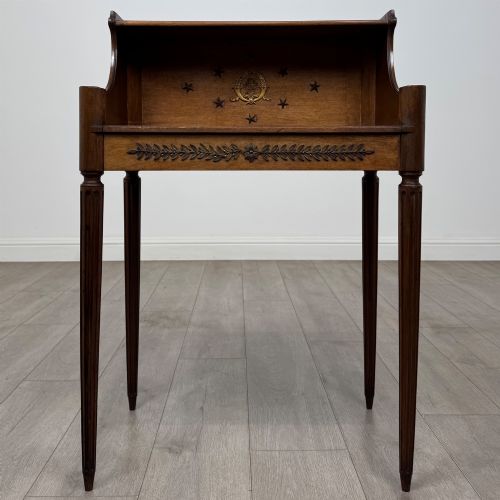
A vintage carved writing desk offers a dedicated workspace rooted in 19th-century and early 20th-century design. Buyers exploring this category encounter pedestal desks, writing tables, bureaux and bureau bookcases dating from the Victorian and Edwardian eras.
The materials span oak, walnut, mahogany and burr walnut, frequently paired with leather writing surfaces and brass hardware. These pieces range from compact nine-drawer pedestal models to large partners desks and carved oak bureaux.
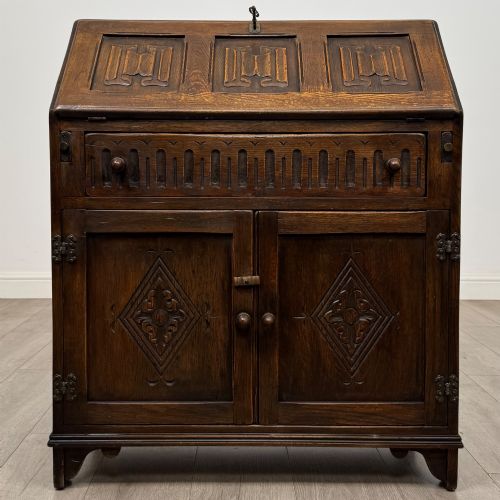
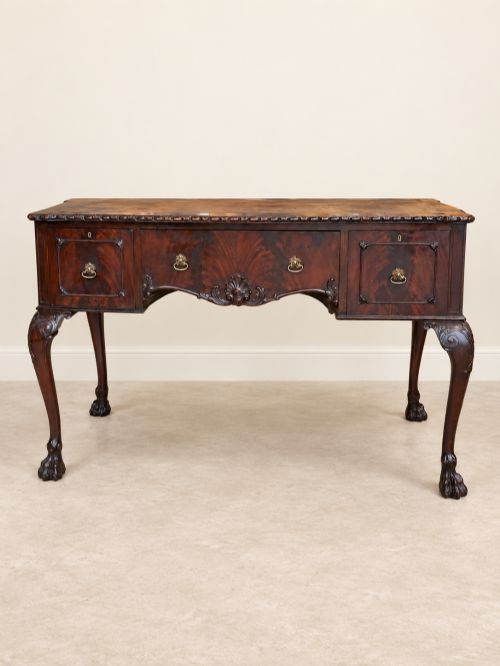
Revival styles dominate the selection, including Jacobean, Tudor, Queen Anne and Chippendale interpretations alongside Arts and Crafts examples. Oak and mahogany versions with linenfold carving or panel detailing appear regularly throughout the listings.
How they were made
Cabinet makers utilised dense hardwoods such as oak, mahogany and walnut for the primary carcases, drawers and framing. Burr walnut veneers provided decorative figured surfaces on drawer fronts and top panels.
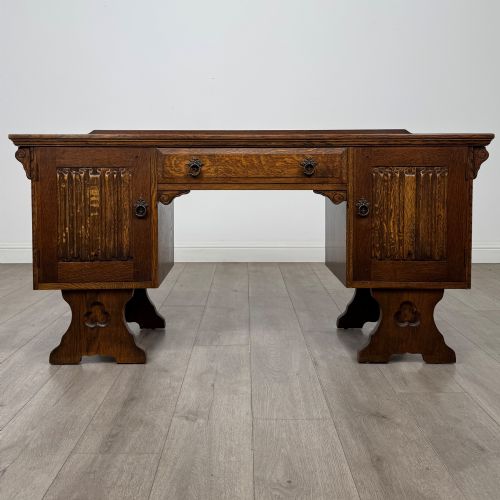
Carving was executed by hand directly into the timber, producing linenfold panels, scrolling foliage and stylistic revival motifs. Brass handles, escutcheons and leather inserts completed the construction of writing surfaces and pedestals.
Listings span oak, walnut, mahogany and burr walnut, incorporating brass hardware and tooled leather writing surfaces across Victorian and Edwardian periods.
What varies in quality
The calibre of timber selection and veneer matching defines the upper tier of these desks. Finely figured burr walnut and dense quarter-sawn oak distinguish superior examples from standard production pieces.
The crispness and depth of hand carving separate workshop pieces from simpler factory outputs. Well-executed linenfold panels, drawer dovetailing and original brass fittings indicate higher standards of period cabinet making.
Maple and Co·Wylie and Lochhead Glasgow·Larkin
The Vintage Carved Writing Desk Glossary
- Bureau
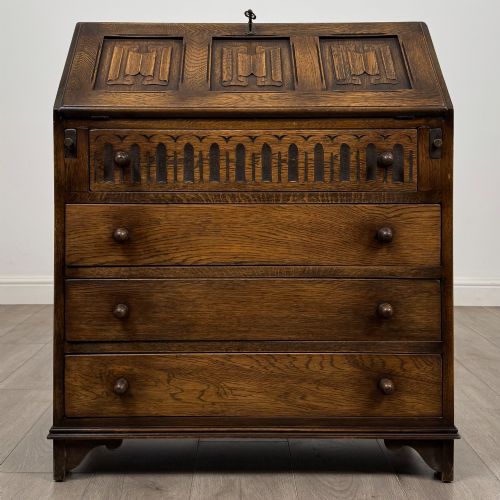
- A writing cabinet featuring a sloping fall-front that opens to reveal internal pigeonholes and small drawers. It often sits upon a chest of drawers or a table frame.
- Pedestal desk
- A freestanding desk comprising two supporting pedestals of drawers with a central writing section. It provides storage on both sides in the case of partners desks.
- Linenfold
- A style of carved wooden panelling that imitates folded linen cloth. It appears frequently on Edwardian oak bureaux and desks.
- Kneehole desk
- A compact pedestal desk with a central recess for the user's legs. These often feature banks of drawers on either side.
- Partners desk
- A large double-sided desk designed for two people to work opposite one another. They incorporate drawers and cupboards accessible from both faces.
Vintage Carved Writing Desk: Frequently Asked Questions
Where should I place a large pedestal desk?
A large pedestal desk requires adequate floor space to allow chairs to pull out comfortably from the drawers. Partners desks suit central room placement where both sides remain visible.
Smaller writing tables and bureaux fit well against walls or within tighter study spaces without dominating the room.
How do I care for a leather writing surface?
Leather writing surfaces benefit from occasional gentle dusting and specialist leather dressings to prevent drying. Avoiding direct sunlight helps preserve the colour of tooled gold borders.
Writing pads provide extra protection when using modern pens or heavy paper.
How do I identify an Edwardian carved desk?
Edwardian desks often display revival styles such as Jacobean linenfold carving or Chippendale motifs. The timber choice frequently includes light oak or rich mahogany.
Construction details and proportions from the early twentieth century distinguish these pieces from heavier Victorian equivalents.