
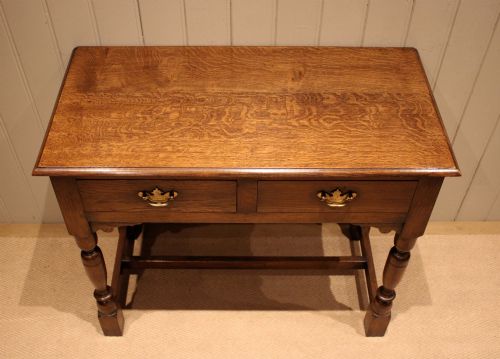


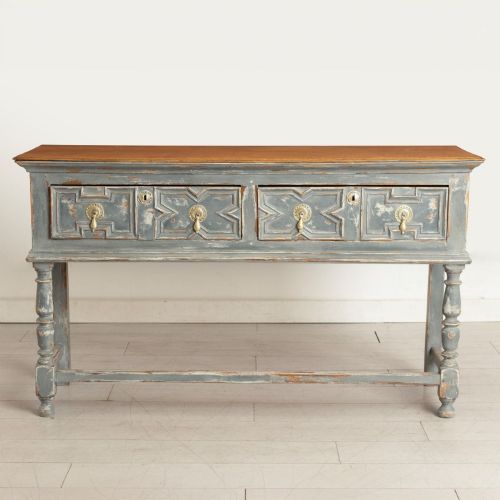
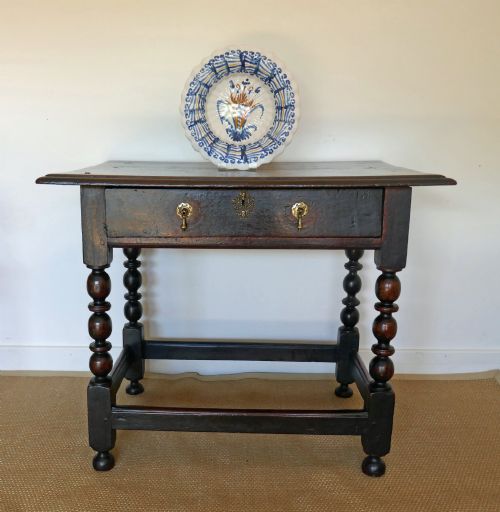
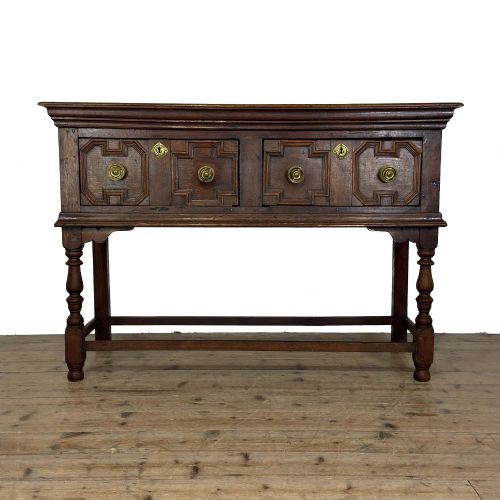
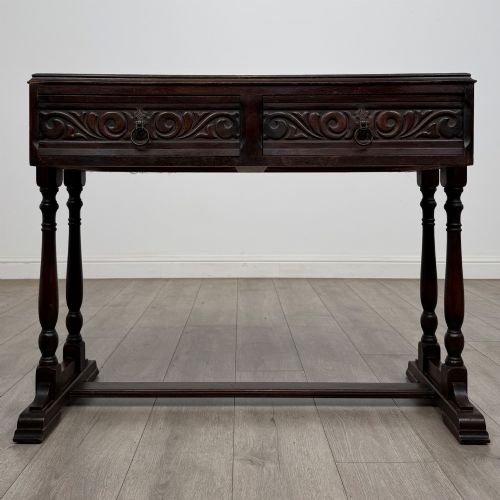
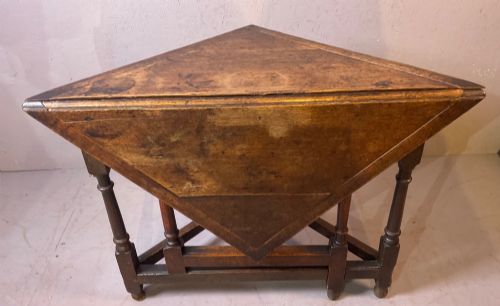
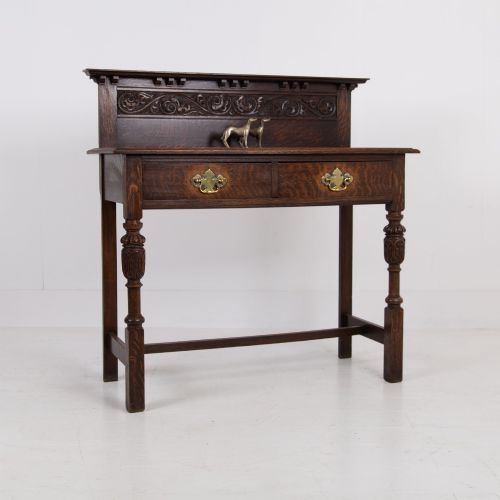

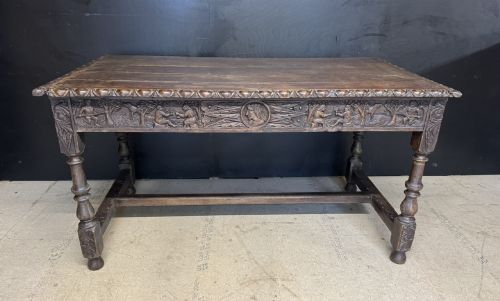
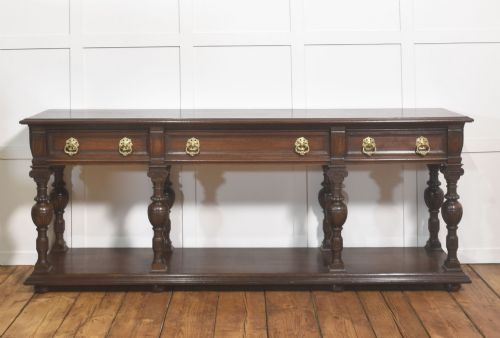
Jacobean Oak Console Table
These jacobean oak console table pieces bring sturdy historic timber and carved character into a modern hallway or living space.
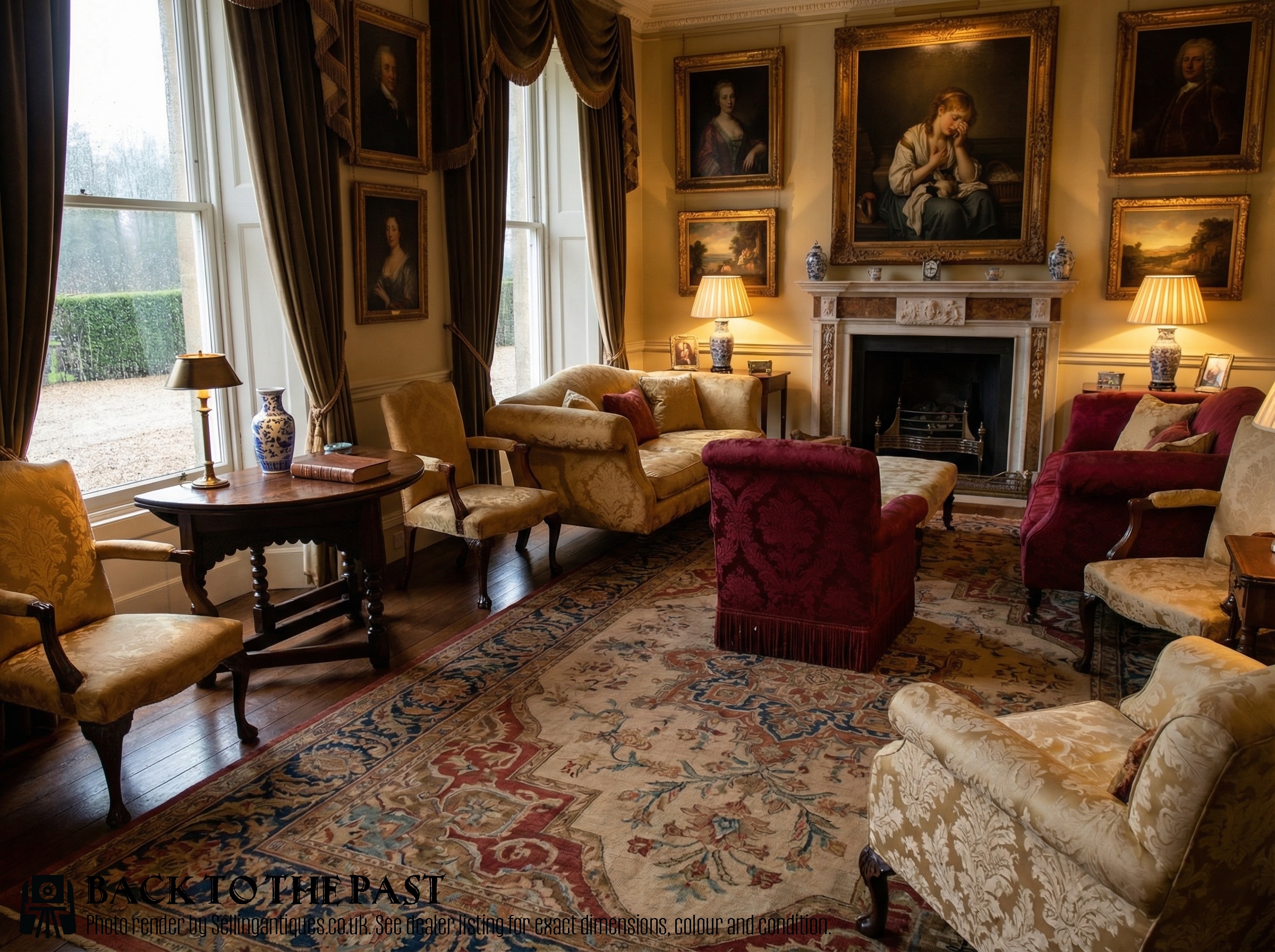
Jacobean Oak Console Table
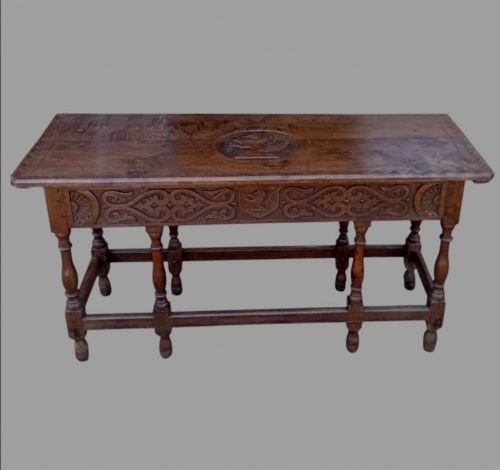
When you search for a jacobean oak console table, you encounter sturdy timber forms originating from the seventeenth century onward, alongside later revivals from the nineteenth and twentieth centuries. The selection spans utilitarian side tables, serving dressers, and narrow hallway furniture designed to stand against a wall.
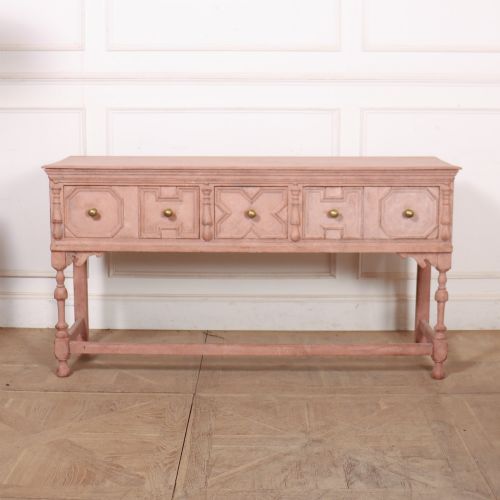
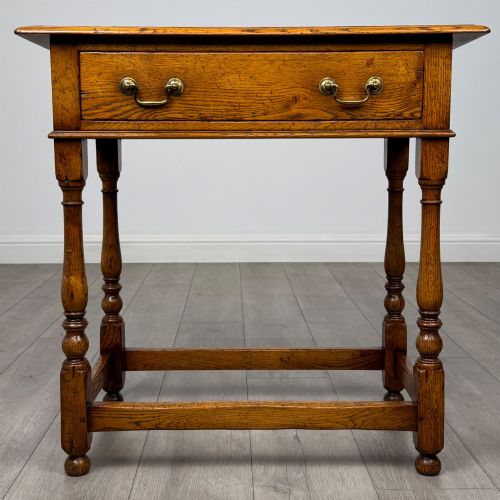
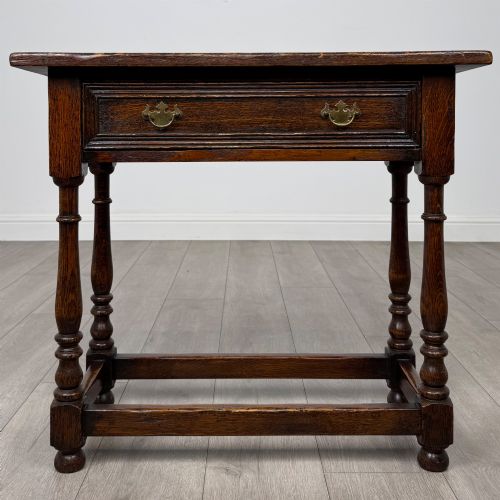
The pieces meeting this description most often date from the 1920s revival period or the late seventeenth century, taking the form of low dresser bases, side tables with drawers, and servers. These items share robust proportions and practical surfaces suited to domestic use.
What varies in quality
Quality rests in the depth and crispness of the carving, the selection of figured oak timber, and the integrity of the original construction. Pieces with bold proportions and well-executed geometric mouldings or balanced turnings stand apart from simpler utilitarian items.
The relationship between the primary timber and secondary elements, such as brass drawer pulls or inlaid sections, dictates the overall refinement of the piece. Period authenticity and the retention of original surface patination elevate seventeenth-century examples above later revivals.
The Jacobean Oak Console Table Glossary
- Jacobean Revival
- A nineteenth and twentieth century style that imitates the heavy carved oak furniture of the early seventeenth century. This revival produced numerous side tables and dresser bases found in modern collections.
- Dresser Base
- A low rectangular table fitted with drawers and occasionally a pot board shelf underneath. These pieces served historically for food preparation and storage in large country houses.
- Barley Twist
- A turned column resembling a spiralling rope found on table legs and supports. This decorative woodworking technique appears frequently on seventeenth century furniture and later revival pieces.
- Pot Board
- An open lower shelf fitted between the legs of a dresser base or side table. Originally utilised for storing pots and heavy kitchen utensils.
- Block Front
- A cabinet or table front characterised by three vertical sections, with the outer sections projecting forward and the centre section recessed. This geometric treatment provides architectural depth to seventeenth century pieces.
Jacobean Oak Console Table: Frequently Asked Questions
How do I date a jacobean oak console table?
Dating relies on examining the construction methods, tool marks, and timber shrinkage visible beneath the piece. Seventeenth-century examples show hand-riven oak and pegged joints, whereas twentieth-century revivals display machine-cut precision.
Secondary indicators include the style of turning, hardware, and overall wear patterns accumulated across centuries of domestic use.
Where should I place a jacobean oak console table?
These narrow tables suit entrance halls, dining rooms, and living spaces where surface area is required without blocking foot traffic. Their shallow depth allows them to sit flush against hallway walls.
Paiing the piece with a mirror or placing it beneath artwork balances the visual weight of the heavy oak timber.
Are these tables solid oak?
The pieces listed under this category utilise solid oak as the primary construction material for tops, frames, and drawer structures. Some revival pieces and later country house tables incorporate related hardwoods.
Checking the grain pattern and underside reveals the consistent use of solid timber across both seventeenth-century originals and 1920s interpretations.