
Dark Oak Leaf Table
A dark oak leaf table offers sturdy practicality and deep historic character, making it a reliable centrepiece for dining rooms and kitchens.
Dark Oak Leaf Table
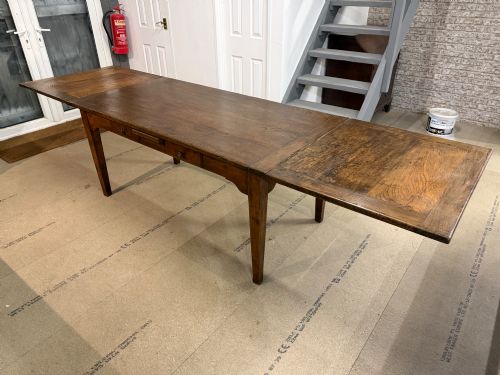
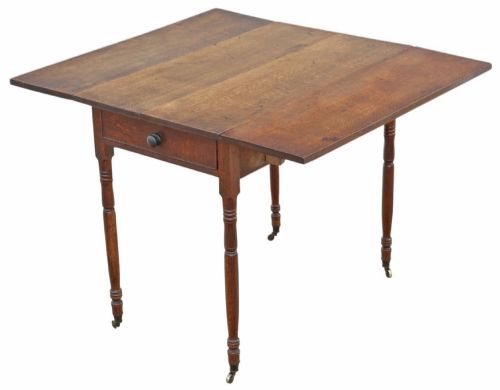
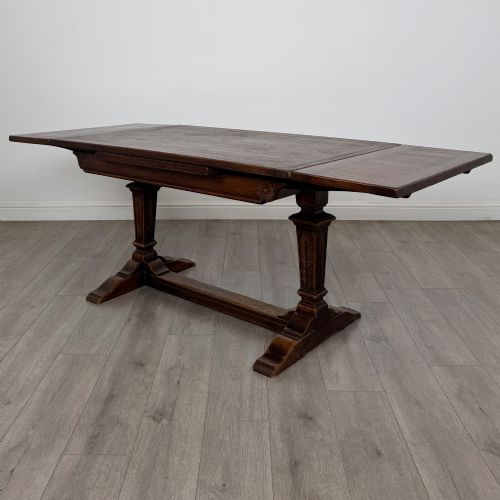
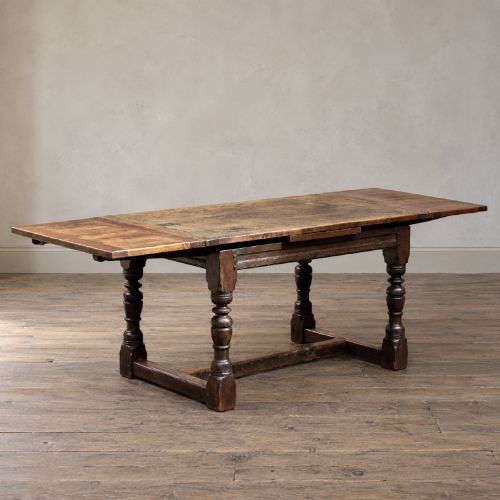
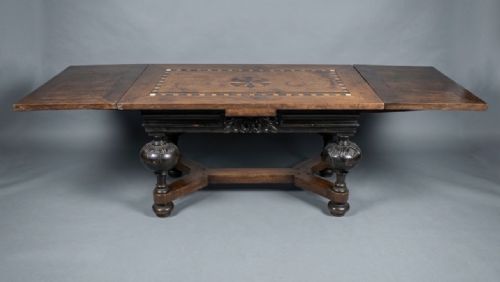
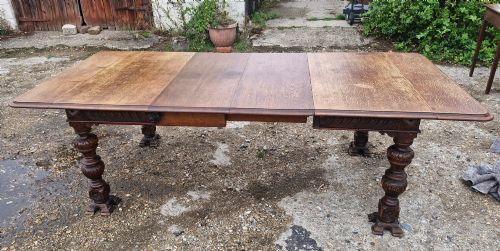
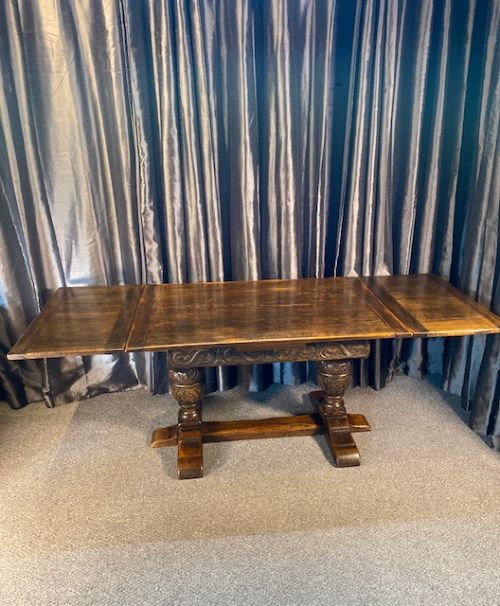
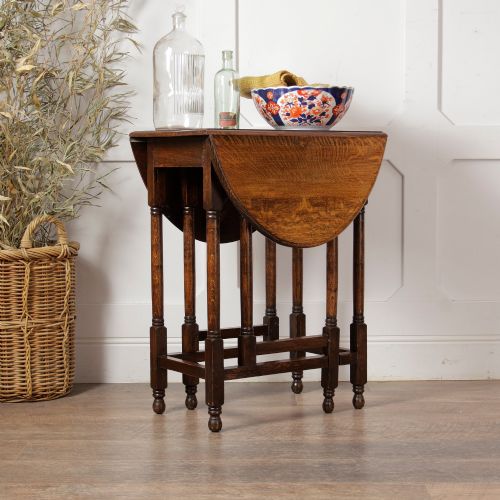
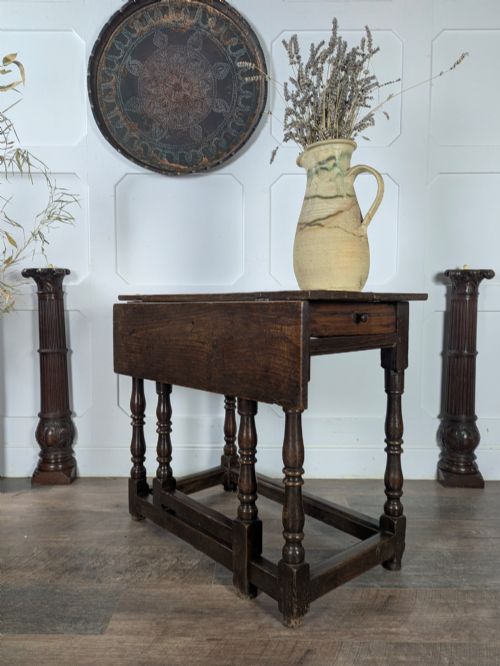
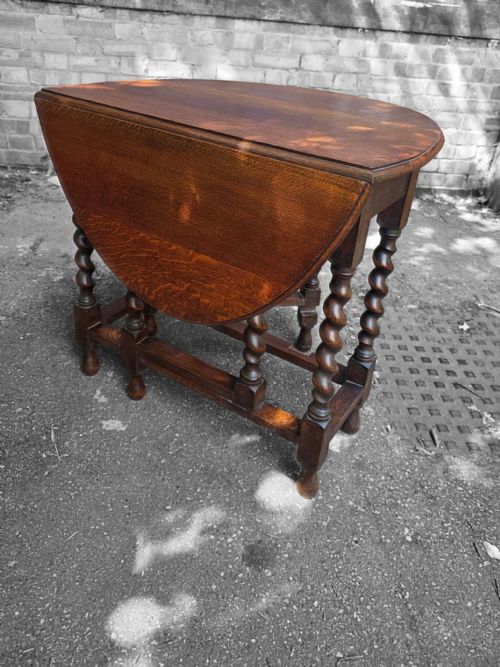
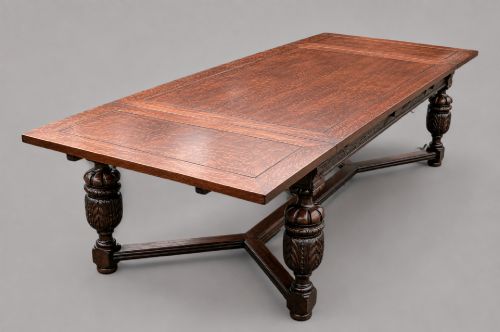
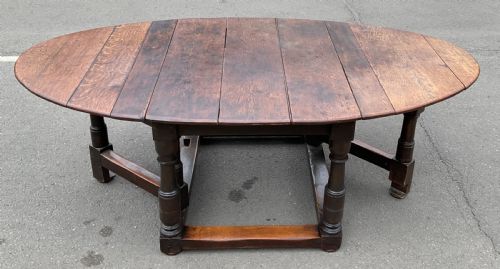
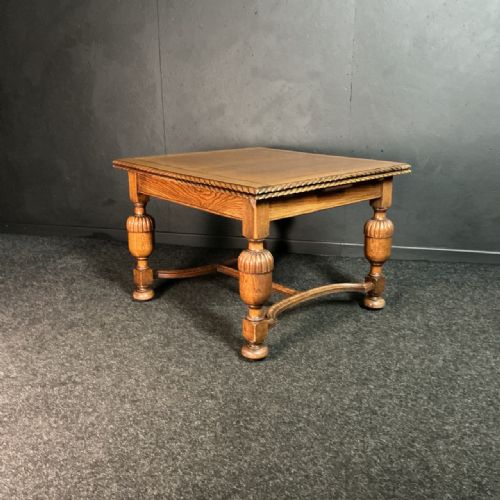
A dark oak leaf table typically refers to tables featuring drop leaves, gatelegs, or extending mechanisms designed to expand surface area. These pieces span centuries of cabinet making, ranging from seventeenth-century originals to twentieth-century revivals.
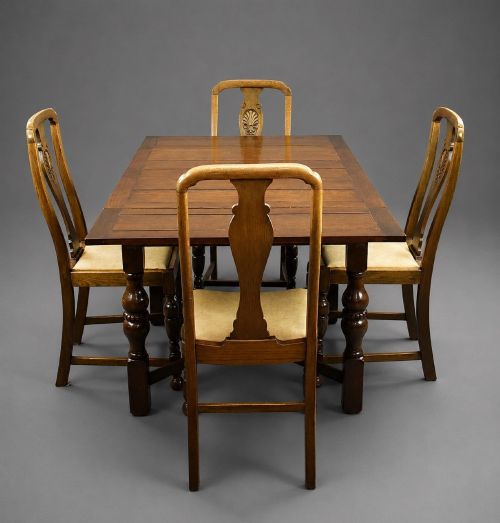
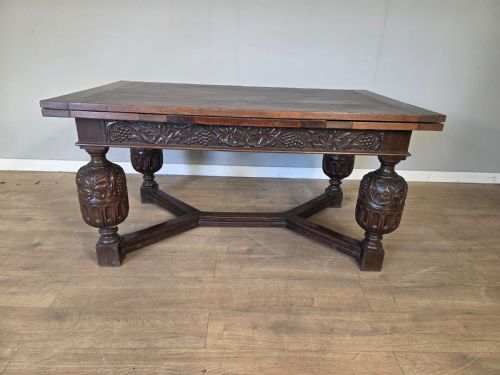
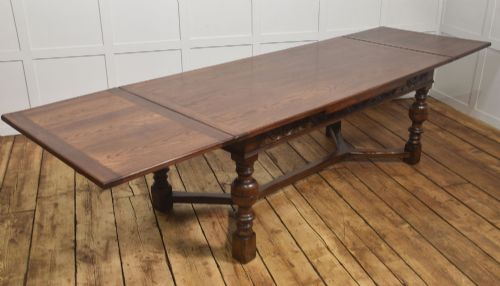
Buyers browsing this selection frequently encounter gateleg tables, draw-leaf dining tables, and Pembroke kitchen tables constructed primarily from solid oak. Styles lean heavily towards Jacobean, Georgian, and English Country traditions.
Formats vary from compact side tables and tea trolleys to large dining sets intended to seat multiple guests. The timber displays the distinct grain and warm tones characteristic of dark oak furniture.
Materials and construction methods
Makers utilised solid oak alongside supporting iron and brass hardware for hinges and opening mechanisms. Joinery relied on traditional framing and pegging methods to sustain the weight of extending leaves and folding gatelegs.
Surfaces often show evidence of historical turning, including bobbin-turned and baluster legs, alongside occasional wood inlay. Timber selection prioritised dense grain to withstand daily use in domestic settings.
Materials documented across the inventory include solid oak, brass, iron, and occasional wood inlay details.
Assessing quality in dark oak tables
Quality rests primarily on the integrity of the timber and the original condition of the mechanism, whether draw-leaf or gateleg. Tables retaining their early hinges and uniform warm patina command greater appreciation among collectors.
Proportion and stability during extension set finer examples apart from later revival pieces. The crispness of carved details and the weight of the solid oak top determine the overall caliber of the table.
The Dark Oak Leaf Table Glossary
- Gateleg table
- A table with hinged leaves supported by legs that swing outward like gates. This design allows the surface area to expand or contract easily.
- Draw-leaf table
- An extending table featuring leaves stored beneath the main top that pull out from each end. It provides a quick method for lengthening the dining surface.
- Patina
- The surface sheen and colour developed by wood over decades of handling and polishing. Good patina indicates age and regular use.
- Refectory table
- A long, narrow dining table traditionally used in communal halls. Examples in oak often feature stretcher rails for added stability.
- Bobbin turned
- A style of leg decoration shaped on a lathe to resemble a string of beads or bobbins. It appears frequently on seventeenth-century joinery.
Dark Oak Leaf Table: Frequently Asked Questions
How do I operate a draw leaf table?
The hidden leaves slide out smoothly from beneath the main central surface as you pull them outward. The main top gently drops down into place to lock the extended surface level.
Ensure you lift slightly rather than forcing the mechanism if it feels stiff from seasonal wood movement. Regular use helps keep the internal runners operating smoothly.
Are gateleg tables stable for daily dining?
Gateleg tables provide sturdy support when the swing legs are fully extended and locked into position against the frame. The solid oak construction adds substantial weight to keep the table grounded.
Take care not to lean heavily on the outer edges of the drop leaves when they are raised without their supports properly engaged.
How do I date an oak table?
Dating relies on examining the construction marks, tool methods visible on the underside, and the style of the turned legs. Seventeenth-century pieces typically show hand-pegged joints and irregular hand-sawn boards.
Revival pieces from the early twentieth century often display more uniform machine sawing and modern hardware fittings alongside older styling.
How do I care for dark oak surfaces?
Maintain the wood by applying natural beeswax periodically to nourish the grain and preserve the warm finish. Avoid placing the table near direct heat sources or strong sunlight to prevent splitting.
Clean spills promptly with a soft, dry cloth rather than using harsh chemical cleaning products that strip the aged surface.