
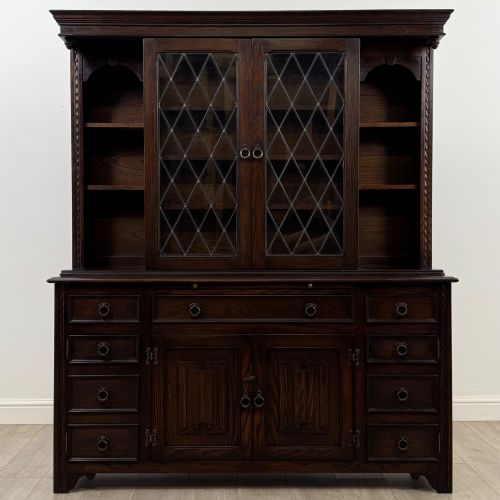
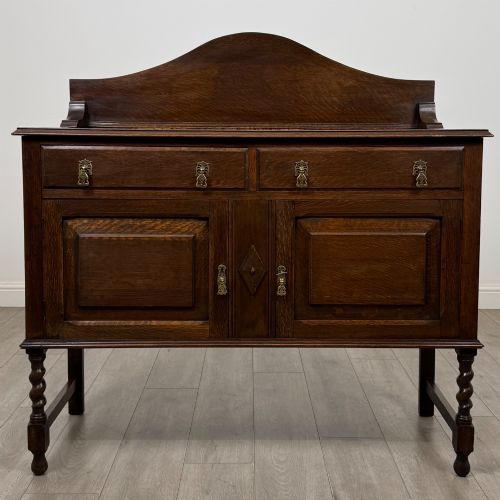
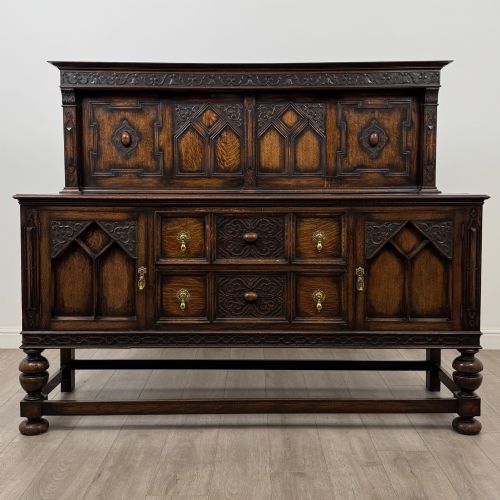
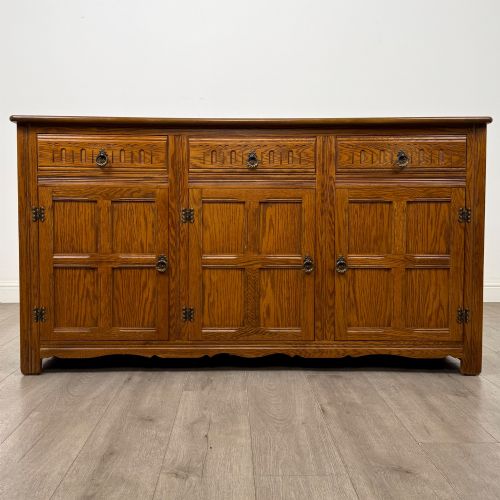

Jacobean Oak Buffet
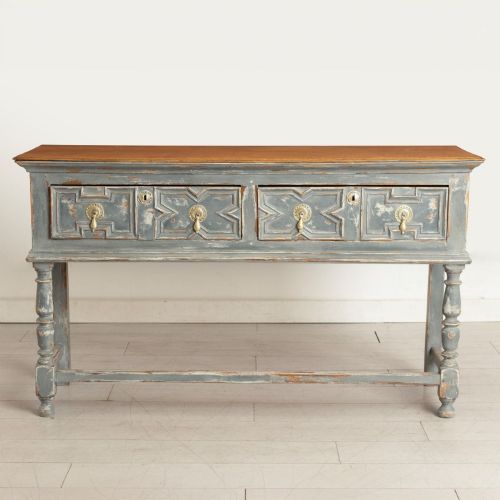
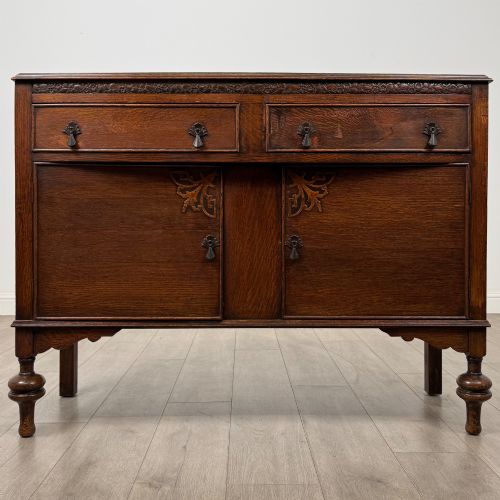
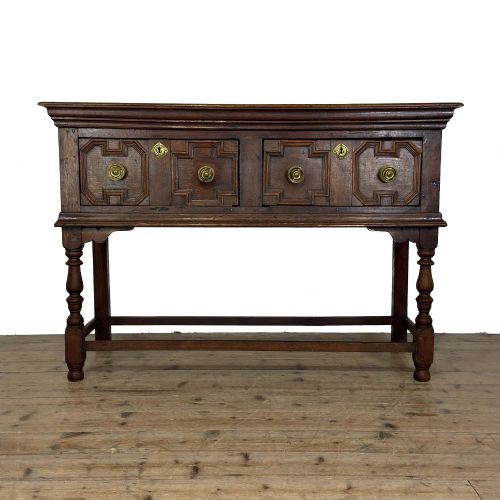
These jacobean oak buffet pieces bring robust 17th-century styling and rich timber grain directly into a modern dining room.
Jacobean Oak Buffet
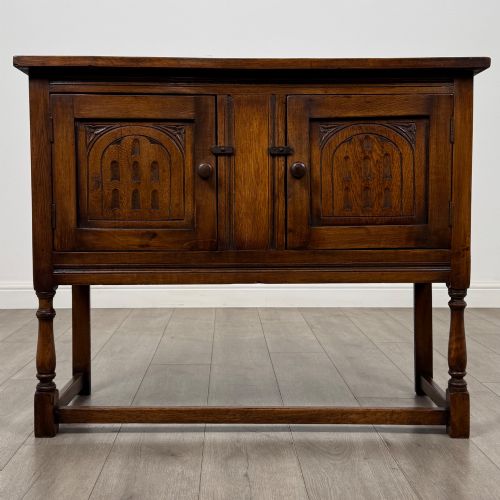
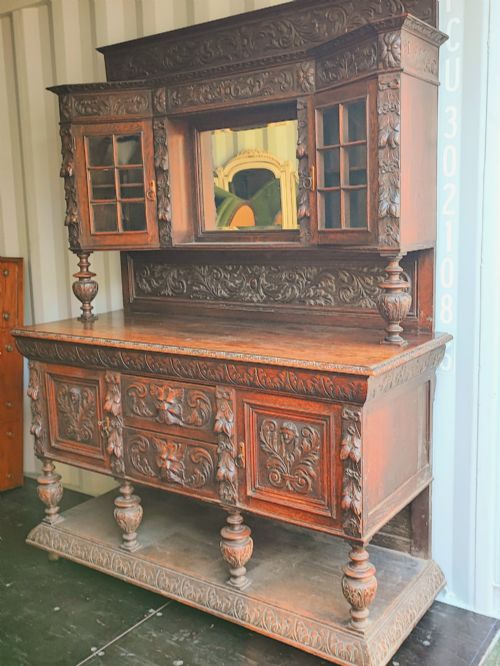
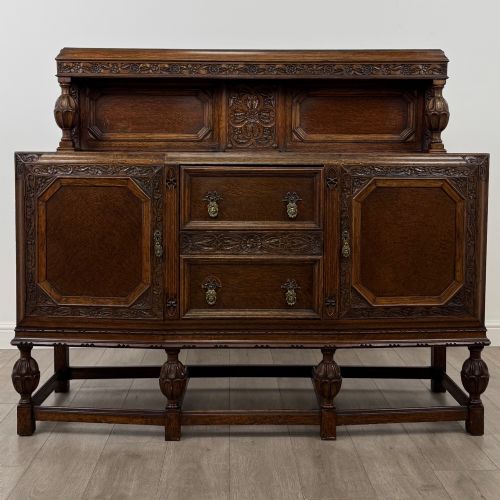
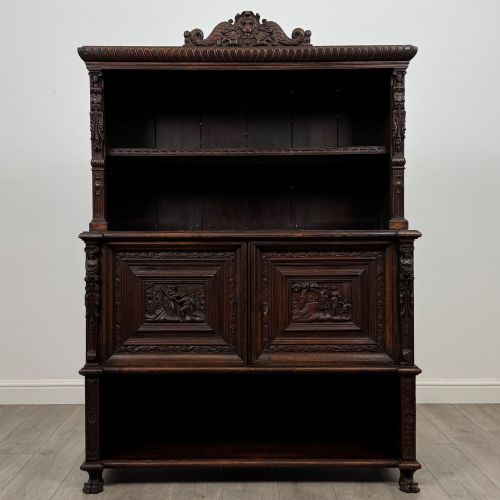
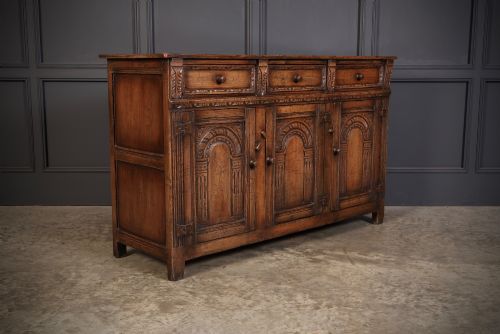
A jacobean oak buffet spans centuries of woodworking, from genuine 17th-century court cupboards to later revival pieces from the Victorian, Edwardian and 1920s periods. Buyers seeking this aesthetic encounter various forms, including press cupboards, dresser bases, serving tables and sideboards.
The heavy timber construction and dark finishes define the category, though collectors also find occasional examples in golden or bleached oak. Most pieces appearing on the market date from the Edwardian era and the early twentieth century, echoing earlier Tudor and Carolean designs.
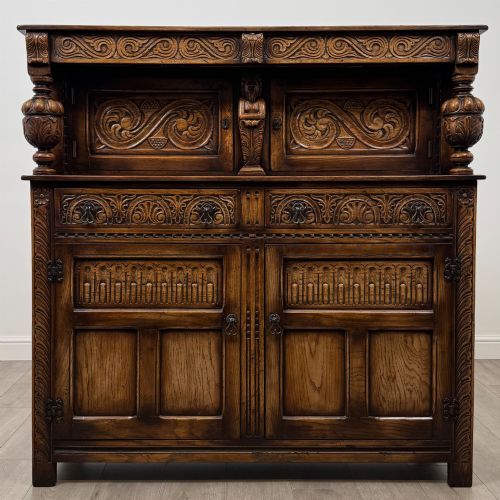
Form follows function in these heavy storage items, which range from small proportions to large court cupboards fitted with shelves and enclosed compartments. The combination of cupboard space and display surface makes them practical for contemporary dining rooms.
What varies in quality
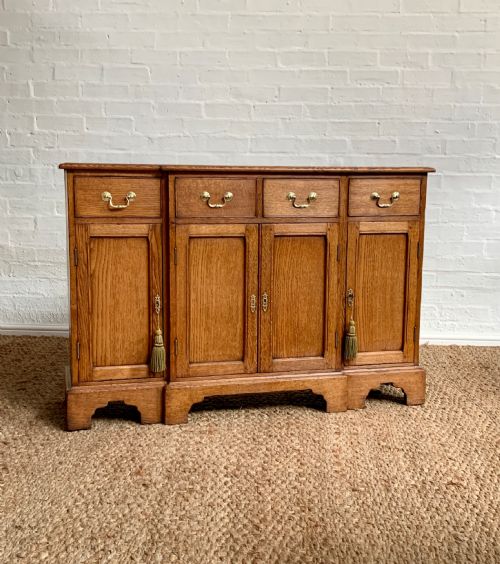
Depth and crispness of the hand-carving separate standard revival pieces from finer examples, as does the choice of well-figured timber. Original hardware, such as period brass drop handles and iron butterfly hinges, elevates the authenticity of older pieces.
The integrity of the structural joints and the presence of untouched patination dictate the desirability among serious collectors. Pieces retaining their original surface finish without heavy modern intervention hold greater visual harmony.
Keep an eye out for the occasional carved Green Man peering out from the woodwork, bringing ancient woodland folklore directly into the dining room.
The Jacobean Oak Buffet Glossary
- Court cupboard
- A formal enclosed piece of furniture with a recessed upper section supported by pillars, used in grand households for storing tableware and food.
- Barley-twist
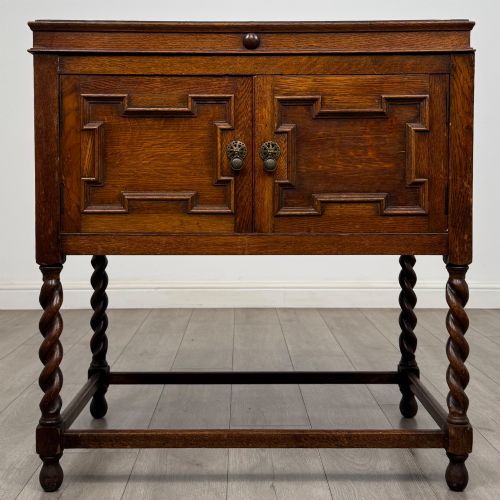
- A decorative turning technique resembling a twisted rope, commonly found on the legs and supports of 17th-century and revival furniture.
- Dresser base
- A long, low cabinet featuring drawers or cupboards beneath a wide serving surface, frequently designed with a lower potboard shelf.
- Press cupboard
- A large enclosed storage item with upper and lower cabinet doors, traditionally used for storing pressed linens and garments.
- Carolean revival
- A late 19th and early 20th-century style reviving the ornate, exuberant carved furniture fashions of the reign of King Charles II.
Jacobean Oak Buffet: Frequently Asked Questions
Where should I place a jacobean oak buffet?
These substantial oak items anchor a dining room or wide hallway, providing a sturdy surface for serving food or displaying ceramics.
Ensure you measure the depth and height carefully before positioning, as original court cupboards and revival sideboards require generous wall space.
How do I clean an antique oak sideboard?
Dust the carved surfaces regularly with a dry, soft cloth to prevent dirt settling into the deep recesses of the wood grain.
Apply a traditional beeswax polish sparingly once or twice a year to nourish the timber and maintain the soft sheen.
Are 17th-century buffets different from Edwardian revival pieces?
Authentic 17th-century examples display period joinery techniques and centuries of natural wear, whereas Edwardian and 1920s revival pieces replicate the older aesthetic using contemporary workshop methods.
Both offer heavy oak construction, but earlier pieces carry distinct tool marks and historical patination built up over generations.
Can I use a court cupboard for modern storage?
The enclosed cupboards and deep drawers provide practical storage for heavy dinnerware, table linen, and glassware in a modern home.
The wide top surface also functions well as a sideboard for serving during dinner parties.