
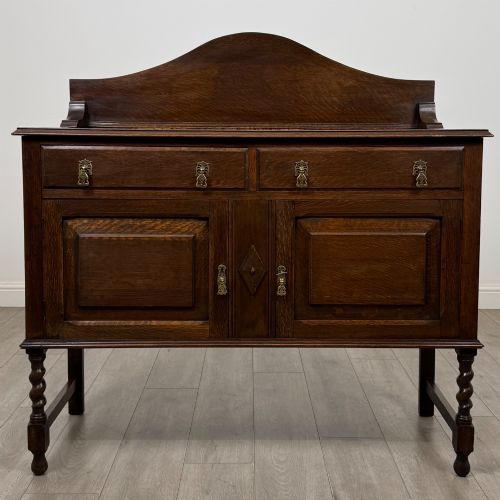
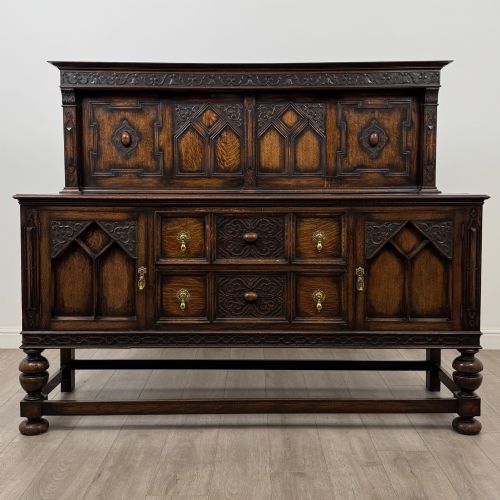
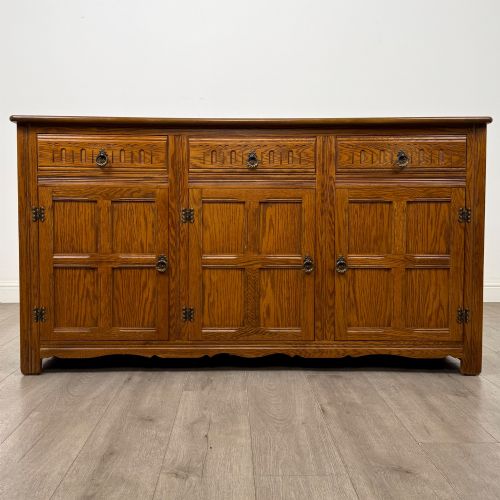
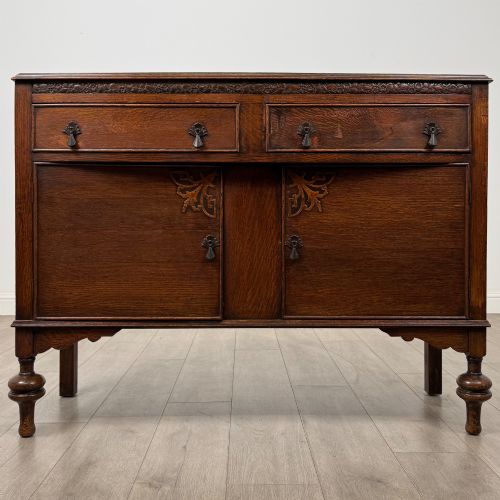

Jacobean Carved Oak Credenza
A jacobean carved oak credenza is a heavy timber storage piece built for formal dining rooms, bringing deep relief carving and dark wood tones to modern interiors.
Jacobean Carved Oak Credenza
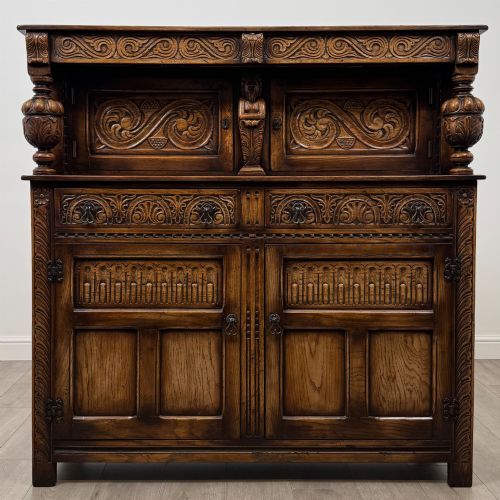
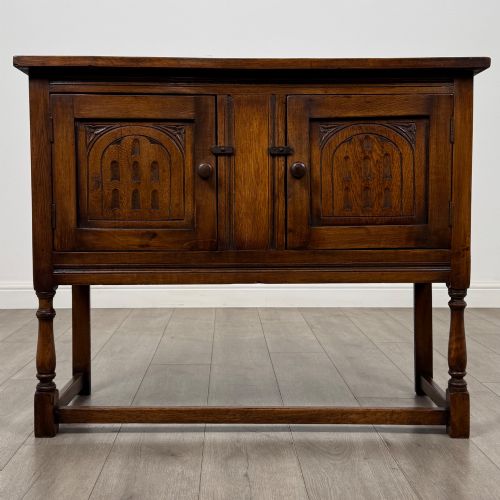
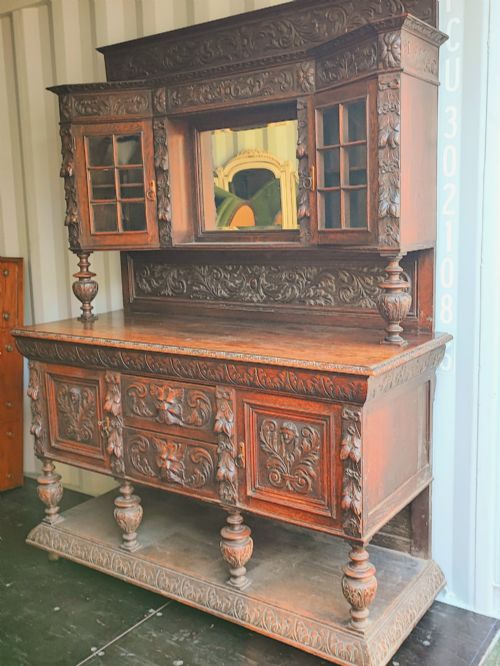
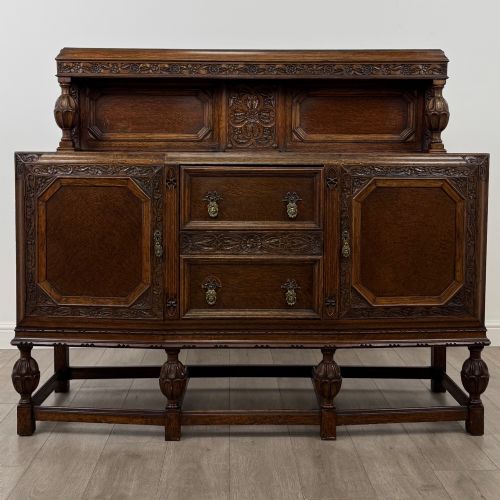
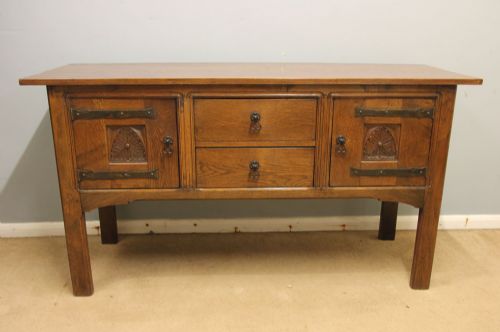
A jacobean carved oak credenza search leads to heavy timber storage furniture that crosses several centuries of British cabinetmaking. The listings on this page span from original seventeenth-century server cabinets and dresser bases to later revival interpretations made during the Victorian, Edwardian and nineteen-twenties periods.
Buyers encounter various forms including court cupboards, low dressers, sideboard buffets and side cabinets. These pieces function as substantial storage units for dining rooms and hallways, constructed primarily from native British hardwoods with prominent surface carving.
How they were made
Makers relied principally on solid oak, frequently augmented with secondary timbers like walnut and fruitwood for contrasting details. Panels and drawers employ traditional joinery such as mortise and tenon frames, held together with wooden pegs rather than modern fasteners.
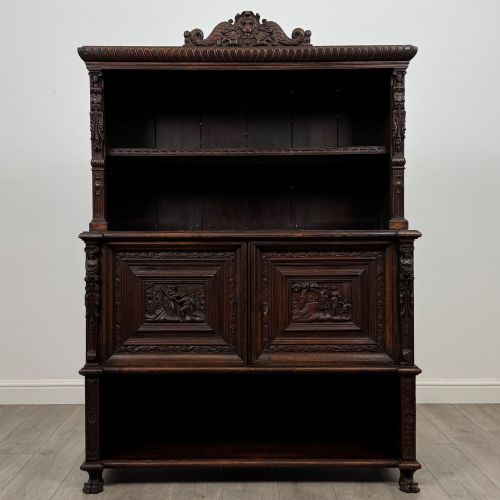
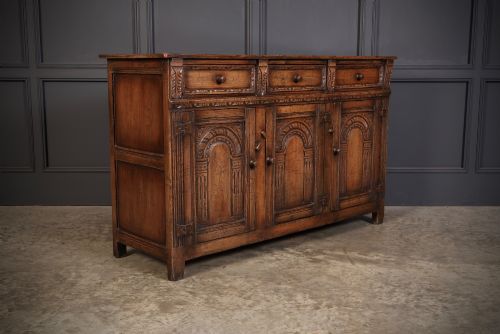
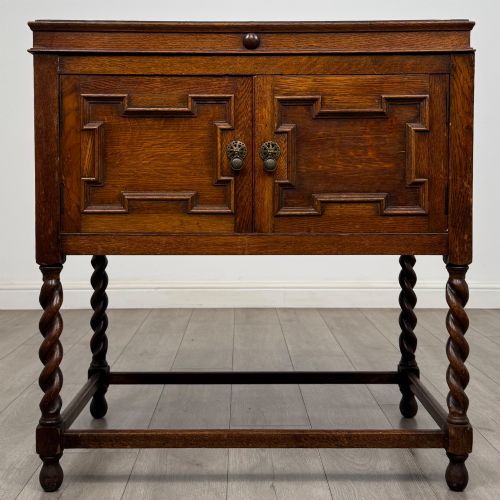
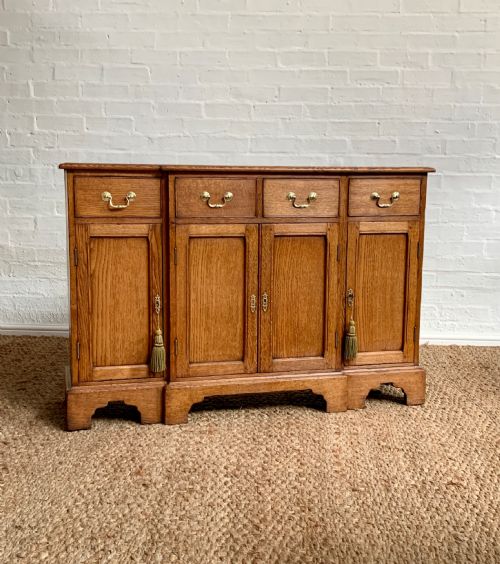
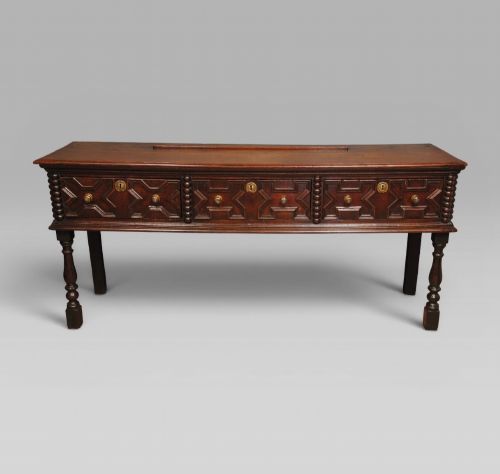
Surface decoration relies heavily on hand-chiselled relief carving, geometric mouldings, and turned elements like barley twists. Hardware consists of brass handles and iron hinges fitted to heavy timber doors and drawers.
One green man makes a sudden woodland appearance among the stern geometric panels, watching over the dining room.
What varies in quality
The degree of hand-carving depth and sharpness separates standard production from finer cabinetwork. Early examples show crisp, confident chisel work, whereas mass-produced revival pieces from later centuries can feature softer, shallower machine milling.
Timber selection and grain figure also dictate the tier of the piece. Credenzas constructed from quarter-sawn oak with rich medullary rays sit above those built from plain planks or secondary fruitwoods.
Maple and Co
The Jacobean Carved Oak Credenza Glossary
- Dresser base
- A low wooden sideboard fitted with drawers and often an open pot board shelf beneath. These items served practical food preparation and serving duties in historic dining spaces.
- Court cupboard
- An enclosed upper or lower cabinet featuring recessed upper sections supported by carved columns. They provided secure storage for household valuables and plate.
- Geometrical moulding
- Raised wooden strips applied to drawer fronts and door panels in complex rectilinear patterns. This technique was favoured during the seventeenth century to add visual depth.
- Barley twist
- A cylindrical wooden column turned in a spiral helix shape. This decorative turning style appears frequently on legs and supports of revival furniture.
- Linenfold
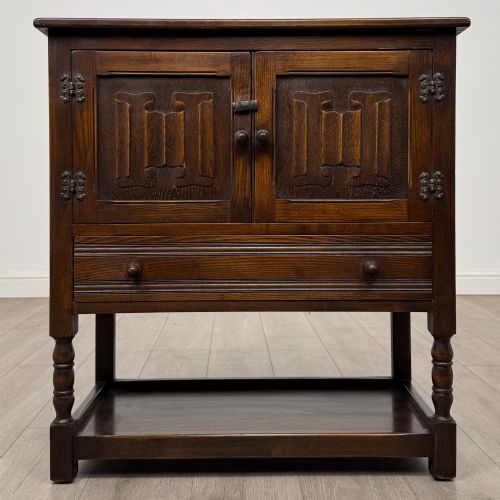
- A carved wooden panel motif designed to resemble folded cloth. It gained popularity in late medieval and revival woodwork.
Jacobean Carved Oak Credenza: Frequently Asked Questions
What is a jacobean carved oak credenza?
A jacobean carved oak credenza is a sturdy wooden storage unit featuring deep panel carving, dark finishes, and heavy timber construction. They originate either as authentic seventeenth-century furniture or as later nineteenth and twentieth-century revival pieces.
These cabinets provide significant tabletop surface area and interior shelving. They suit traditional dining rooms, hallways, and living spaces as statement storage pieces.
How do I style a heavy oak cabinet?
Pair these dark timber pieces with neutral walls and simple lighting to let the carved details stand out. They anchor large rooms and contrast well against modern minimalist interiors.
Keep decorative items on top minimal to avoid cluttering the surface carving. Heavy pottery, brass candlesticks, or simple mirrors complement the historic aesthetic.
How can I tell the period?
Examine the timber shrinkage, tool marks on the interior boards, and the construction methods used on the drawer linings. Seventeenth-century originals display hand- split oak and irregular pegged joints.
Revival pieces from the Edwardian era or the nineteen-twenties often feature more uniform machine sawn timber and standardised hardware screws. The style of the carving also hints at whether the piece is original or a later copy.
Where were these pieces used?
Historic examples stood in the great halls and dining parlours of country houses and merchant homes. They held tableware, serving platters, and household provisions.
Later revival versions were built for suburban dining rooms where homeowners desired a traditional aesthetic. Their robust construction ensured they survived generations of domestic service.