

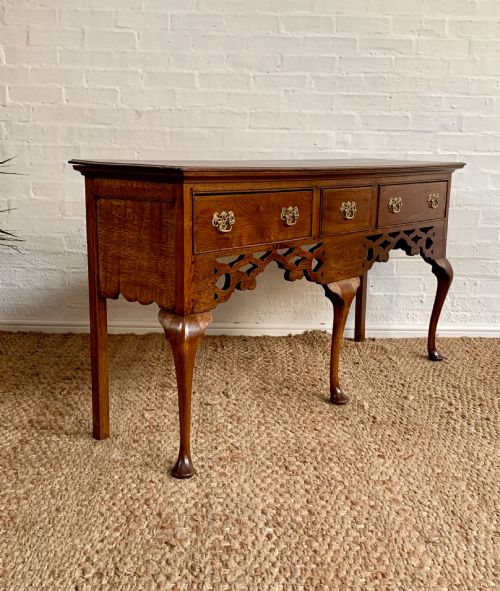
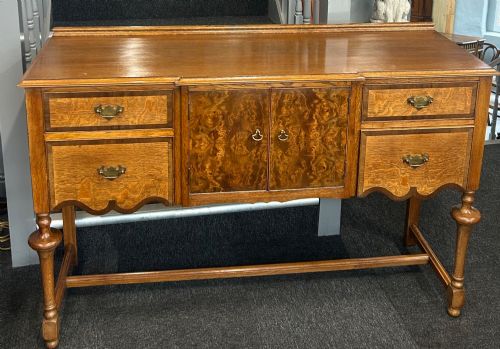
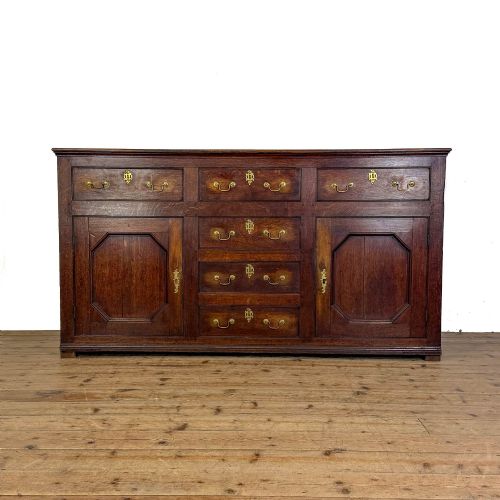
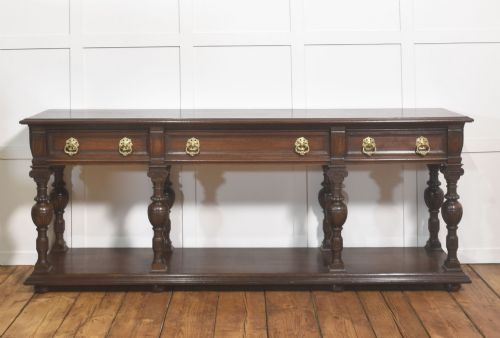
Traditional Oak Sideboard Table
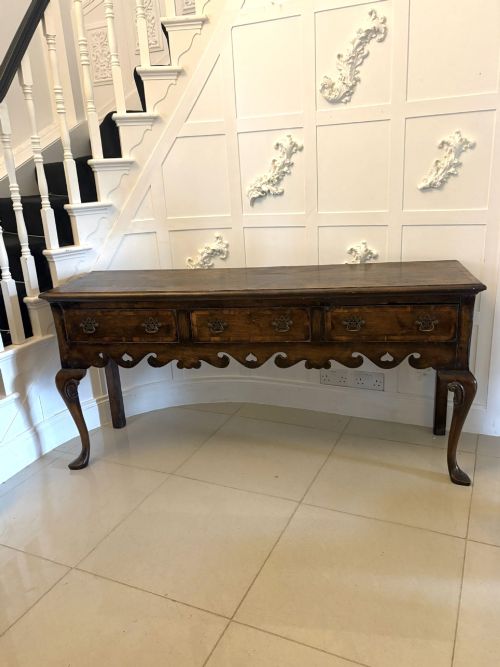
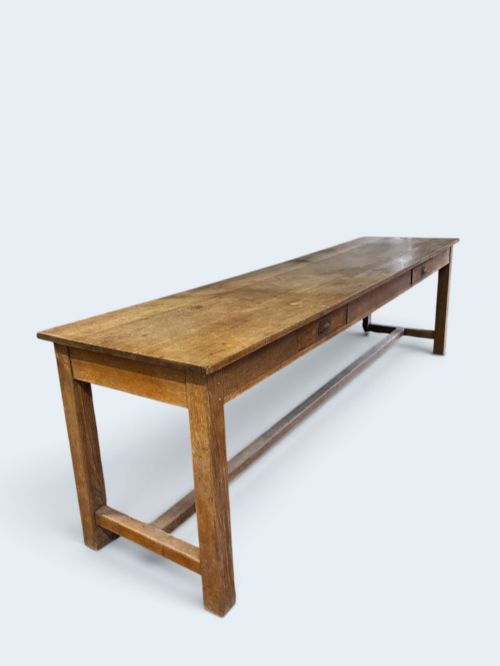
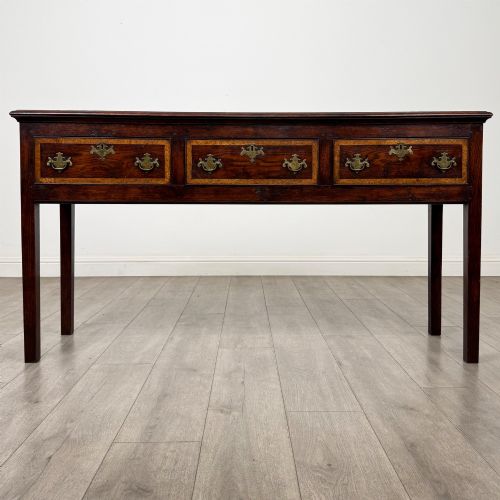
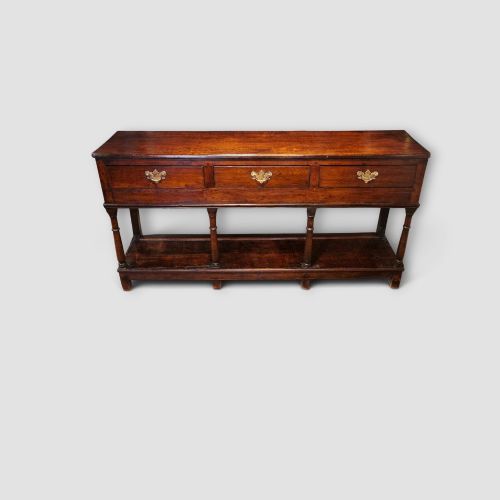
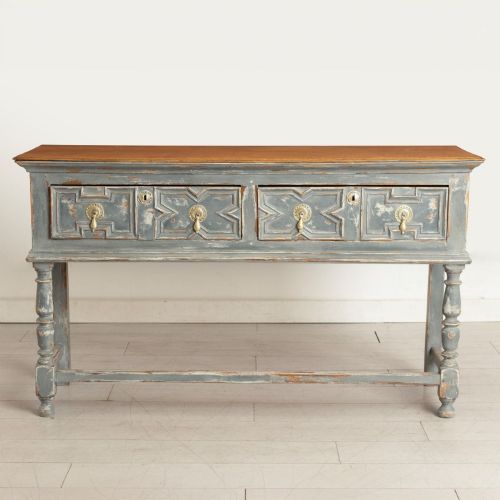
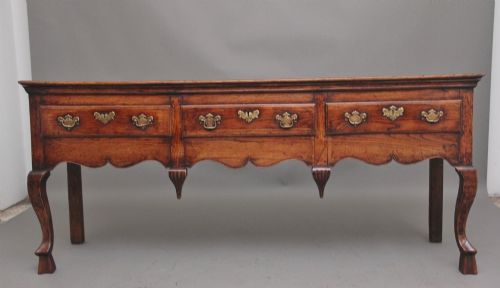
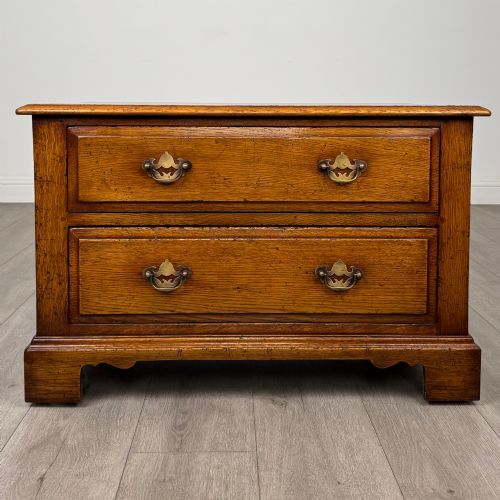
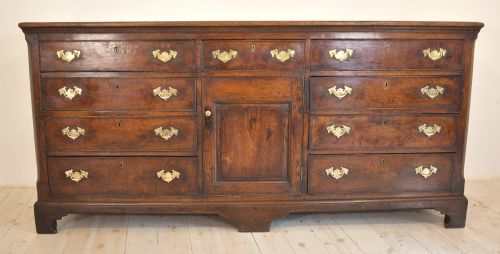
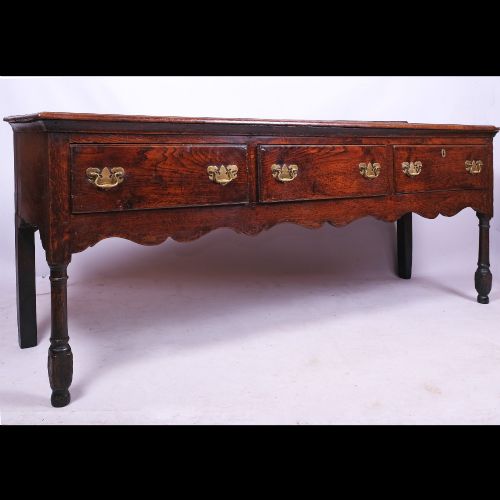
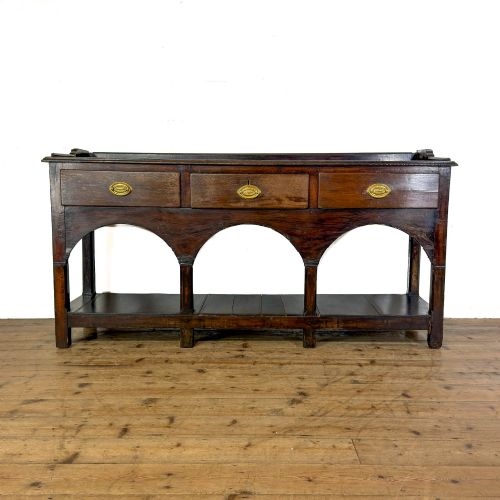
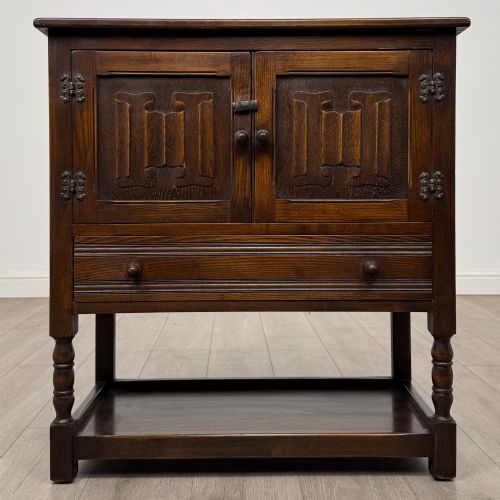
These traditional oak sideboard table pieces, primarily historic dresser bases and serving tables, bring robust timber character and practical surface space to any room.
Traditional Oak Sideboard Table
A traditional oak sideboard table typically takes the form of a dresser base, a serving table, or a low cabinet designed for domestic utility. These pieces originate from various periods including the eighteenth and nineteenth centuries, alongside revival pieces from the Edwardian era and the early twentieth century.
The regional variations are distinct, spanning English country workshops, Welsh vernacular pieces, and continental examples such as Dutch and French furniture. Formats range from open potboard bases to multi-drawer serving tables and carved side cabinets.
Buyers encountering this selection will frequently find substantial timber constructions intended originally for farmhouse kitchens and dining spaces. They function today as practical sideboards, console tables, and hallway furniture.
What separates the finest examples
Quality in these pieces depends heavily on the integrity of the timber, the depth of natural patination, and the proportion of the form. Early examples from the eighteenth century often display superior hand-planed surfaces and original board construction that later revival pieces attempt to emulate.
The sophistication of the carving, the retention of original brass or iron hardware, and the structural honesty of potboards and drawer linings define the upper tier of the range. Alterations, replacement timber, and overly harsh surface cleaning diminish the historic character of a piece.
Several pieces come equipped with heavy cast iron vices, having spent their early lives holding timber rather than serving tea.
The Traditional Oak Sideboard Table Glossary
- Potboard
- An open lower shelf built into the base of a dresser or sideboard, historically used for storing ceramic plates and pots.
- Dresser base
- The lower portion of a traditional Welsh or English dresser, functioning independently as a serving table or sideboard with drawers.
- Vernacular
- Furniture designed and built by local artisans using regional traditions and readily available materials rather than following metropolitan fashion.
- Jacobean Revival
- A nineteenth or twentieth-century style imitating the heavy, geometric carved woodwork of the early seventeenth century.
Traditional Oak Sideboard Table: Frequently Asked Questions
What is a potboard dresser base?
A potboard dresser base is a low serving table featuring an open lower shelf positioned close to the floor between the legs. This lower tier provided practical storage space for heavy kitchen pottery and serving dishes in historic homes.
Today, this open shelf offers a convenient platform for displaying large decorative objects or baskets. It distinguishes these traditional pieces from standard enclosed sideboards.
How do I date an oak sideboard?
Dating relies on examining construction techniques, timber selection, and hardware styles across the piece. Eighteenth-century examples often feature hand- cleft boards and pegged joinery, while Edwardian and 1920s revival pieces show machine-sawn elements.
Secondary woods inside drawers and the style of the leg turnings, such as cabriole or square section legs, provide further chronological clues. Comparing the patination of the top surface to hidden areas also helps determine age.
Where were these tables used?
Historically, these oak tables served working roles in farmhouse kitchens, pantries, and large dining rooms. They provided sturdy surfaces for food preparation and storage for culinary equipment.
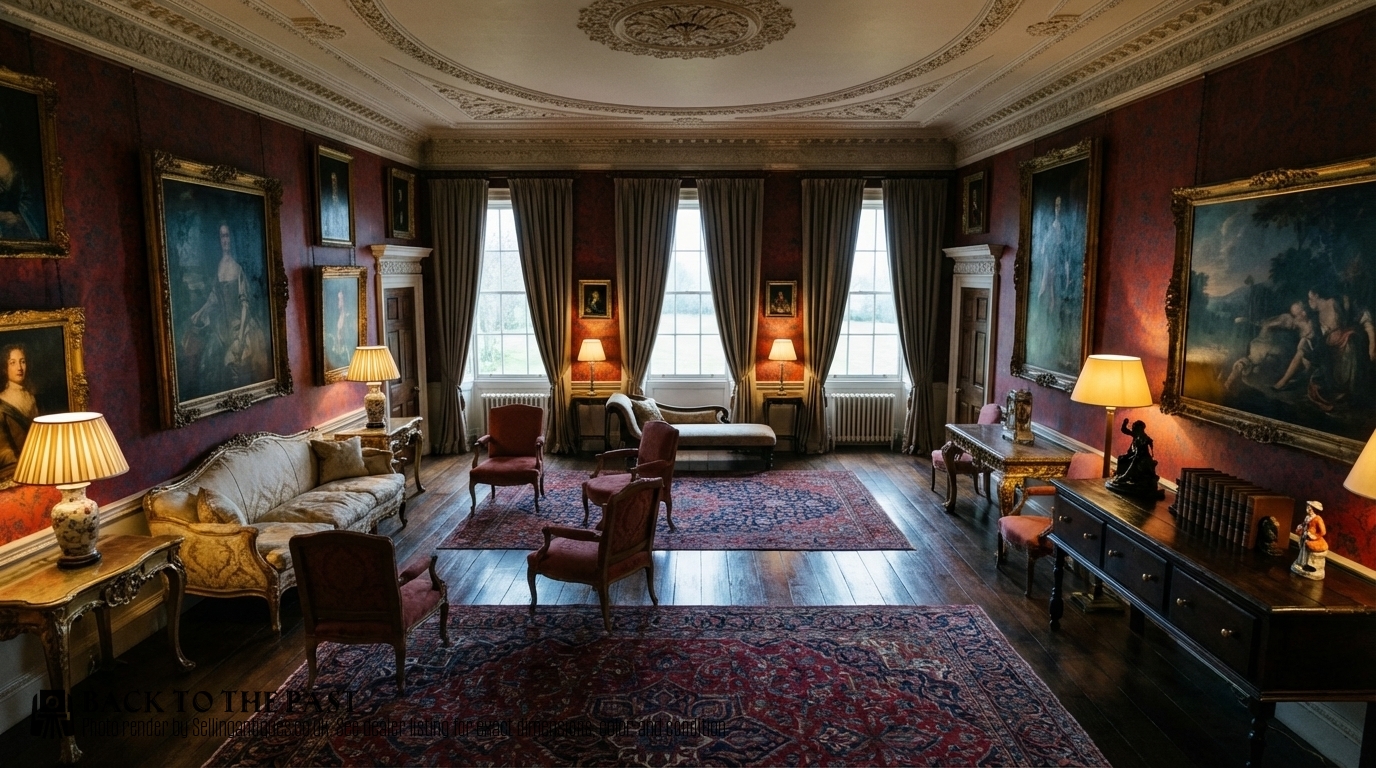
Modern interiors utilise them in dining rooms as serving surfaces, in hallways as console tables, or in living spaces as low storage cabinets.
Are these pieces made of solid oak?
The listings encompass items built from solid oak alongside pieces incorporating secondary timbers like elm and pine in non-visible structural areas. Some later revival items also feature decorative veneers such as burr walnut.
Inspecting the drawer linings and backboards reveals the mix of materials used by the maker. Solid construction remains a defining characteristic of the vernacular and period pieces found here.