





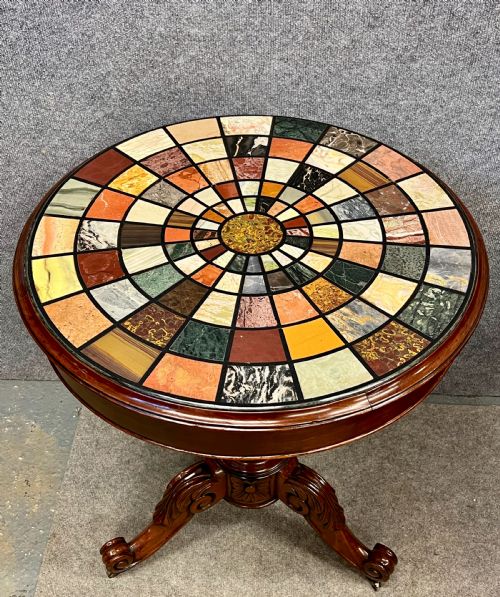


Italian Specimen Marble Table
An Italian specimen marble table brings the mineral riches of the Mediterranean directly into a room through geometric inlays and mosaic roundels.
Italian Specimen Marble Table
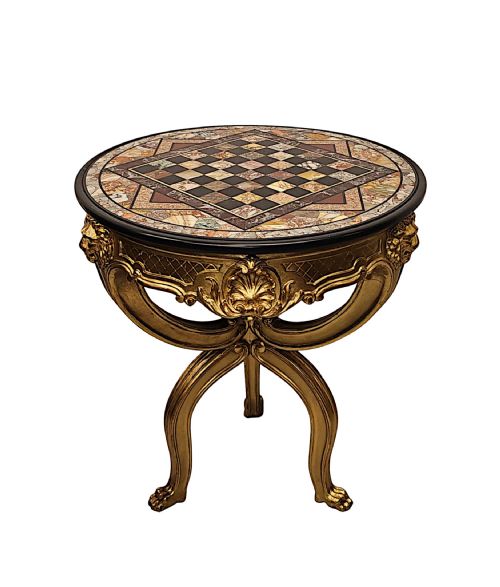
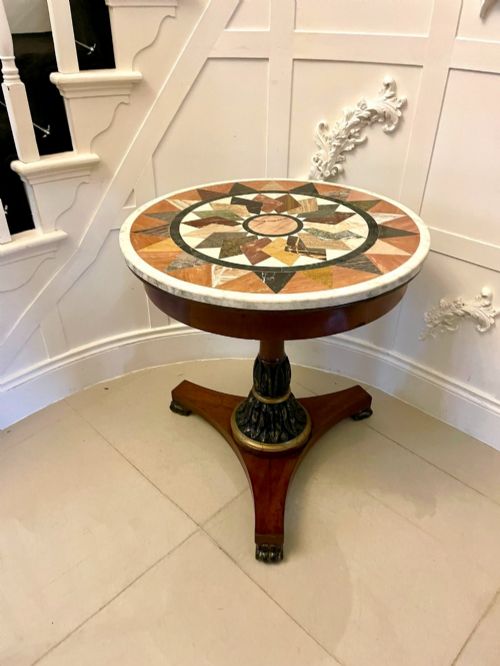
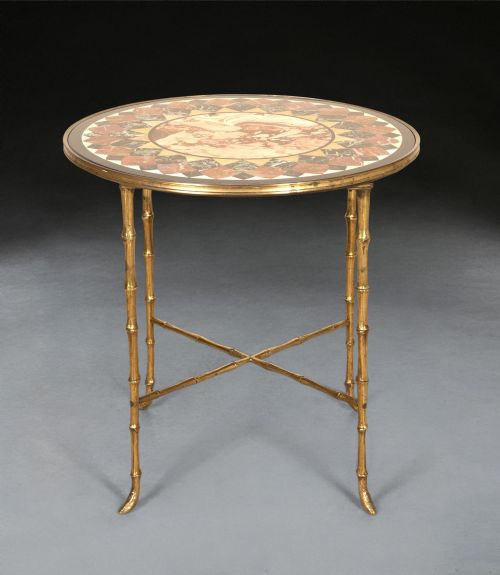
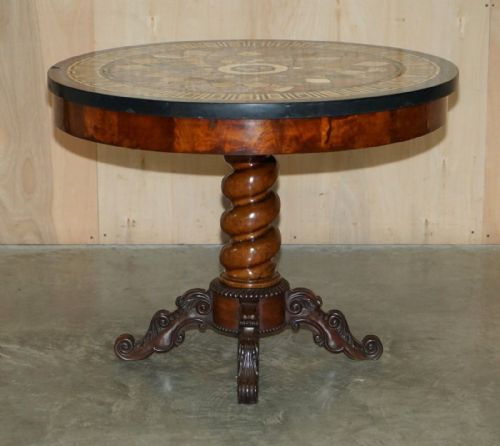
An Italian specimen marble table is a piece of furniture defined by a tabletop composed of numerous geometric or pictorial fragments of different stones, marbles, and hardstones. When you search for an Italian specimen marble table, you meet works spanning the eighteenth and nineteenth centuries, alongside Victorian interpretations and Grand Tour souvenirs. These range from low occasional tables and centre tables to console tables and coffee tables supported by mahogany, satin birch, walnut, giltwood, or stone bases.
The surface patterns typically showcase meticulous craftsmanship, assembling jaspers, agates, and various coloured marbles into intricate geometric designs, architectural perspectives, or pictorial roundels. Most examples originate from Italian workshops associated with the Grand Tour or Florentine pietra dura traditions, often paired with British cabinetmaker bases from the Regency or William IV periods. Surviving forms include octagonal occasional pieces and large display tables designed to anchor a formal drawing room or reception space.
Materials and Construction
The creation of these tops relies on the precise cutting and fitting of diverse natural stones, hardstones, and slate into recessed slate or marble backings. Craftsmen select individual specimens for their distinct veining and natural colour before sawing them into thin veneers and locking them tightly together with pigmented adhesives. Supporting structures utilise traditional cabinet timbers such as mahogany, walnut, and satin birch, frequently shaped into pedestal bases or carved with giltwood detailing.
Pietra dura works employ finely sliced hardstones arranged in pictorial compositions depicting birds, flora, or architectural vistas, contrasting with purely geometric specimen layouts. Micro-mosaic elements occasionally supplement the design, utilising tiny coloured glass or stone tesserae to form intricate figurative roundels. The finished stone tops are then ground and polished to a smooth, reflective sheen that accentuates the varied mineral colours.
Italian Specimen Marble Table Retail Price Guide 2026
Typical asking prices for italian specimen marble table among the pieces listed under this phrase on Sellingantiques today, from the lower quarter to the upper quarter. They describe what is for sale here now, not the wider market.
Grand Tour travellers routinely smuggled fragile stone table-tops across European borders disguised as mundane luggage to avoid hefty customs duties.
Distinctions in Quality
Quality rests upon the variety, rarity, and tightness of fit among the individual stone specimens composing the top. Superior examples demonstrate a vast palette of distinct minerals meticulously cut with virtually invisible joints, whereas lesser pieces rely on simpler geometric repetitions using common marbles. The intricacy of the pictorial subjects, such as detailed avian or floral pietra dura work, elevates a piece well beyond basic geometric tiling.
The harmony between the stone top and its supporting base further dictates the standing of the table. Tables featuring contemporaneous or high-status bases in giltwood, finely figured mahogany, or walnut hold greater distinction than later or replacement supports. The depth of polish and the preservation of the delicate stone surface without extensive losses or discordant modern repairs also determine the overall merit.
The Italian Specimen Marble Table Glossary
- Specimen marble
- A tabletop composed of multiple distinct varieties of marble and stone arranged in geometric or banded patterns. It serves as the primary visual identifier for these tables.
- Pietra dura
- An artistic technique using cut and fitted polished coloured hardstones to create pictorial designs. It appears frequently on Florentine tops.
- Grand Tour
- The nineteenth-century practice of cultural travel through Europe by young elites who collected souvenirs. These tables often served as monumental trophies of such journeys.
- Micro-mosaic
- An assembly of minute glass or stone tesserae forming detailed miniature pictures. Such roundels occasionally embellish the centre of a marble top.
- Centre table
- A freestanding table designed to stand in the middle of a room rather than against a wall. Many specimen marble examples take this form to display their tops from all angles.
Italian Specimen Marble Table: Frequently Asked Questions
How do I clean an antique marble top?
Maintenance requires only a soft, dry cloth to remove dust and grit that might scratch the polished surface.
Moisture and acidic substances must be avoided completely, as they etch the sensitive natural stone and dull the historical polish.
Were these tables made in Britain or Italy?
The complex mosaic and specimen tops were predominantly produced in Italian workshops, particularly in Florence and Rome, by specialist lapidaries.
British cabinetmakers frequently imported these finished stone slabs and constructed bespoke wooden bases from mahogany, walnut, or giltwood to display them.
What is the difference between geometric and pictorial tables?
Geometric tables feature strictly arranged stars, octagons, and borders constructed from diverse coloured marbles and stones.
Pictorial examples utilise pietra dura or micro-mosaic techniques to illustrate specific subjects like birds, flowers, or architectural landscapes.
Can these tables be used for everyday dining?
Occasional and centre tables are constructed primarily for display rather than heavy domestic use.
The antique stone veneer and historical cement matrix are vulnerable to heavy weights, knocks, and liquid spills.