


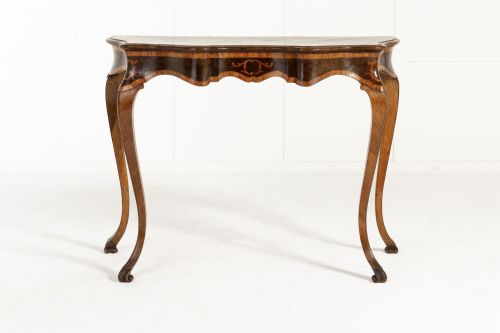

Italian Marquetry Table
An italian marquetry table brings together intricate wood veneers and centuries of craftsmanship, offering both a functional surface and a detailed pictorial display for the home.
Italian Marquetry Table
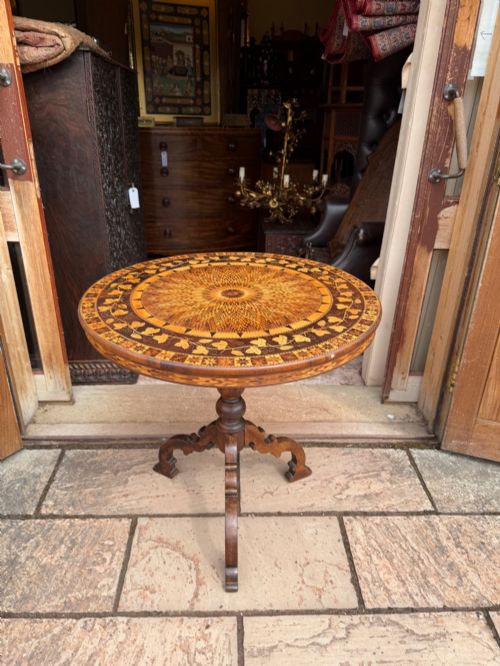
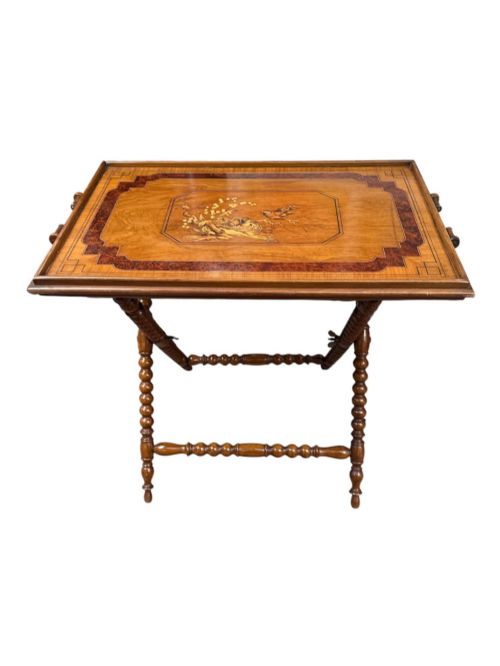
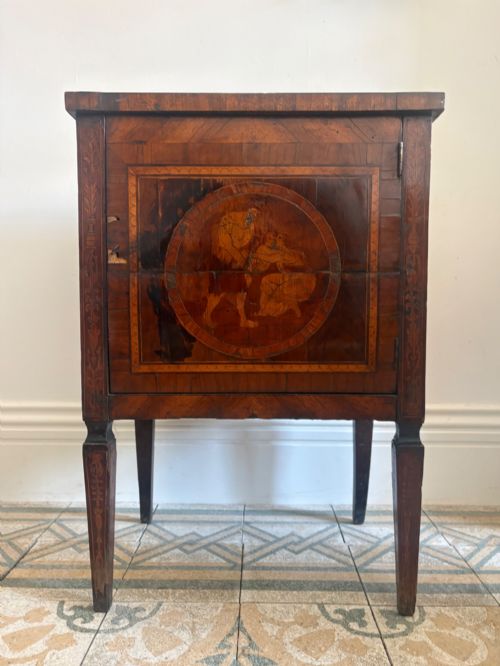
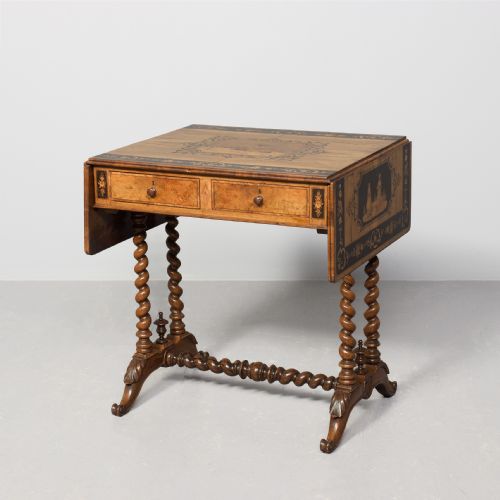
An italian marquetry table encompasses a broad range of forms, from small occasional and coffee tables to larger centre, console, and games tables originating across various centuries. Buyers looking at this selection will most frequently encounter nineteenth-century walnut and olive wood examples associated with Sorrento ware, alongside earlier neoclassical and occasional pieces.
The material vocabulary spans traditional walnut, fruitwood, and olive wood, frequently accented by contrasting ebonised wood, brass, and bone inlay. These surfaces often display elaborate geometric patterns or figural scenes, reflecting stylistic revivals from the Renaissance to the neoclassical period.
Craftsmanship and Execution
The precision and complexity of the veneer work distinguish standard production from superior pieces, with master workshops achieving remarkable detail in shading and perspective. Finer examples display tight joints between individual veneer segments and careful selection of timber grains to create natural depth in the imagery.
Structural integrity and the retention of original surface patination also divide the range, as pieces with undisturbed historical finishes and solid underlying construction hold greater integrity. The presence of specialised maker signatures or documented Sorrento origins further elevates the standing of an individual table.
Italian Marquetry Table Retail Price Guide 2026
Typical asking prices for italian marquetry table among the pieces listed under this phrase on Sellingantiques today, from the lower quarter to the upper quarter. They describe what is for sale here now, not the wider market.
One exceptional folding travel mirror includes bone inlay, proving that historical artisans packed their fine marquetry work for the road.
Pietro Ferrario·Almerico Gargiulo
The Italian Marquetry Table Glossary
- Marquetry
- A decorative technique where small pieces of varied wood veneer are fitted together to form pictorial designs or patterns on a wooden surface. This method allows artisans to create intricate scenes and multi-toned imagery.
- Sorrento ware
- A style of decorative woodworking originating from the Italian town of Sorrento, characterised by detailed micro-mosaic marquetry and olive wood construction. It frequently incorporates local architectural motifs and floral designs.
- Parquetry
- A geometric mosaic of wood pieces used for surface decoration, similar to marquetry but strictly utilising repeating angular shapes. It often appears on table tops to form checkerboard or cube patterns.
- Ebonised
- Wood that has been chemically treated or stained to resemble expensive ebony. This dark finish provides a strong visual contrast against lighter inlaid fruitwoods and bone.
- Console table
- A table designed to be placed flat against a wall, frequently supported by wall brackets or distinct front legs. These pieces often feature elaborate marble or inlaid wooden tops.
Italian Marquetry Table: Frequently Asked Questions
How do I date an italian marquetry table?
Dating relies on examining the secondary timbers, the style of the base construction, and the specific characteristics of the veneer work. Eighteenth-century examples often feature heavier walnut frames and simpler neoclassical motifs, whereas nineteenth-century Sorrento pieces typically utilise olive wood and highly detailed micro-mosaics.
Changes in hardware, joinery methods, and the presence of maker signatures or specific regional styles also help narrow down the period of production. Comparing the decorative motifs against known revival periods provides further chronological context.
What is Sorrento ware?
Sorrento ware refers to decorative wooden items, particularly tables and boxes, produced in the coastal Italian town of Sorrento during the nineteenth century. These pieces are distinguished by intricate micro-mosaics and the prominent use of local olive wood.
Workshops in the region specialised in capturing local scenes, figures, and floral arrangements through precise veneer cutting. This distinct regional output became a popular souvenir for travellers undertaking the Grand Tour.
How should I care for my table?
Maintaining these tables requires keeping them away from direct sunlight and extreme fluctuations in temperature or humidity, which can cause the delicate wood veneers to lift or crack. Regular dusting with a soft, dry cloth is usually sufficient for daily upkeep.
Occasional application of appropriate furniture wax helps nourish the timber and protect the historical surface. Avoid using harsh chemical cleaners or excess moisture on the inlaid areas.
Are these tables suitable for daily use?
While many of these pieces were built as functional furniture like coffee, side, or games tables, their delicate veneer surfaces require a mindful approach to daily living. Using coasters, placemats, and protective pads helps prevent scratching or moisture rings on the antique polish.
Lighter occasional use ensures the historical marquetry remains undamaged over time. Placing them in low-traffic areas allows you to enjoy the craftsmanship without risking heavy wear.