

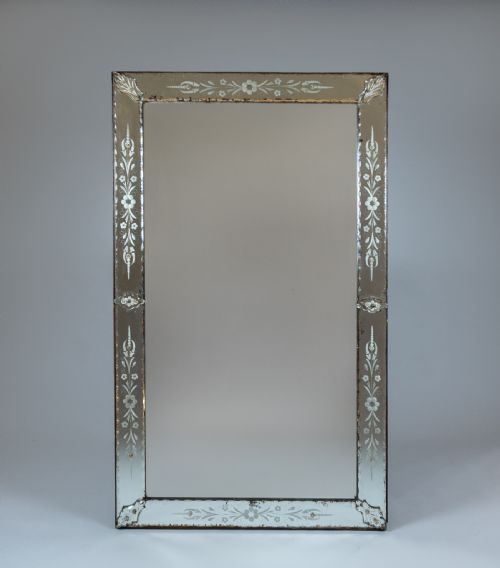
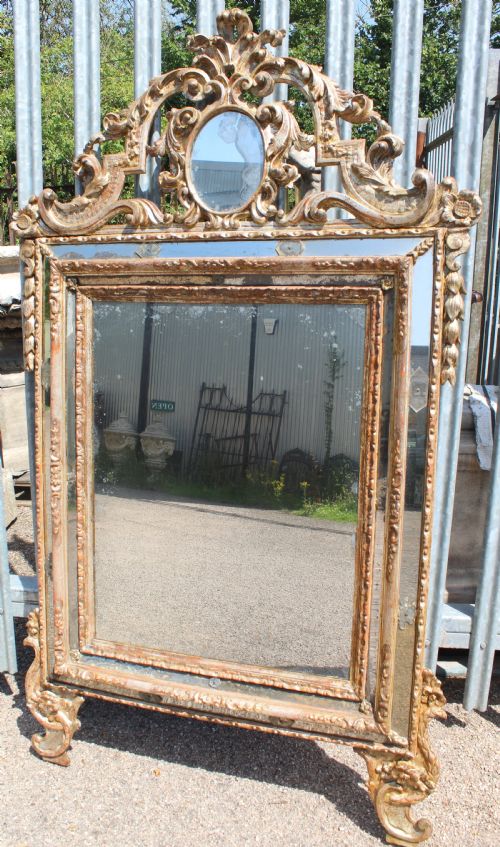
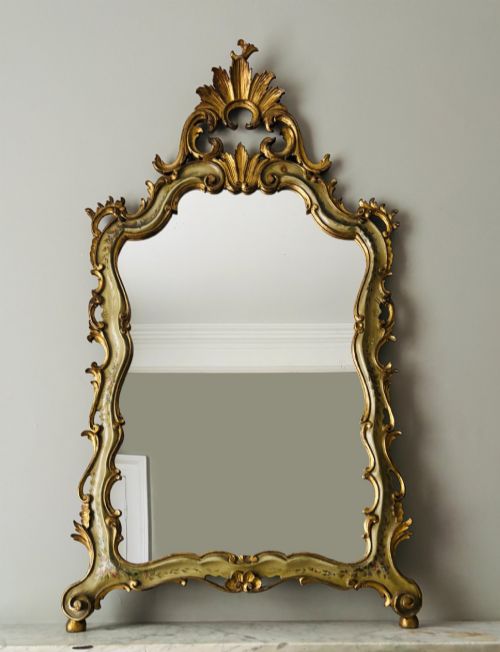
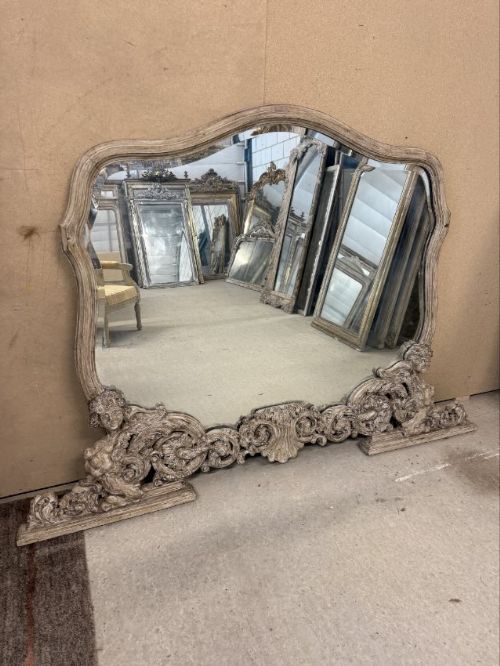

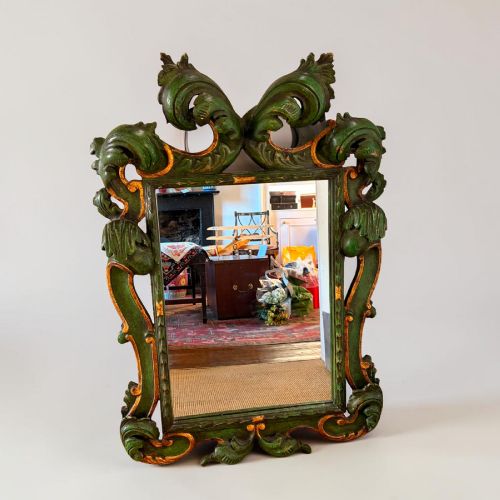
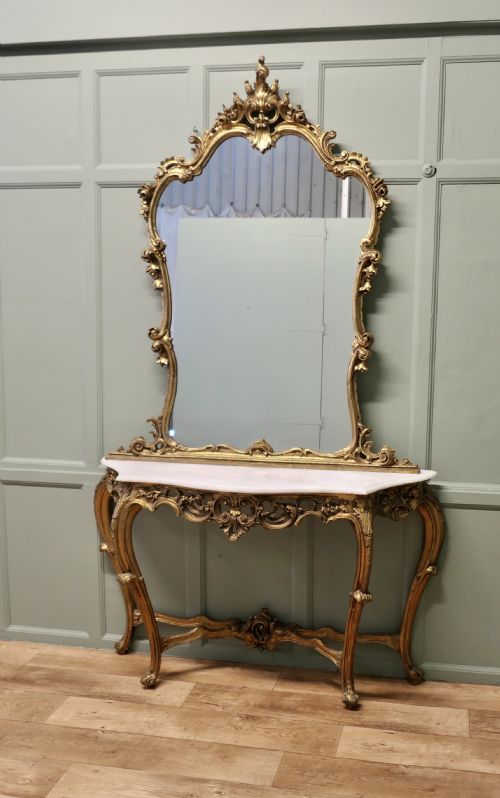
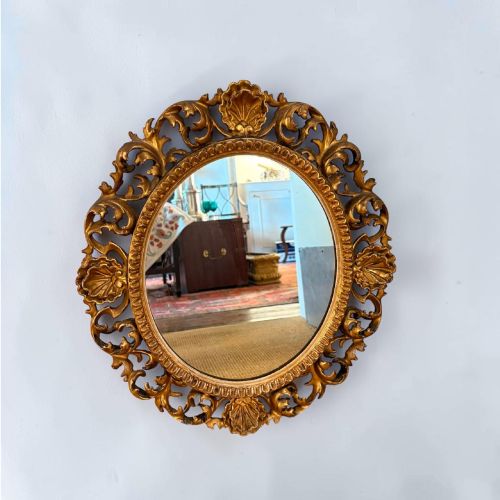
Italian Carved Wall Mirror
An italian carved wall mirror brings theatrical depth and gilded presence to a room, drawing the eye with intricate scrolling and classic forms.
Italian Carved Wall Mirror
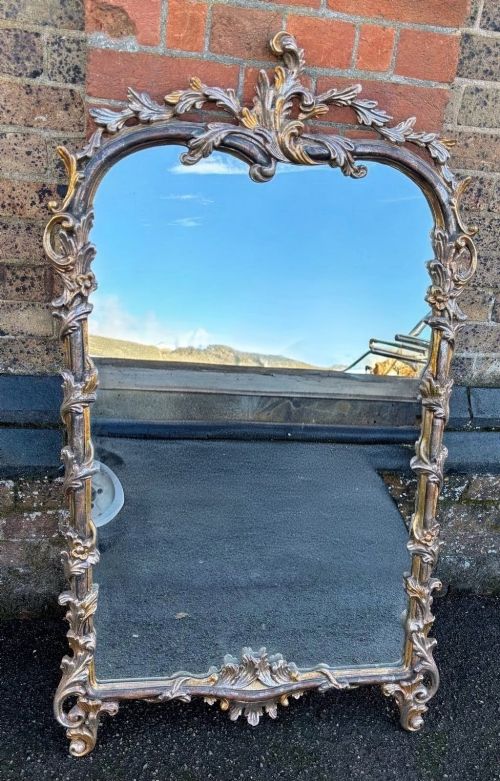
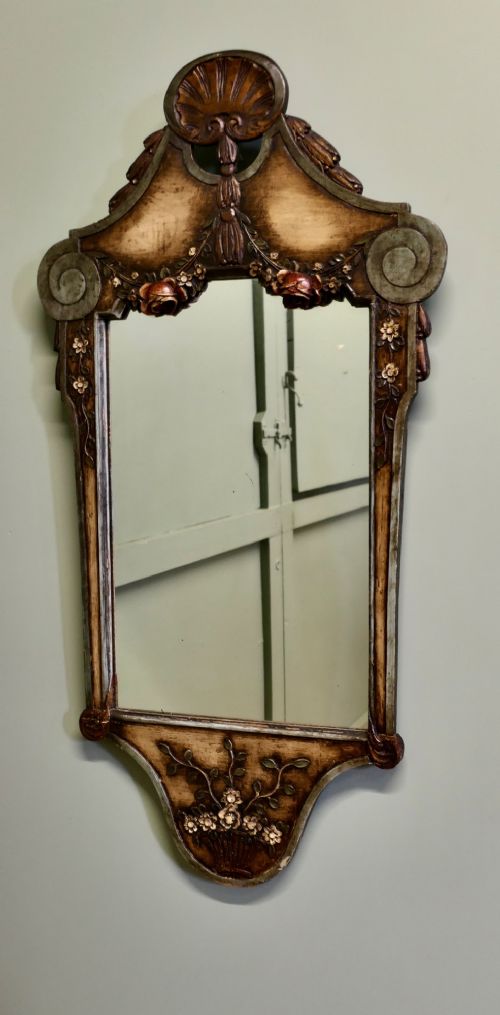
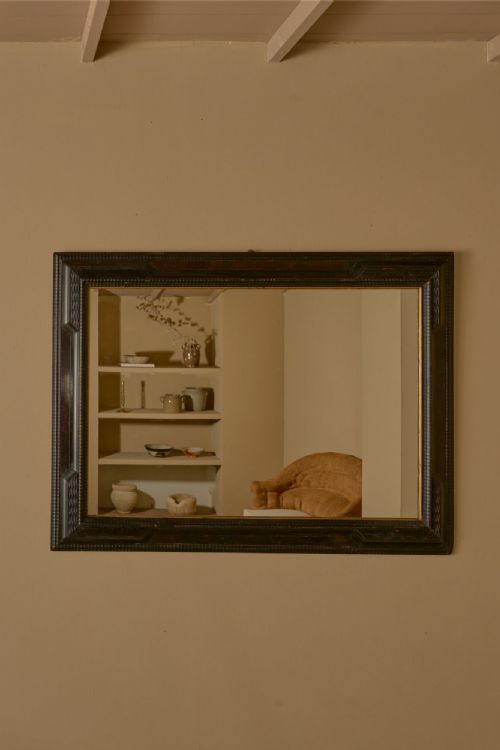
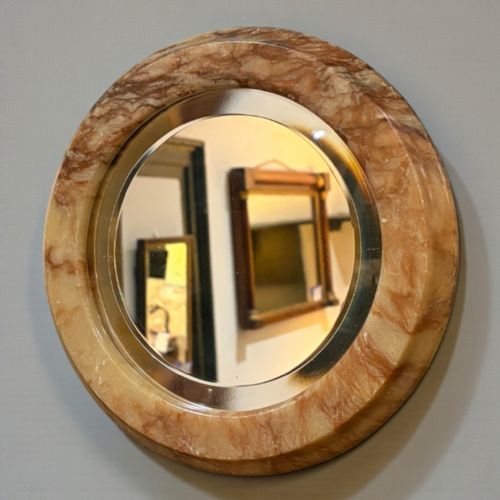
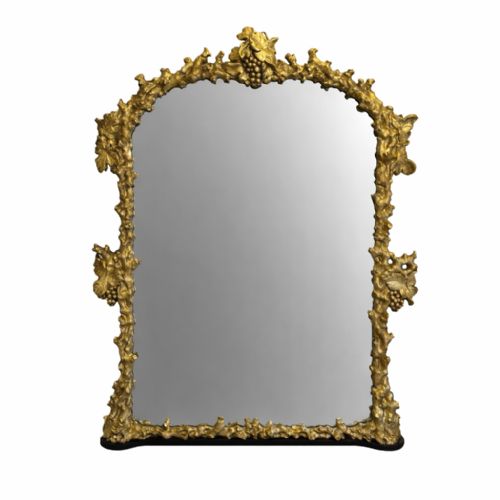
An italian carved wall mirror encompasses ornate looking glasses originating from various regions on the peninsula, spanning centuries of craftsmanship. These pieces range from grand overmantels and cushion mirrors to intimate cartouche forms and oval portrait glasses.
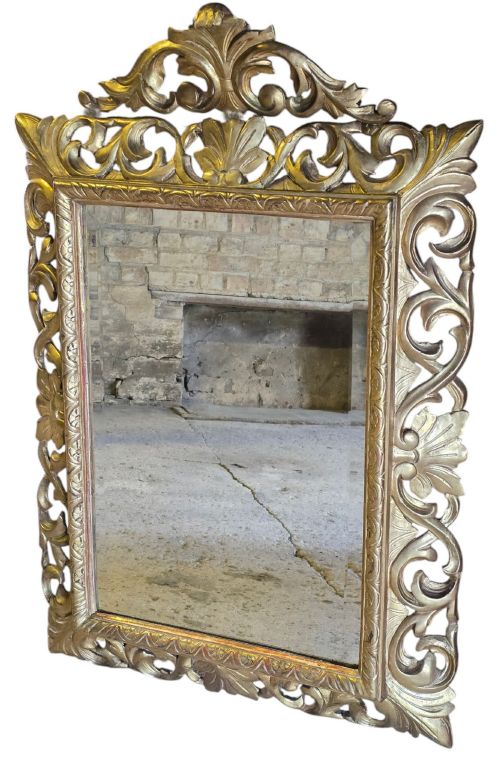
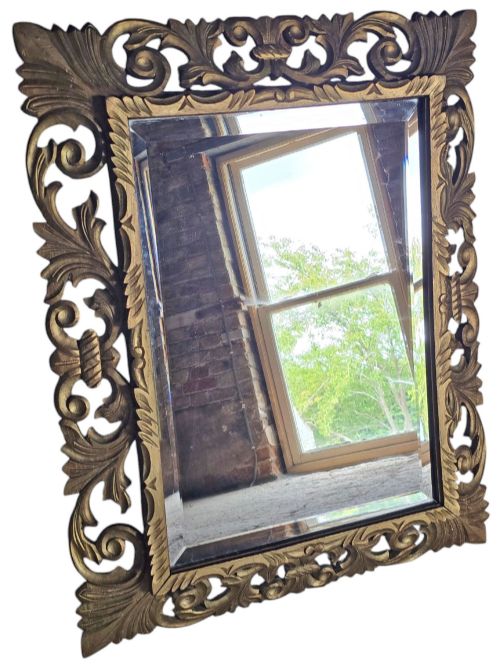
The version most commonly encountered on this page is the Florentine or Venetian giltwood mirror from the nineteenth century. These items typically display exuberant rococo revival carving, elaborate pierced frames, and rich surface gilding intended to command attention in reception rooms and halls.
How they were made
Carved wood provides the structural foundation for these looking glasses, shaped from timber such as limewood or walnut before receiving decorative surface treatments. Artisans applied layers of gesso to smooth the substrate and prepare intricate details for subsequent gilding.
Gold leaf and silver leaf were meticulously laid over the prepared surfaces to achieve a luminous finish, sometimes complemented by polychrome paint or foxed mirror plates. The interaction between hand-carved relief and applied metal leaf creates the characteristic play of light associated with these works.
Italian Carved Wall Mirror Retail Price Guide 2026
Typical asking prices for italian carved wall mirror among the pieces listed under this phrase on Sellingantiques today, from the lower quarter to the upper quarter. They describe what is for sale here now, not the wider market.
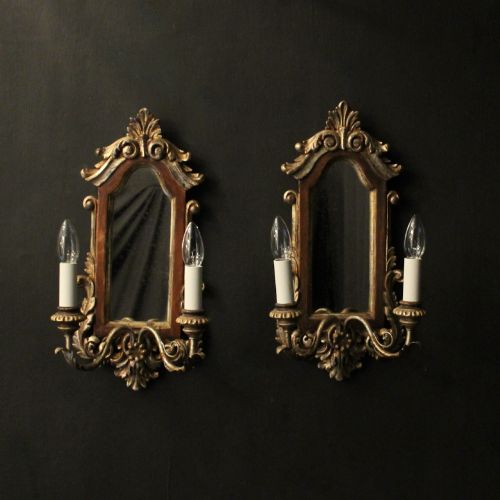
Some antique wall lights arrive with candle arms ready to double the illumination, proving our ancestors took multitasking very seriously indeed.
What varies in quality
Depth and sharpness of the carving set exceptional examples apart from simpler productions, distinguishing confident hand tool work from repetitive moulding. Superior pieces exhibit undercuts and spatial dimension in the foliage and scrollwork rather than flat, uniform relief.
The integrity of the original surface preparation influences the character of the object over time, particularly how the gesso and gold leaf hold the underlying wooden form. Original mercury or aged glass plates with natural foxing also contribute to the authentic visual weight of an antique looking glass.
Ciceri and Co
The Italian Carved Wall Mirror Glossary
- Giltwood
- Wood that has been coated with gold leaf or gold paint. This technique gives the carved frame a radiant, metallic sheen.
- Gesso
- A plaster mix applied to a wooden substrate to create a smooth surface for carving and gilding. It holds fine detail exceptionally well.
- Cartouche
- An ornamental frame resembling a scroll or a sheet of paper with rolling edges. It frequently houses asymmetrical rococo mirror plates.
- Girandole
- A branched wall sconce fitted with candleholders attached to a mirror frame. The reflective glass multiplies the candlelight in a room.
- Foxed plate
- Mirror glass displaying dark spots and age-related oxidation. Collectors value this natural weathering for the authentic period atmosphere it provides.
Italian Carved Wall Mirror: Frequently Asked Questions
How do I hang a heavy carved mirror safely?
Heavy carved wall mirrors require secure fixing directly into structural wall studs or masonry using rated brackets that match the weight of the timber and glass. Distributing the load across multiple points protects the antique frame from undue twisting.
Professional installation is strongly recommended for larger overmantel and pier formats to ensure the piece remains stable against the wall surface over time.
Where should I place an italian carved wall mirror?
Placing a looking glass opposite a window maximises natural daylight and visually expands the proportions of smaller interior spaces. They traditionally anchor reception rooms above mantelpieces or serve as focal points in entrance halls.
Consider the surrounding ceiling height and room scale to allow ornate rococo and baroque frames adequate breathing room without feeling crowded by furniture.
How can I tell nineteenth century pieces from eighteenth century ones?
Eighteenth century examples often display organic asymmetry, hand-forged construction details, and deeply patinated gilt surfaces shaped by genuine age. Nineteenth century revival pieces frequently utilise more standardised mechanical framing methods while still employing traditional hand carving.
Examining the reverse of the wooden frame and the nature of the glass plate helps reveal the manufacturing methods characteristic of each specific era.