

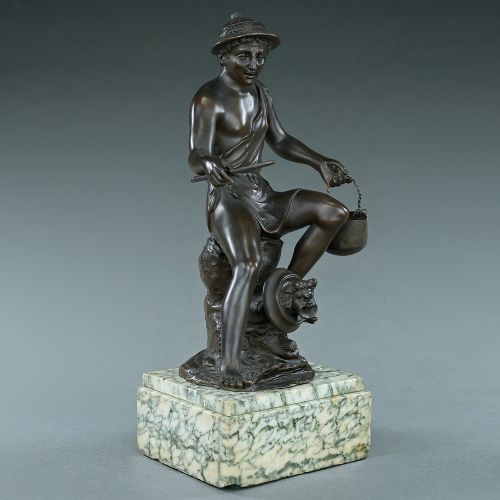
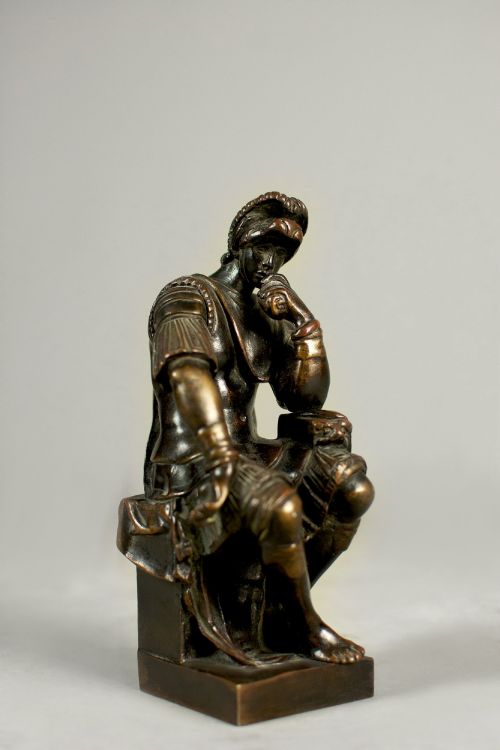
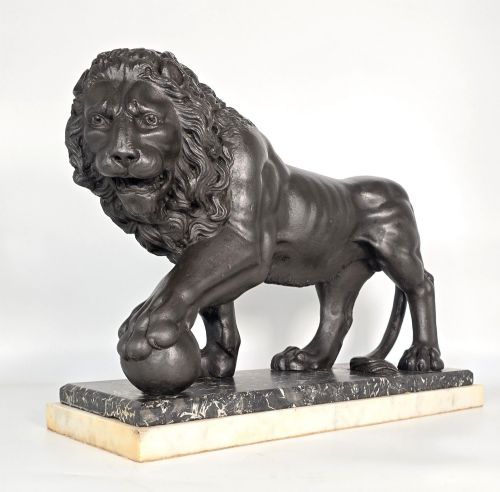

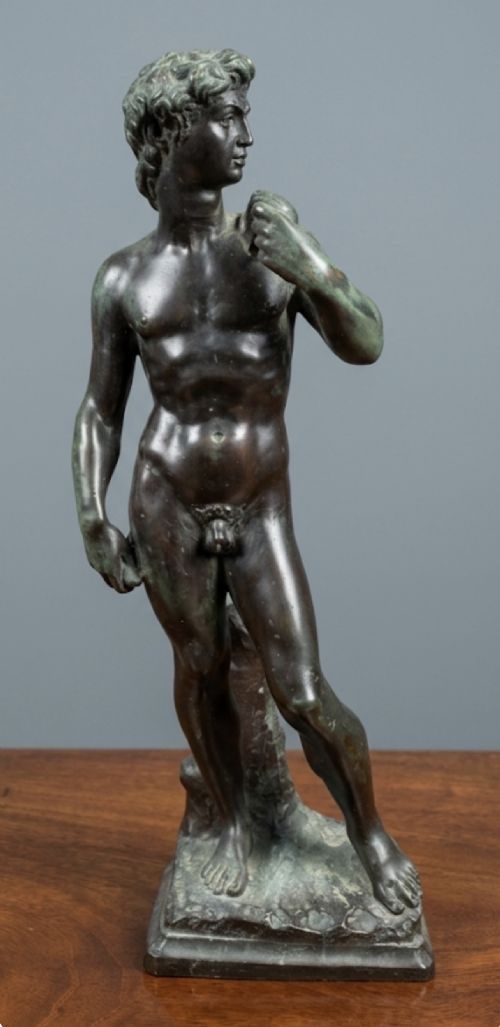
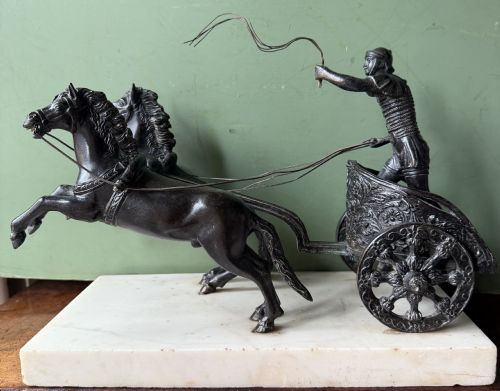
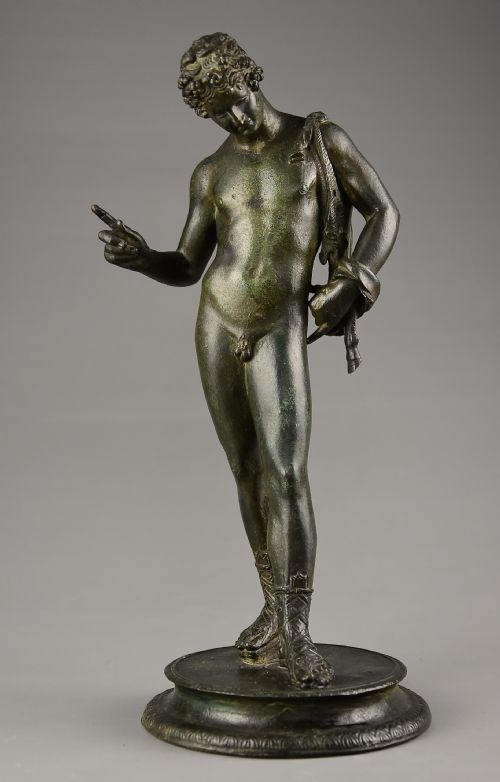


Italian Bronze Figurine
An italian bronze figurine brings classical antiquity and historical sculpture into a room through small-scale foundry work.
Italian Bronze Figurine
An italian bronze figurine captures classical myth, historical figures, and heroic subjects in cast metal. Buyers searching this phrase encounter reductions of ancient statuary, Renaissance masterpieces, and 19th-century realisitic studies.
The objects span from small cabinet bronzes to large monumental figures and pairs of musicians. Many pieces reflect the Grand Tour tradition, serving as souvenirs of classical travels across Italy during the 18th, 19th, and early 20th centuries.
Forms include single male and female nudes, animals such as lions and tigers, and mythological subjects like Mercury, Bacchus, and Narcissus. These figures frequently stand upon dedicated plinths made from marble, stone, or wood.
How They Were Made
Foundries utilised the lost-wax casting technique or sand casting to capture fine musculature, drapery, and facial expressions in molten metal. Artisans then chased the cooled bronze using chisels and files to sharpen the surface detail.
Surfaces received various chemical treatments to produce dark green, black, or brown patinated bronze finishes. Some workshops applied silvered bronze or parcel-gilt highlights to accent specific areas of the sculpture.
Italian Bronze Figurine Retail Price Guide 2026
Typical asking prices for italian bronze figurine among the pieces listed under this phrase on Sellingantiques today, from the lower quarter to the upper quarter. They describe what is for sale here now, not the wider market.
Several figures depict mythological youths caught in everyday moments, such as a boy eating grapes or wrestling a tiger.
What Varies in Quality
The fidelity of the casting separates standard souvenir pieces from superior reductions after antique originals. Sharply defined hands, hair, and musculature indicate skilled chasing work in the foundry.
The selection and finish of the supporting base influence the overall presence of the sculpture. Solid marble plinths, particularly coloured varieties like portoro or white marble, indicate careful presentation by the maker.
Luigi Secchi·Muñoz·Antonio Merente·Canova·Zoffoli·Cellini·Messina Roma·Giuseppe Renda·Vannetti·Vincenzo Gemito·Aspetti·Ugo Cipriani·Pietro Calvi·Giambologna·Ferdinando de Luca·Renzo Colombo·Gory
The Italian Bronze Figurine Glossary
- Grand Tour
- A traditional journey through Europe undertaken by upper-class travellers to study classical art and antiquities. Bronzes purchased during these travels formed the basis for many domestic collections.
- Patination
- The chemical treatment or natural weathering applied to the metal surface to create colour and tone. Dark green and deep brown patinas are common on 19th-century casts.
- Reduction
- A scaled-down bronze copy of a large public or museum sculpture. These smaller versions allowed collectors to display famous classical and Renaissance works at home.
- Parcel-gilt
- A decorative technique where specific portions of a bronze are highlighted with applied gold leaf or gilding. This method draws the eye to details like garments or accessories.
Italian Bronze Figurine: Frequently Asked Questions
What is a Grand Tour bronze?
A Grand Tour bronze is a souvenir sculpture purchased by travellers visiting Italy during the 18th and 19th centuries. These pieces reproduced famous classical statues found in museums and archaeological sites.
Foundries in Rome, Naples, and Florence produced these reductions so collectors could bring home portable examples of antique and Renaissance art.
How do I display an italian bronze figurine?
These figures require a stable surface such as a desk, console table, or bookcase where they can be viewed closely. Because many pieces are mounted on heavy marble plinths, they hold their own weight securely.
Keep the bronze away from direct moisture and bright sunlight to preserve the patination and any underlying stone or wood bases.
How are periods told apart?
Earlier 17th-century casts often show the rougher, hand-finished qualities of individual foundry work and draw heavily on Mannerist styles. 19th-century Grand Tour pieces exhibit precise reduction techniques and varied chemical patinas.
Later 20th-century examples move into Art Deco and Realism styles, reflecting modern casting methods while retaining classical subjects.
What materials are used alongside bronze?
Marble serves as the most frequent companion material, used as plinths and bases for figures to stand upon. Green portoro marble, white marble, and plain stone frequently support the metal sculptures.
Wood, brass, and silvered bronze accents also appear across the listings to provide contrast and structural support.