8,146  PAGES BROWSED TODAY PAGES TODAY 36  ANTIQUES UPLOADED TODAY NEW ARRIVALS
ID #SA1199815
FOR SALE
£2,950
Email
Save
Antique Monumental Italian Grand Tour Bronze Sculpture Mercury Hermes 19thc
Regent Antiques
for sale €3,452     $3,747
£2,950
Regent Antiques

Regent Antiques

Sellingantiques Verified Since Sep 2016
View Dealers Stock Page
  • About Us
    We specialise in english and continental furniture, silver, porcelain and decorative items.
  • Trade Associations
    Regent Antiques is a registered member of LAPADA  CINOA
Id #SA1199815
PDF SHARE
SAVE

Antique Monumental Italian Grand Tour Bronze Sculpture Mercury Hermes 19thc

19th century
For Sale by Regent Antiques
Description

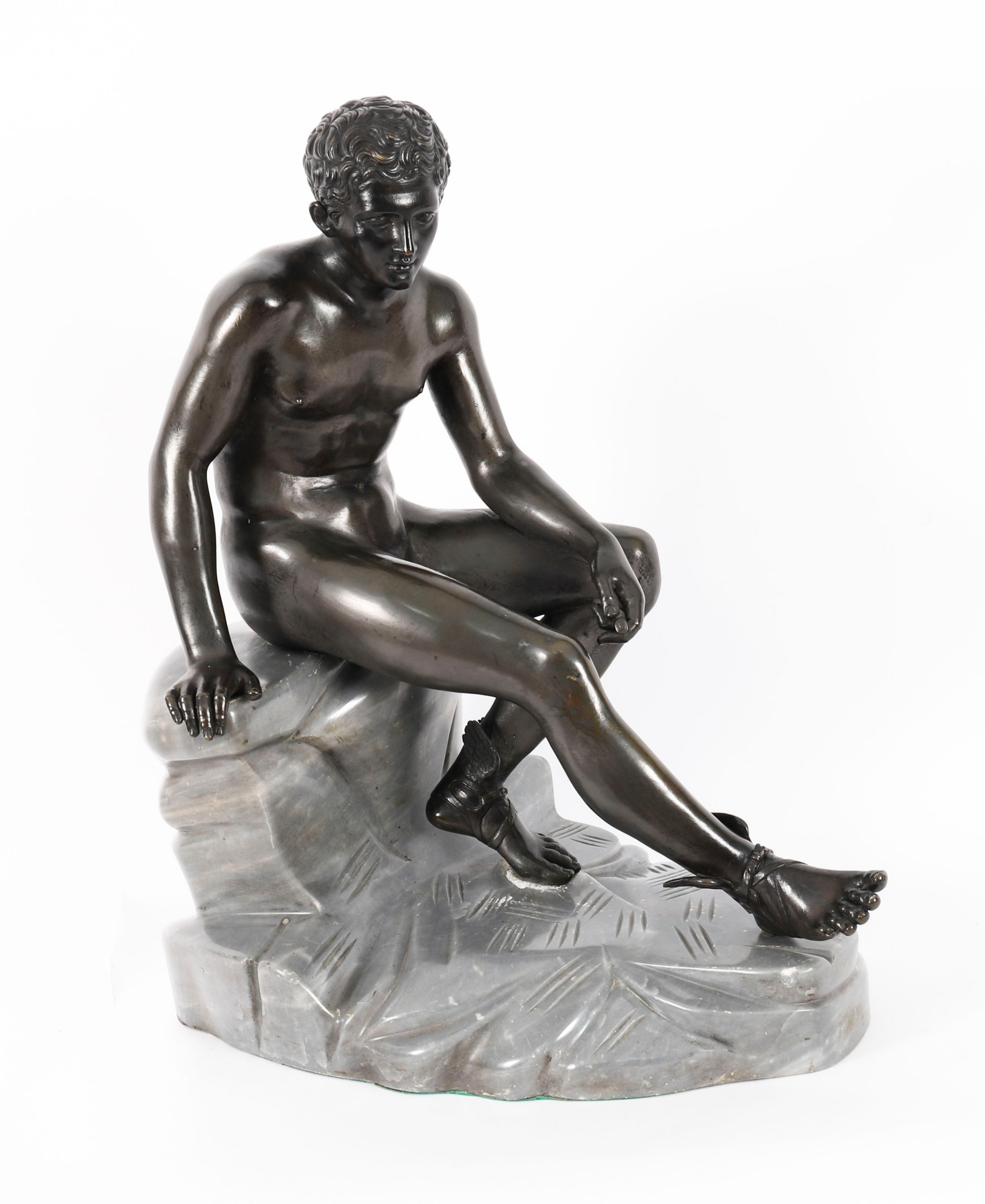
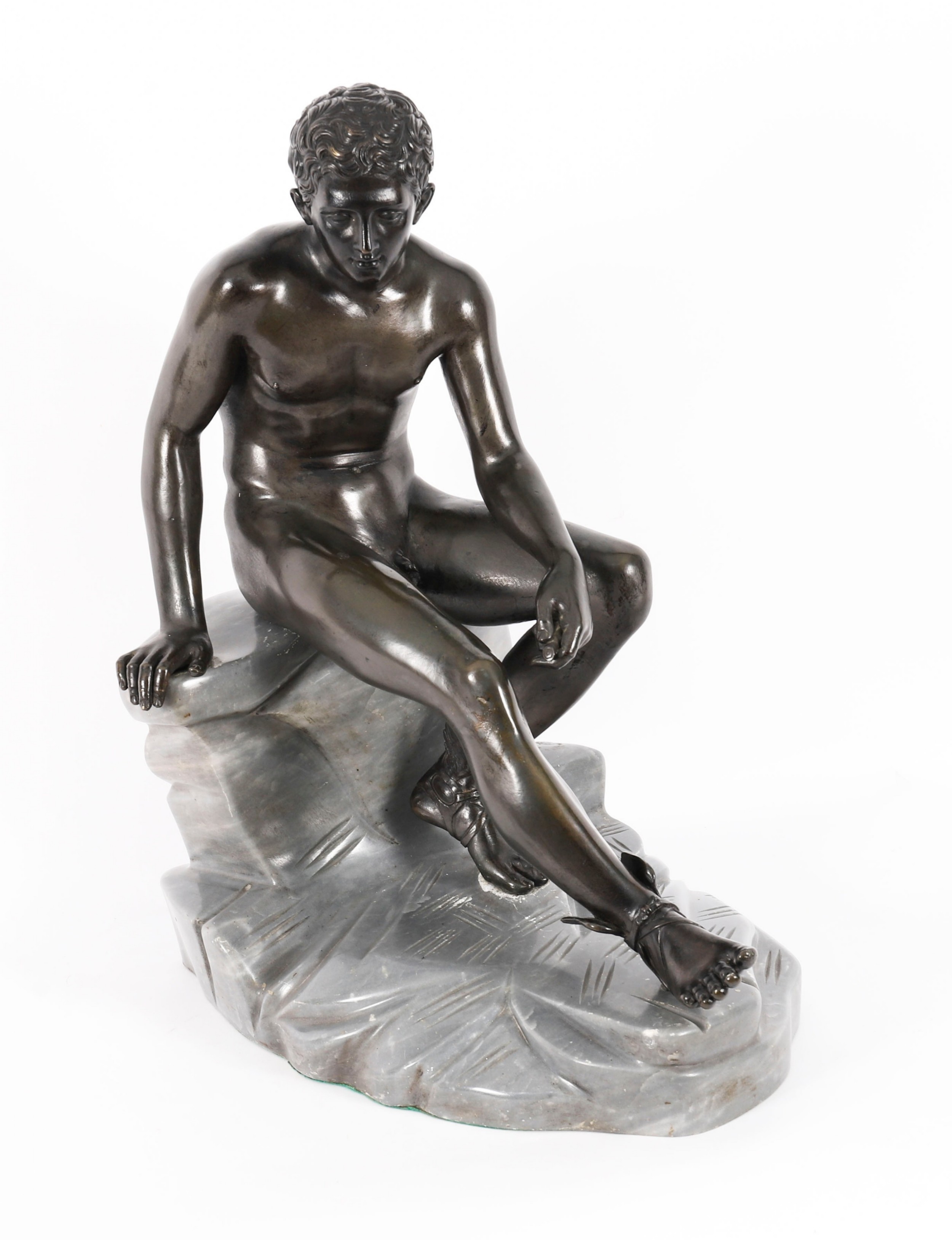
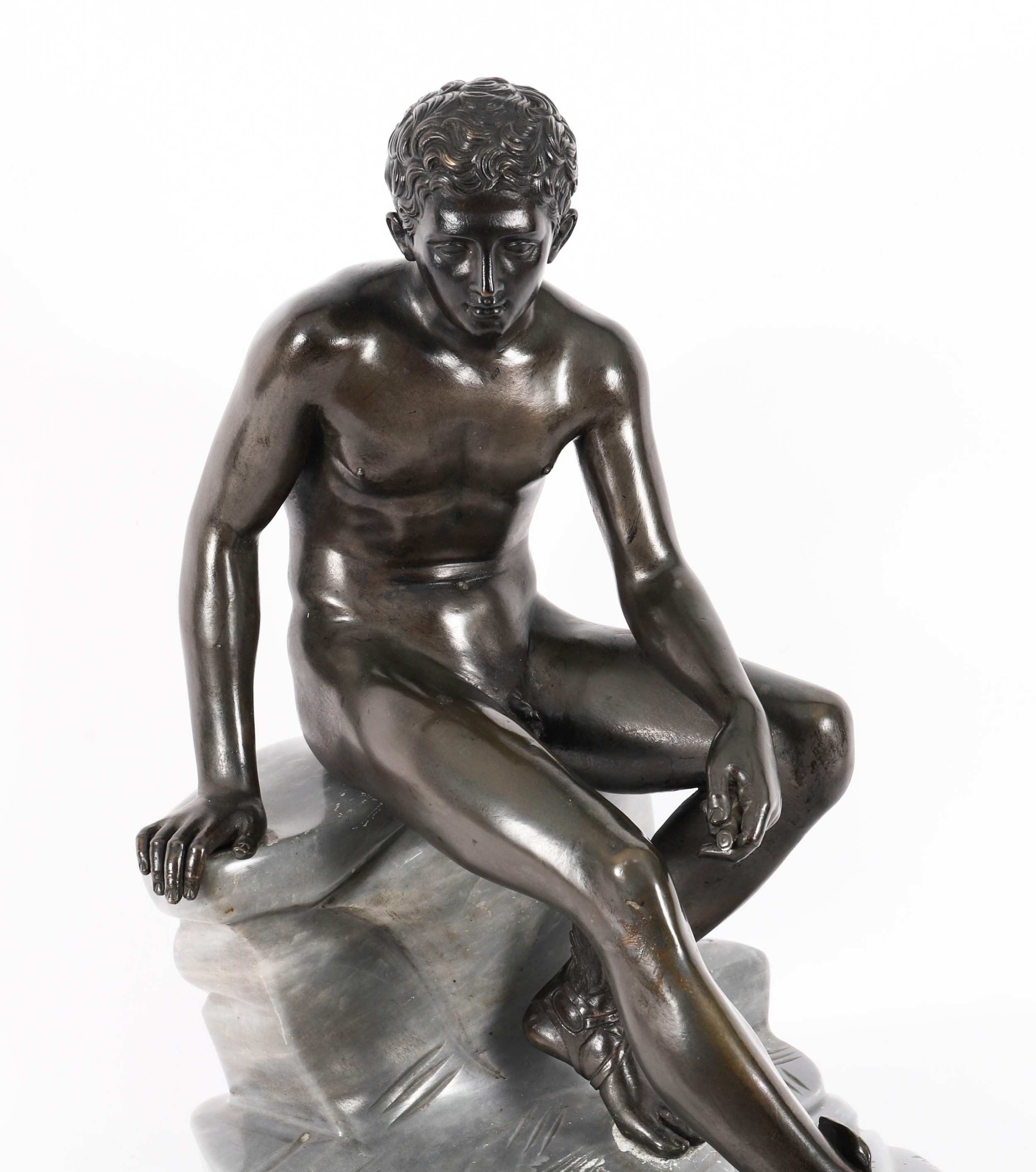
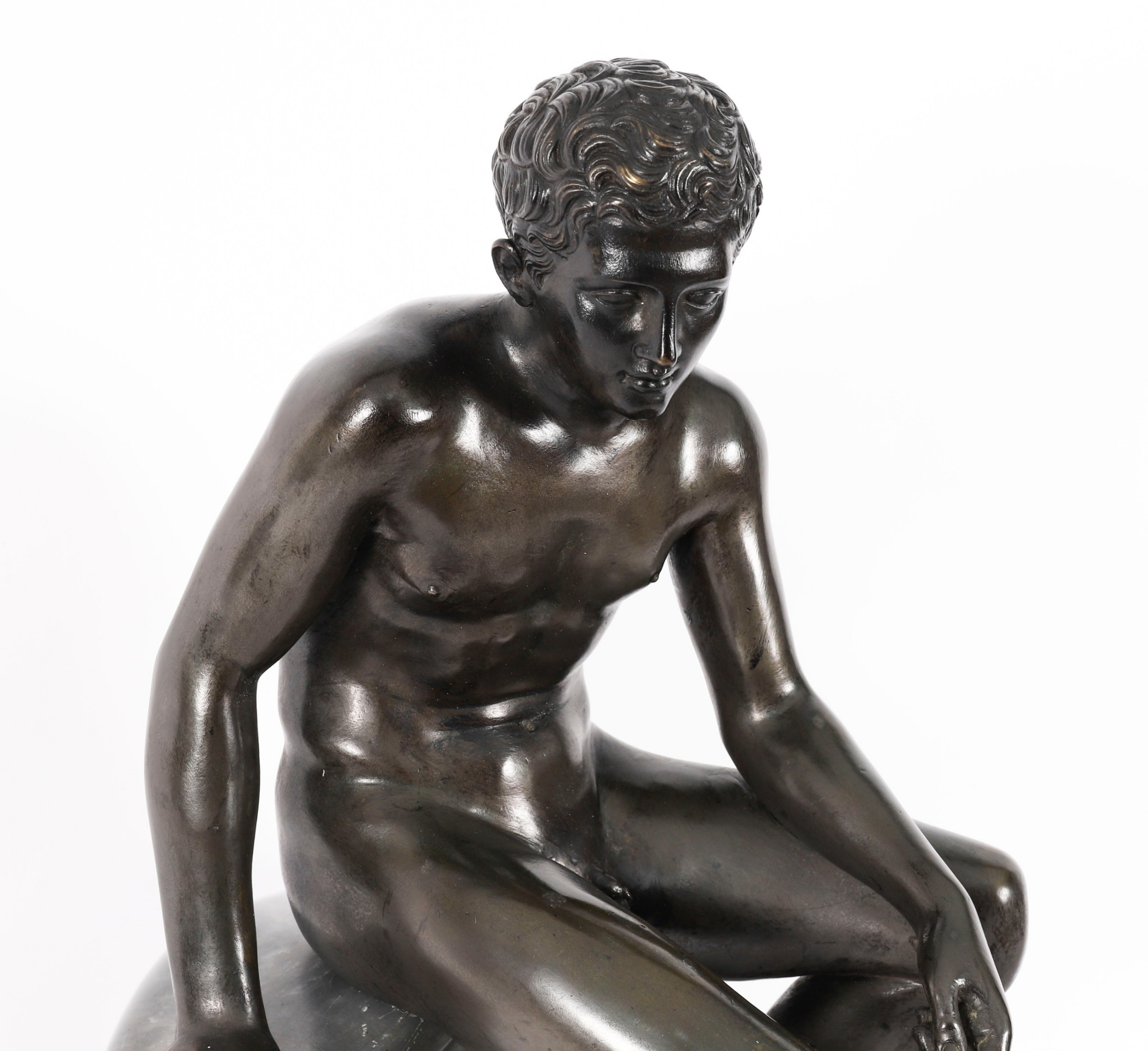
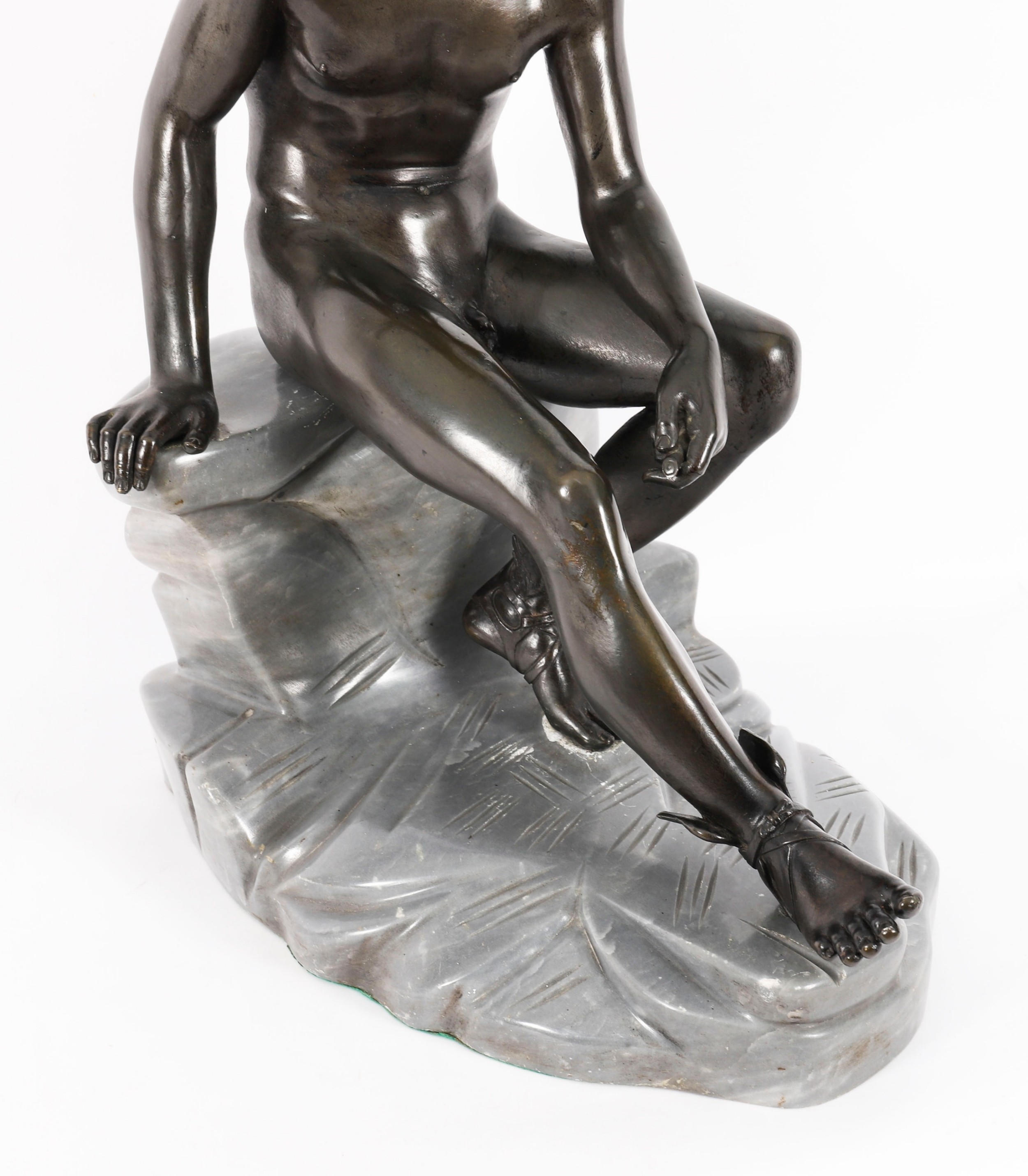
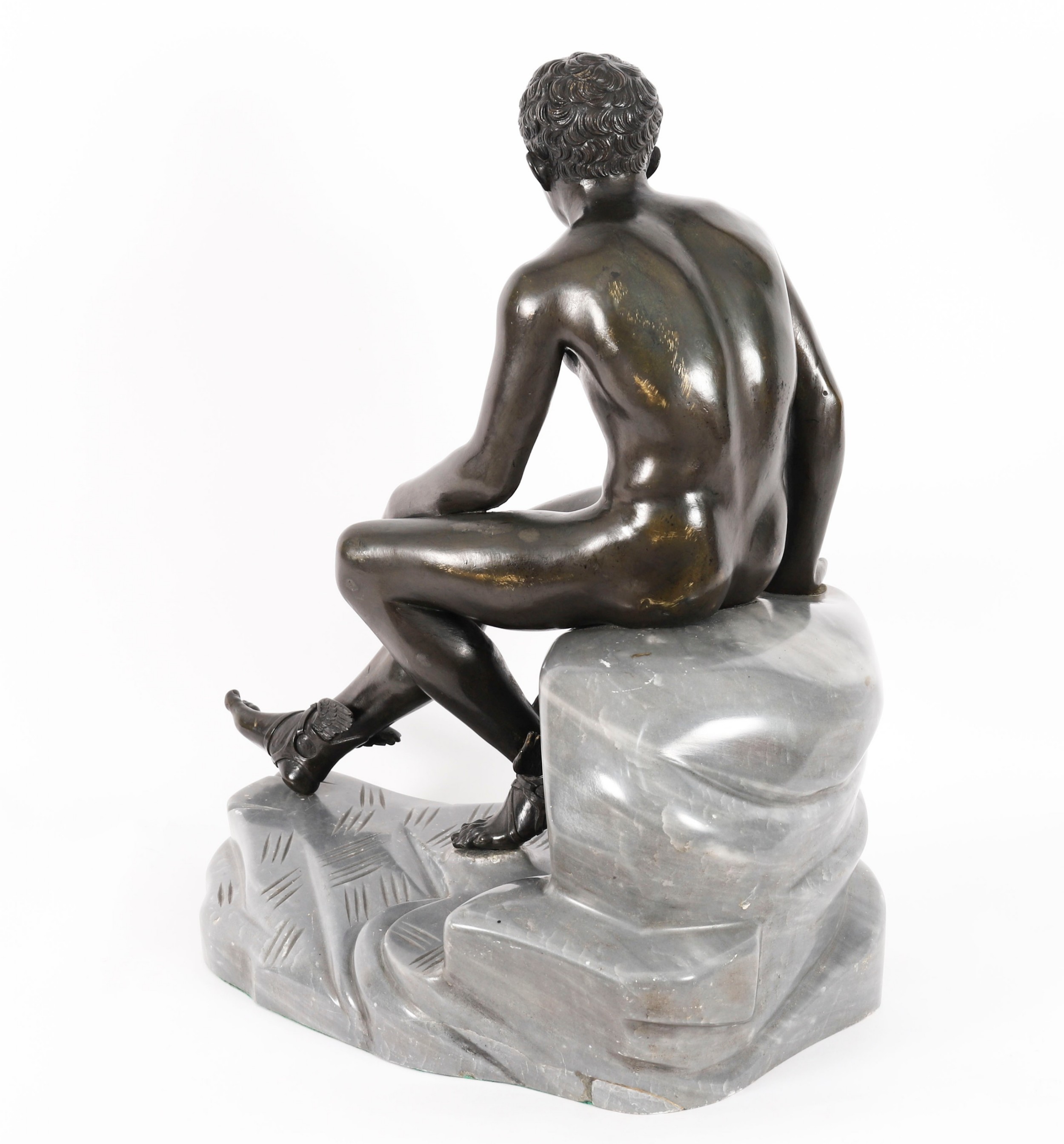
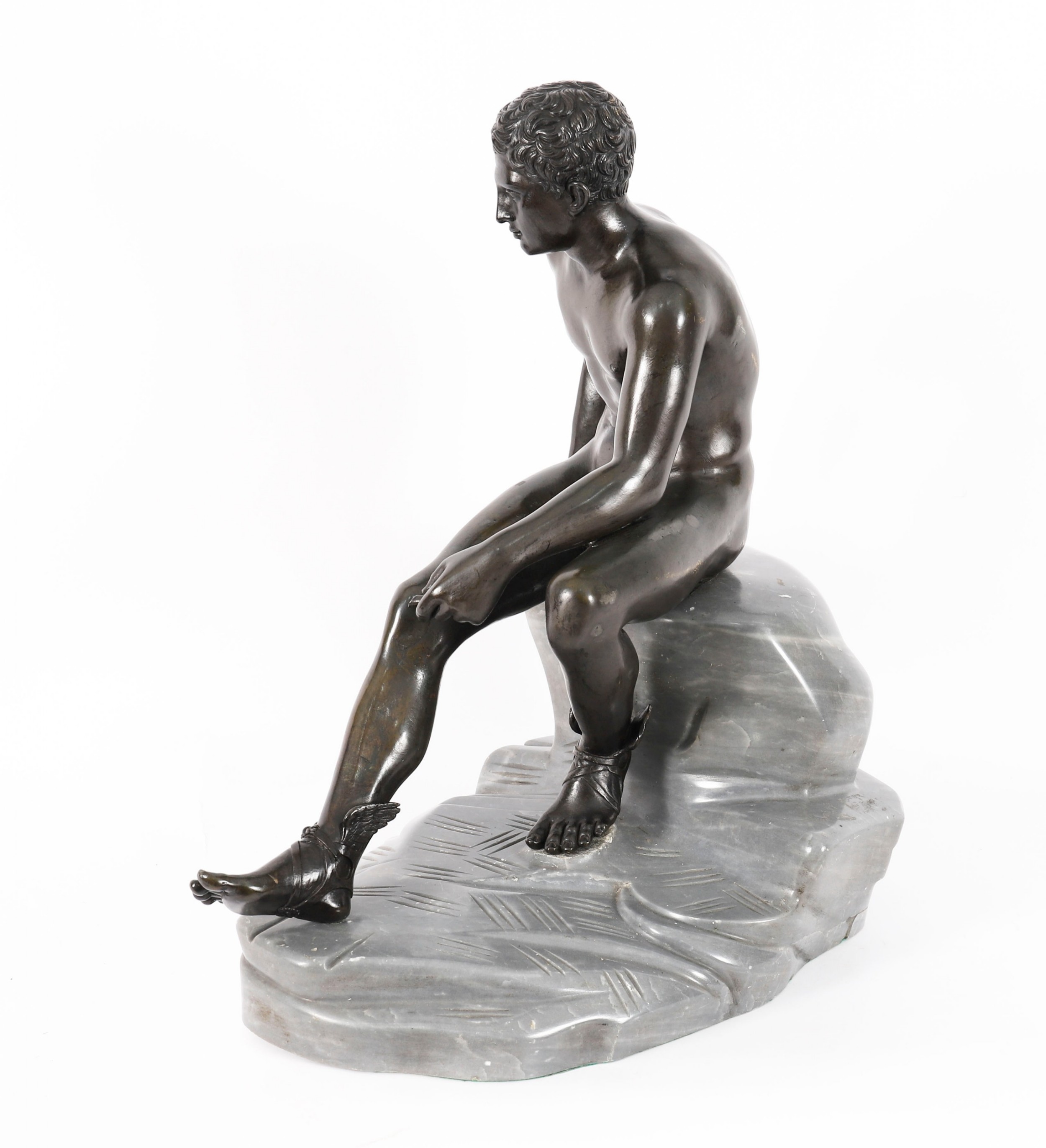
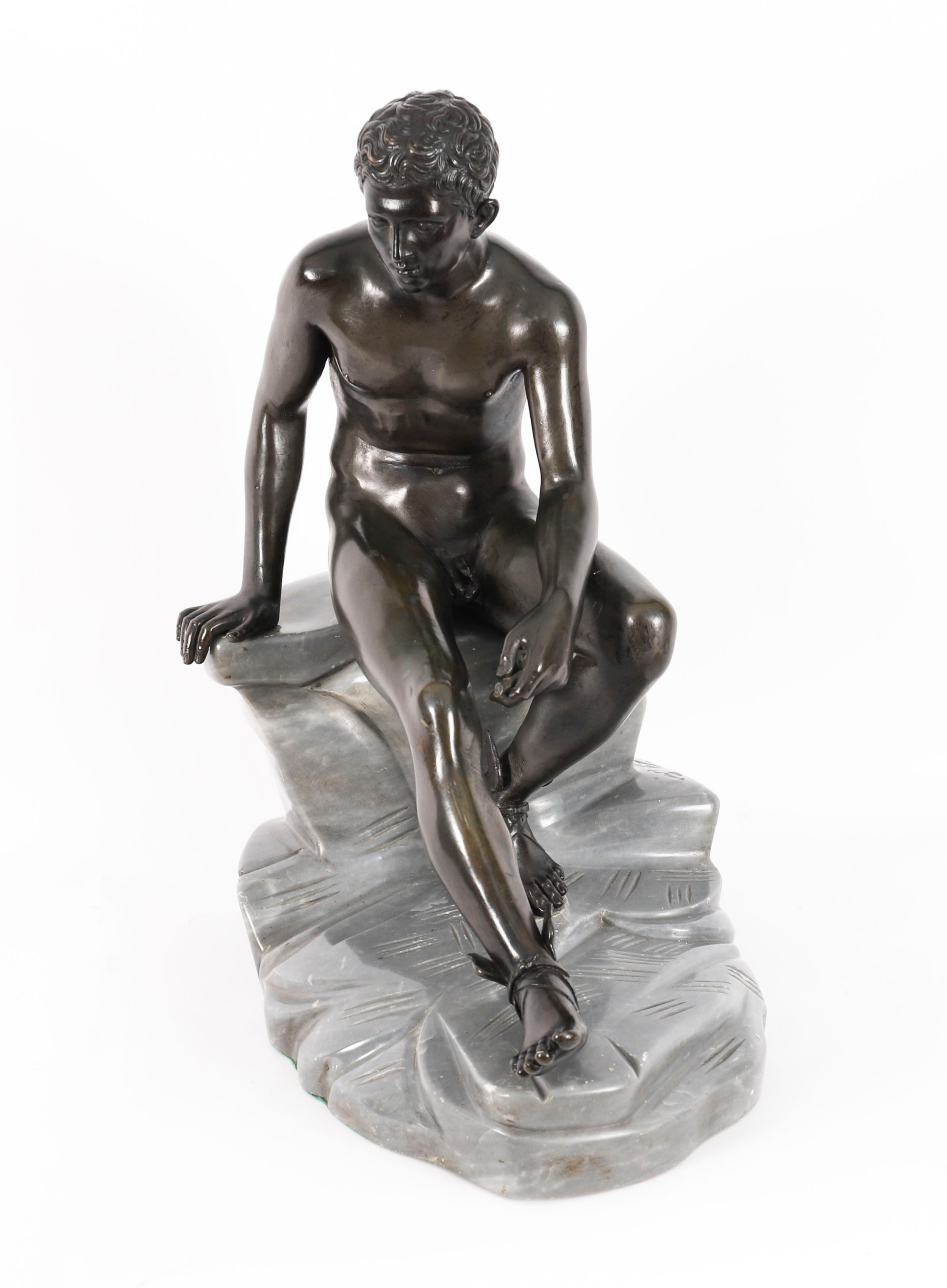
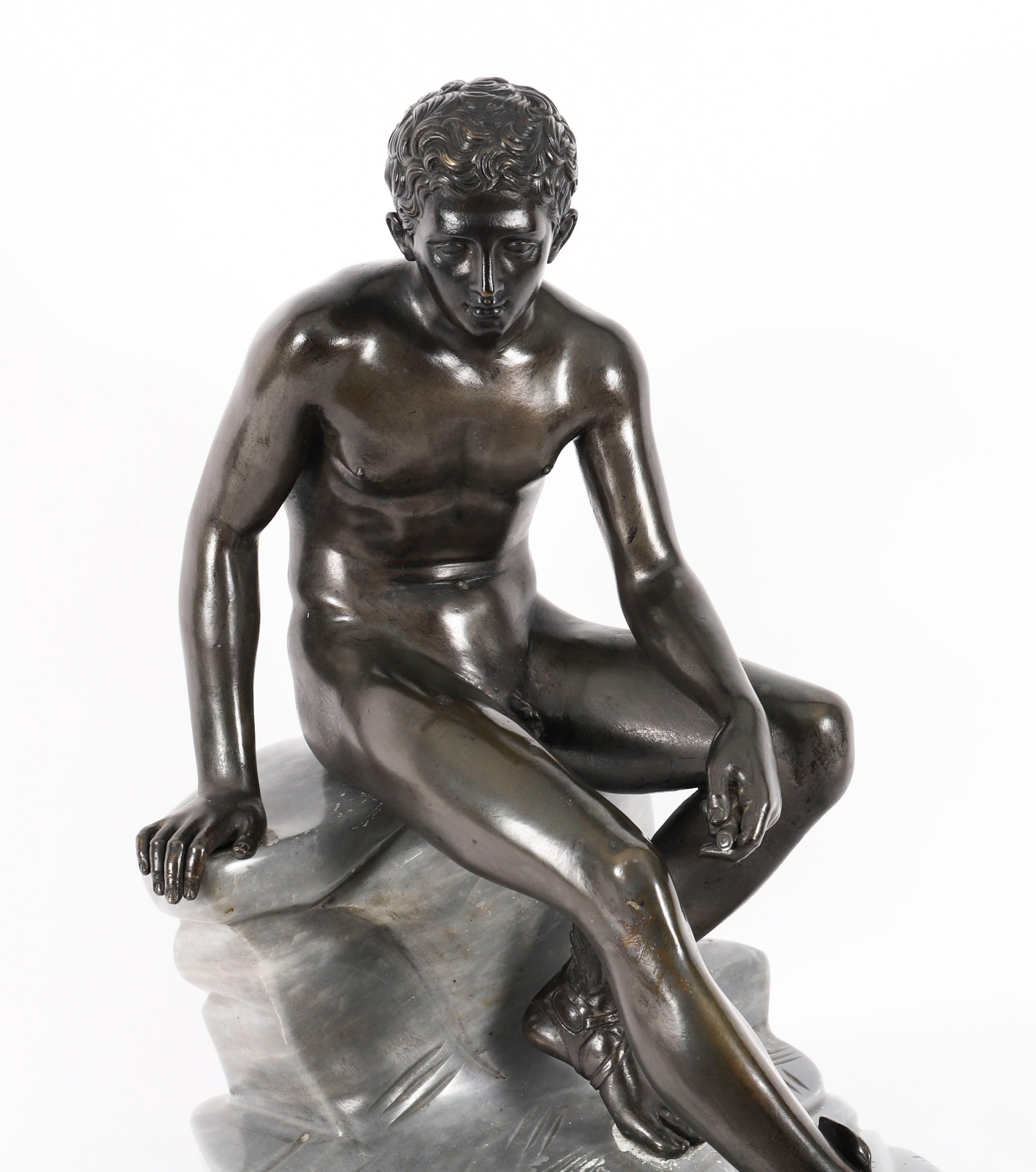
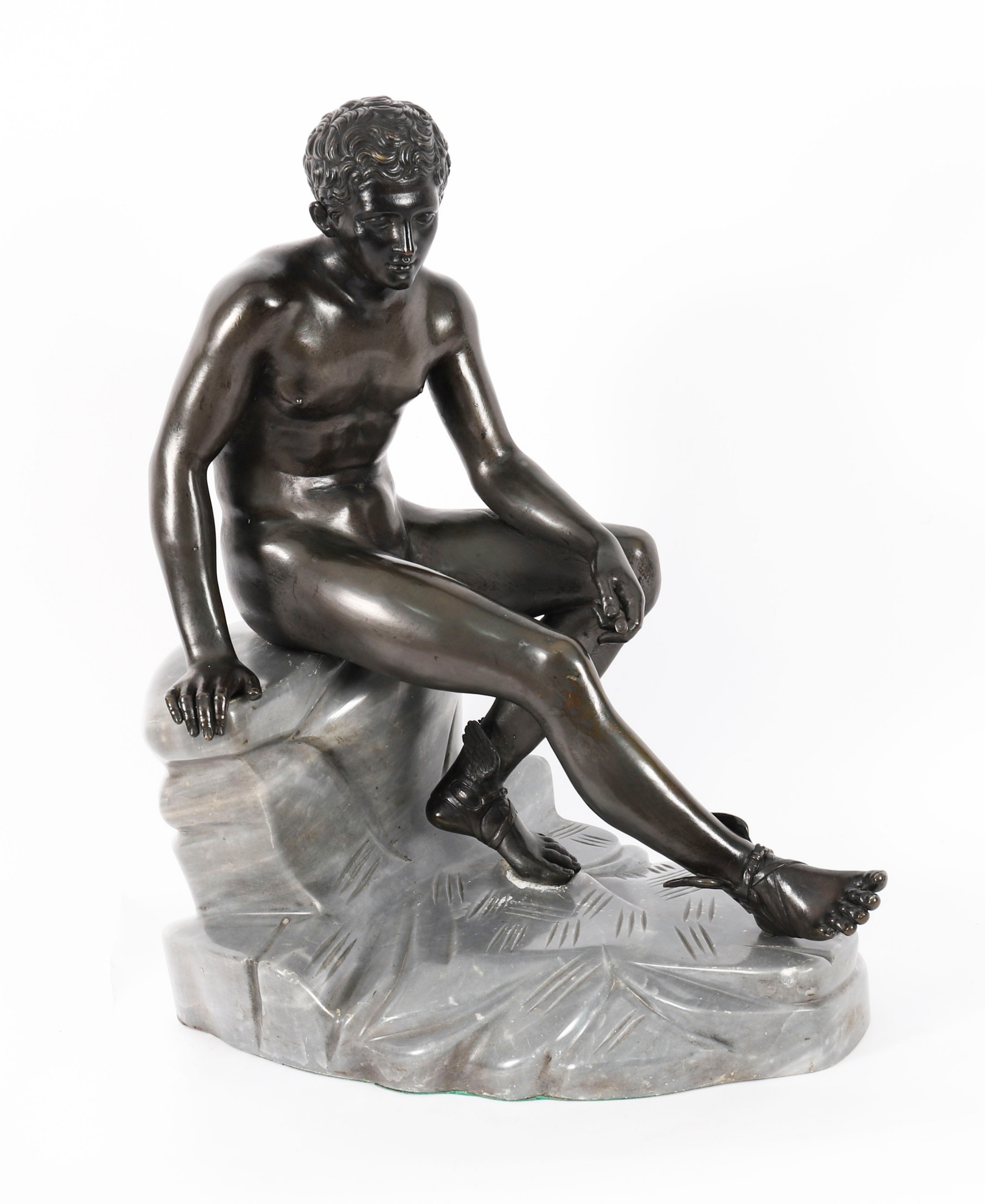
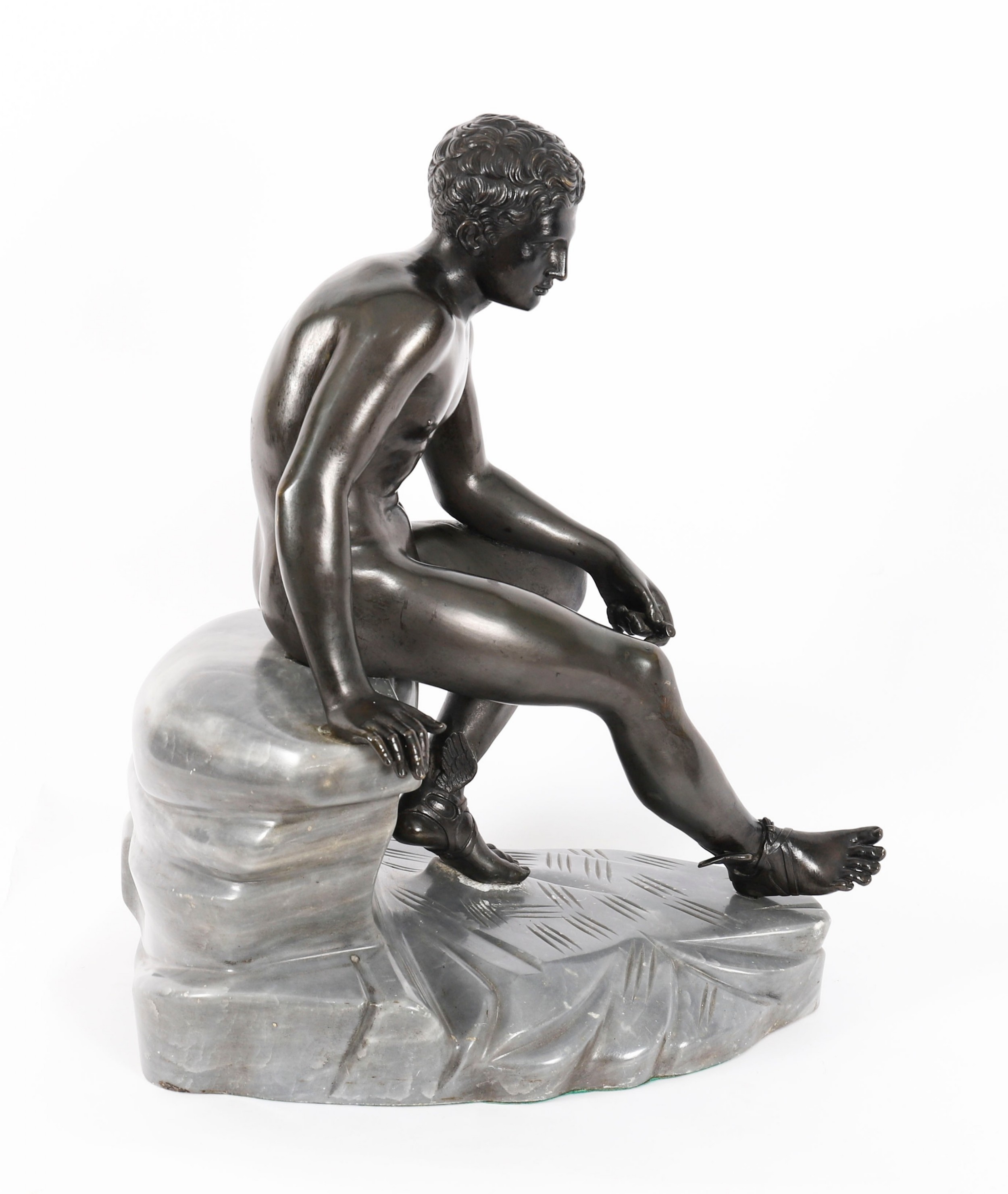
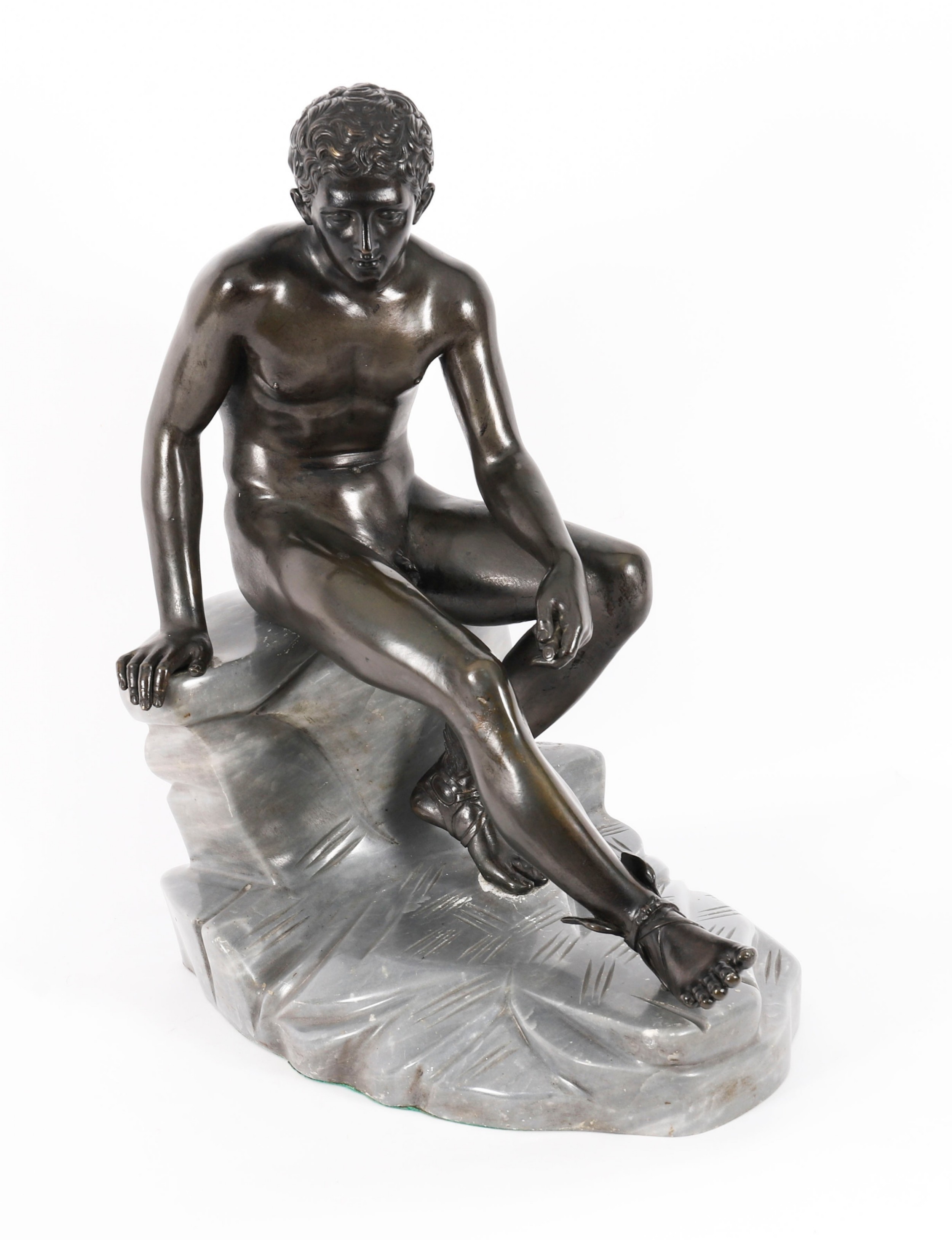
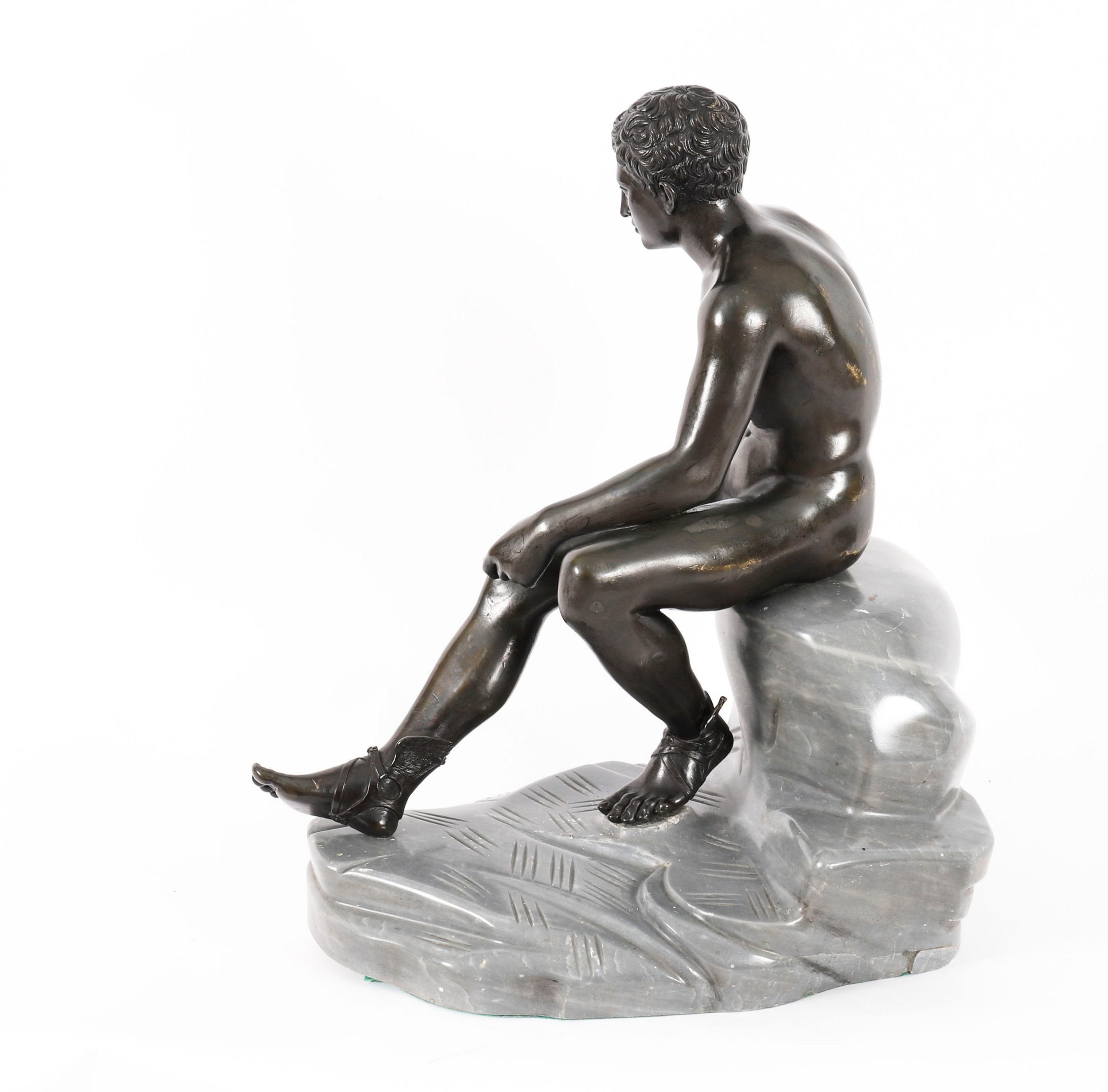
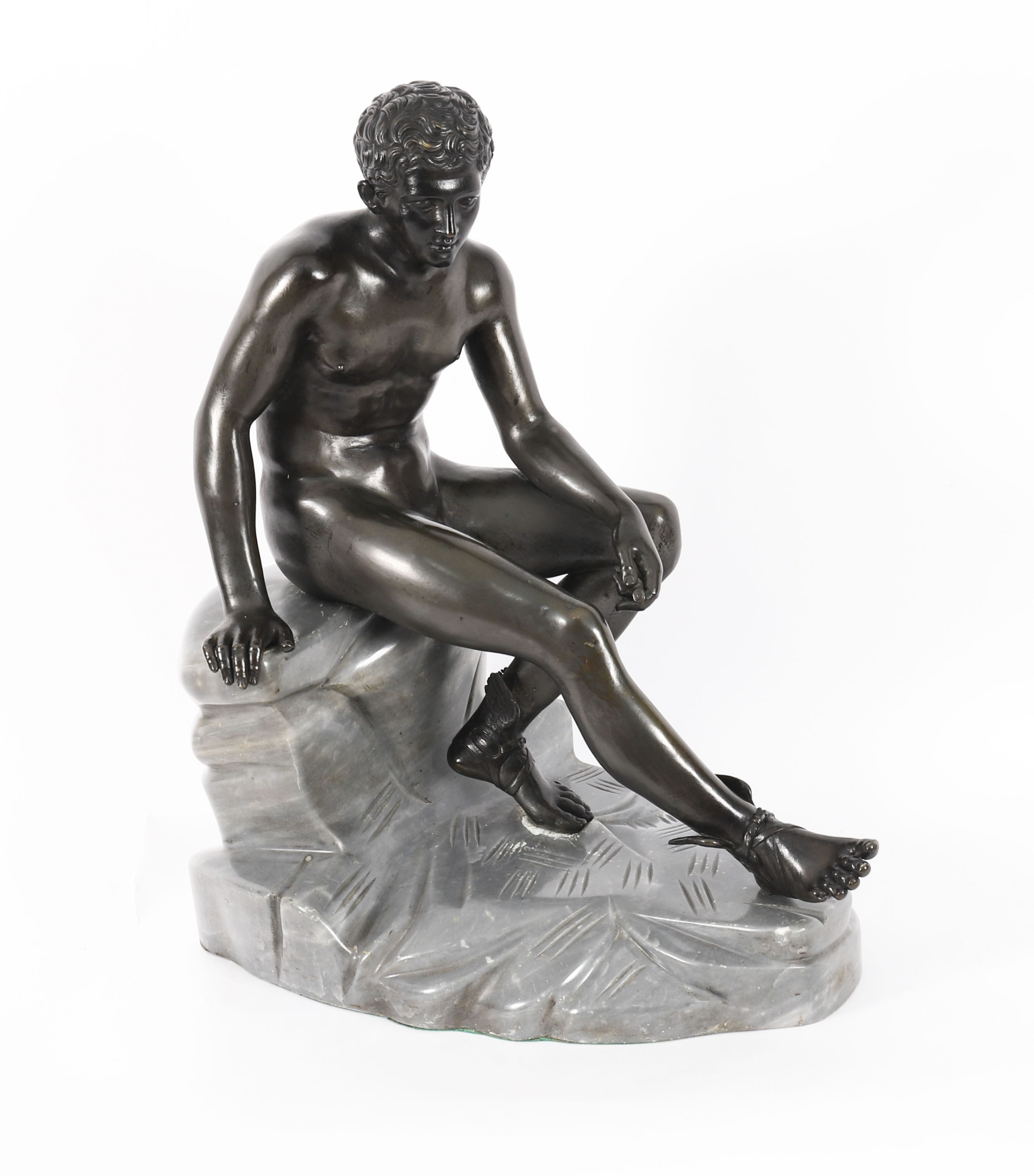
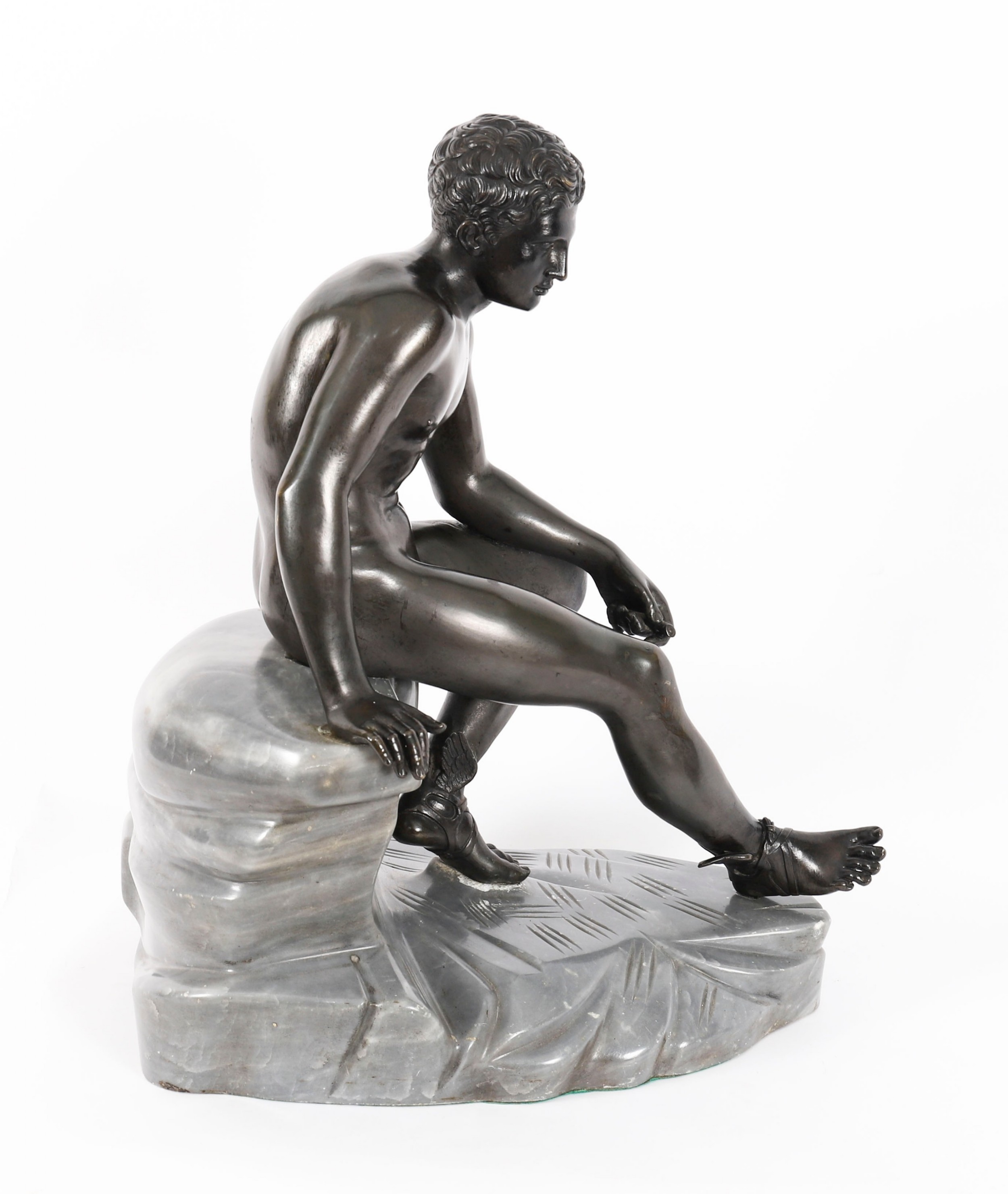
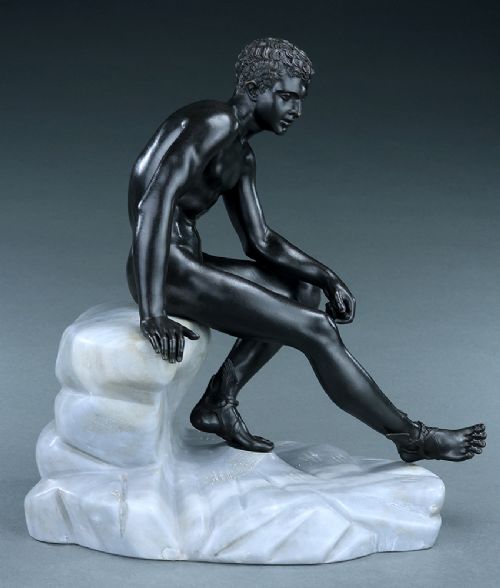
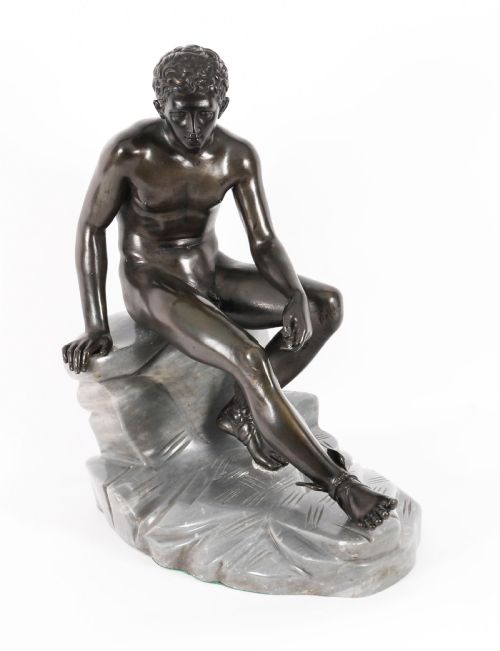
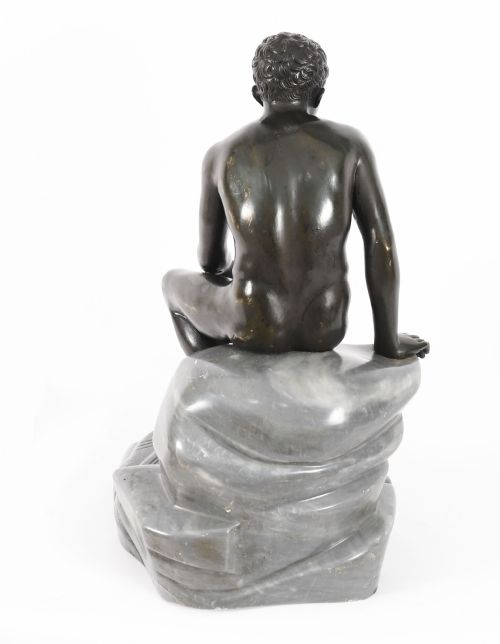
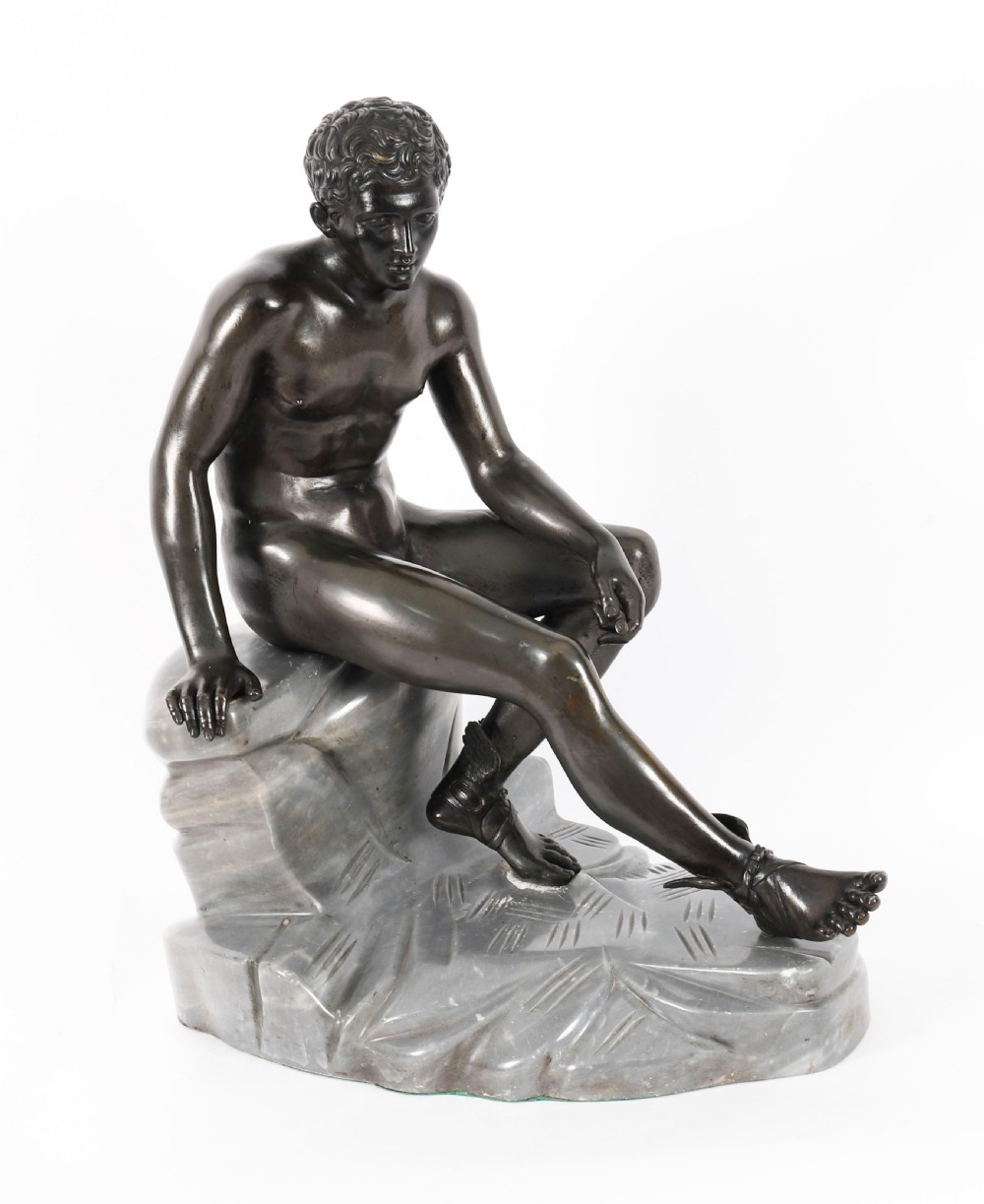
This is a beautifully detailed monumental antique Italian Grand Tour School bronze figural sculpture of Hermes, Circa 1880 in date.

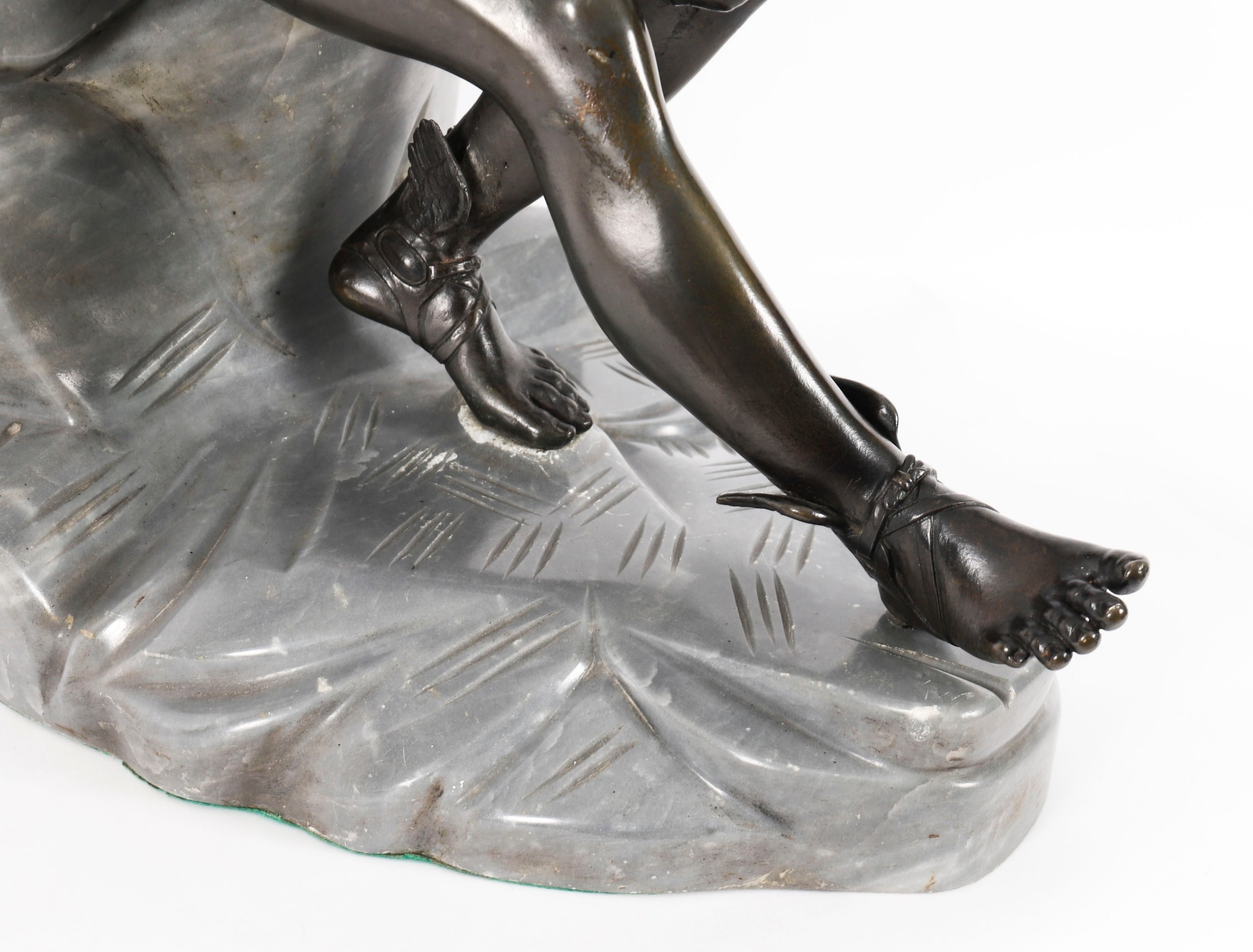
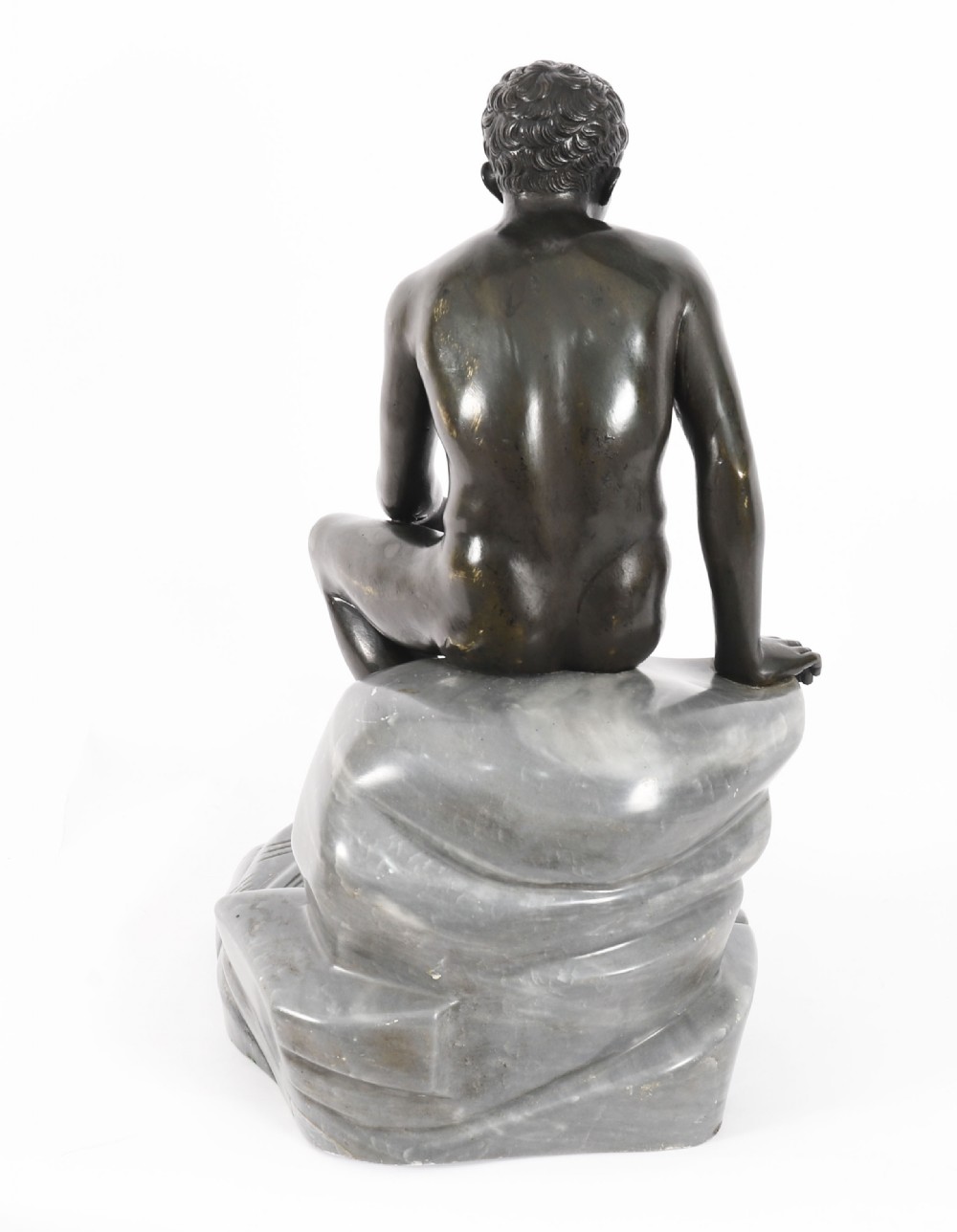
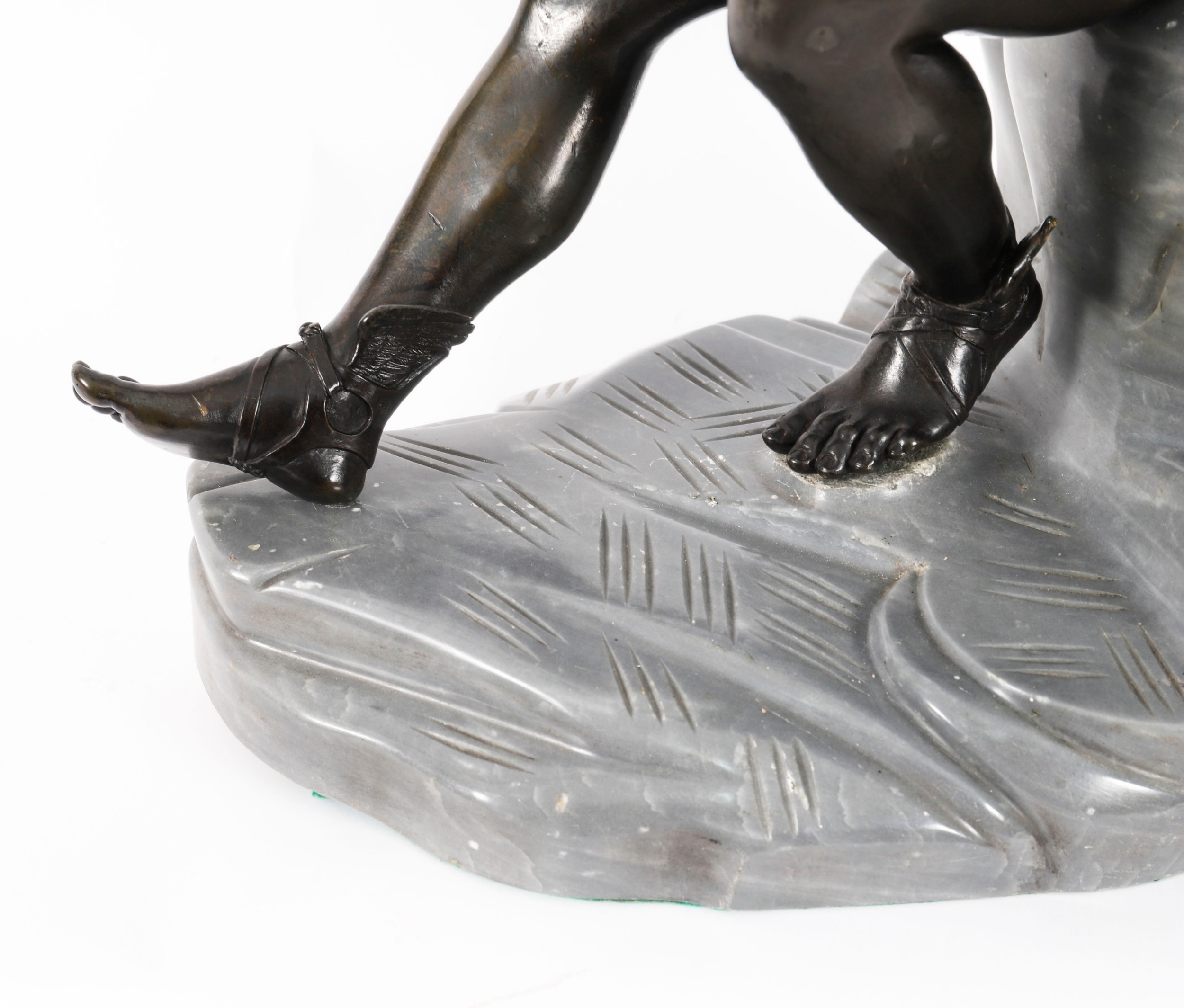
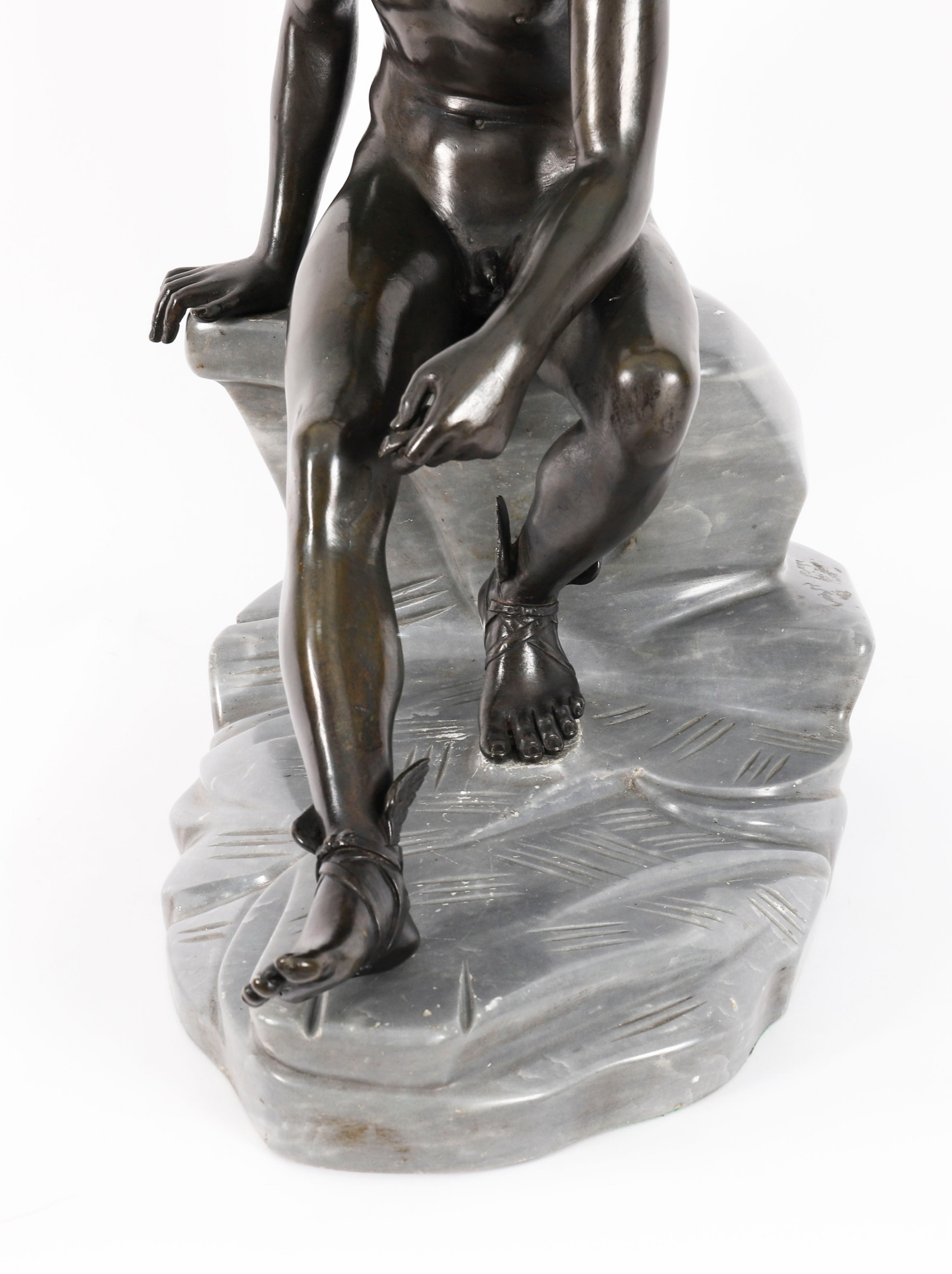
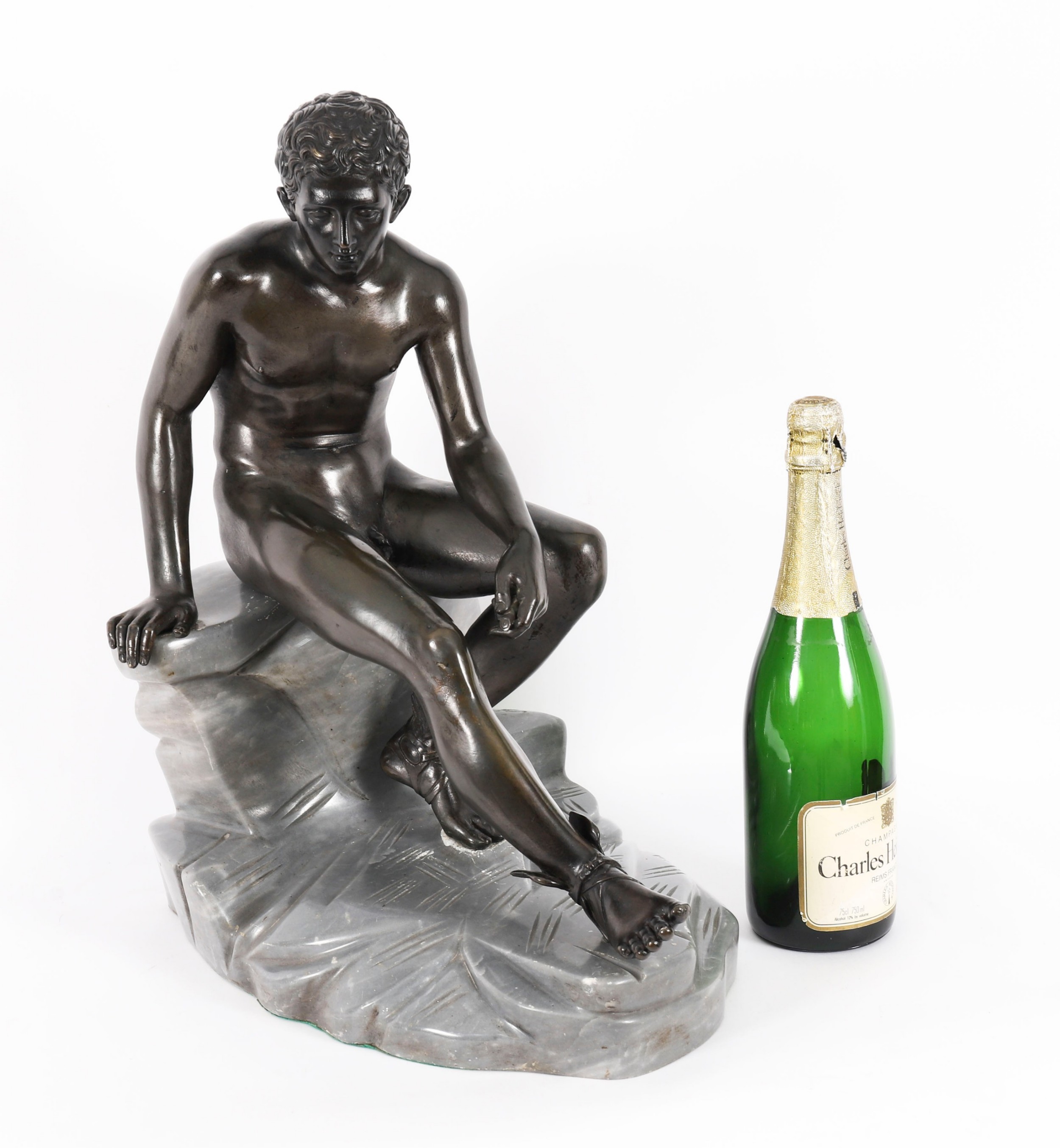
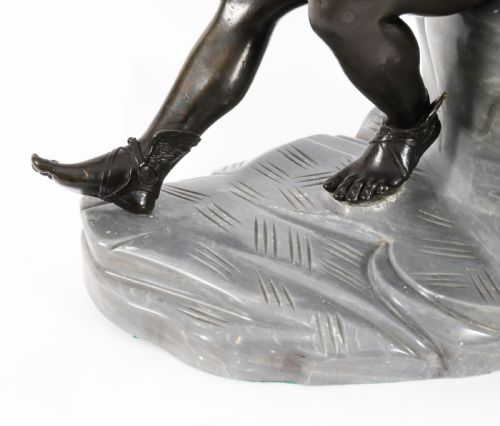
Mercury is cast after the original held at the Museo Nazionale in Naples. He is depicted naked seated on a naturalistic rock base, his heels are winged allowing the God to fly through the air and deliver messages to the Olympian Gods.  The bronze is seated on a decorative grey grey marble base in the form of a rocky outcrop.
The total weight of the sculpture and base is an amazing 29.4kgs, approx 65 lbs.


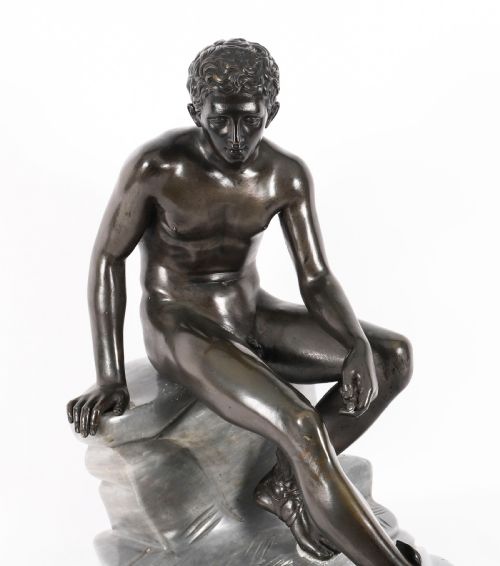
The attention to detail here is remarkable and this  sculpture is sure to receive the maximum amount of attention wherever it is placed.
Condition:

In excellent condition, please see photos for confirmation.

Dimensions in cm:

Height 50 cm x Width 43 cm x Depth 30 cm

Weight 29.4 kg - Total Weight

Dimensions in inches:

Height 1 foot, 8 inches x Width 1 foot, 5 inches x Depth 1 foot
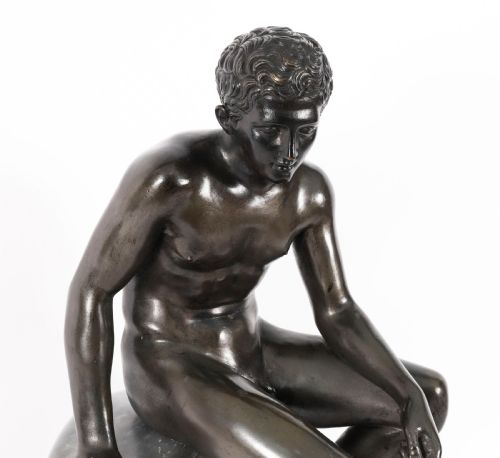
Weight 64.8 lbs - Total Weight

Hermes - was the great Olympian God of animal husbandry, roads, travel, hospitality, heralds, diplomacy, trade, thievery, language, writing, persuasion, cunning wiles, athletic contests, gymnasiums, astronomy, and astrology. 
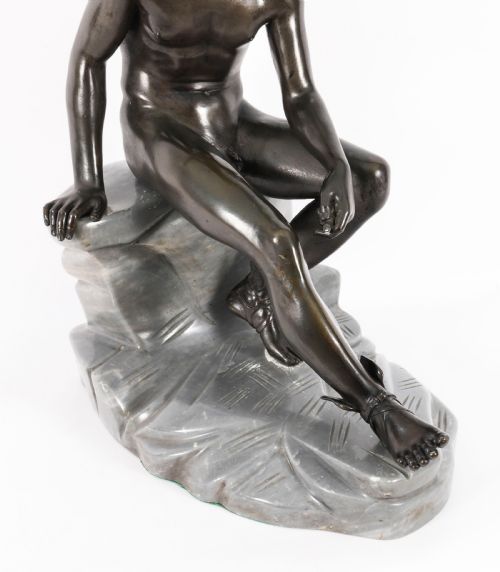
He was also the personal agent and herald of Zeus, the king of the gods. Hermes was depicted as either a handsome and athletic, beardless youth, or as an older bearded man. His attributes included the herald's wand or kerykeion (Latin caduceus), winged boots, and sometimes a winged travelers cap and chlamys cloak.  He was known as Mercury to the Romans.
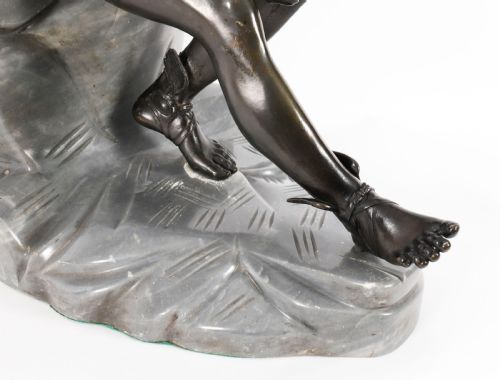
The Grand Tour was the traditional trip of Europe undertaken by mainly upper-class European young men of means. The custom flourished from about 1660 until the advent of large-scale rail transit in the 1840s, and was associated with a standard itinerary.
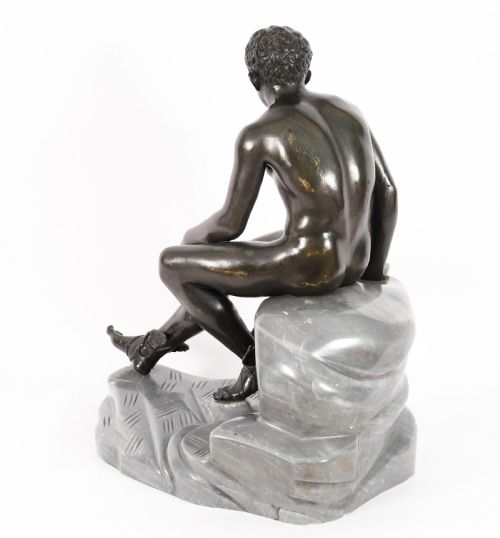
It served as an educational rite of passage. Though primarily associated with the British nobility and wealthy landed gentry, similar trips were made by wealthy young men of Protestant Northern European nations on the Continent, and from the second half of the 18th century some South American, U.S., and other overseas youth joined in. The tradition was extended to include more of the middle class after rail and steamship travel made the journey less of a burden.
The primary value of the Grand Tour, it was believed, lay in the exposure both to the cultural legacy of classical antiquity and the Renaissance, and to the aristocratic and fashionably polite society of the European continent. In addition, it provided the only opportunity to view specific works of art, and possibly the only chance to hear certain music. A grand tour could last from several months to several years. It was commonly undertaken in the company of a knowledgeable guide or tutor. 
The Grand Tour not only provided a liberal education but allowed those who could afford it the opportunity to buy things otherwise unavailable at home, and it thus increased participants' prestige and standing. Grand Tourists would return with crates of art, books, pictures, sculpture, and items of culture, which would be displayed in libraries, cabinets, gardens, and drawing rooms, as well as the galleries built purposely for their display; The Grand Tour became a symbol of wealth and freedom.

Our reference: A5132

Physical Dimensions
Height
50cm (19.69")
Width
43cm (16.93")
Depth
30cm (11.81")
Declaration

Regent Antiques has dated this Grand Tour Bronze Sculpture to the 1880s.

Reference Numbers
Sellingantiques Reference
SA1199815
Dealers Internal Reference
A5132
Description
This is a beautifully detailed monumental antique Italian Grand Tour School bronze figural sculpture of Hermes, Circa 1880 in date.

Mercury is cast after the original held at the Museo Nazionale in Naples.

 He is depicted naked seated on a naturalistic rock base, his heels are winged allowing the God to fly through the air and deliver messages to the Olympian Gods.
Regent Antiques

  The bronze is seated on a decorative grey grey marble base in the form of a rocky outcrop.

fig 1. A dark patinated bronze sculpture depicting a nude seated Hermes resting on a carved grey marble base.
fig 1. Antique Monumental Italian Grand Tour Bronze Sculpture Mercury Hermes 19thc

The total weight of the sculpture and base is an amazing 29.4kgs, approx 65 lbs.


The attention to detail here is remarkable and this  sculpture is sure to receive the maximum amount of attention wherever it is placed.

fig 2. A dark patinated bronze sculpture depicting a nude seated Hermes resting on a carved grey marble base.
fig 2. Antique Monumental Italian Grand Tour Bronze Sculpture Mercury Hermes 19thc

Condition:

In excellent condition, please see photos for confirmation.

Dimensions in cm:

Height 50 cm x Width 43 cm x Depth 30 cm

Weight 29.4 kg - Total Weight

Dimensions in inches:

Height 1 foot, 8 inches x Width 1 foot, 5 inches x Depth 1 foot

fig 3. A dark patinated bronze sculpture depicting a nude seated Hermes resting on a carved grey marble base.
fig 3. Antique Monumental Italian Grand Tour Bronze Sculpture Mercury Hermes 19thc

Weight 64.8 lbs - Total Weight

Hermes - was the great Olympian God of animal husbandry, roads, travel, hospitality, heralds, diplomacy, trade, thievery, language, writing, persuasion, cunning wiles, athletic contests, gymnasiums, astronomy, and astrology. 

fig 4. A dark patinated bronze sculpture depicting a nude seated Hermes resting on a carved grey marble base.
fig 4. Antique Monumental Italian Grand Tour Bronze Sculpture Mercury Hermes 19thc

He was also the personal agent and herald of Zeus, the king of the gods. Hermes was depicted as either a handsome and athletic, beardless youth, or as an older bearded man. His attributes included the herald's wand or kerykeion (Latin caduceus), winged boots, and sometimes a winged travelers cap and chlamys cloak.  He was known as Mercury to the Romans.

fig 5. A dark patinated bronze sculpture depicting a nude seated Hermes resting on a carved grey marble base.
fig 5. Antique Monumental Italian Grand Tour Bronze Sculpture Mercury Hermes 19thc

The Grand Tour was the traditional trip of Europe undertaken by mainly upper-class European young men of means. The custom flourished from about 1660 until the advent of large-scale rail transit in the 1840s, and was associated with a standard itinerary.

fig 6. A dark patinated bronze sculpture depicting a nude seated Hermes resting on a carved grey marble base.
fig 6. Antique Monumental Italian Grand Tour Bronze Sculpture Mercury Hermes 19thc

It served as an educational rite of passage. Though primarily associated with the British nobility and wealthy landed gentry, similar trips were made by wealthy young men of Protestant Northern European nations on the Continent, and from the second half of the 18th century some South American, U.S., and other overseas youth joined in. The tradition was extended to include more of the middle class after rail and steamship travel made the journey less of a burden.

fig 7. A dark patinated bronze sculpture depicting a nude seated Hermes resting on a carved grey marble base.
fig 7. Antique Monumental Italian Grand Tour Bronze Sculpture Mercury Hermes 19thc

The primary value of the Grand Tour, it was believed, lay in the exposure both to the cultural legacy of classical antiquity and the Renaissance, and to the aristocratic and fashionably polite society of the European continent. In addition, it provided the only opportunity to view specific works of art, and possibly the only chance to hear certain music. A grand tour could last from several months to several years. It was commonly undertaken in the company of a knowledgeable guide or tutor. 

fig 8. A dark patinated bronze sculpture depicting a nude seated Hermes resting on a carved grey marble base.
fig 8. Antique Monumental Italian Grand Tour Bronze Sculpture Mercury Hermes 19thc

The Grand Tour not only provided a liberal education but allowed those who could afford it the opportunity to buy things otherwise unavailable at home, and it thus increased participants' prestige and standing. Grand Tourists would return with crates of art, books, pictures, sculpture, and items of culture, which would be displayed in libraries, cabinets, gardens, and drawing rooms, as well as the galleries built purposely for their display; The Grand Tour became a symbol of wealth and freedom.

Our reference: A5132

Height
50cm (19.69")
Width
43cm (16.93")
Depth
30cm (11.81")
Date of Manufacture

Regent Antiques has dated this Grand Tour Bronze Sculpture to the 1880s.

Reference Numbers
Sellingantiques Ref
SA1199815
Dealers Internal Ref
A5132
Regent Antiques
Regent Antiques
Sellingantiques verified Since Sep 2016

We specialise in english and continental furniture, silver, porcelain and decorative items.

Dealer Profile

You can view the stock and full dealer information on the Regent Antiques Profile Page

Trade Associations

Regent Antiques is a registered member of LAPADA  CINOA
PDF SHARE
SAVE
A dark patinated bronze sculpture depicting a nude seated Hermes resting on a carved grey marble base.
1 / 20
Archive I A dark patinated bronze sculpture depicting a nude seated Hermes resting on a carved grey marble base.

Antique Monumental Italian Grand Tour Bronze Sculpture Mercury Hermes 19thC

Archive II A dark patinated bronze sculpture depicting a nude seated Hermes resting on a carved grey marble base. View II
Archive III A dark patinated bronze sculpture depicting a nude seated Hermes resting on a carved grey marble base. View III
Archive IV A dark patinated bronze sculpture depicting a nude seated Hermes resting on a carved grey marble base. View IV
Archive V A dark patinated bronze sculpture depicting a nude seated Hermes resting on a carved grey marble base. View V
Archive VI A dark patinated bronze sculpture depicting a nude seated Hermes resting on a carved grey marble base. View VI
Archive VII A dark patinated bronze sculpture depicting a nude seated Hermes resting on a carved grey marble base. View VII
Archive VIII A dark patinated bronze sculpture depicting a nude seated Hermes resting on a carved grey marble base. View VIII
Archive IX A dark patinated bronze sculpture depicting a nude seated Hermes resting on a carved grey marble base. View IX
Archive X A dark patinated bronze sculpture depicting a nude seated Hermes resting on a carved grey marble base. View X
Archive XI A dark patinated bronze sculpture depicting a nude seated Hermes resting on a carved grey marble base. View XI
Archive XII A dark patinated bronze sculpture depicting a nude seated Hermes resting on a carved grey marble base. View XII
Archive XIII A dark patinated bronze sculpture depicting a nude seated Hermes resting on a carved grey marble base. View XIII
Archive XIV A dark patinated bronze sculpture depicting a nude seated Hermes resting on a carved grey marble base. View XIV
Archive XV A dark patinated bronze sculpture depicting a nude seated Hermes resting on a carved grey marble base. View XV
Archive XVI A dark patinated bronze sculpture depicting a nude seated Hermes resting on a carved grey marble base. View XVI
Archive XVII A dark patinated bronze sculpture depicting a nude seated Hermes resting on a carved grey marble base. View XVII
Archive XVIII A dark patinated bronze sculpture depicting a nude seated Hermes resting on a carved grey marble base. View XVIII
Archive XIX A dark patinated bronze sculpture depicting a nude seated Hermes resting on a carved grey marble base. View XIX
Archive XX A dark patinated bronze sculpture depicting a nude seated Hermes resting on a carved grey marble base. View XX
FURTHER BROWSING

Visitors also looked at these ⇣

Enlarged Archival View
Location
Manor Warehouse
318 Green Lanes
London
N4 1BX
United Kingdom
Verified Since Sep 2016
Items For Sale 659
Items Sold 2,608
Regent Antiques
Regent Antiques
Verified Since Sep 2016
View Dealer Info
Location: Manor Warehouse, 318 Green Lanes, London, N4 1BX, United Kingdom
Verified
Sep 2016
For Sale
659
Sold
2,608
A dark patinated bronze sculpture depicting a nude seated Hermes resting on a carved grey marble base.
Antique Monumental Italian Grand Tour Bronze Sculpture Mercury Hermes 19thC
Ref: SA1199815
A dark patinated bronze sculpture depicting a nude seated Hermes resting on a carved grey marble base.
Detail View 1
Detail View 2
Detail View 3
Detail View 4
Detail View 5
Detail View 6
Detail View 7
Detail View 8
Detail View 9
Detail View 10
Detail View 11
Detail View 12
Detail View 13
Detail View 14
Detail View 15
Detail View 16
Detail View 17
Detail View 18
Detail View 19
Archival Detail
Every single antique dealer on our platform is individually approved by our internal team. We verify their professional trade history, ethical standards, and photographic quality to ensure a secure, high-standard buying environment. Upon joining, every dealer agrees to a strict 9-point code of conduct. While issues can occasionally arise, our dealers typically resolve them swiftly and directly with the buyer. In fact, since our founding in 2002, Sellingantiques has only had to step in to help resolve an issue on roughly five occasions—a true testament to the quality of our dealers and their dedication to your happiness.
Our dealers are highly experienced in packing and shipping fragile, high-value antiques. Because you are in direct contact with the dealer, you will be able to easily go through all available shipping and insurance options together to ensure your item arrives safely.
Antiques are the ultimate green purchase. By choosing historical pieces over newly manufactured goods, you completely eliminate the carbon footprint of modern mass production while preserving exceptional, timeless craftsmanship.

During the 18th and 19th centuries, wealthy European aristocrats embarked on the Grand Tour across Italy to study classical art and culture. Italian foundries produced high-quality bronze scale models of famous ancient Greek and Roman statues discovered at sites like Pompeii and Herculaneum as refined souvenirs for these travellers.

These sculptures were typically cast using the lost-wax or sand-casting method in solid copper alloy bronze. The figures were finished with chemical patination to achieve deep brown, black, or verd antique tones, and were often mounted onto polished marble, porphyry, or stone bases.

Authentic period castings display fine hand-chased details in the hair and features, realistic muscular definition, and natural age-appropriate wear to the original chemical patina. They generally feature heavy weight, clean assembly joints without modern screws, and genuine antique marble bases with natural veining and light edge nibbles.

A bronze figure functions as an elevated focal point when positioned on a dark wooden sideboard, mantelpiece, or desk. Pairing classical bronzes with modern architectural lines, crisp neutral walls, and contemporary abstract artwork creates a sophisticated, curated contrast.

Dust the sculpture regularly with a soft, dry microfibre cloth or camel-hair brush, avoiding wet cleaning or harsh chemicals that can strip the delicate patina. To protect the bronze surface, apply a thin coat of specialized microcrystalline wax once a year and buff gently with a soft cloth.
items
Add keywords to the filter
Price
£100
£250000
Era
Movements
Material
Origin
Stock Location
Freshness
Online Payments
Categories