
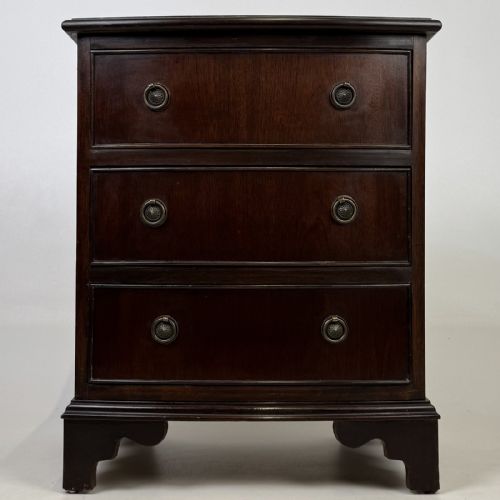
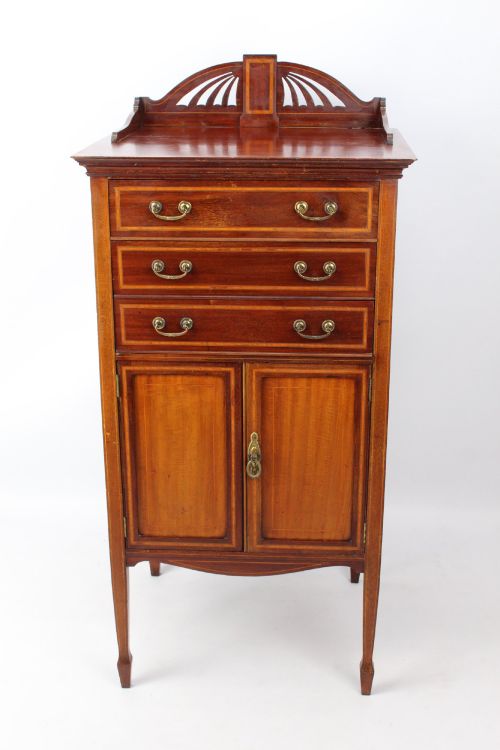
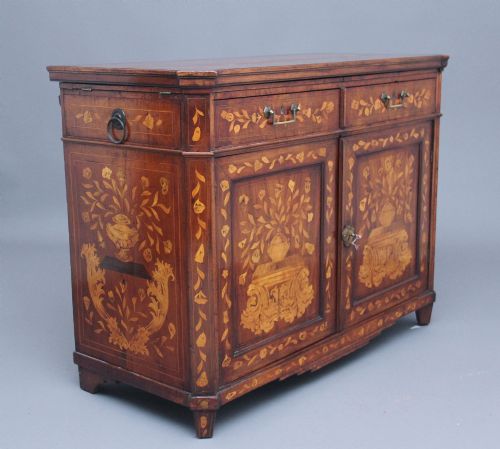
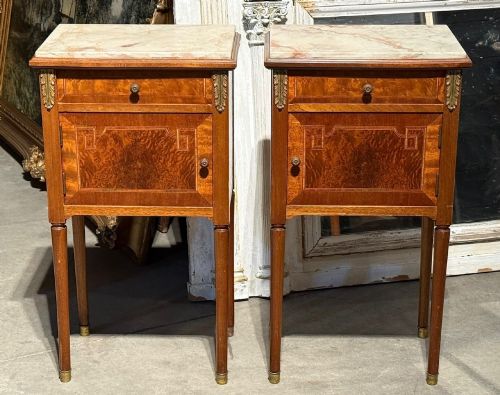
Inlay Cabinet with Drawers
An inlay cabinet with drawers offers practical storage combined with decorative surface work, spanning centuries of cabinet-making traditions.
Inlay Cabinet with Drawers
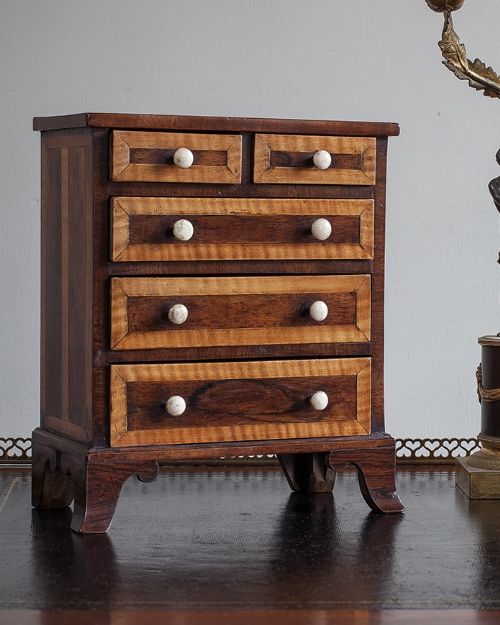
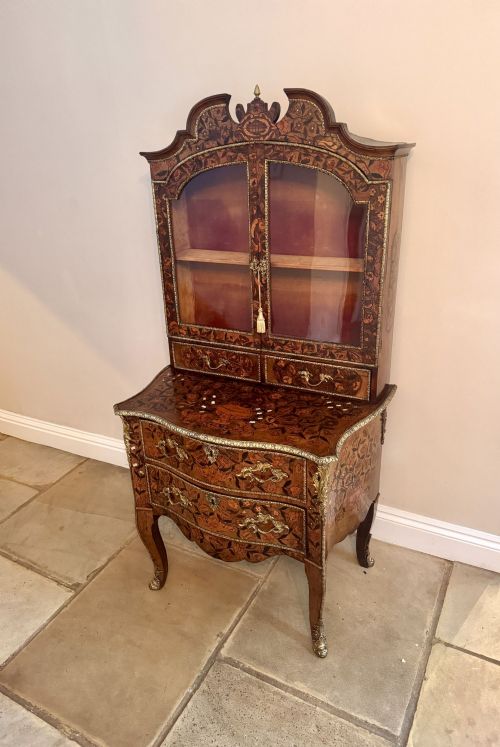
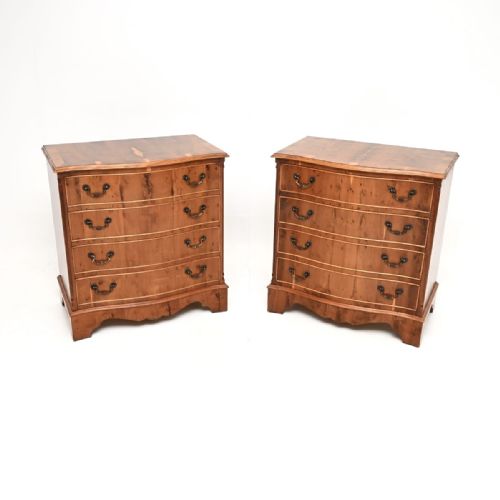
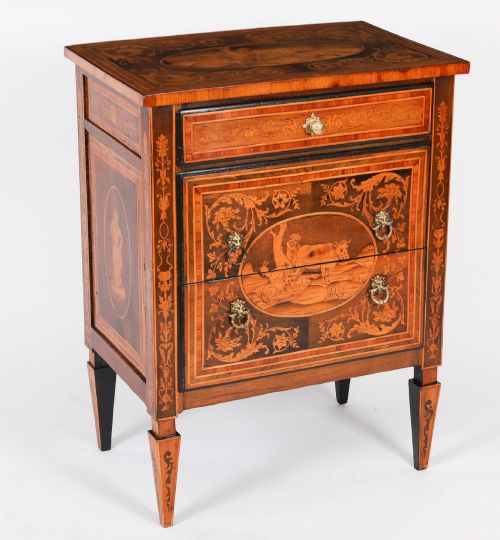
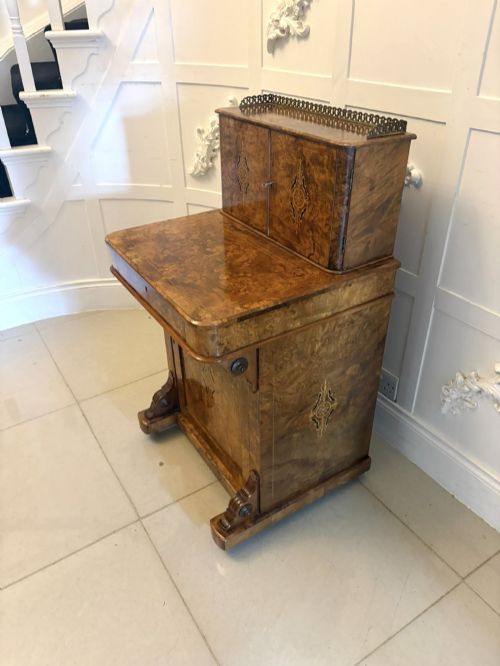
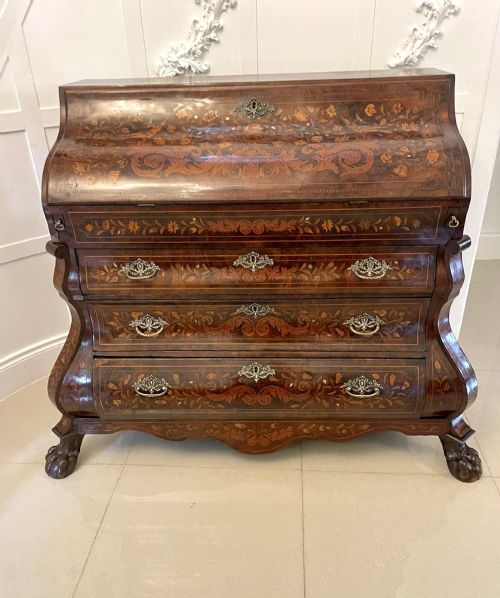
An inlay cabinet with drawers encompasses various forms ranging from bureau bookcases and display cabinets to bedside tables and side cabinets. These pieces emerge from multiple periods including the 18th century, Georgian era, Regency period, and Edwardian times.
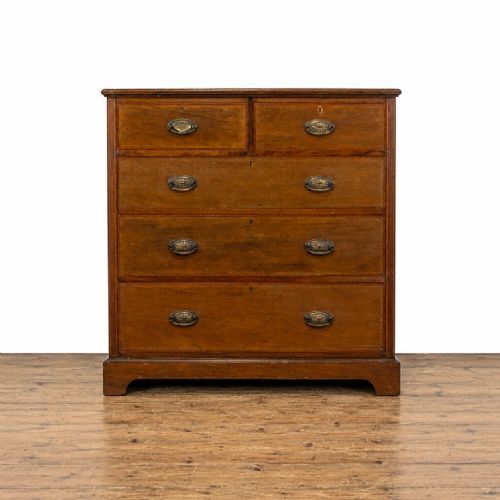
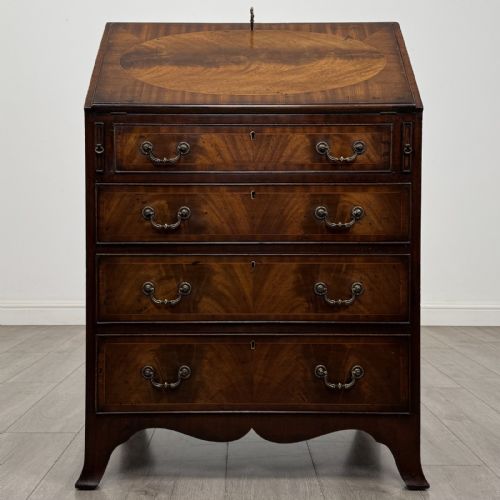
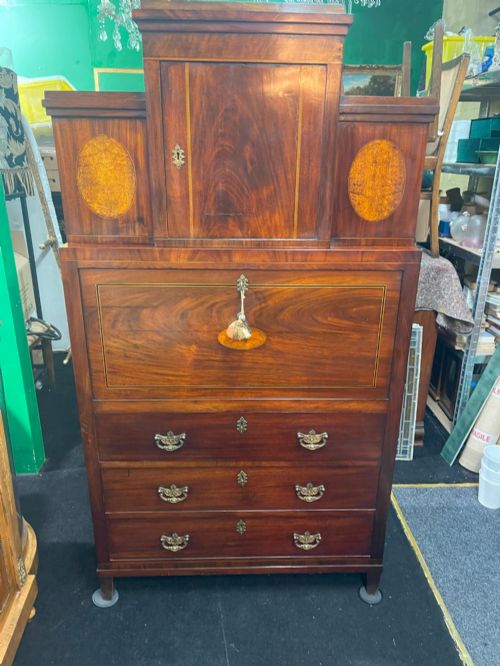
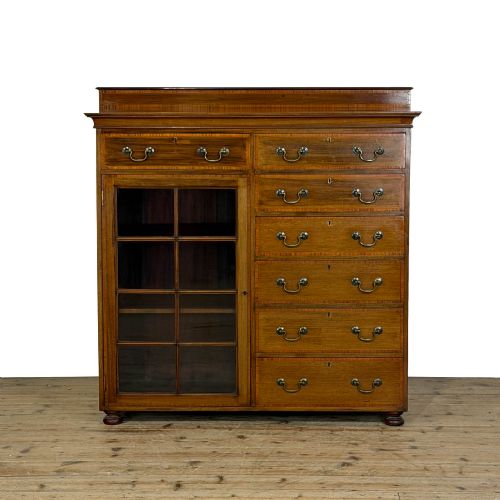
The version most frequently encountered on this page is the mahogany or walnut cabinet featuring contrasting wood inlays, often produced during the Georgian and Edwardian periods. These forms combine enclosed shelving or writing surfaces with accessible drawer storage.
Originating from British and continental workshops, these items reflect the prevailing design aesthetics of their respective decades, from George III bureau bookcases to Edwardian Sheraton revival sideboards.
Materials and Technique
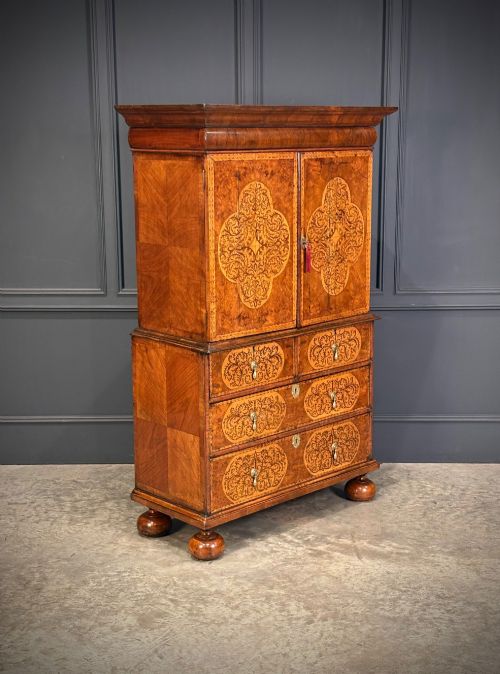
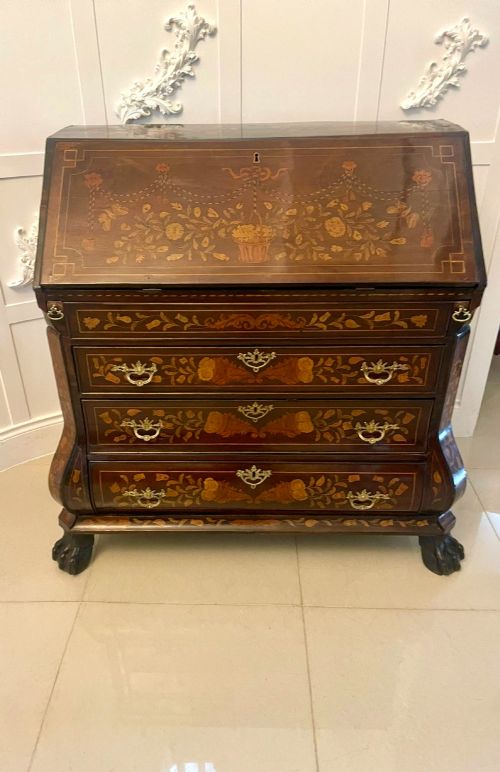
Cabinet makers utilised primary timbers such as mahogany, walnut, and rosewood, applying contrasting decorative elements in satinwood, boxwood, and brass. These materials provide both structural integrity and a rich ground for decorative work.
The inlay technique involves recessing thin pieces of contrasting wood or metal into shallow channels carved into the surface of the carcase. This precise method creates flush, intricate patterns that define the visual character of the furniture.
Several pieces conceal hidden compartments behind fall-front desks, offering secret storage for private papers.
Evaluating Execution
The precision of the inlay work marks the distinction between standard production and superior craftsmanship. Tighter joints between the inserted timber and the surrounding ground indicate greater skill.
The selection of timber grain, particularly figured mahogany or burr walnut, influences the visual depth of the piece. Superior examples display carefully matched veneers and secondary timbers that remain stable over time.
maples & co
The Inlay Cabinet with Drawers Glossary
- Inlay
- A decorative technique where pieces of contrasting material are inserted into a recessed surface to form a design. This method enhances the visual appeal of cabinetry.
- Bureau bookcase
- A combination furniture form featuring a sloping writing flap above drawers, surmounted by a glazed or panelled bookcase section. It serves both storage and writing functions.
- Satinwood
- A pale, durable hardwood with a lustrous sheen, frequently utilised for contrasting inlay work on darker timbers. It gained widespread popularity during the Georgian and Sheraton periods.
- Commode
- A low cabinet with drawers or doors, originating in France and later adopted in British furniture design. These pieces often feature marble tops and elaborate mounts.
- Chiffonier
- A compact sideboard or cabinet developed during the Regency period, typically featuring doors enclosing shelves and small drawers above. They provide versatile storage in smaller reception rooms.
Inlay Cabinet with Drawers: Frequently Asked Questions
What periods do these cabinets represent?
The selection spans from the 18th century through the Georgian, Regency, and Victorian eras into the Edwardian period and early 20th century. Each era brings distinct proportions and decorative vocabulary to the design.
Craftsmanship evolved across these periods, shifting from solid timber construction with hand-cut dovetails to the refined revival styles of the Edwardian decades.
How were these cabinets used?
These pieces served multiple domestic functions, from storing household linen and documents to displaying precious ceramics and glassware. Bureau variants provided dedicated spaces for correspondence.
Drawing rooms, studies, and bedrooms housed these items depending on their specific form, combining surface display with concealed drawer storage.
What is the difference between inlay and marquetry?
Inlay involves inserting pieces of wood or other materials into pre-carved recesses within a solid timber or veneered ground. This creates crisp, geometric or linear patterns.
Marquetry, by contrast, assembles pictorial veneers on a backing sheet before applying the entire composition to the furniture carcase, allowing for complex floral or scenic designs.
How do I care for antique inlaid furniture?
Protect these pieces by placing them away from direct sunlight and extreme temperature fluctuations, which can cause timber to split and veneers to lift. Maintain stable indoor humidity.
Apply a traditional beeswax polish sparingly to nourish the wood and preserve the surface sheen without building up excessive residue over the inlay work.