
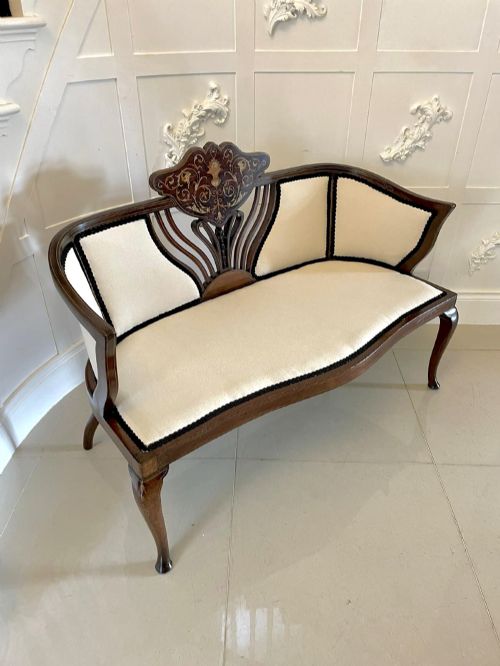
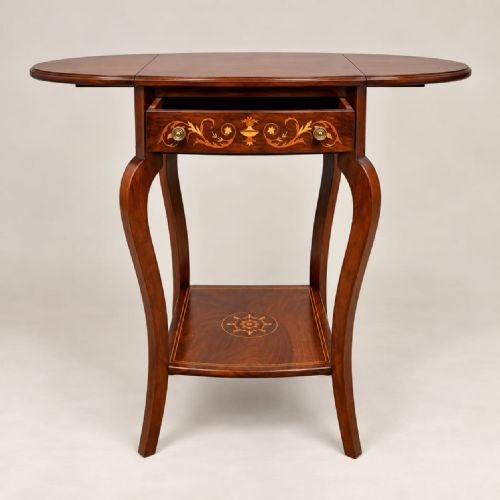

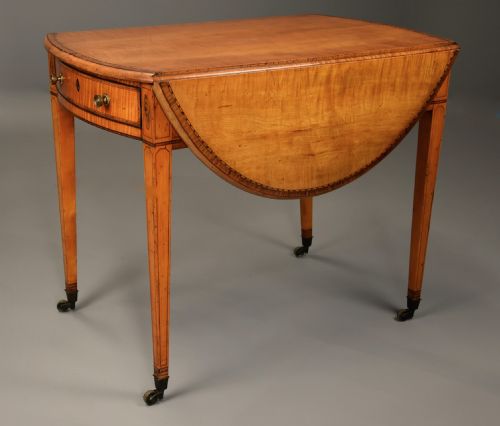
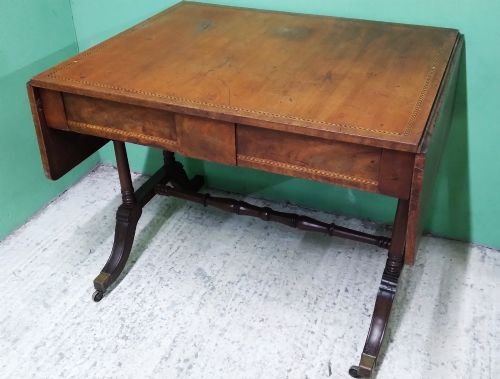
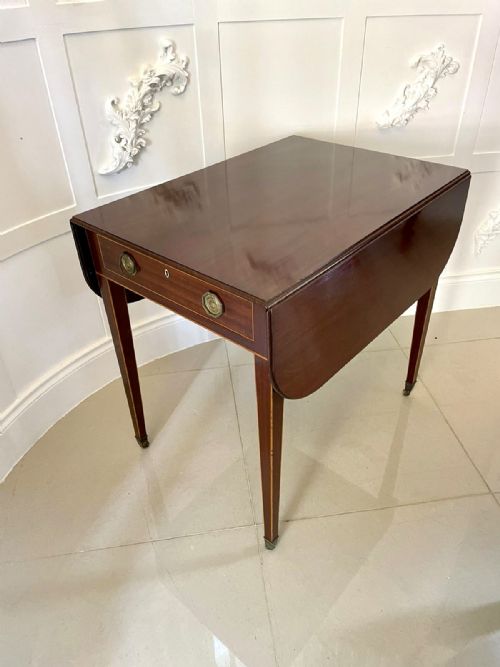

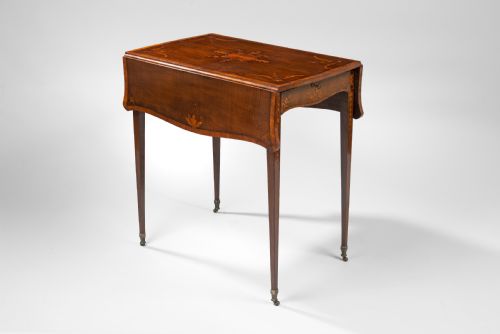


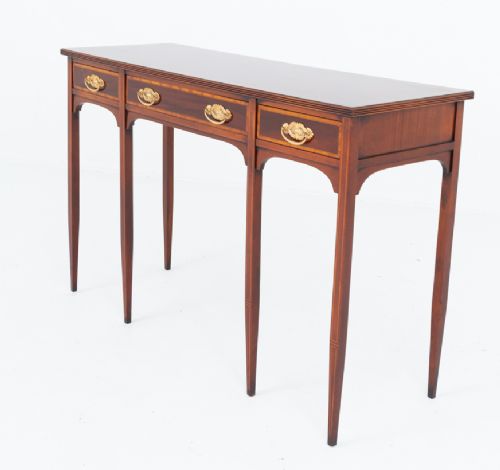




Inlaid Wooden Sofa
An inlaid wooden sofa brings refined seating into a room, combining structural timber with delicate contrasting wood details.
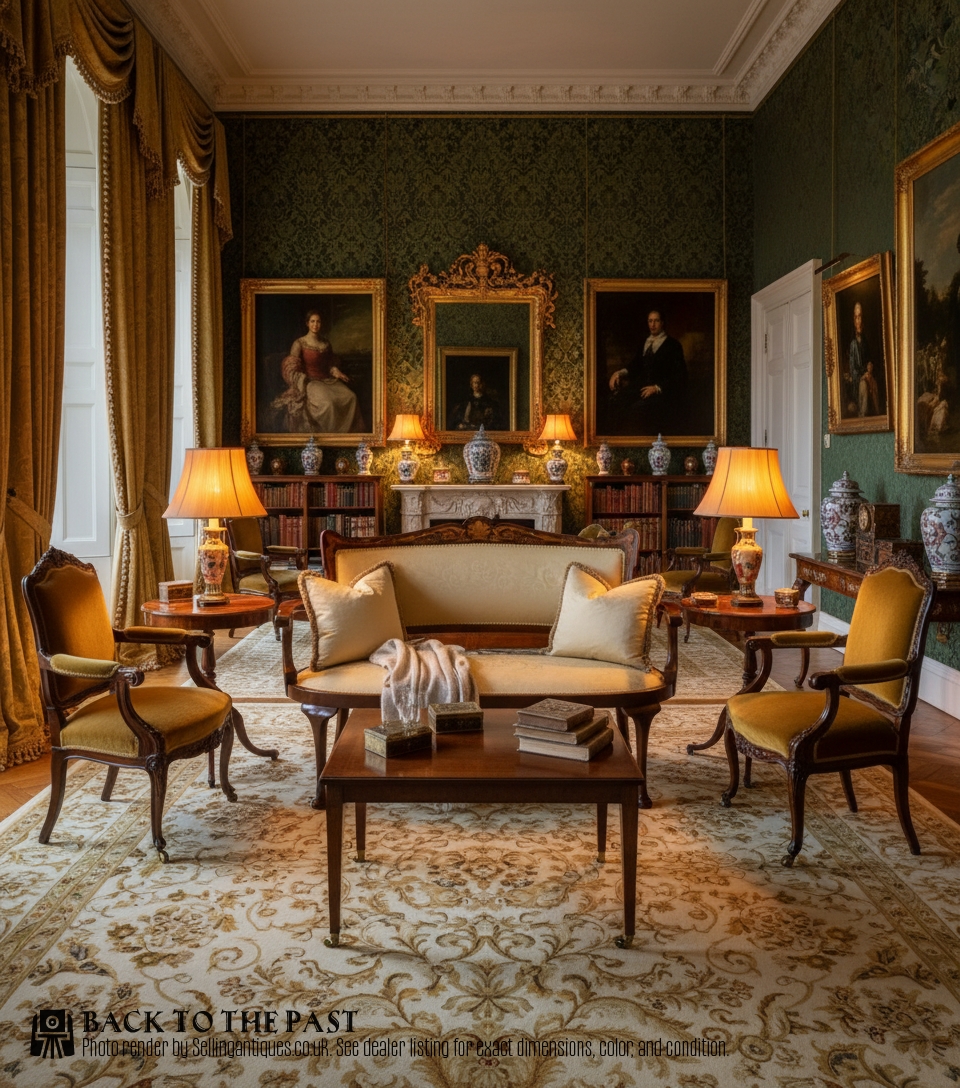
Inlaid Wooden Sofa
An inlaid wooden sofa unites comfortable upholstered seating with decorative timber framing, appearing in periods from the Georgian era through to the Edwardian period and the early twentieth century. These pieces encompass sturdy settee designs alongside smaller two-seater parlor configurations.
The selections available here showcase significant variation in timber choice and decorative approach, ranging from formal Sheraton Revival models to later Edwardian interpretations. Such seating provides functional household utility while displaying traditional cabinet-making skills.
Factors determining quality
Quality rests upon the precision of the timber joinery and the crispness of the fitted inlay work rather than surface ornamentation alone. Superior examples display tight joints and seamless integration of contrasting woods without visible gaps or filler.
The choice of primary timber and the complexity of the contrasting wood motifs dictate the tier of the piece. Master craftsmen selected figured veneers for prominent sections, ensuring a balanced appearance across the entire wooden frame.
Listings feature timbers including mahogany, walnut, rosewood, and satinwood, spanning the Georgian, Victorian, and Edwardian eras.
The Inlaid Wooden Sofa Glossary
- Inlay
- A decorative technique where small pieces of contrasting wood or brass are fitted into a recessed surface to create flat patterns. This method defines the primary ornamentation found across these timber frames.
- Settee
- A traditional wooden seat designed for multiple occupants, featuring an upholstered back and seat supported by timber legs. These forms range from modest parlor seating to larger drawing-room couches.
- Marquetry
- Elaborate wood inlay assembled as a pictorial mosaic rather than simple geometric banding. This technique appears on high-status surfaces, forming floral or symmetrical motifs.
- Satinwood
- A lustrous, hard timber native to India and Sri Lanka, prized for its golden-yellow colour and natural sheen. Cabinet-makers used it extensively for contrasting banding and detailed panel work.
- Sheraton Revival
- A late nineteenth-century design movement inspired by the lighter furniture styles of the late eighteenth century. Pieces from this revival typically feature delicate proportions and refined timber inlays.
Inlaid Wooden Sofa: Frequently Asked Questions
What periods do these sofas date from?
The pieces span multiple design eras, including Georgian, Victorian, and Edwardian periods, stretching into the early twentieth century.
Each era brought distinct proportions and decorative vocabulary to the timber frames.
How do I care for the wooden frame?
Maintain the timber by keeping the piece away from direct sunlight and sudden changes in room humidity.
Applying occasional traditional wax polish preserves the sheen of the mahogany, walnut, or satinwood surfaces.
Are these sofas suitable for daily use?
Most examples are structurally sound for everyday seating, provided the underlying frame and joints remain stable.
Consider the condition of the internal upholstery webbing if you intend to use the settee frequently.
What woods were commonly used?
Makers relied primarily on mahogany, walnut, and rosewood for the main structural components of the seating.
Satinwood and harewood frequently appear as contrasting elements for the detailed decorative inlays.