



Victorian Double Seat
When you search for a Victorian double seat, you find conversation pieces, double-end settees and duet stools designed for two people to sit together.
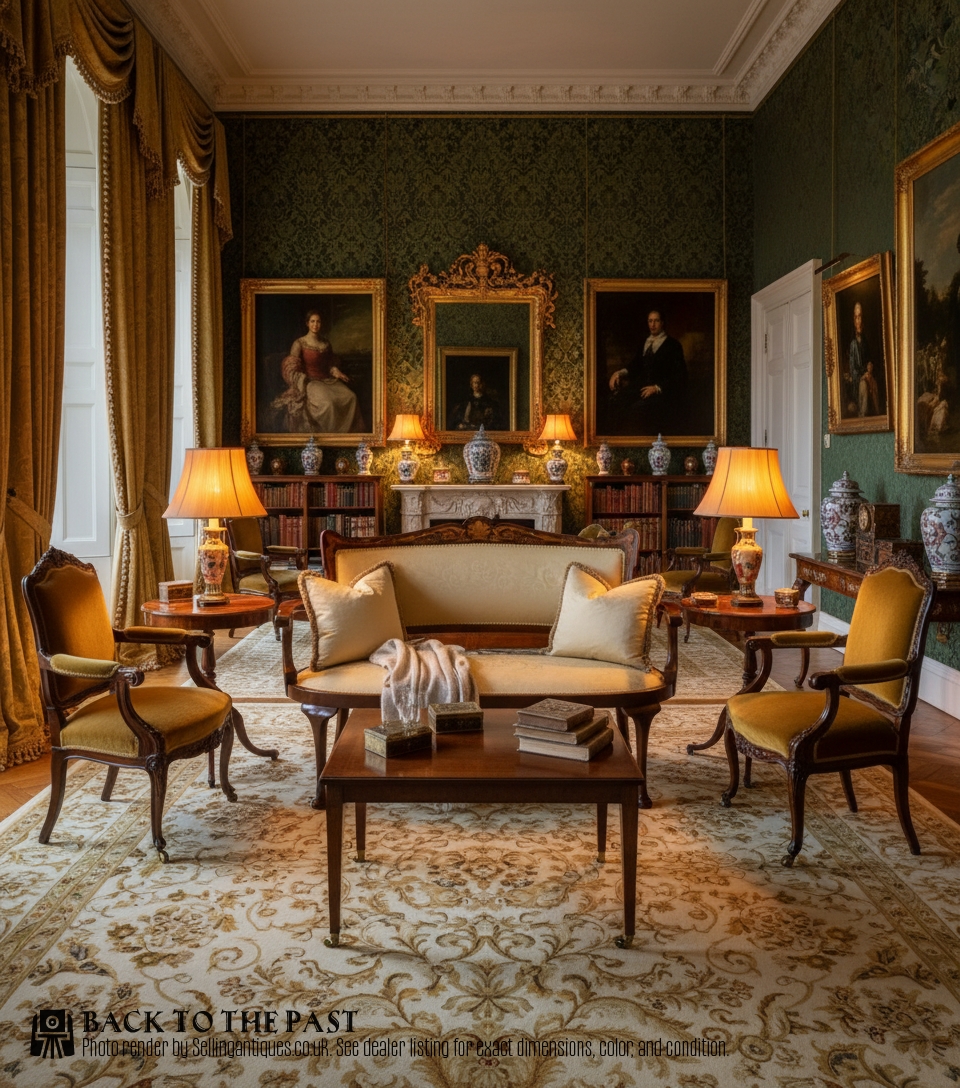
Victorian Double Seat
A Victorian double seat encompasses conversation seats, double-end settees, duet stools and small sofas designed to accommodate two occupants comfortably. These pieces emerge primarily in walnut and mahogany during the nineteenth century, often reflecting styles such as Rococo Revival or Early Victorian.
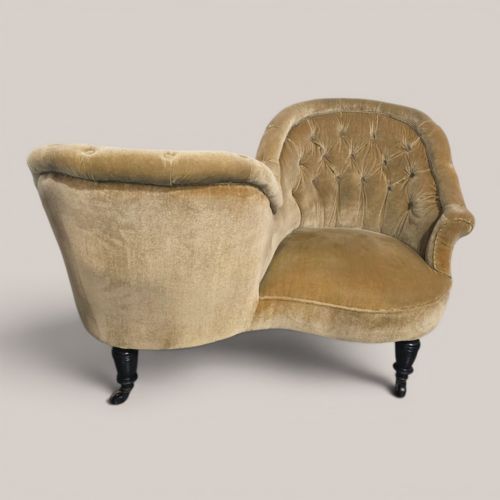
Conversation seats provide a curved or S-shaped configuration allowing two people to sit facing opposite directions while conversing. Settees and double-end sofas offer extended seating on a single frame, whilst duet stools provide twin seating specifically for the piano or music room.
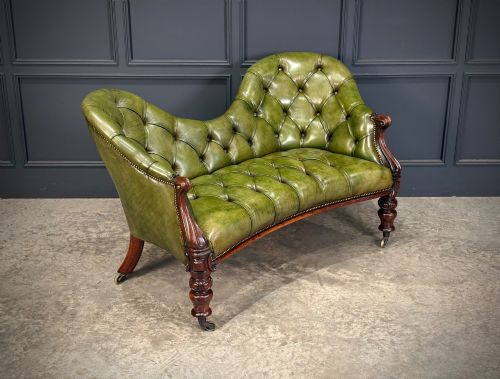
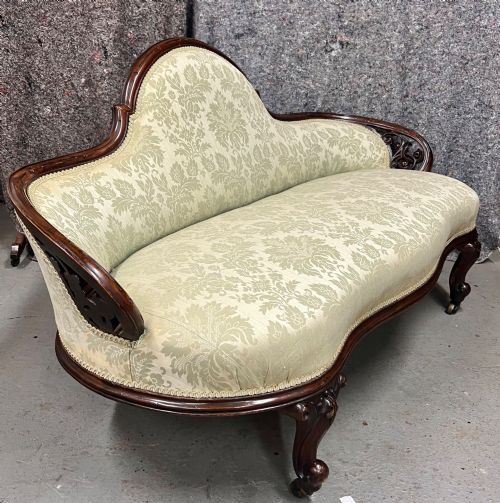
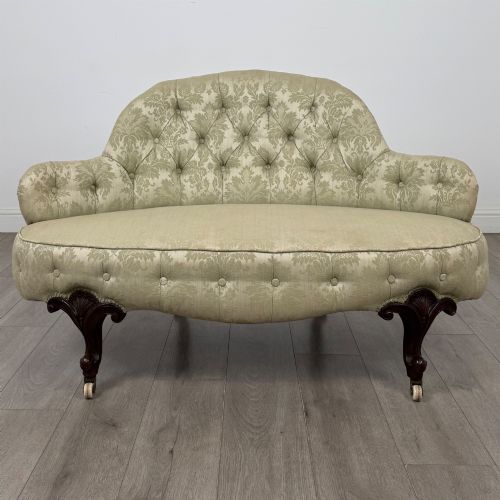
The version you most frequently meet on this page is the walnut or mahogany conversation seat or double-end settee, typically featuring button-backed upholstery and turned or carved woodwork. These seating forms served formal reception rooms, drawing rooms and private parlours.
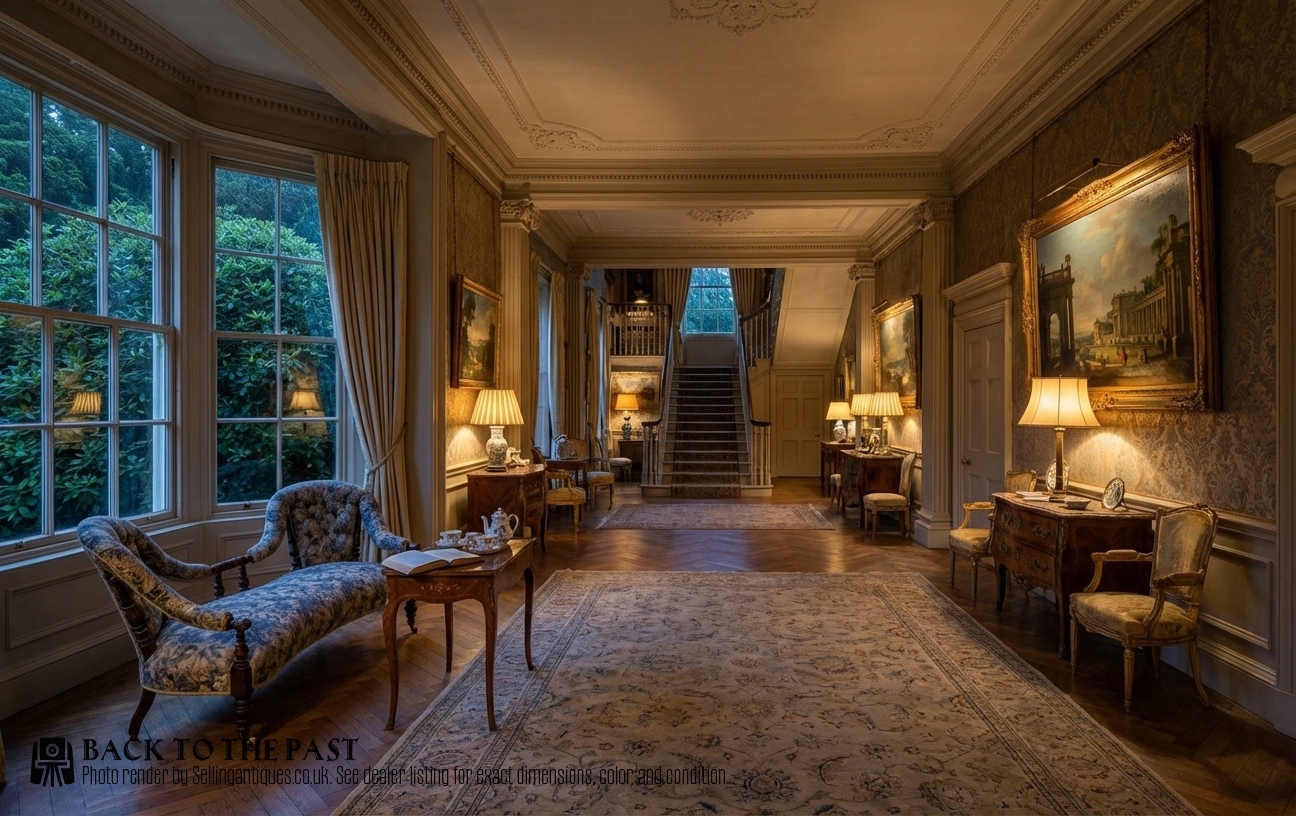
How they were made
Makers construct the foundational frames of these double seats using solid hardwoods, predominantly mahogany and walnut, supplemented by pine for secondary internal components. Artisans shape these timbers through traditional joinery methods, incorporating carved details, turned supports and barley twist frames.
Upholstery forms a central element of construction, utilising fabric, velvet, leather and ticking over internal padding and springs. Button-backed finishing secures the textile tightly to the frame, while brass castors frequently attach to the feet for mobility.
The site records nineteenth-century seating forms ranging from piano duet stools to double-end settees and conversation seats.
What varies in quality
The distinction between tiers of these pieces rests heavily on the crispness of the timber carving and the selection of cabinet woods. Superior examples display deeply figured walnut or dense mahogany with finely executed hand-carved ornamentation rather than superficial moulding.
Structural integrity of the frame and the retention of original showwood finish dictate the standing of a piece. Finer seating exhibits robust joinery that supports the double-seat configuration without movement, paired with sympathetic traditional upholstery materials.
Howard And Sons
The Victorian Double Seat Glossary
- Conversation seat
- A specialised upholstered seat designed for two people to sit facing opposite directions, allowing face-to-face dialogue without turning.
- Double-end settee
- A sofa featuring raised scrolls or backrests at both ends, allowing a user to recline against either extremity.
- Duet stool
- An elongated stool designed for two musicians to sit side by side at a piano, frequently incorporating a hinged seat for music storage.
- Barley twist
- A decorative turning technique resembling a twisted rope, commonly found on the wooden legs and supports of nineteenth-century furniture.
- Button-backed
- An upholstery style where buttons are pulled deep into the padding at regular intervals, creating a quilted diamond pattern.
Victorian Double Seat: Frequently Asked Questions
How do I use a duet stool?
A duet stool provides a wide, bench-style seat intended for two people sharing a piano or dressing table.
Many examples feature a hinged top that opens to reveal internal storage space for sheet music.
What is a double-end settee?
A double-end settee is a sofa constructed with upholstered backrests or scrolls rising at both ends of the frame.
This design allows occupants to sit or recline facing either direction along the length of the furniture.
How do I identify a Victorian seat?
Victorian seating exhibits characteristic nineteenth-century timber choices such as solid mahogany and walnut, often paired with button-backed leather or textile upholstery.
Stylistic markers include carved showwood frames, turned legs and occasionally brass castors.