
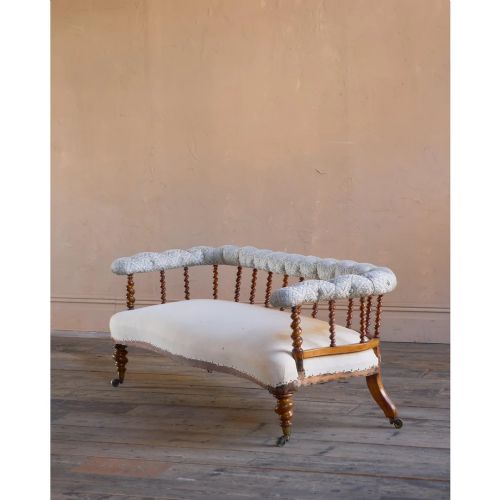


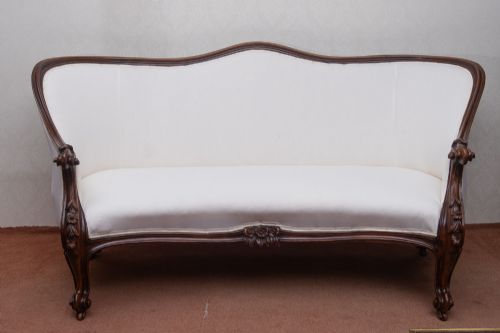


Padded Back Settee
These padded back settee examples combine period upholstery with robust mahogany, walnut and rosewood frames for traditional interior seating.
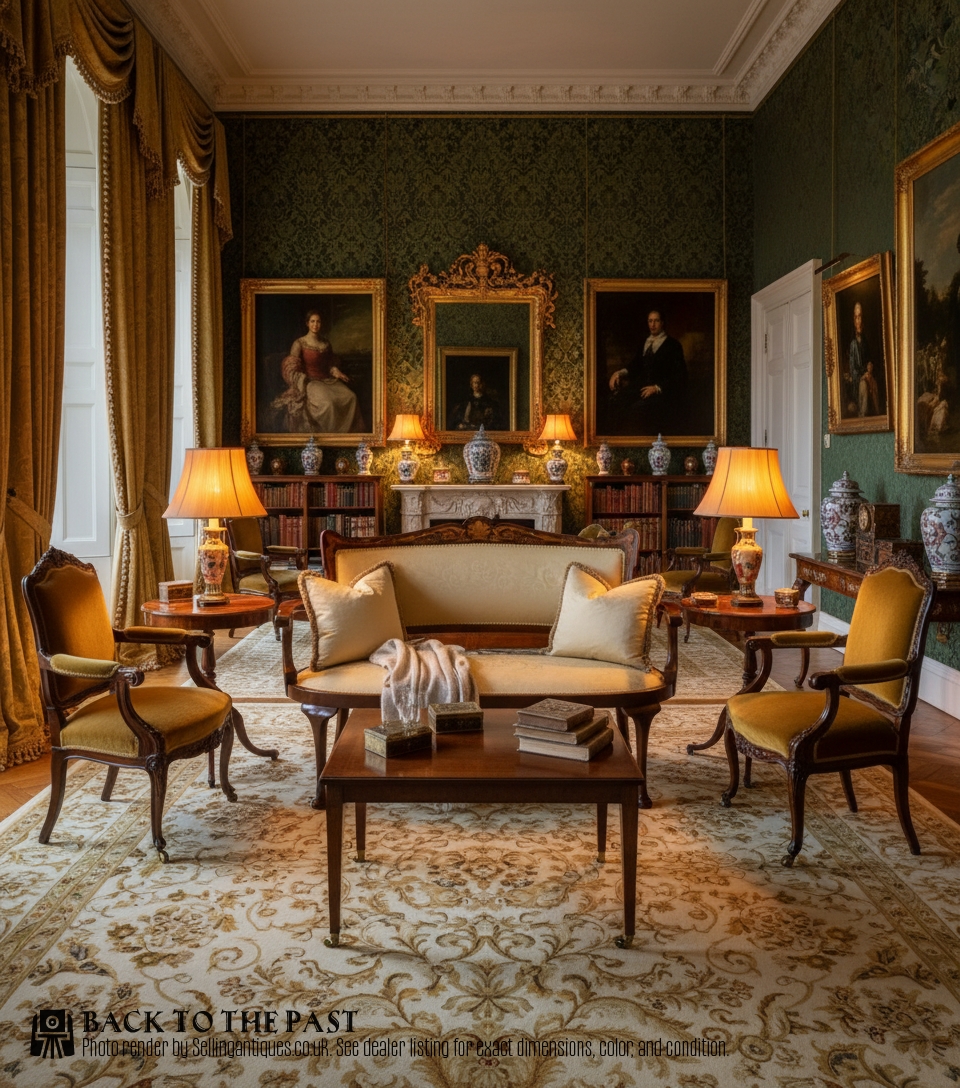
Padded Back Settee
A padded back settee provides upholstered seating designed for salons, bedrooms and principal rooms across the Victorian and Edwardian periods.
The pieces appearing on this page range from nineteenth-century salon sofas to early twentieth-century inlaid mahogany and walnut two-seaters.
Makers produced these sofas in various revival styles, including Queen Anne, French Rococo and Edwardian Art Nouveau interpretations.
How they were made
Carpenters constructed the structural frames using dense hardwoods such as mahogany, walnut and rosewood, often shaping the timber with carved details.
Craftsmen enriched the wooden surfaces using satinwood inlay and marquetry techniques to create decorative motifs across the rails and legs.
Upholsterers finished the seating using traditional fabrics, velvet and damask to cover the padded internal padding.
What varies in quality
The refinement of the timber carving and the complexity of the inlaid satinwood or marquetry distinguish standard pieces from more ambitious workshops.
Structural grace in the shaping of the frame and the proportion of the upholstered back determine the visual balance of the settee.
C. Hindley & Sons
The Padded Back Settee Glossary
- Inlay
- A decorative technique where contrasting woods like satinwood are inserted into recesses in the primary timber. This method highlights the surface design.
- Marquetry
- Elaborate wood veneers assembled to form pictorial or geometric patterns across the frame. It requires skilled cutting and fitting.
- Salon sofa
- A lighter seating form intended for formal reception rooms rather than heavy daily lounging. These often feature slender legs and delicate frames.
- Damask upholstery
- A reversible figured fabric traditionally woven with intricate patterns. It provides a formal textile finish for period seating.
Padded Back Settee: Frequently Asked Questions
Where did people place a padded back settee?
Homeowners positioned these settees in drawing rooms, large bedrooms, and formal reception spaces where guests gathered.
They served as decorative seating options that complemented other parlour furniture of the period.
How do I identify an Edwardian settee?
Edwardian examples often feature lighter mahogany frames combined with delicate satinwood inlay and refined upholstery.
They tend to appear less heavy in scale than their Victorian predecessors while retaining traditional cabinetmaking techniques.
What woods were used for the frames?
Cabinetmakers primarily selected mahogany and walnut for their strength and suitability for carving.
Rosewood also appears on specific nineteenth-century pieces to provide a darker, highly polished surface.
Are these settees suitable for daily use?
These pieces function well in modern interiors when placed in low-traffic seating areas or bedrooms.
Their solid hardwood frames ensure structural stability, though the historic upholstery may require careful management.