


Victorian Inlaid Settee
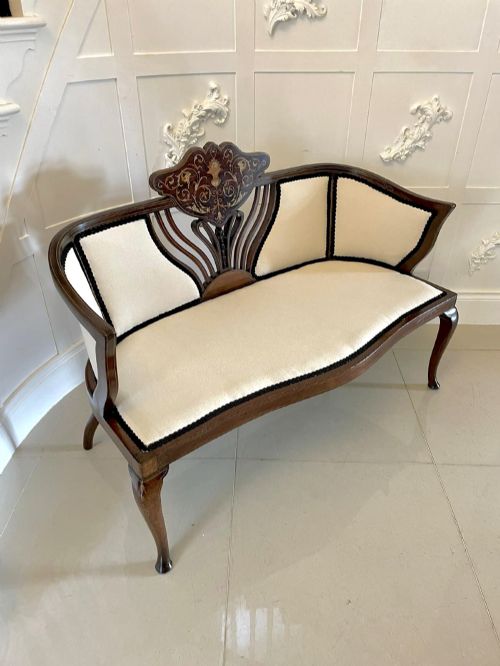
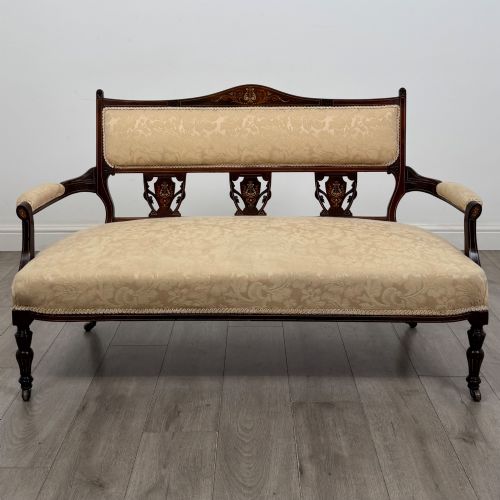
A victorian inlaid settee brings rich timber and delicate marquetry to a room, offering both comfortable seating and strong decorative presence.
Victorian Inlaid Settee
A victorian inlaid settee is a upholstered seat designed for two or more people, combining timber frames with contrasting wood ornamentation. These pieces originate primarily from the nineteenth century, spanning periods from eighteen seventy through to nineteen ten.
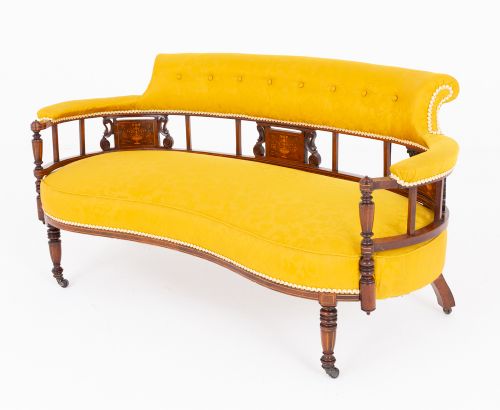
The most common examples encountered on this page utilise mahogany or rosewood structures decorated with marquetry. Forms range from standard salon sofas and two-seat couches to conversation seats and high curved back parlour settees.
Makers drew on various stylistic influences beyond standard Victorian design, including Sheraton Revival, Edwardian, Anglo-Indian Colonial, Moorish Revival, and Egyptian Revival aesthetics. Many examples function as parlour furniture designed to display craftsmanship in formal reception rooms.
Materials and construction
Frames rely predominantly on dense hardwoods such as mahogany, rosewood, and walnut, often accented with lighter decorative timbers like satinwood and boxwood. Carved show-wood elements expose the timber structure around upholstered sections.
Inlay work involves precision cutting of contrasting woods or bone to create marquetry motifs, seaweed inlay, and stringing. Upholstery materials include traditional fabric and damask, supported by brass fittings on specific models.
Conversation seats let two people gossip face-to-face without craning their necks.
Variations in quality
Quality rests upon the crispness of the marquetry and the choice of primary timber, with richly grained rosewood and figured mahogany marking the upper tier. The precision of the inlay work and the complexity of botanical or geometric motifs distinguish finer pieces from simpler production.
Structural refinement also dictates standard, seen in the fluid curve of a high back or the delicate shaping of show-wood frames. Integrated use of contrasting stringing and secondary timbers like satinwood or boxwood signals higher workshop ambition.
The Victorian Inlaid Settee Glossary
- Marquetry
- Decorative patterns formed by fitting together small pieces of veneer into wooden frames. This technique allows intricate floral and geometric designs across the backrest or crest rail.
- Satinwood
- A pale, lustrous timber utilised for contrasting inlay work. It provides bright visual accents against darker rosewood and mahogany structures.
- Show-wood
- Exposed polished timber frame sections surrounding upholstered areas. These visible wooden elements display the grain and carved details of the settee.
- Stringing
- Thin lines of contrasting wood inlaid into channels in the primary timber. This linear detail outlines panels and structural borders.
- Conversation seat
- An S-shaped seating form allowing two people to sit facing opposite directions while conversing. These frames often incorporate elaborate upholstery and turned supports.
Victorian Inlaid Settee: Frequently Asked Questions
What is a victorian inlaid settee?
A victorian inlaid settee is an antique upholstered seating piece featuring timber frames decorated with contrasting wood marquetry. These items served as formal parlour and salon furniture during the nineteenth and early twentieth centuries.
Craftsmen utilised mahogany, rosewood, and walnut alongside satinwood and bone inlay. They reflect various revival styles ranging from Sheraton to Moorish designs.
How do I place a settee in a modern room?
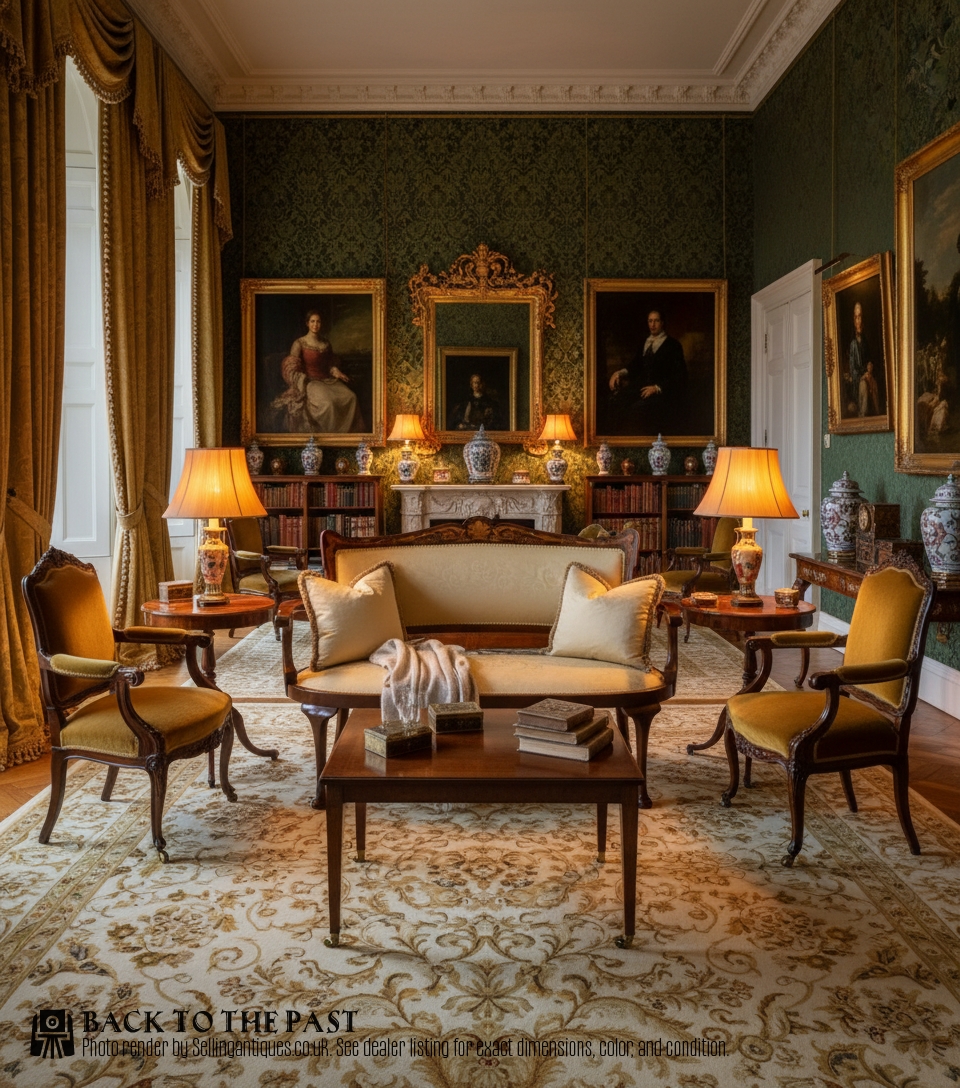
A victorian inlaid settee works effectively as a focal point in a living room, hallway, or bedroom. Its decorated timber back makes it suitable for placement where the rear frame remains visible.
Pair the piece with neutral surroundings to highlight the rosewood or mahogany grain and intricate marquetry. Ensure upholstery fabrics complement existing soft furnishings in the space.
How do I identify a late victorian settee?
Late victorian examples often date from eighteen eighty to nineteen ten, incorporating styles like Sheraton Revival or Edwardian influences. Look for refined mahogany or rosewood frames paired with delicate boxwood stringing.
Records show pieces from this era frequently utilise high curved backs or lighter satinwood marquetry. Construction methods and timber selection help distinguish them from earlier mid-century items.
What is the difference between a sofa and a settee?
Historically, a settee denotes a lighter upholstered wooden bench designed for multiple occupants in a parlour setting. Sofas often offered heavier padding and larger proportions for general lounging.
Victorian inlaid versions typically emphasise exposed show-wood frames and precise marquetry over deep upholstery. Many function as decorative salon seating rather than heavy domestic lounging furniture.