


Victorian Marquetry Bench
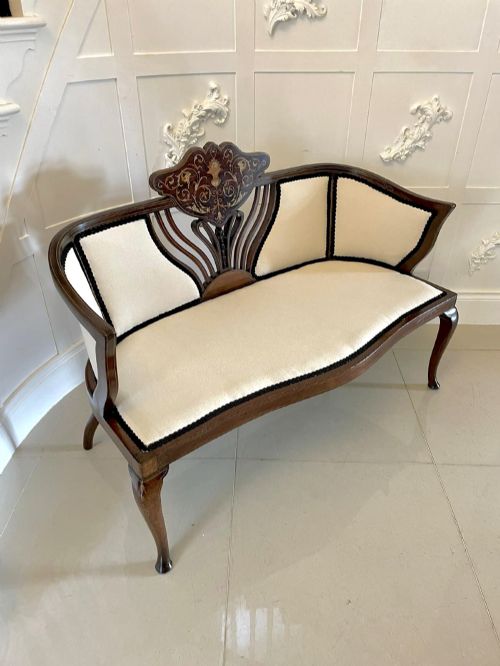
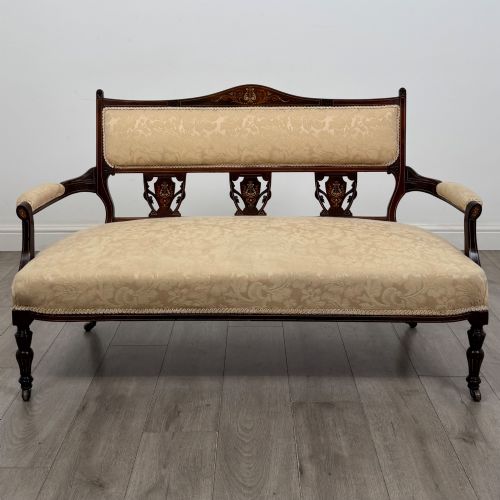
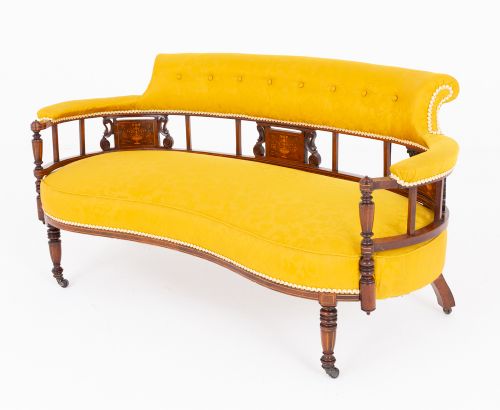
These Victorian marquetry bench options offer refined seating inlaid with contrasting timbers, bringing period character and intricate floral motifs straight into a drawing room.
Victorian Marquetry Bench
A victorian marquetry bench encompasses inlaid settees, salon sofas, and fender stools from the nineteenth century. These seating pieces typically feature decorative wooden inlays set into dark timber frames.
You will most commonly encounter mahogany and rosewood settees dating from the 1870s to 1880s. Walnut also appears alongside occasional Edwardian and Sheraton Revival pieces.
The form spans from compact fender stools to larger salon sofas and complete seating suites. Egyptian Revival examples introduce distinct stylistic variations into the selection.
Construction and materials
Cabinetmakers built the structural frames using solid hardwoods like mahogany, rosewood, and walnut. These timbers provided a dark, stable base for elaborate surface decoration.
Satinwood and other contrasting timbers formed the marquetry inlay work, creating detailed patterns across the wood. Brass details and damask upholstery completed the finished seating.
Upholstered sections paired with intricate wood inlay required specialist joinery techniques. The combination of timber framing and delicate surface work defined the period manufacturing process.
Listings span the nineteenth century, featuring Victorian, late Victorian, and Edwardian periods alongside Sheraton Revival and Egyptian Revival styles.
Assessing quality
The precision of the marquetry inlay separates standard pieces from finer examples. Crisp lines and tight joints in the contrasting timbers indicate superior cabinetmaking skill.
The choice of primary wood impacts the overall character, with dense rosewood and well-figured mahogany representing the upper tier of production. Rich grain patterns enhance the visual depth of the frame.
Stylistic ambition also dictates quality, as seen in pieces exhibiting Sheraton Revival or Egyptian Revival design elements. More complex sofa forms generally demonstrate greater decorative investment.
The Victorian Marquetry Bench Glossary
- Marquetry Inlay
- Decorative woodwork where pieces of contrasting timber are fitted into a veneer to form pictorial or geometric patterns. This technique creates the signature surface ornamentation on period frames.
- Settee
- A long upholstered seat with a back and arms, designed to accommodate multiple people. These forms dominate the nineteenth-century seating selection.
- Fender Stool
- A long, low stool traditionally placed in front of a fireplace fender. They share the same timber construction and inlaid detailing as larger sofas.
- Sheraton Revival
- A late nineteenth-century design style drawing inspiration from eighteenth-century neoclassical furniture. Pieces in this style often feature lighter woods and refined inlay.
- Damask Upholstery
- A reversible figured fabric traditionally used for rich furniture coverings. It provides a textured surface that complements polished mahogany and rosewood frames.
Victorian Marquetry Bench: Frequently Asked Questions
What is a victorian marquetry bench?
A victorian marquetry bench generally refers to an inlaid nineteenth-century settee, sofa, or stool. These pieces combine functional seating with decorative wood inlay.
Cabinetmakers utilised timbers like mahogany and rosewood as a base for intricate satinwood patterns. They served as principal decorative seats in Victorian reception rooms.
Where should I place a settee?
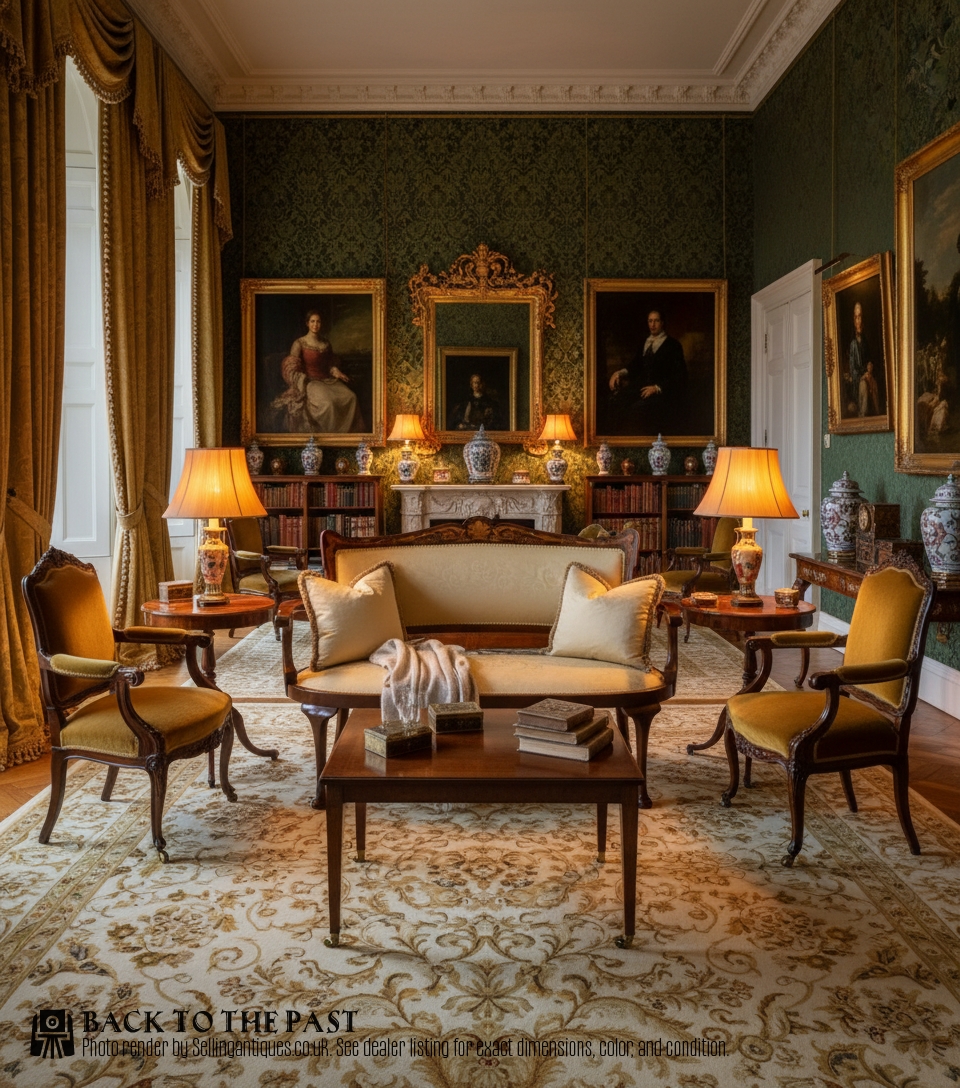
These settees suit formal drawing rooms, large hallways, or spacious master bedrooms. Their decorative backs look best positioned against a clear wall.
Shorter fender stools work effectively in front of fireplaces or at the foot of a bed. Their compact size allows for versatile placement in period interiors.
How do I care for inlaid wood?
Protect inlaid furniture by keeping it away from direct sunlight and sudden temperature changes. Consistent indoor climates prevent the delicate veneers from lifting.
Apply high-quality beeswax sparingly to nourish the timber and maintain the polished surface. Avoid using harsh chemical cleaners that might damage the antique finish.
How do I date these pieces?
Dating relies on examining the timber selection, construction methods, and stylistic motifs. Pieces from the 1870s and 1880s often display robust proportions combined with refined marquetry.
Later Victorian and Edwardian examples may show influences from revival movements such as Sheraton or Egyptian styles. Comparing the decorative details helps narrow the decade of manufacture.