
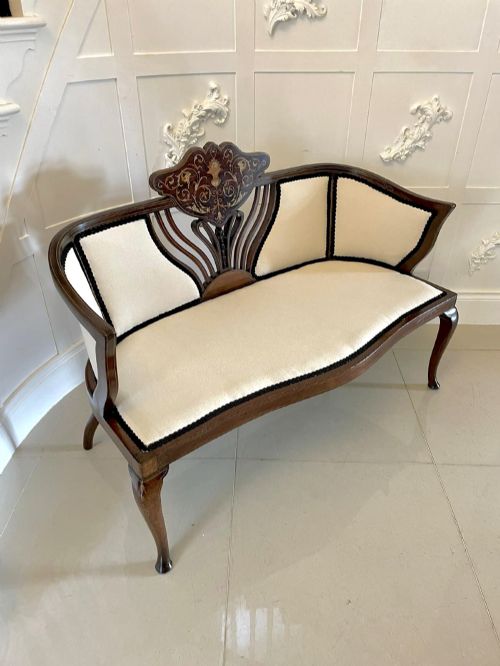


Marquetry Two Seater
These marquetry two seater settees combine nineteenth and early twentieth century timberwork with intricate inlay, offering compact seating with distinct historic character.
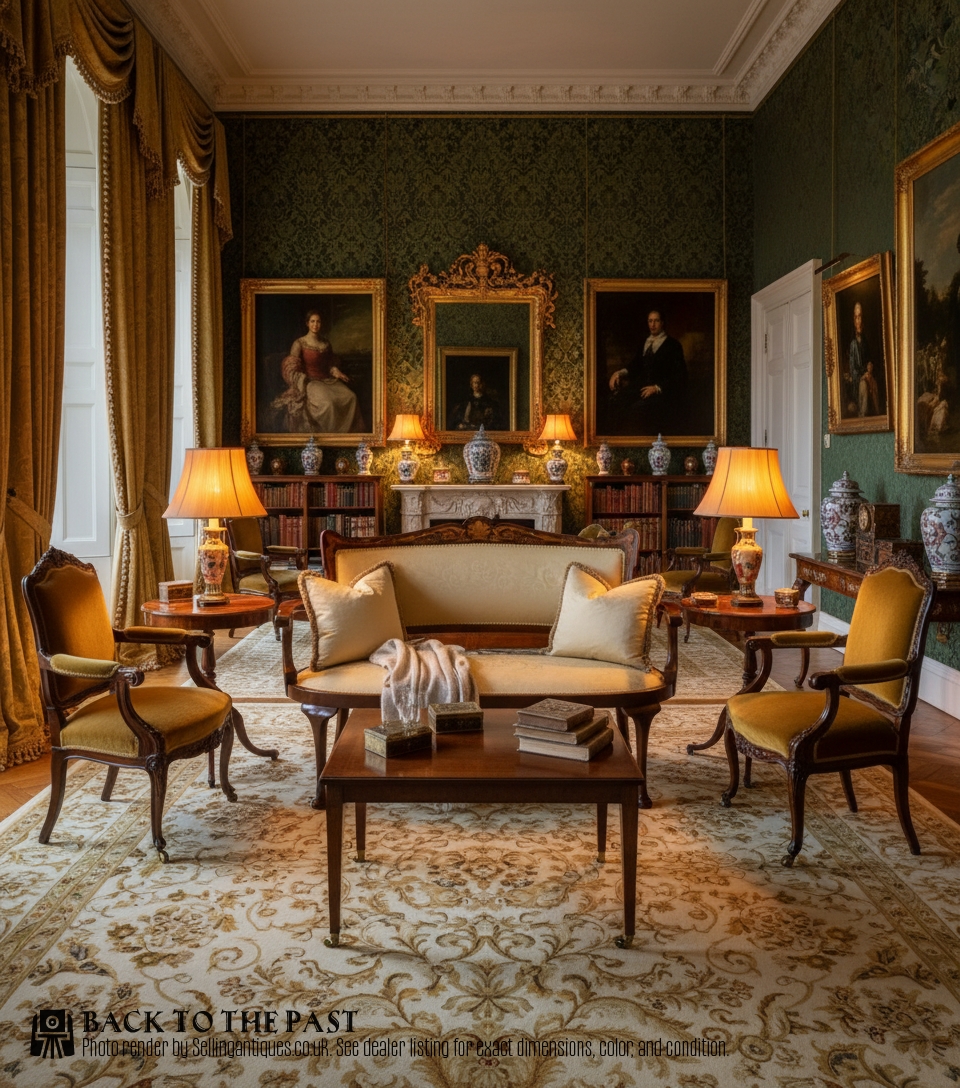
Marquetry Two Seater
When you search for a marquetry two seater, you encounter compact upholstered sofas built to seat two people comfortably in a drawing room or salon. The selection on this page consists entirely of Victorian, late Victorian, and Edwardian examples dating from the late nineteenth century up to 1910.
Most pieces take the form of salon settees and sofas constructed primarily from mahogany, often enhanced with satinwood, boxwood, and bone details. You will find both individual settees and paired seating arrangements designed for formal entertaining spaces.
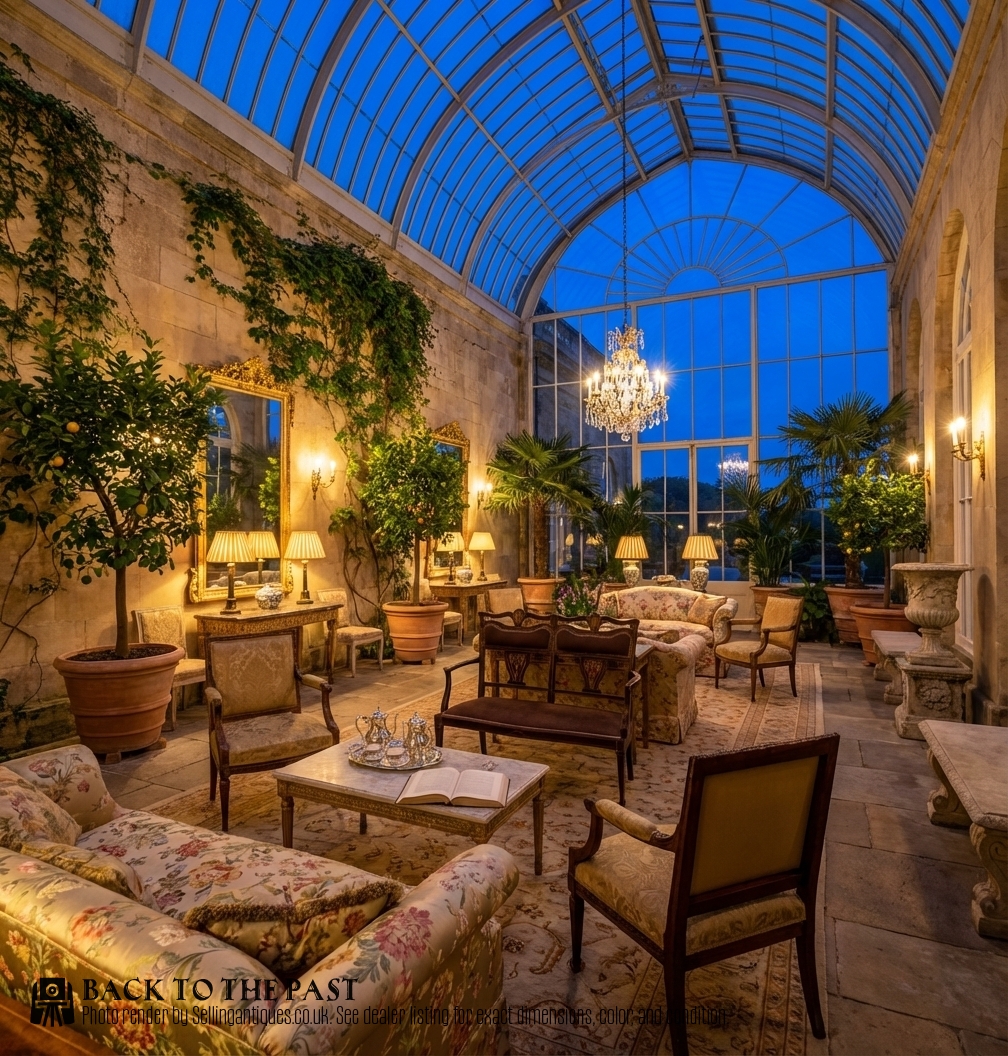
How they were made
Cabinetmakers built the structural frames of these settees using solid mahogany, shaping the woodwork to support both upholstered seating areas and decorative inlay. Skilled artisans applied delicate marquetry inlay using contrasting timbers like satinwood and boxwood directly into the wooden surfaces.
Many examples incorporate fine bone inlay details alongside traditional wood veneers to create intricate patterns across the backrests and frames. Workshops then finished the pieces with fabric upholstery tailored for parlour and salon use.
What varies in quality
The standard of a marquetry two seater rests largely on the precision of the inlay work and the choice of cabinet timbers. Finer examples display crisp botanical or geometric patterns executed in contrasting satinwood and boxwood, showing meticulous attention to detail.
Structural harmony also separates everyday seating from exceptional examples, as seen in the balanced proportions of the mahogany frames and the integration of decorative woodwork. Pieces that retain their original decorative integrity without clumsy repairs command greater appreciation among collectors.
The Marquetry Two Seater Glossary
- Marquetry
- Decorative veneer applied to furniture in intricate patterns using different woods and materials. This technique creates pictorial or geometric designs across the surface of the timber.
- Settee
- A small upholstered bench with a back and arms, designed to seat two or more people. These pieces typically occupied nineteenth-century drawing rooms and formal reception spaces.
- Satinwood
- A lustrous, hard timber native to Ceylon and India, prized for its golden yellow colour. Cabinetmakers utilised it extensively for contrasting inlay work and decorative banding.
- Boxwood
- A dense, pale yellowish wood frequently employed for fine stringing and inlay details. Its tight grain allows artisans to cut extremely sharp lines.
Marquetry Two Seater: Frequently Asked Questions
Where did people place these settees?
These compact settees typically stood in formal drawing rooms, parlours, or large bedrooms to provide comfortable seating for two.
Their restrained proportions allowed them to fit neatly against walls or at the foot of a bed without dominating the room.
How do I date an Edwardian settee?
Edwardian examples generally date from around 1900 to 1910, showing lighter timber frames and delicate inlay work compared to earlier Victorian furniture.
Makers of this period favoured satinwood and bone details set into mahogany, reflecting a shift towards brighter, more refined drawing room aesthetics.
Can I re-upholster these salon seats?
Many surviving salon settees require fresh upholstery to suit modern interiors, and some pieces are sold specifically for this purpose.
Replacing the fabric allows you to preserve the historic mahogany frame while adapting the seating to your own room scheme.
What is the difference between Victorian and Edwardian styles?
Victorian settees from the 1880s tend to feature heavier mahogany frames and deeper, more robust proportions suited to late nineteenth-century interiors.
Edwardian pieces from the early twentieth century generally appear lighter and more slender, often incorporating brighter satinwood and bone inlay.