


Boulle Inlay Furniture
Boulle inlay furniture brings together brass and tortoiseshell across grand nineteenth century cabinets and tables.
Boulle Inlay Furniture
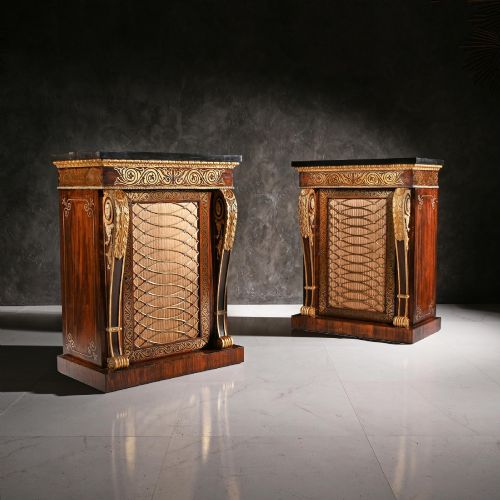
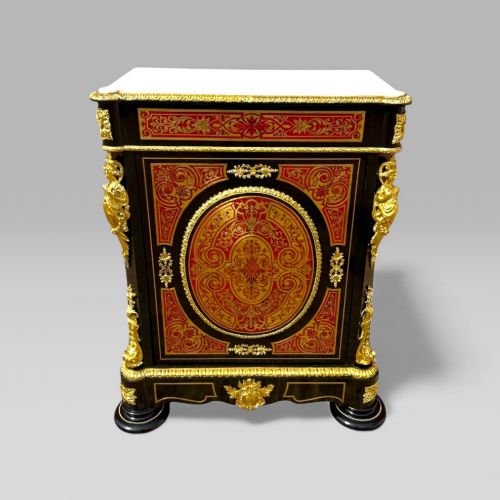
Boulle inlay furniture comprises grand nineteenth century display cabinets, pier cabinets, credenzas, and centre tables. These pieces display the characteristic metallic marquetry that defines the French Napoleon III, Victorian, and Regency revivals.
Buyers most frequently encounter ebonised wood surfaces enriched with contrasting brass and tortoiseshell details. Side cabinets and pier cabinets dominate the forms available, often finished with marble tops and ormolu mounts.
How they were made
Craftsmen built these pieces using ebonised wood, rosewood, or giltwood as a dark foundation for intricate metalwork. Sheets of brass and tortoiseshell were cut together in contrasting patterns known as premiere partie and contre-partie.
Final assembly incorporated cast ormolu mounts, glass panels for display cabinets, and occasionally fitted marble tops. The integration of these diverse materials required precise joinery and meticulous polishing of the wooden carcase.
Materials appearing across the inventory include ebonised wood, tortoiseshell, brass, ormolu, and marble.
What varies in quality
The sophistication of the brass and tortoiseshell cutting dictates the visual depth of the marquetry. Finer examples display crisper lines and more complex scrolls within the floral or arabesque patterns.
Mount quality and timber selection separate standard production from exceptional workshops. Heavier, finely chased ormolu mounts and carefully chosen ebonised or rosewood carcases elevate the standing of a cabinet or table.
Louis Constantin Le Gaigneur·Maison Millet
The Boulle Inlay Furniture Glossary
- Boulle inlay
- A marquetry technique using brass and tortoiseshell, named after the cabinetmaker André-Charles Boulle. This method creates contrasting metallic and organic patterns across furniture surfaces.
- Ormolu
- Gilded bronze used for decorative mounts and accents on nineteenth century furniture. The finish provides a rich metallic contrast against dark ebonised wood.
- Pier cabinet
- A tall, narrow cabinet designed to stand against a wall pier between windows. These pieces frequently feature glass doors and elaborate Boulle marquetry.
- Ebonised wood
- Timber treated to resemble ebony, providing a dark, uniform background. This finish accentuates the bright contrast of brass inlay.
- Credenza
- A large storage cabinet or sideboard standing low to the ground. Nineteenth century versions often incorporate glass doors and detailed floral marquetry.
Boulle Inlay Furniture: Frequently Asked Questions
How do I care for Boulle furniture?
Keep these pieces away from direct sunlight and fluctuating humidity to protect the delicate tortoiseshell and wood joints.
Dust gently with a dry, soft cloth and avoid chemical polishes that can damage the metallic surfaces.
Which periods produced this furniture?
The pieces seen here date primarily from the nineteenth century, spanning Regency, Victorian, and Napoleon III revivals. Makers of this era drew heavily on earlier Louis XIV, XV, and XVI designs.
Later interpretations also appear from the early twentieth century, reflecting ongoing interest in French decorative styles.
How can I tell quality in the marquetry?
Examine the tightness of the joints between the brass and tortoiseshell elements. Superior work displays seamless integration without excessive filler or blurred edges.
The complexity of the engraved details on the metal also indicates a higher standard of craftsmanship.