
Inlaid Wooden Sideboard
An inlaid wooden sideboard brings warmth and architectural presence to a dining room, combining rich timber with precise decorative detail.
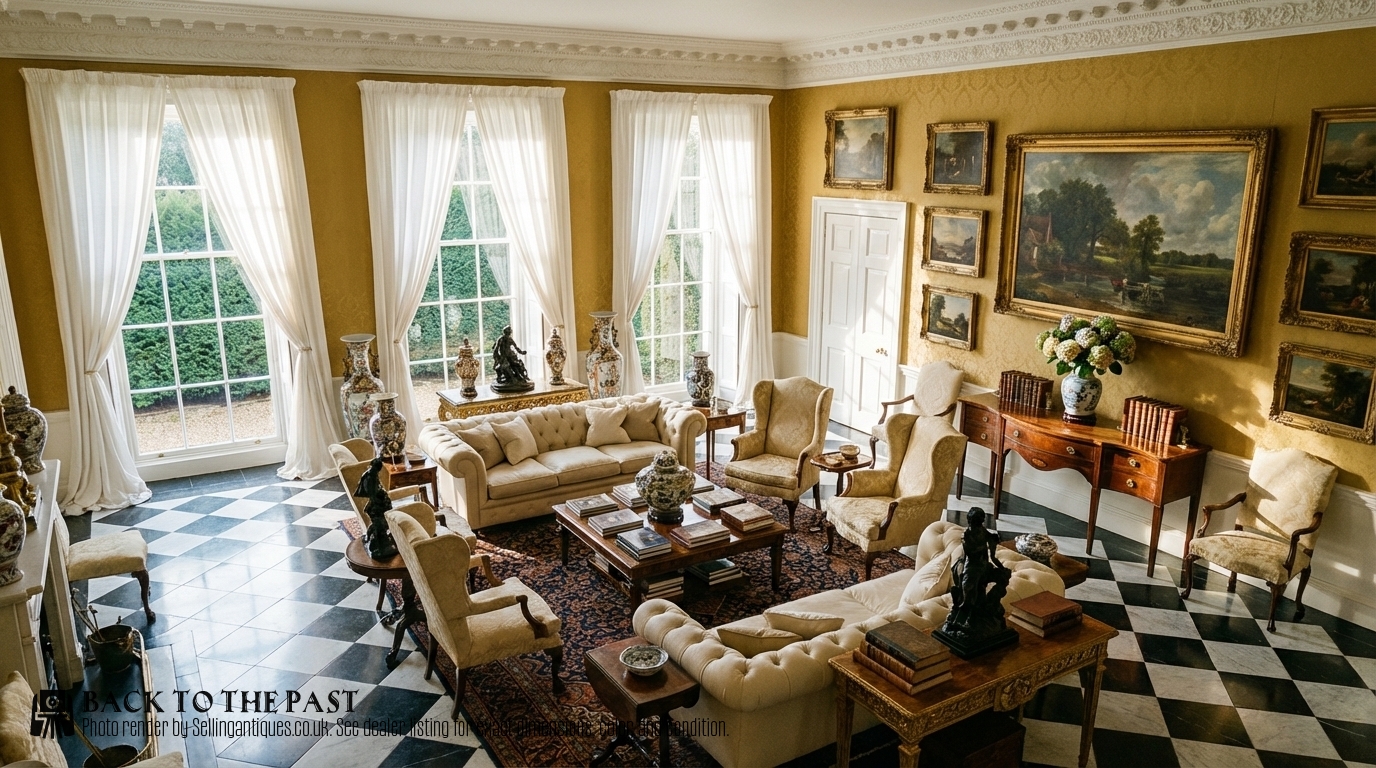
Inlaid Wooden Sideboard
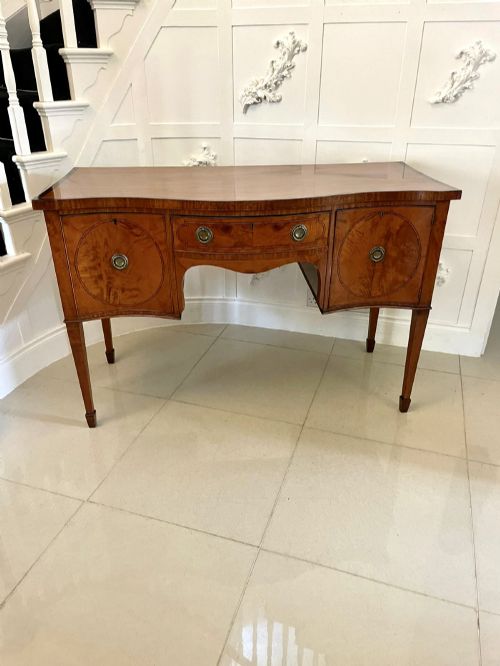
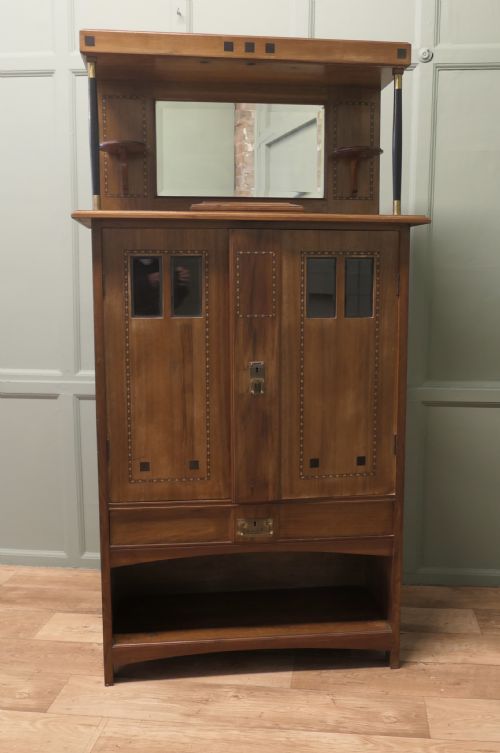
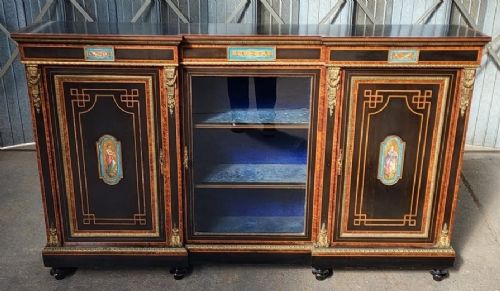
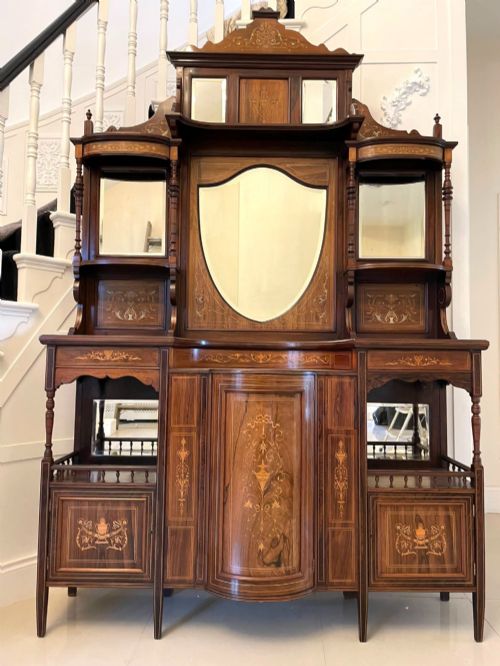
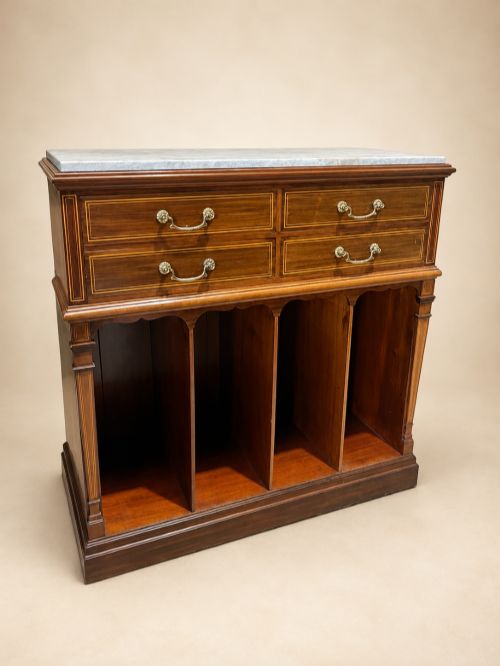
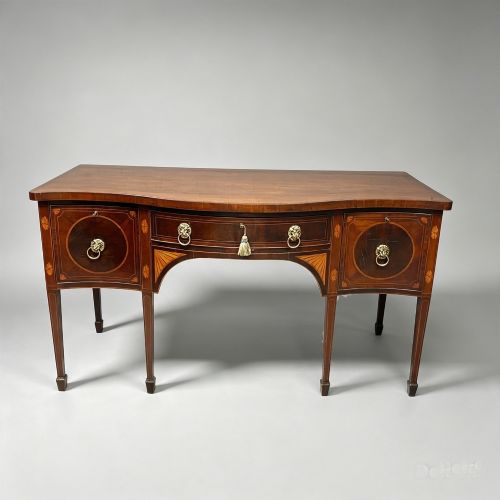
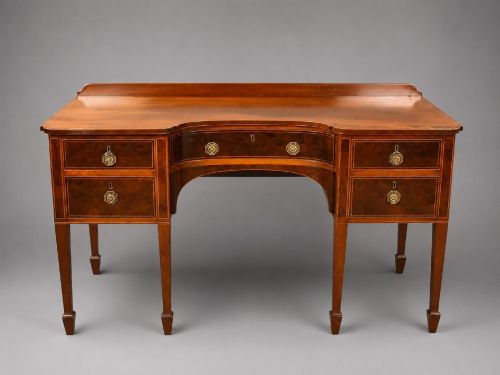
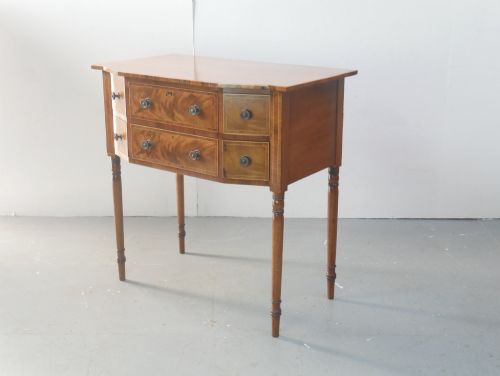
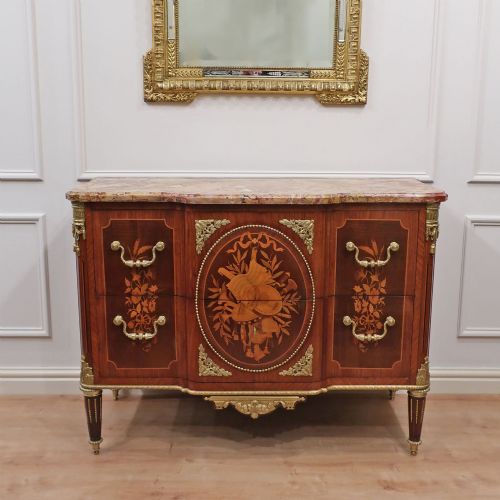
An inlaid wooden sideboard is a substantial serving and storage furniture piece typically positioned in a dining room, encompassing forms such as sideboards, credenzas, and side cabinets. The examples found here span multiple eras, with Georgian, Victorian, and Edwardian pieces appearing frequently.
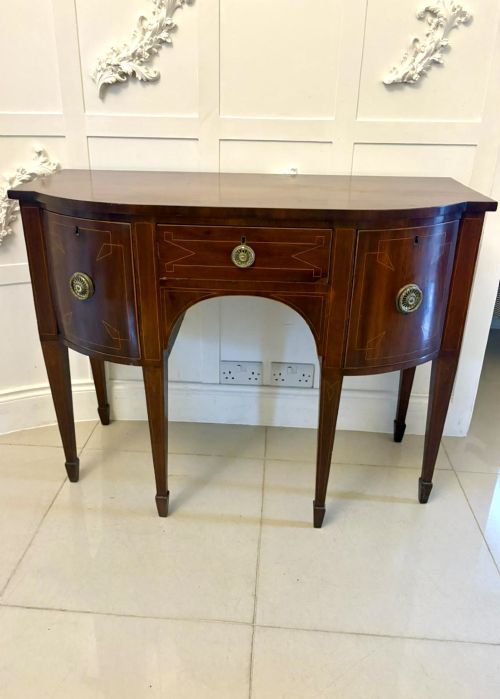
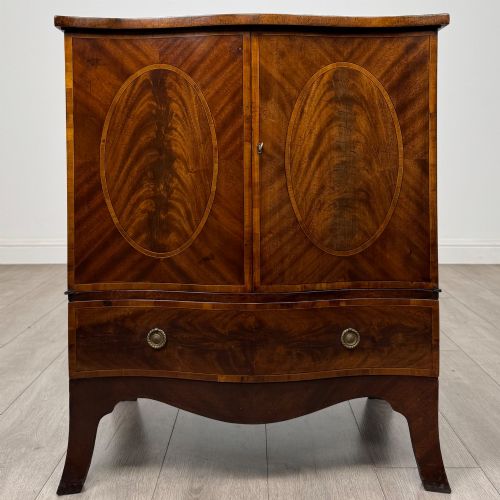
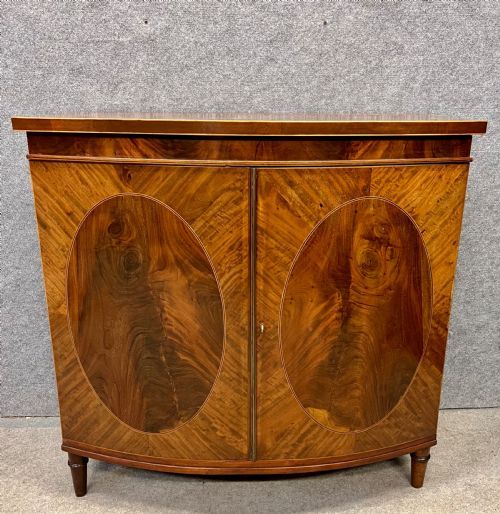
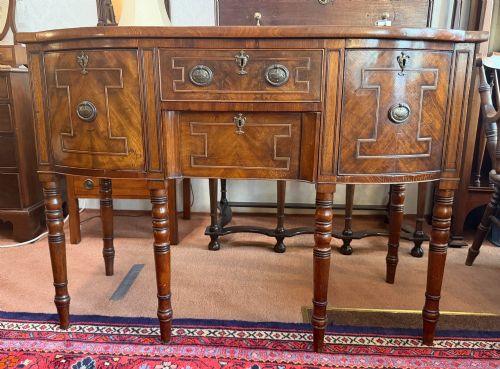
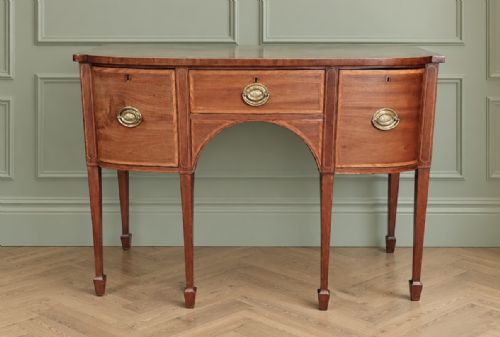
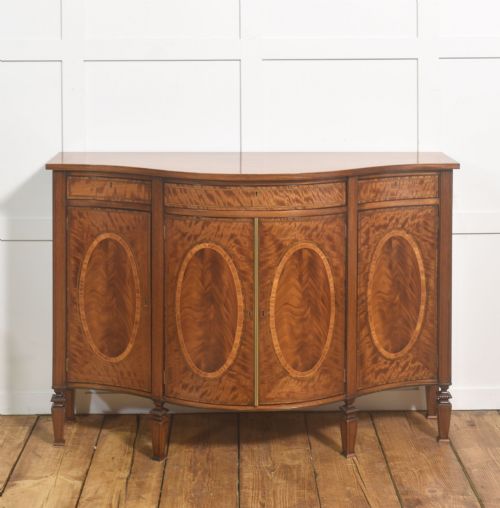
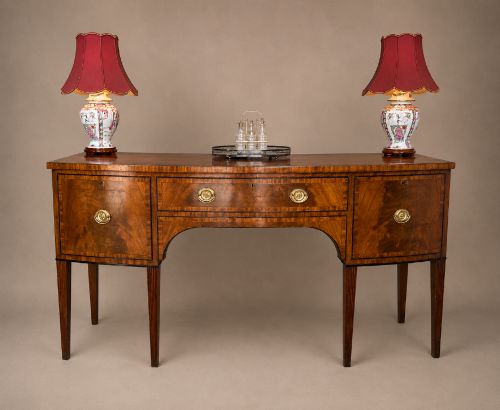
The construction takes various geometric and curved shapes, including serpentine fronts, bow fronts, and demi-lune formats. These pieces often feature cupboards and drawers designed for dining storage.
Makers utilised woods like mahogany, satinwood, and walnut as a foundation for decorative contrast, applying boxwood and satinwood inlay to define borders and panels.
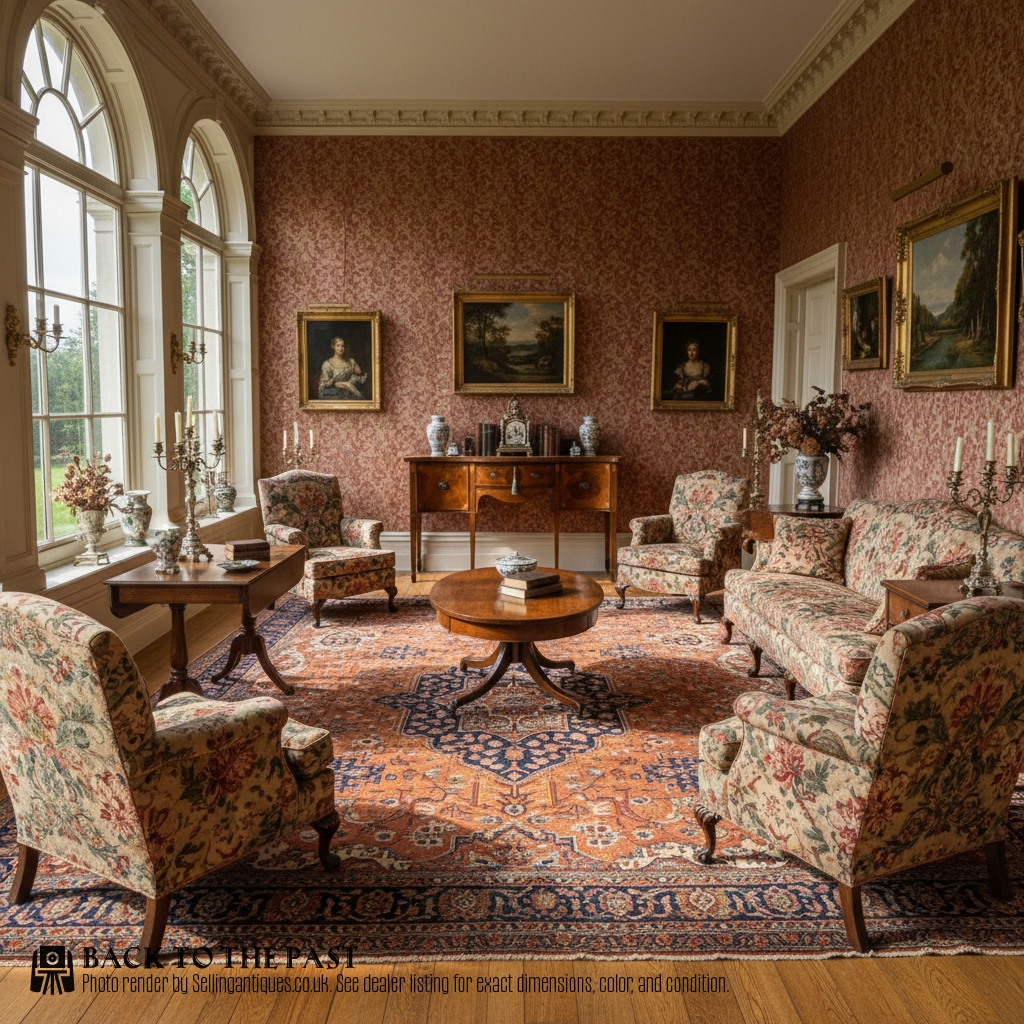
What varies in quality
The refinement of the timber selection determines the initial visual impact, distinguishing simple stock from examples utilising highly figured flame mahogany, burr walnut, or burr yew. Superior pieces display thoughtful grain matching across multiple drawers and doors.
The precision of the inlay work separates standard production from finer craftsmanship, seen in the tightness of the mitres and the complexity of the satinwood or boxwood motifs. Structural integrity in the framing and the original condition of the brass fixtures further delineate the hierarchy of these items.
Inlaid Wooden Sideboard Retail Price Guide 2026
Typical asking prices for inlaid wooden sideboard among the pieces listed under this phrase on Sellingantiques today, from the lower quarter to the upper quarter. They describe what is for sale here now, not the wider market.
Listings feature timbers including mahogany, satinwood, walnut, boxwood, and oak across Georgian, Victorian, and Edwardian periods.
The Inlaid Wooden Sideboard Glossary
- Serpentine
- A furniture front curving inward centrally and convexly outward at the sides. This undulating shape requires advanced woodworking skill to execute properly.
- Marquetry
- Decorative patterns formed by inserting pieces of wood veneer into a master panel. This technique creates pictorial or geometric designs on cabinet doors and tabletops.
- Crossbanding
- A border strip of veneer laid around the perimeter of a panel with the grain running perpendicular to the central field. It provides a neat framing effect.
- Credenza
- A low cabinet or sideboard lacking legs, frequently fitted with doors and glass panels. Originating in Italy, it serves similar storage functions to standard sideboards.
- Bow-front
- A convexly curved furniture front that projects outward in a smooth arc. This shape softens the profile of a heavy dining room cabinet.
Inlaid Wooden Sideboard: Frequently Asked Questions
Where should I place a sideboard?
A sideboard traditionally anchors the dining room wall, providing a surface for serving food and storing tableware within its cupboards and drawers.
Modern interiors also utilise these cabinets in hallways or living spaces to ground artwork and store everyday items.
How do I care for antique wood?
Maintain the timber by keeping the piece away from direct heat sources and sudden humidity changes that cause wood to split.
Apply natural beeswax occasionally to nourish the surface and preserve the polished finish without building up heavy residue.
What is the difference between a sideboard and a credenza?
Sideboards traditionally feature legs and serve primarily in dining rooms for food preparation and storage.
Credenzas sit lower to the ground, often without visible legs, and historically functioned as side cabinets for displaying wealth or serving dishes.
How can I tell a Georgian piece from a Victorian one?
Georgian furniture relies on architectural proportion, classical mahogany tones, and restrained stringing inlay.
Victorian and Edwardian items often introduce darker ebonised finishes, burr veneers, or revival styles like Sheraton Revival and Secessionist influences.