



Inlaid Wooden Desk Clock
An inlaid wooden desk clock brings the warmth of figured timber and precision brass work directly to a working surface.
Inlaid Wooden Desk Clock
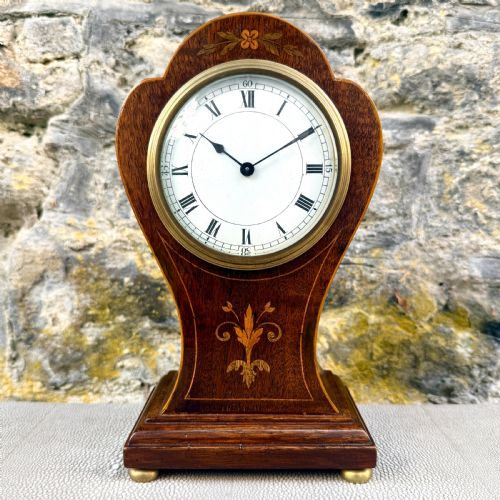
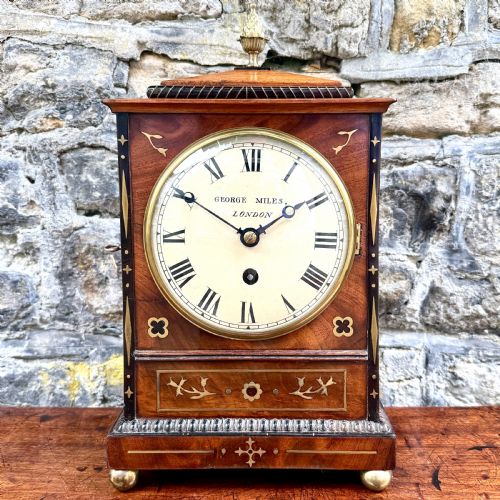
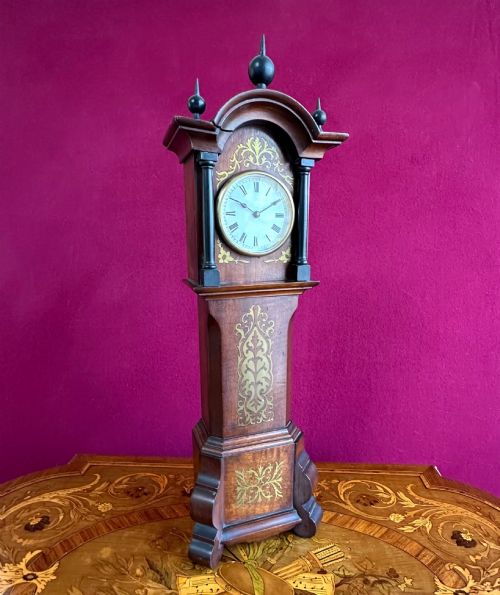
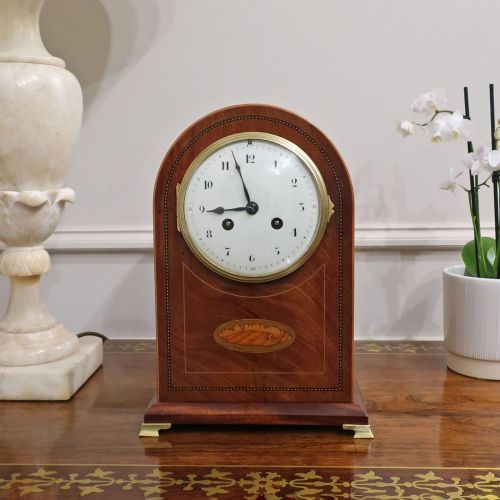
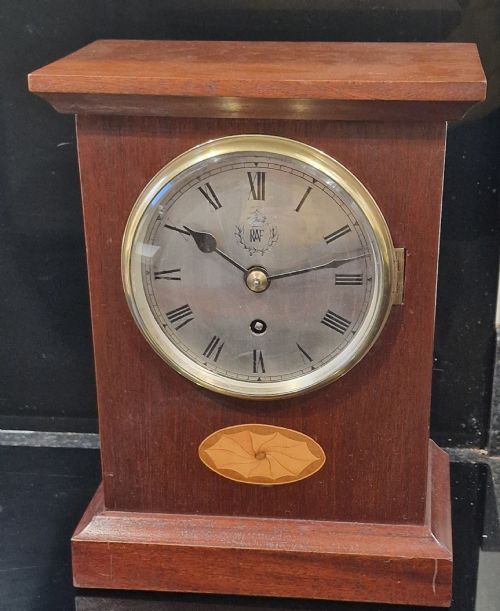
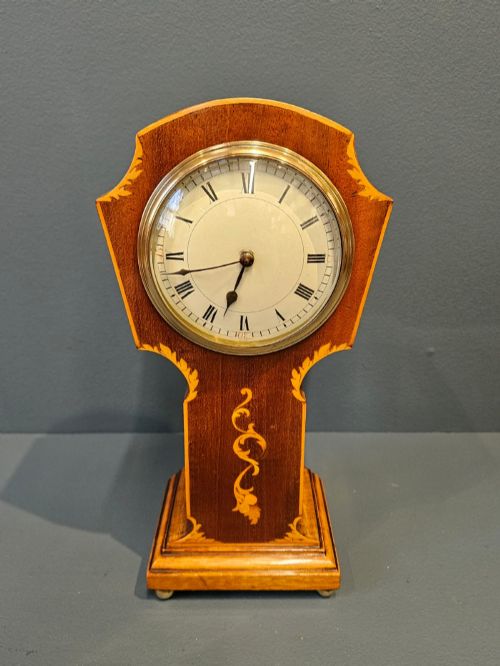
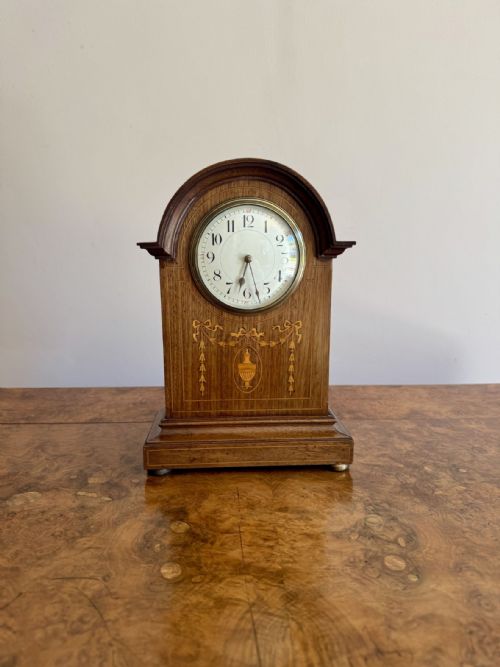
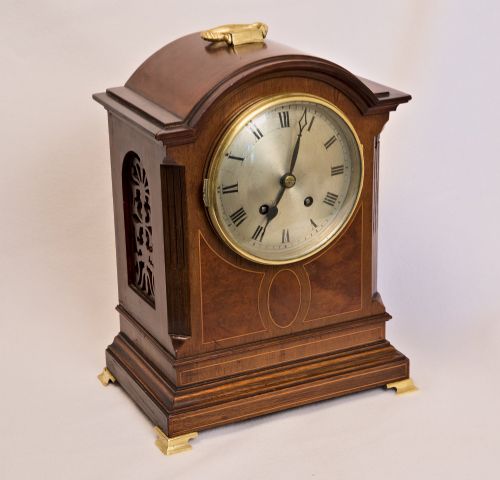
Makers housed these movements in mantel clocks, table clocks, bracket clocks, and miniature grandfather clock forms. Mahogany, rosewood, and satinwood serve as the primary foundational timbers, frequently embellished with contrasting wood inlay or brass detailing. These horological instruments range from simple library timepieces to complex fusee bracket clocks designed to sit prominently on flat surfaces.
How they were made
Cabinetmakers constructed the wooden housings using dense timbers like mahogany, rosewood, and occasionally oak or satinwood. They incorporated contrasting wood inlay and brass stringing into the carcasses to create geometric or pictorial motifs such as poppies and figures. Glass doors and bezels protected the enamelled or silvered dials housed within.
Clockmakers fitted mechanical movements driven by springs or weights, frequently utilising single fusee systems to maintain even tension as the mainspring wound down. Dials featured painted enamel or engraved silver plates with Roman or Arabic numerals, often signed by the maker or retailer.
What varies in quality
The sophistication of the cabinetwork and the crispness of the wood inlay distinguish finer pieces from standard production. Superior examples display carefully chosen timber grain, precise contrasting stringing, and well-executed decorative motifs rather than plain veneer.
Movement execution also dictates grade, with signed London movements and fusee mechanisms representing a higher tier of horological ambition. The integration of high-grade brass bezels, heavy cast brass fittings, and clean enamel dials further separates exceptional desk clocks from simpler domestic versions.
Bush of London·W. Burton·Wilkinson Leicester·Dent of London·Walker and Hall·Plumbly and Tupman, London·Malecot of Paris
The Inlaid Wooden Desk Clock Glossary
- Fusee
- A conical pulley used in mechanical clocks to equalise the torque of the mainspring as it winds down. This mechanism helps the clock maintain a consistent rate throughout its run.
- Bracket clock
- A portable clock originally designed to sit on a wall bracket or a table. Many examples feature substantial wooden cases with carrying handles.
- Inlay
- A technique where pieces of contrasting material, such as satinwood or brass, are fitted into depressions carved into a wooden surface to form a pattern.
- Library clock
- A sturdy, legible timepiece traditionally kept in a study or library for quiet work. They often feature clean dials and dependable movements.
- Chased
- Metalwork decorated by hammering or indenting the surface with punches rather than engraving away material. This adds texture to brass bezels and mounts.
Inlaid Wooden Desk Clock: Frequently Asked Questions
How do I wind a fusee desk clock?
You insert the winding key into the dial aperture and turn it gently clockwise until you feel resistance from the mainspring. Care must be taken not to overwind antique mechanisms.
Most fusee movements require a key specific to their square arbor size, so ensure the key fits snugly before applying pressure.
Where should I place a wooden desk clock?
These clocks belong on stable, flat surfaces away from direct sunlight, central heating vents, and damp exterior walls. A sturdy desk, mantelpiece, or library table provides an ideal environment.
Keeping the clock away from temperature fluctuations protects both the wooden veneer and the delicate oils within the mechanical movement.
How can I tell an Edwardian clock from a Georgian one?
Georgian and Regency clocks generally display heavier architectural proportions, flame mahogany veneers, and restrained brass inlay. Edwardian pieces often feature lighter satinwood banding, delicate floral marquetry, and more slender Edwardian styling.
Examining the interior movement mounting and the timber preparation will also reveal clues about the manufacturing period.
Did these clocks always measure time accurately?
Mechanical desk clocks from the eighteenth and nineteenth centuries were capable of good timekeeping, though they relied on regular adjustment. Variations in temperature and the gradual settling of components affected their daily rate.
Routine servicing by a professional horologist helps maintain steady performance in antique movements.