
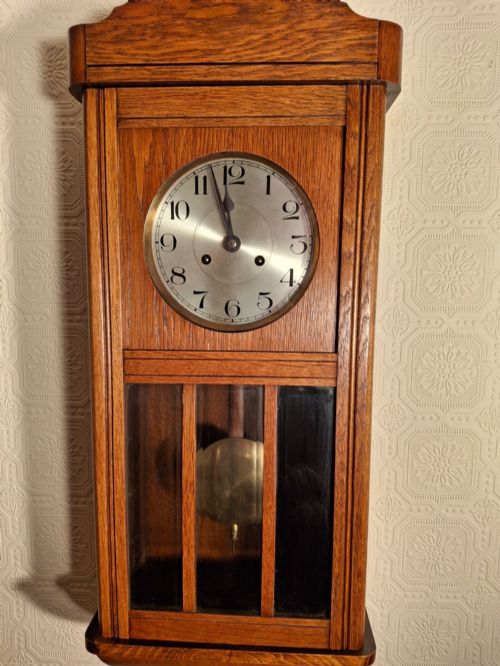
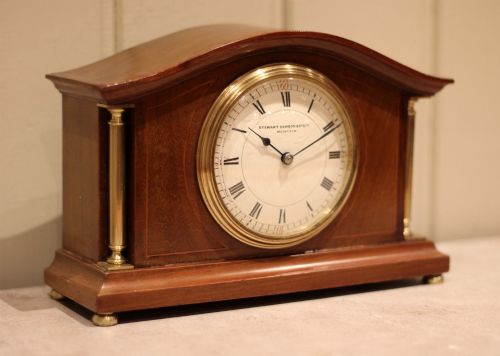
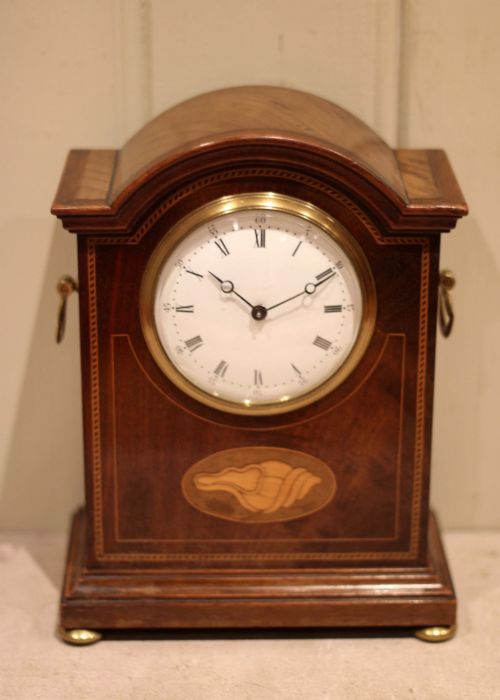
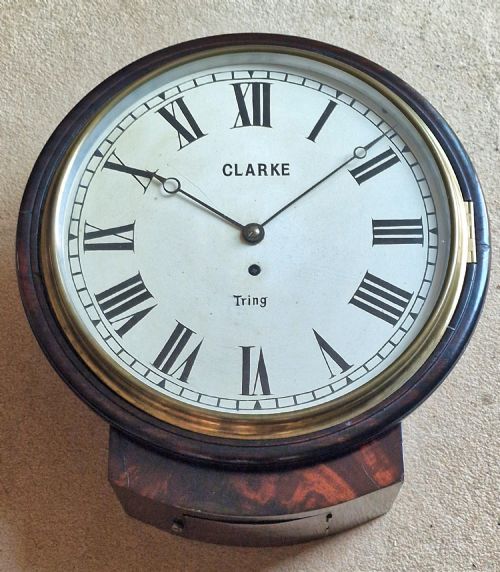

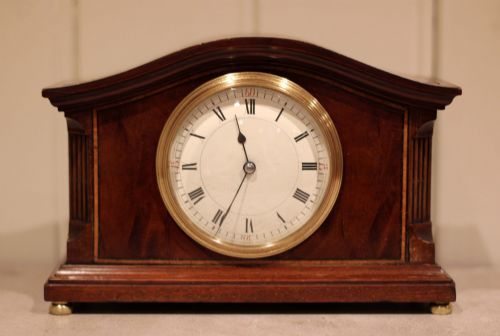
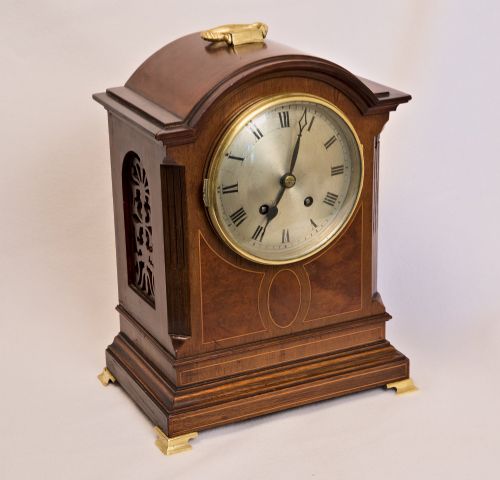


Traditional Wooden Timepiece
These traditional wooden timepiece examples span the nineteenth and early twentieth centuries, offering dependable mechanical timekeeping housed in handsome timber cases.
Traditional Wooden Timepiece
A traditional wooden timepiece encompasses mantel clocks, wall clocks, bracket clocks, and longcase clocks produced primarily during the nineteenth and early twentieth centuries. These objects served domestic and public spaces as both functional instruments and substantial items of furniture.
The selection here relies heavily on mantel and wall clocks from the Victorian and Edwardian eras. Buyers encounter compact timepieces alongside larger regulator and dial clocks designed for prominent placement in rooms.
Makers utilised diverse regional forms, ranging from English fusee movements to German bracket clocks and Scottish mantel designs. Oak, mahogany, and walnut appear frequently as the primary structural timbers.
Materials and construction
Cabinetmakers constructed the cases using solid and veneered timbers such as mahogany, oak, walnut, and satinwood. Inlays of lighter woods and decorative painted motifs occasionally embellished the exterior surfaces.
Mechanical movements relied on brass gears and plates, driven by weights or springs with escapements regulated by pendulums or balance wheels. Dials featured painted metal, enamel, or turned wooden faces protected by glass bezels.
The listings demonstrate a strong presence of mahogany and oak timber cases, spanning Victorian, Edwardian, and Arts and Crafts periods.
Quality and execution
Superior examples distinguish themselves through the precision of the mechanical movement, such as fusee setups, and the selection of figured timber veneers. Well-executed marquetry inlay and crisp carving elevate a case beyond utilitarian production.
Original components and signed movements by known makers separate standard domestic pieces from finer workshop productions. The integrity of the dial, whether enamel, painted metal, or timber, dictates the overall visual standard.
George Clarke·Webster Cornhill London·Winterhalder & Hofmeier·Jas Whitelaw of Edinburgh·John Thwaites·Malecot of Paris
The Traditional Wooden Timepiece Glossary
- Fusee
- A conical pulley used in clock movements to maintain even tension on the chain as the mainspring unwinds. This mechanism improves timekeeping accuracy across the power reserve.
- Bracket clock
- A portable mechanical clock traditionally designed to sit on a bracket or furniture surface. Many feature carrying handles and arched or lancet tops.
- Vienna regulator
- A precision wall-hung pendulum clock developed in Austria during the nineteenth century. These pieces display long glass doors and accurate weight-driven movements.
- Dial
- The face of the clock where the hours and minutes are indicated. Materials include painted metal, white enamel, and solid wood.
- Mantel clock
- A domestic clock designed to stand on a fireplace mantel or shelf. Cases take various forms including balloon, lancet, and architectural shapes.
Traditional Wooden Timepiece: Frequently Asked Questions
What is a fusee movement?
A fusee is a conical pulley connected to the mainspring by a cord or chain, designed to equalise the torque as the spring unwinds.
This mechanical refinement ensures consistent power delivery to the gear train, resulting in more reliable timekeeping throughout the running period.
How do I wind my clock?
Clock winding requires inserting a matching key into the winding holes on the dial and turning it gently until resistance is felt.
Care must be taken not to overwind the mainspring, as excessive force can damage the internal components.
Where should I place a wall clock?
Wall clocks require a stable, vertical surface away from excessive vibrations, direct sunlight, and draughts that might affect the pendulum.
Securing the clock firmly to a stud or using appropriate wall fixings ensures the case hangs plumb and the movement operates reliably.
How do I identify an Edwardian clock?
Edwardian timepieces, produced between the death of Queen Victoria and the First World War, frequently display lighter mahogany cases with subtle satinwood inlay or floral painted details.
Stylistic influences from this period often lean towards refined proportions and lighter domestic aesthetics compared to heavier Victorian designs.